
I don’t know anything about anime. I tend to prefer artsy fartsy graphic novels and, I, Avery, am incredibly judgy of anime and all its dorky fandom.
But my friend Em Seely-Katz, of the brilliant newsletter Esque, is here to set me straight. Because anime is more important to contemporary high fashion than I realized.
This piece was written by Em, edited by the great Grace Tarducci, and it was a treat for me. Take it away friends
You can almost smell it: sweat-marred graphic tees; cheap plastic purses with transparent windows to show off crowded rows of enamel pins; knee-high socks embroidered with cringeworthy quotes. Anime lovers are not typically known for their fashion sense.
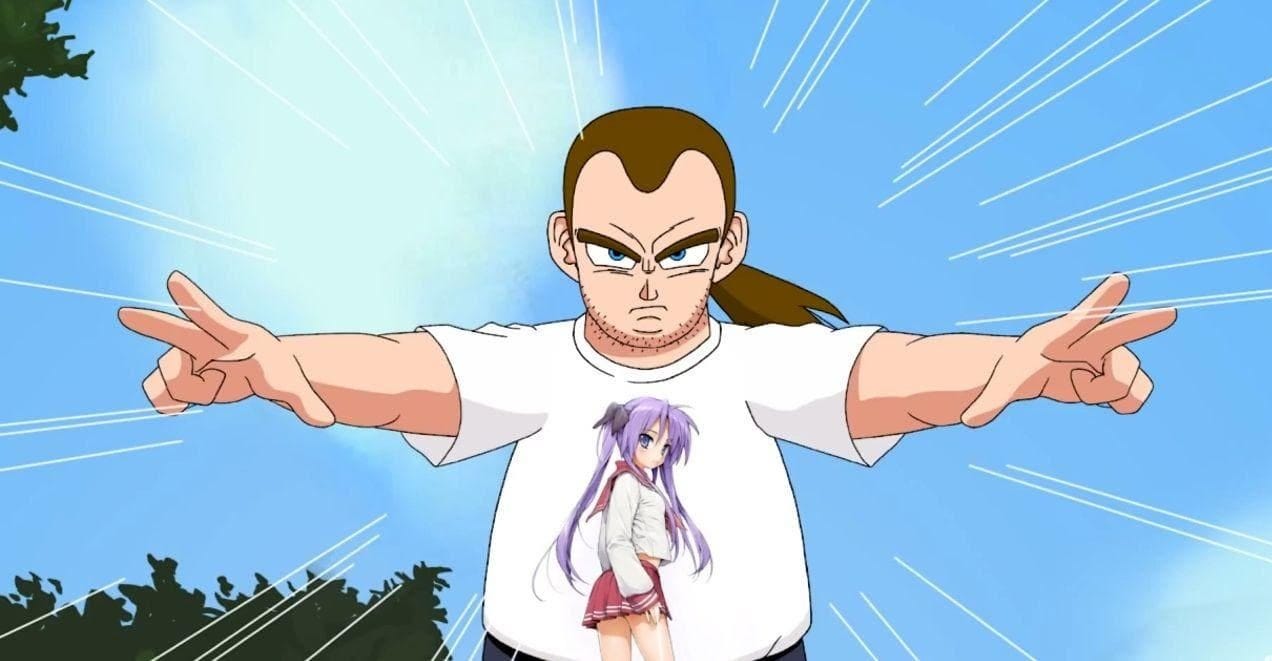
“Otaku” is a Japanese term that can be used on a spectrum from derogatory to affectionate. The word refers to nerds entranced by a specific interest; racecars, computer parts, or in this case, anime. But, despite their bad rep when it comes to style, the last decade has seen the rise of a new subset of otakus whose fixation is split down the middle between anime and fashion, blurring a line that once seemed more like a chasm.
As a dual-wielding anime/fashion otaku myself, I couldn’t be happier about this crossover. But for people who don’t identify with both interests, this may seem like a random, even unholy, union. I’m going to do my best here to assuage any fears as I walk you through the genesis of this intersection, introduce you to a few key figures who have done the work to Make Anime Fashionable, and to a few entry points if you’re a fashion fiend curious about testing the waters of anime1 or vice versa.
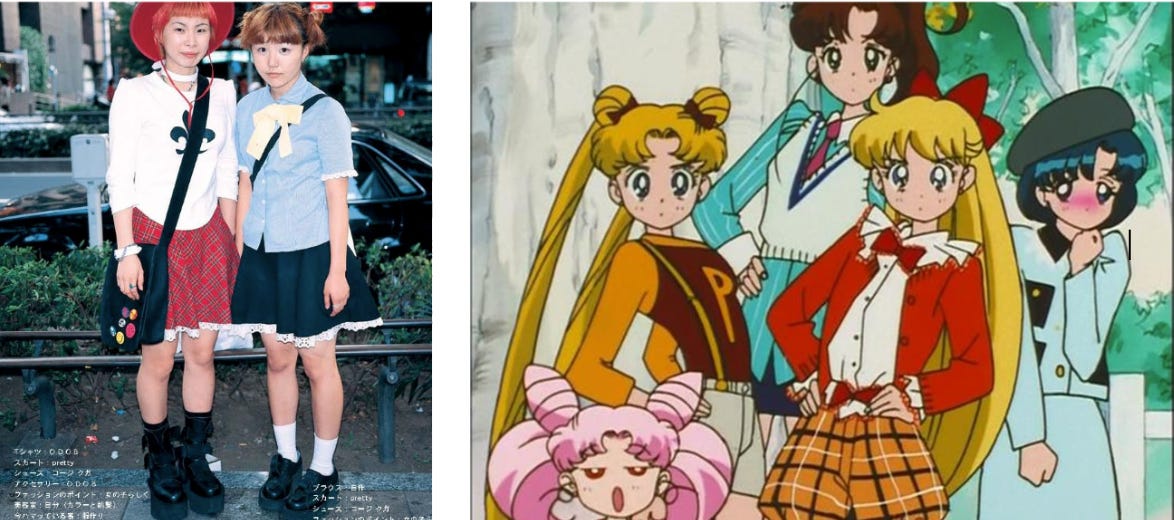
If I had to call it, I’d say that the anime world’s first notable flirtation with fashion was in Naoko Takeuchi’s dizzyingly prolific series Sailor Moon (1992), a 90s childhood staple with a monster-of-the-week structure and an overall message of girl power. Like a Benadryl slipped to an unsuspecting dog, Sailor Moon watchers may not have known that they were surreptitiously fed, week after week, references to both street style and high fashion that may still help define their tastes to this day.
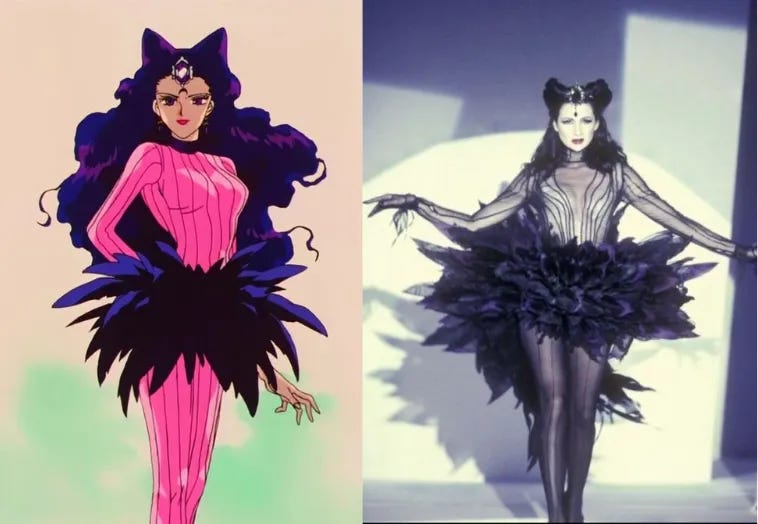
Everything from a faithful representation of Christian Dior’s 1992 Palladium Dress bedecking a celestial princess, to several Mugler FW92 pieces worn by a handful of the series’ most lascivious villains, to street stylings that look like a primer for future FRUiTS Magazine models.
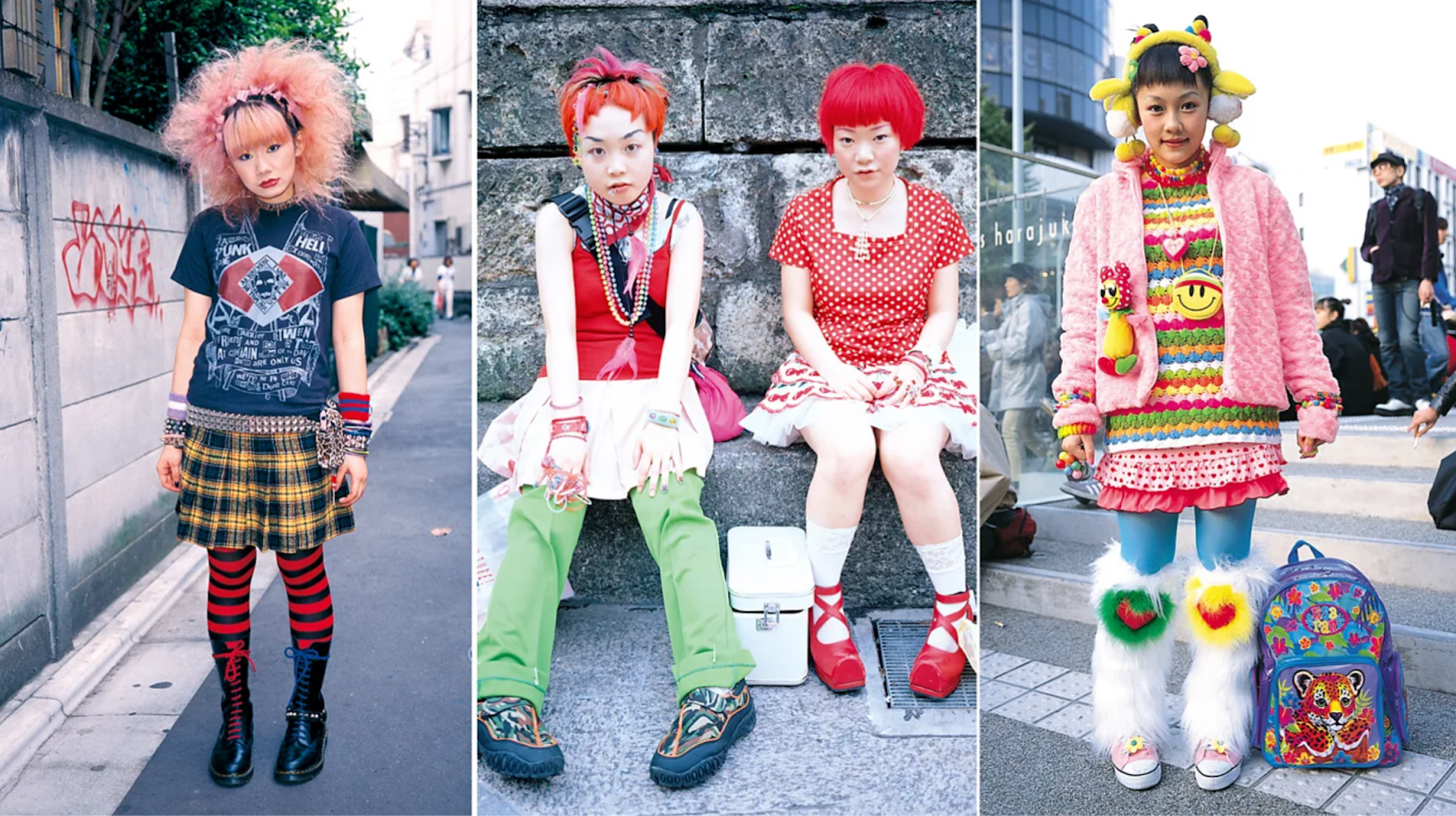
Harajuku syle, named for the Harajuku railway station in Tokyo, is a high saturation streetwear movement that’s been going strong since the late 80s. The ancestry of the fad can be traced back to the western occupation of Japan in the 1940s-50s. After WWII, Japan’s economy grew at an unprecedented rate, reaching its peak in the 1980s and ultimately crashing in the 90s. This craze was the visual identity of Tokyo’s rebellious youth movements of the 1990s, a time known in Japan as “The Lost Decade.” Throughout the years, Harajuku has come to include many of its own subcultures such as urahara, Lolita, kogal, gyaru, and cosplay. Sailor Moon prominently featured the streetwear style, and Fashion, from the pages of Vogue to the street stylings of the Harajuku district, was a defining feature of one of the most iconic franchises in animation history.
If Naoko Takeuchi and Sailor Moon made the first move in the steamy fashion and anime affair, Ai Yazawa sealed the deal with her aughts-spanning works Paradise Kiss, a show so style-focused that its plot centers around fashion school students. Yazawa’s more widely-known show, however, is Nana, where the titular punk superstar wears Vivienne Westwood’s iconic Orb necklace and armor ring. Yazawa had been infatuated with the clothing of Vivienne Westwood since before she started writing manga, so it was only natural for her to draw her heroines wearing pieces ripped off Westwood’s runways.


Beyond jewelry, almost every page in both Paradise Kiss and Nana bears the mark of Westwood’s influence, whether designs were copied directly from Yazawa’s personal stash of clothes or simply influenced by Westwood’s proclivities toward asymmetry, tartan, safety pins, and a rebellious spirit against the homogenous, traditional norms of Japanese style before the subcultural revolutions of the aughts.
Although Westwood passed away in 2022, the interplay between her work and Yazawa’s lives on, most recently through a collection of “Nana-inspired” jewelry and ready-to-wear clothes in honor of the story’s 25th anniversary. Alas, I and many other fans saw the capsule as cheap and cash-grabby due to its lack of attention to onscreen detail (for example, Nana’s always-silver jewelry was rendered here, for no apparent reason, in gold), but the fact still remains that the Yazawa x Westwood connection is a central point around which the fashion and anime worlds continue to visibly merge.
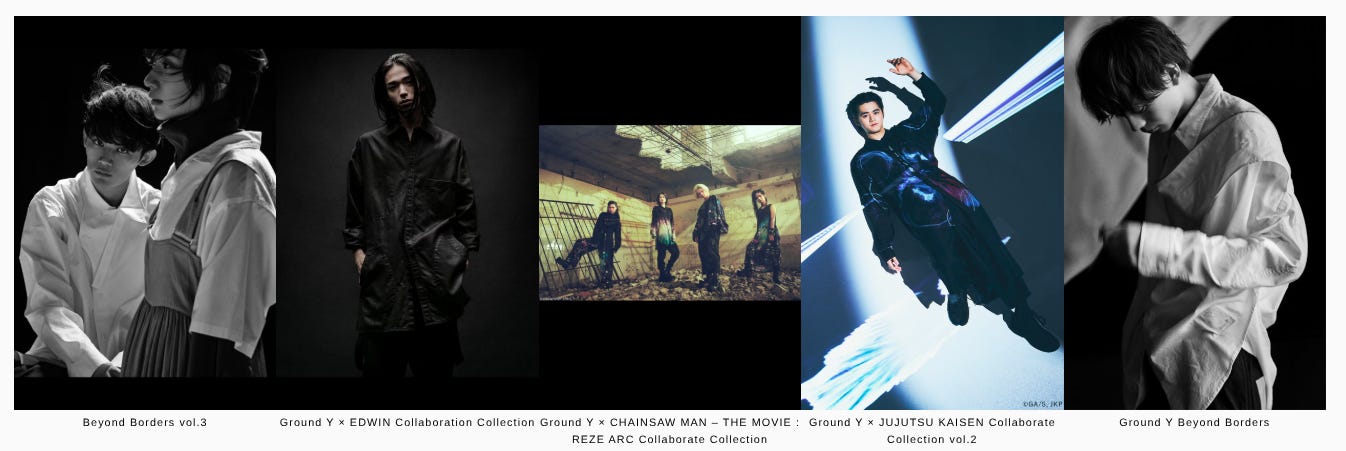
You may be under the impression that the anime-fashion pipeline is strictly on the feminine side of style, but menswear has become just as, if not more, intertwined with anime in the past few decades.Yohji Yamamoto’s sub-brand Ground Y has collaborated with animes from the ‘90s staple Neon Genesis Evangelion to a 2020s cult favorite, Chainsaw Man, specifically picking shows that jibe with the brand’s already-established aesthetic filled with moody, flowy streetwear and gothic color palettes. The clothing is subtle enough that most fans, let alone non-otakus, wouldn’t clock that you were wearing anime-inspired clothing.
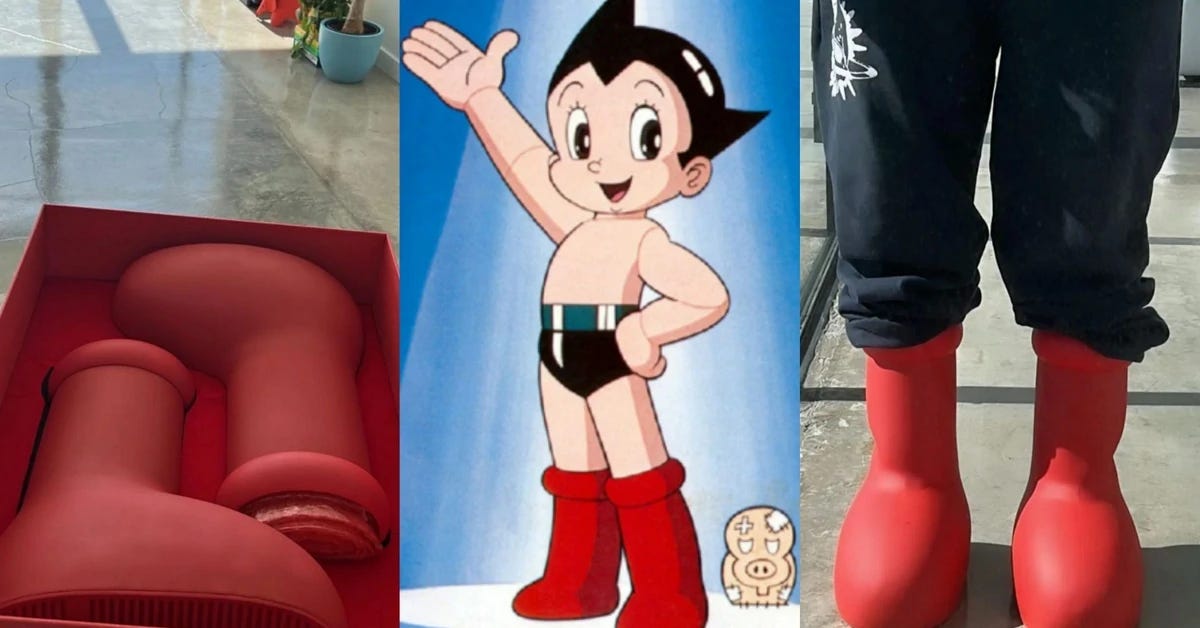
In 2023, MSCHF’s Astroboy-esque red boots terrorized the internet with their omnipresence, but looking past the gimmick, these shoes can be considered one of the best examples to date of a high-quality, high-fashion replica of anime wear. The backlash to their introduction was nothing more than growing pains as the worlds of anime and fashion began the next phase of their fusion.
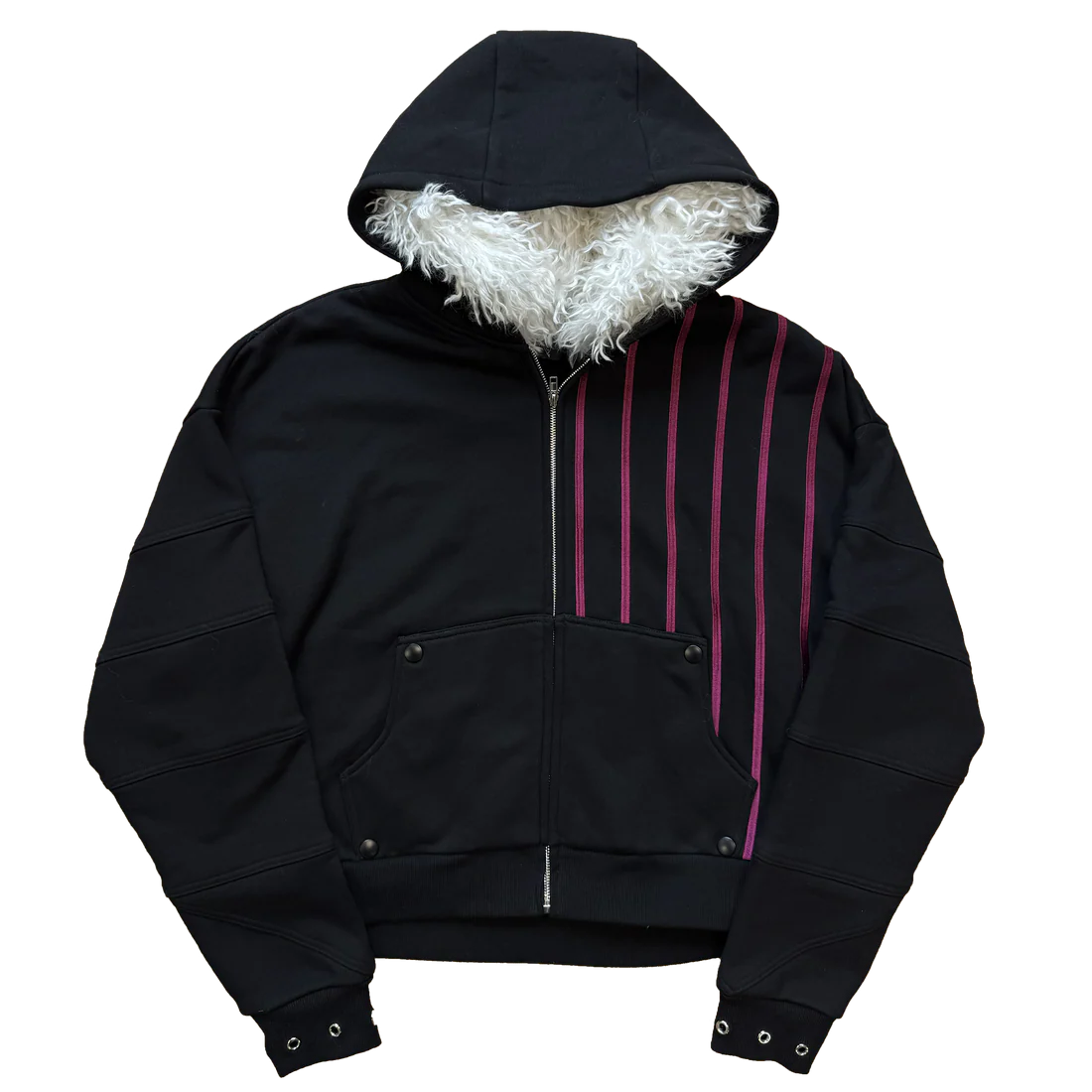
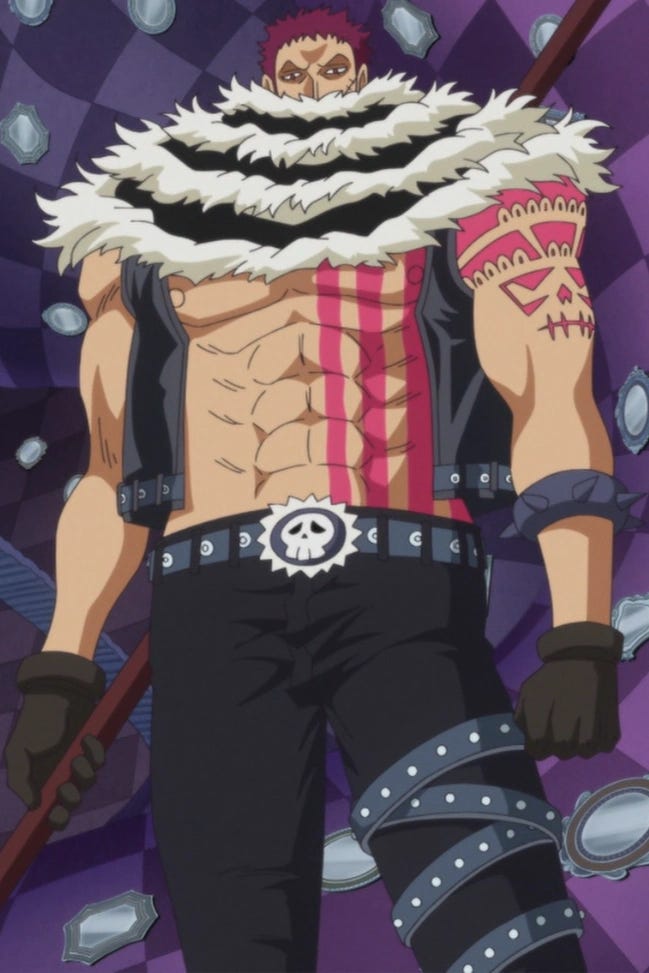
This style of collaboration has trickled down to a robust market of not-quite-bootleg designers such as Goni and VeesClothing who create pieces that cleverly and subtly reference characters’ designs and outfits for price points that are far more attainable than the high-end Yamamoto togs. Below, a faux fur-lined hoodie with armorlike paneling and purple embroidery translates the tattoos and ridiculous get-up of Katakuri, a beloved One Piece antagonist, into a casual piece of outerwear.
A black tie with a triangular cutout at the tip nods to both the uniform worn by Chainsaw Man’s Denji, and the chainsaw pull that sprouts from his chest.
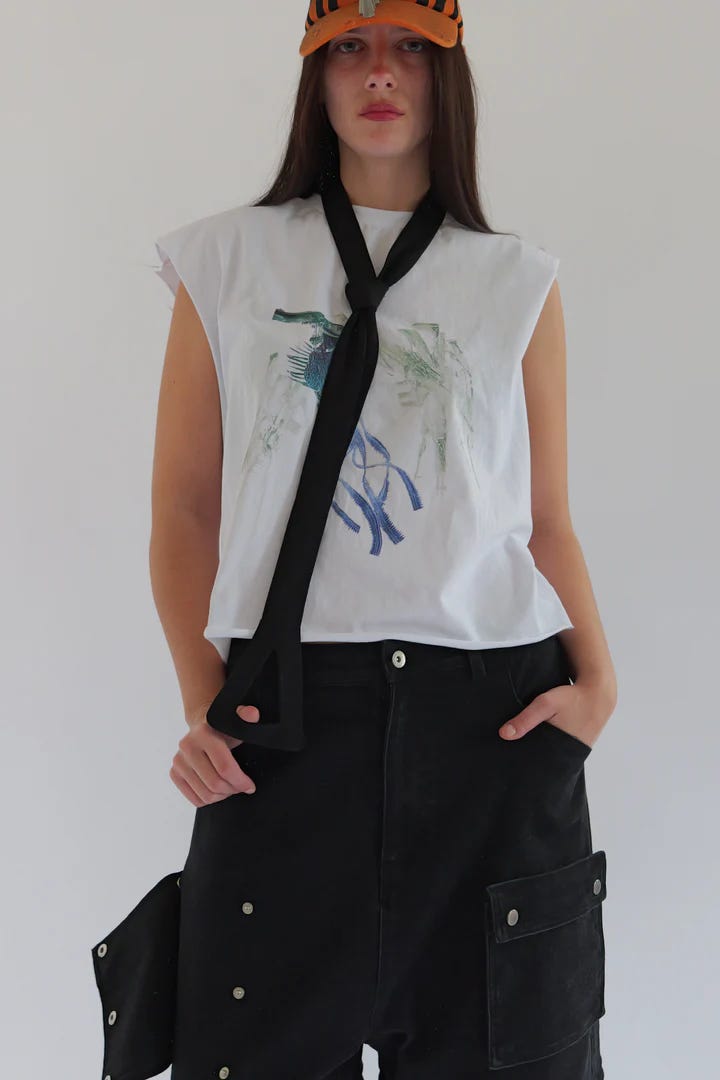
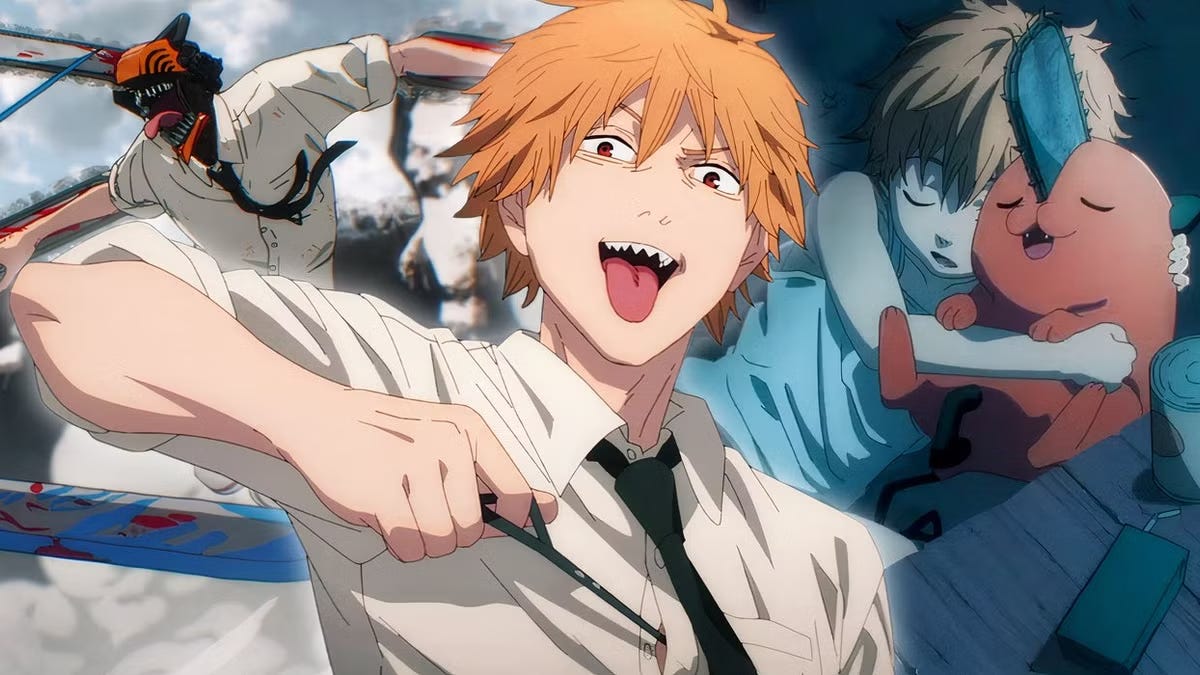
Anime’s attitude of defiance toward hegemonic power has attracted many subcultures throughout its time in the western world. One of the most consistent of these subcultures being Black otakus. Anime has had a strong following of Black American fans since it was first introduced to the United States. The history of this fandom is a bit of a complex phenomenon that not enough serious scholarship has focused on, and I won’t pretend to have the knowledge or wherewithal to fully break it down here, but this cultural tie truly can’t be overlooked when it comes to anime fashion’s cool factor. Black American style helped shape Japanese streetwear; Harajuku fashion borrowed copiously from 90s hip hop culture, most evidently in subcultures such as gyaru, and mainstream American style today owes much of its debt to the same aesthetic movements. When it comes to anime and high fashion, Black American otakus are leading the charge, with, as usual, the rest of the world following.
Nigerian-American model and stylist Wisdom Kaye has garnered a social media following of millions, an invite to the 2024 Met Gala, and the holy grail of high-fashion closets. One of the main draws of his content is his use of anime as inspiration for designer outfits. He translates, with both visionary precision and a rakish creative license, outfits worn by characters like Luffy, the pirate protagonist of the epic tale One Piece, into looks that would make Anna Wintour’s heart stop (complimentary).
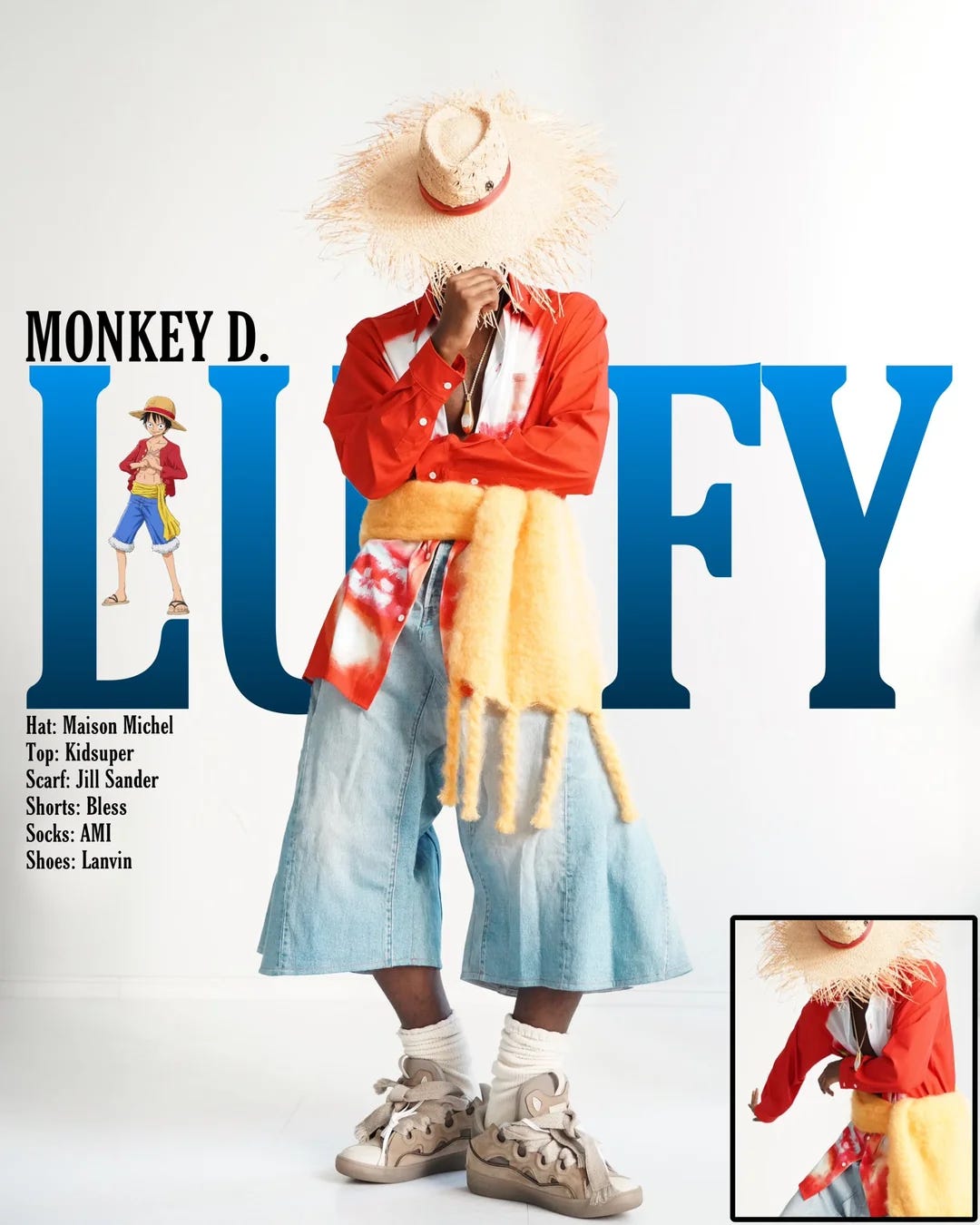
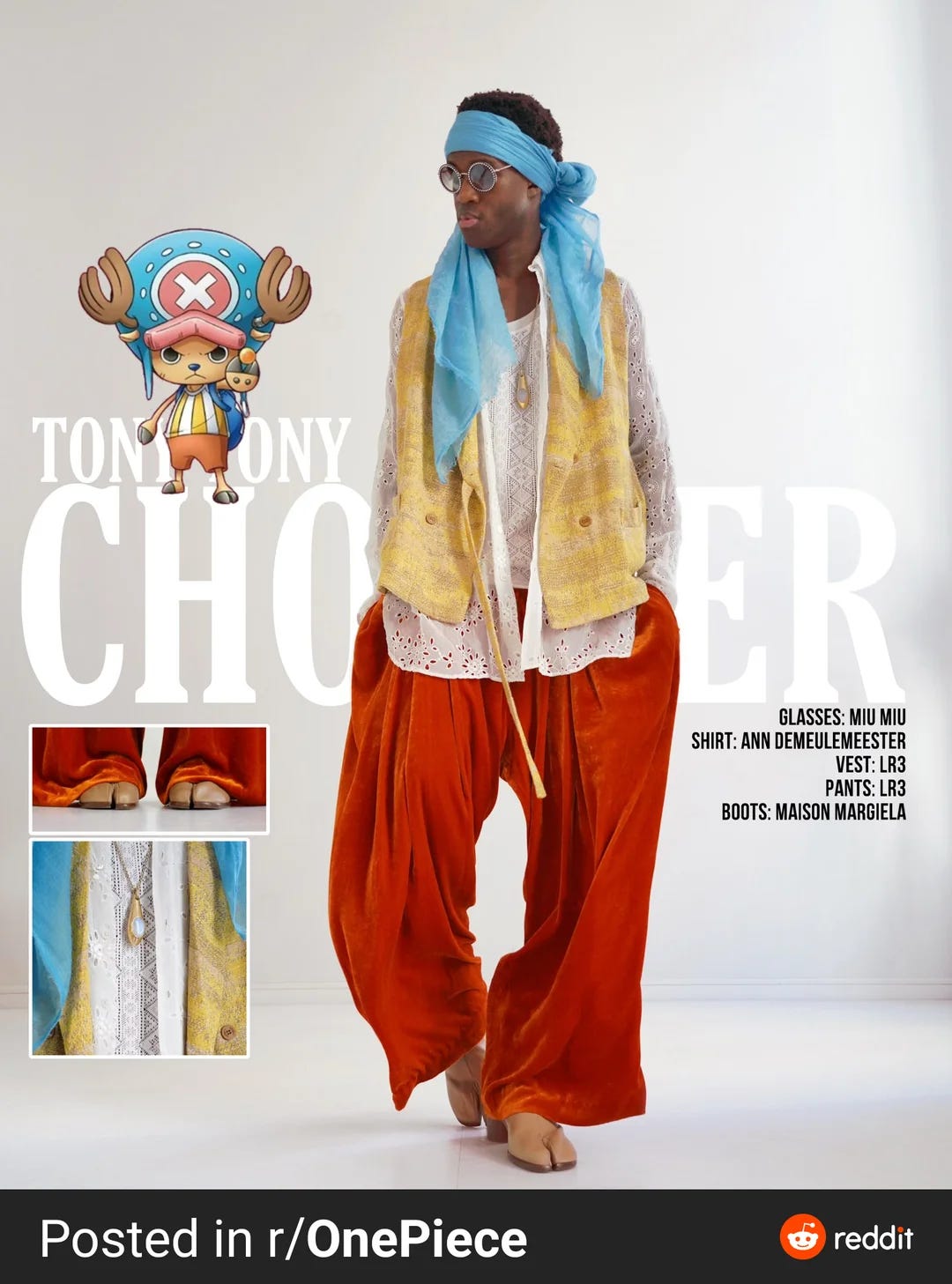
Wisdom’s outfits, as well as the bootleg designers’ wares above, veer into what I would deem “casual cosplay,” (cosplay, noun: the art of dressing up as an anime character, typically for events like conventions).
Similar to DisneyBounding (have fun opening that can of worms), the lines between dress-up and simply dressing up have blurred in the wake of stylists like Wisdom and other influential figures such as Michael B. Jordan, who created a Naruto capsule in collaboration with Coach, and perhaps most famously, Megan Thee Stallion. Interpreting characters’ looks with varying degrees of fidelity and an ever-present level of hotness, Megan has subtly referenced deep cuts (like the protagonist of The Disastrous Life of Saiki K.’s pink hair) sometimes for an occasion like Halloween, sometimes just for fun. With her varying degrees of cosplay, one of the most talented women in the entertainment industry has helped officially cement anime as inextricable from the world of style.
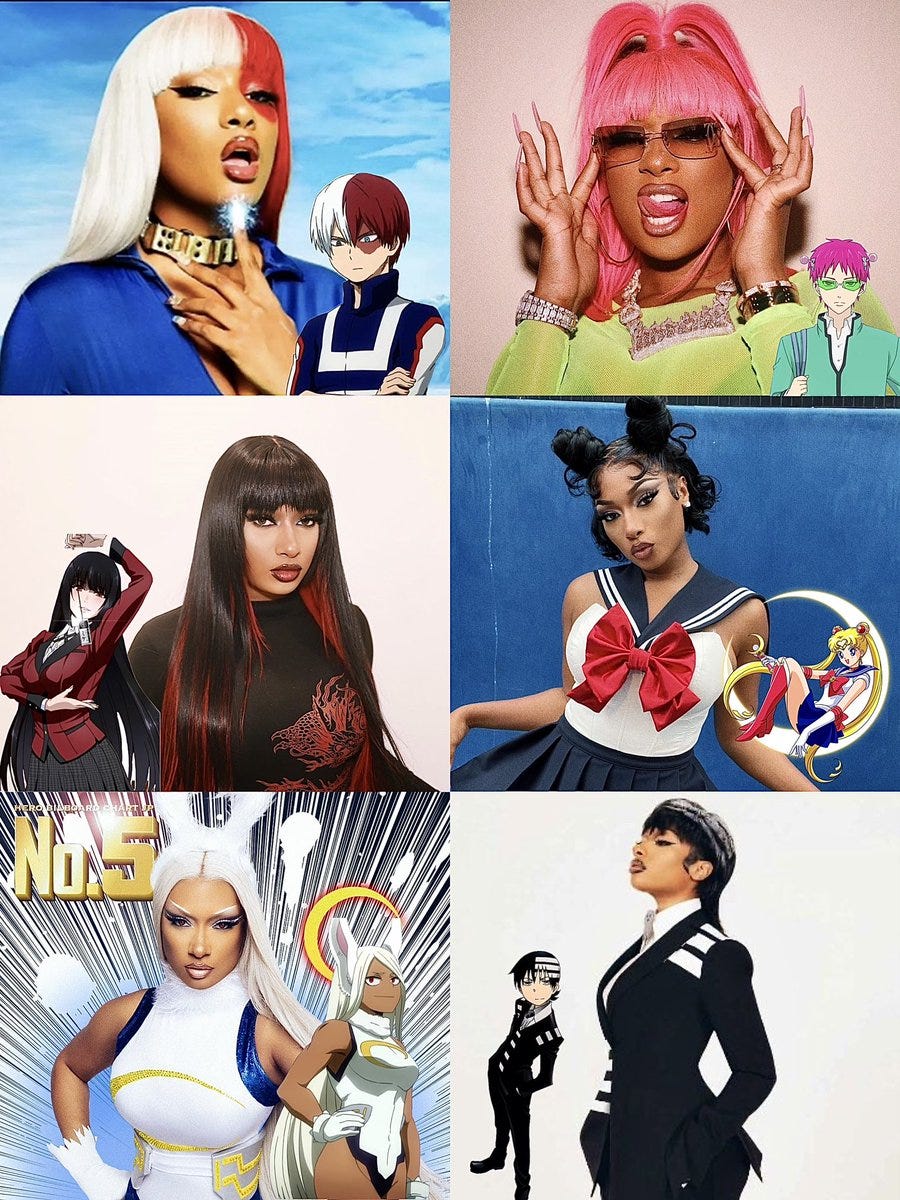
From Sailor Moon in Chanel to hypebeasts lining up down New York City streets for pill-adorned Akira jackets to the virality and impact of Black fashion otakus like Wisdom and Megan, the verdict is in: the anime world is now officially a fashionable one to occupy. Gone are the days of the stinky T-shirt, here are the times of the designer collab. I hope your interest is piqued―you have a lot of homework to do if you want to get caught up on One Piece.
N.B. This piece focuses on anime for breadth’s sake, but most of the shows cited below originated from manga (Japanese comics). Though oftentimes the writer of a manga (or mangaka) doesn’t have much control over its anime adaptation, I’ll refer to the mangakas as the animes’ creators, since the visual languages and stylistic choices are almost always translated faithfully from the original texts.
No posts
Comments
Nothing yet. Say the first thing.
Sign in to join the conversation.