

You’ve heard a lot about “theatrical windows” lately - both here on substack and in the trades, particularly in reference to the WBD x PSD merger. Most of these stories focus on why they are critical for the movie business at large but today we want to talk to about why they matter for filmmakers…and the indie ecosystem.
To set the scene, a backstory on how our TWR campaign came to be: in mid-January, we ran across an insta story shared by a mutual featuring an irresistible merch drop from. In mid-January, we ran across an insta story shared by a mutual featuring an irresistible merch drop from Pink Among Men and immediately reached out to see how we might work together. The incredible Producer Amy DePaola jumped into producing-mode and in just a couple weeks, and literally shipped direct to Park City, we had beanies, tees and bags just in time for Sundance. The merch became highly coveted - even with the likes of our new friend - The Ankler’s Richard Rushfield.
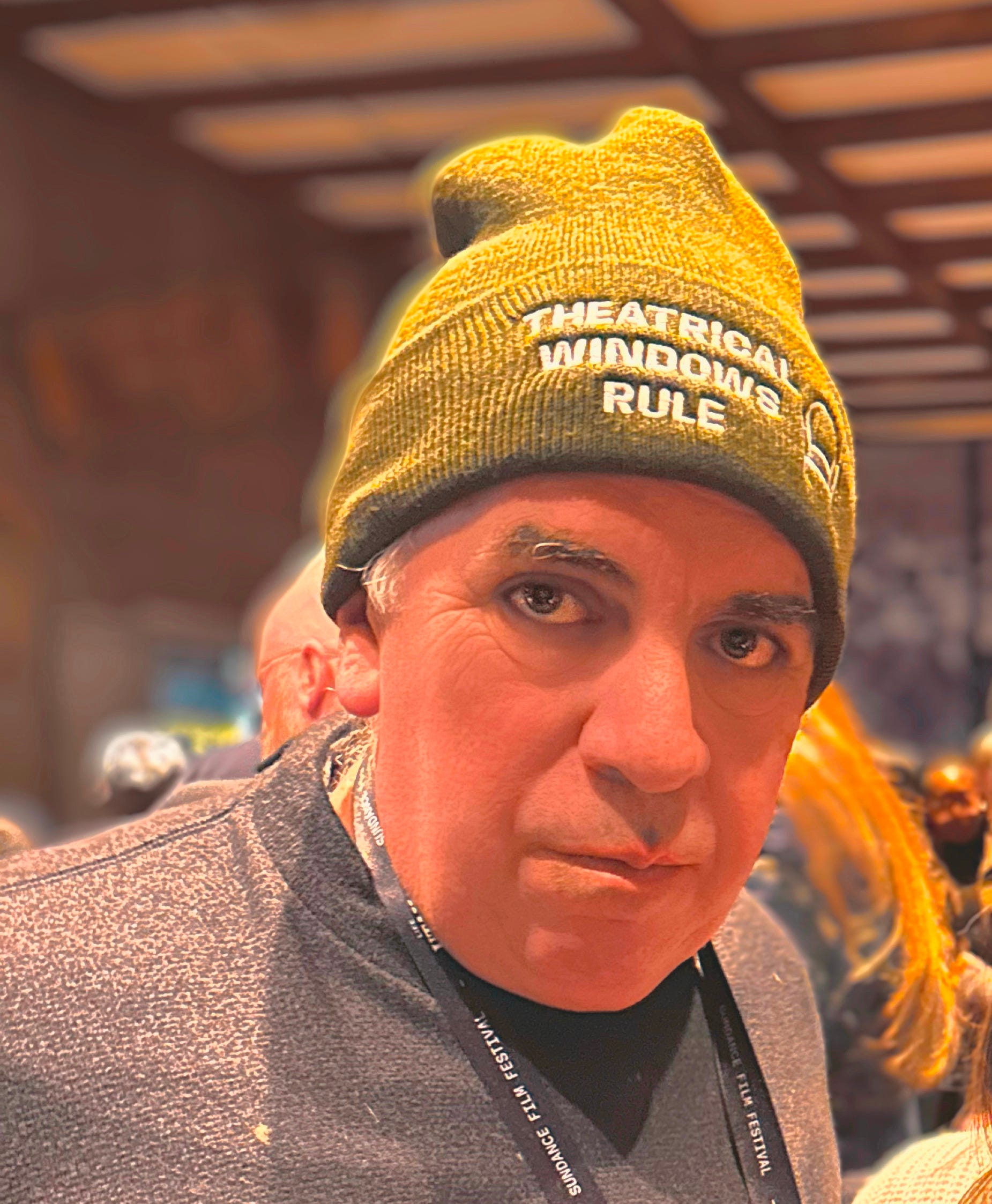
Spreading the word that THEATRICAL WINDOWS RULE was a great conversation starter but the number of filmmakers we chatted with who didn't know what a theatrical window was gave us pause. Now, together with Pink Amongst Men, we’re on a mission to shout it from the rooftops everywhere and invite you to join us, grab your merch here!
Here are several reasons why every filmmaker should also care, and insist on a theatrical window as part of their distribution plan. (Thanks to Ted Hope who included us in his NonDē Dangerous Ideas Programming at Slamdance and SXSW for including our Activate Your Art House panel as our launching pad.) Keep reading for Part 1 of AHC’s Best Practices for indie filmmakers when booking at an art house.
What’s a theatrical window?
The exclusive the period of time when a movie is only available to watch in theaters. In the last several years, this window has shrunk from 95 days, to an average of 45 days or less, as studios opt to platform their films on their own streaming platforms instead. An average for indies - if you get one - is 17-45 days. The good news for indie films is, you don’t have to subscribe to the studio formula: release in select cities (that don’t just include major markets), play one night only engagements, get creative with Q&A’s and additional materials…embrace that big screen energy.
Creative:
Your creative choices - from cinematography to FX to production and sound design - were most likely designed for a large screen format.
Experiential:
Audiences will experience your film differently - on a big screen, and with other people - it just hits differently (but you all know this.)
Audience:
Theatrical screenings (just like film festivals, and especially at art houses) allow you to connect directly with, and build, your fan base - as well as meet cinema programmers. Also, respondents from AHC’s2025 National Audience Survey say the top reason they love going to their art house is “more films outside the mainstream.”
Marketing:
A theatrical window creates exclusivity, always an attractive marketing tactic (clearly attractive to audiences) and keeps it in the zeitgest longer(word of mouth remains the strongest form of movie marketing there is.)
Cultural:
A theatrical release still signifies a sense of legitimacy for your film for both audiences, critics and the industry (see zeitgeist.)
Financial:
A theatrical window also supports downstream revenue via subsequent channels of distribution including video on demand, physical media and other ancillary rights.
Are you convinced yet? Theatrical windows benefit your film, your career and entire independent cinema ecosystem at large.

Now here are some of AHC’s best practices should you be contacted by, or decide, to book your film in theaters.
While these are best practices for working with independent exhibitors, you should be aware ahead of time that there is no guarantee your film will be a good fit for any particular theater or that they will be able to screen it in the time frame you are interested in and/or asking for.
In general, be open to flexible scheduling and negotiations around fees. Every independent exhibitor has different budgetary constraints, and in general, they are not out to lowball you. Their only goal is getting your film in front of their audience with terms that are fair to both the filmmaker and the exhibitor.
Most exhibitors who reach out will be interested in one or two screenings.
Typically, a film without distribution doesn’t come with the same level of marketing and awareness. By screening the film once or twice, the theater is able to leverage the “event” nature of the single screening to drive higher attendance and awareness. It also reduces risk for the theater and helps them remain in good standing with the film distributors to whom they owe consistent screenings of new releases.
If you are spearheading the outreach to theaters, be strategic in your own timing. Booking lead time varies across theaters - for both multiplexes and independent cinemas. Many independent theaters book 3 months out, and have quarterly and monthly print marketing deadlines to meet. Many of the larger chains will book your film at the last minute - this is not always helpful as there is very limited, if any, marketing lead time for your team. Fall is a notoriously crowded time for theaters with lots of awards-bait releases; and in awards-qualifying cities, many showtimes are taken up by four-walled screenings. Slower seasons tend to be August - mid-October and late March into early April.
Typical Screening Terms:
One-Off Screening: A single screening of a film title, with or without a Q&A and/or additional wrap-around components. A typical fee: $250 - $500 or box office split (some theaters will do a more favorable split if there is a filmmaker Q&A or other additional wrap-around components added to the screening).
Week-Long Run: A full run of a film title with 2-3 screenings a day for 7 days, with or without a Q&A. A typical fee: box office split ranging from 30/70 to 50/50 in the theater’s favor
Split Runs and Shows: When the theater programs at least one showing of the film per day over the course of the programming week (“splitting” screening times with another film or films). Shows are sporadic screenings of the film over the course of a programming week. These options give the programmer the most flexibility for maximizing the audience for the film title. A typical fee: box office split ranging from 30/70 to 50/50 in the theater’s favor
Four Wall: A filmmaker or distributor rents out a movie theater for a set period, pays all the advertising and operating costs, and keeps all the ticket revenue, instead of the usual arrangement where ticket sales are split with the theater (this is most often utilized for awards-qualifying runs).
Film File: The theater will expect a DCP with 5.1 or 7.1 sound (stereo is ok, it’s just not as powerful in the theater) that follows industry standard naming conventions. Some theaters may have the capability to play ProRes files. You should also be prepared to have caption files available, whether they are closed captions or open captions. If you have Audio Description available, make sure to highlight that in your communication with the theater.
Marketing Toolkit: Deliver this at the time of booking so that they have all materials on hand and it should include:
A poster (ideally one you can ship or a high resolution file that can be printed locally at your expense)
Social graphics sized for Instagram, Facebook, and Twitter/X with pre-written copy and hashtags
Key stills for the theater’s newsletter (recommend 4 stills to choose from)
A logline, key film details (runtime, format, cast/crew), festival awards and play, links to any reviews (including Letterboxd) with favorable pull quotes (ideally, include all of this in a Google doc or PDF where it is easy to copy/paste without incurring formatting issues)
A trailer 2 minutes or less.
Consider including additional social media assets (behind-the-scenes film stills, video clips from the creative team, etc.). The theater’s marketing team is often small and responsible for every marketing channel plus PR – the more you can provide in the way of assets and copy, the more the marketing teams will be able to leverage that as they advertise the film locally. Also understand that they have packed social media calendars, so not every asset may be utilized. When in doubt, invite them as a collaborator on a post; if they are able to accept, they will.
Be as timely as you can in your communications with the theaters. They are often working on tight deadlines as they slot in films among their first-run schedules.
Make sure your contact information is listed publicly - either on your film’s website, director or production company’s website, social media, etc. If they can’t find you, they can’t book you! The inability to make contact with the filmmaker is the number one reason exhibitors cannot book directly.
Many theaters employ an external consultant called a film booker who arranges the deal with you and decides on scheduling. Film bookers will book multiple theaters, so if you connect with one, make sure to ask if their other theaters would be interested in booking your film too.
It’s important to keep in mind that many independent exhibitors run much like an indie film does - on a shoestring budget and without a lot of staff. Sometimes the only marketing they can do on your behalf is a newsletter or social media story (with many films/day to promote), so a successful screening often relies on the film team’s hard push on marketing and PR.
Communications:
Be as timely as you can in your communications with the theaters. They are often working on tight deadlines as they slot in films among their first-run schedules.
Make sure your contact information is listed publicly - either on your film’s website, director or production company’s website, social media, etc. If they can’t find you, they can’t book you! The inability to make contact with the filmmaker is the number one reason exhibitors cannot book directly.
Many theaters employ an external consultant called a film booker who arranges the deal with you and decides on scheduling. Film bookers will book multiple theaters, so if you connect with one, make sure to ask if their other theaters would be interested in booking your film too.
Stay tuned for Part 2 of Best Practices including Filmmaker Involvement, Community Outreach, Box Office, Payment, plus our recap from CinemaCon 2026!
Art House Convergence (AHC) is a 501(c)3 arts service organization that connects, amplifies and advocates for mission-driven, community-focused independent cinemas and exhibitors within the film industry, and arts and cultural sector. We provide professional development, and capacity and network building for the independent exhibition workforce; and advocate for independent cinemas in the greater, and ever-changing, exhibition and film landscape.
No posts
Comments
Nothing yet. Say the first thing.
Sign in to join the conversation.