
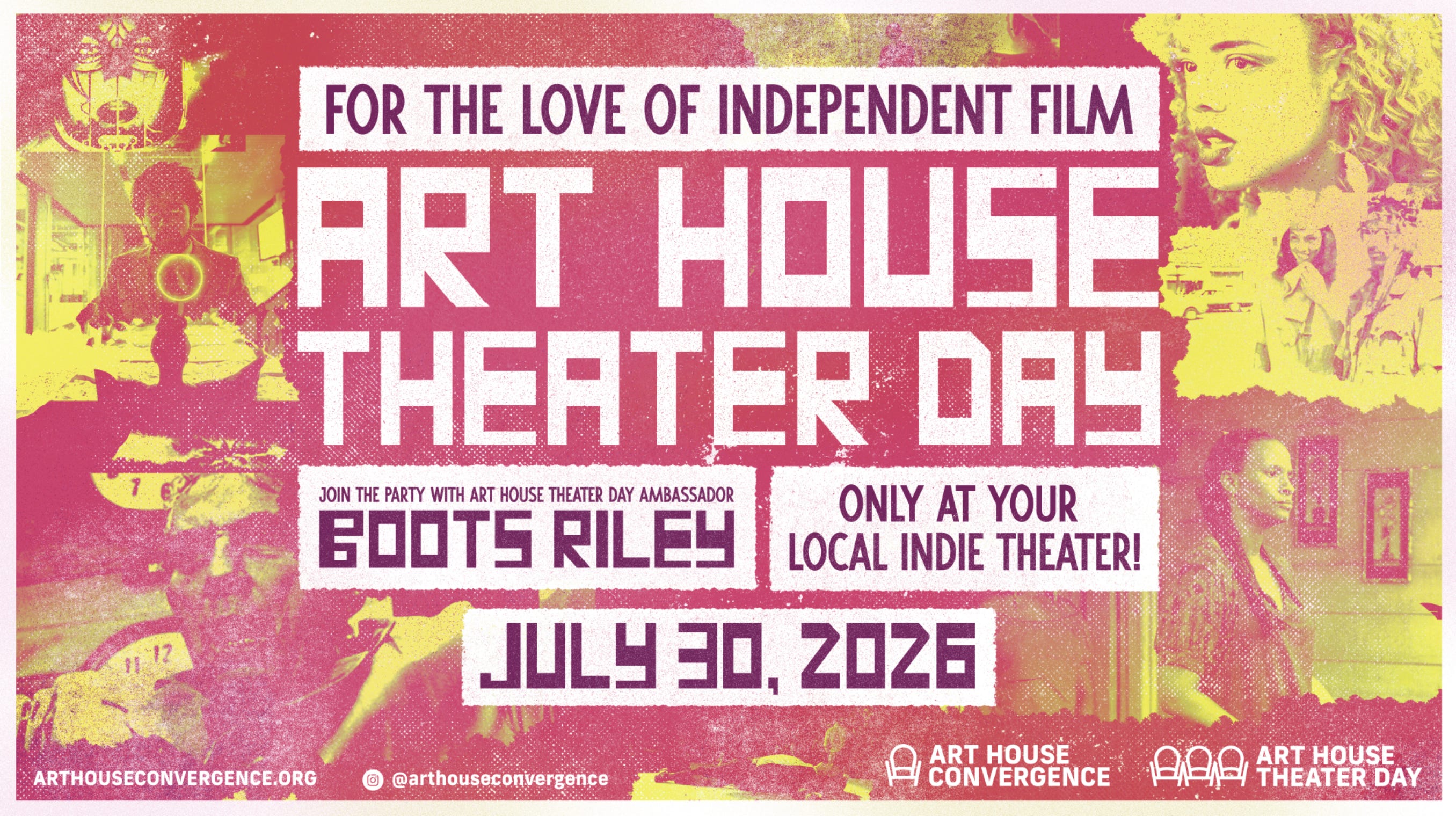
This week, we’re excited to spotlight two AHC members and the work they do at their respective theaters, and also debut the official 2026 Art House Theater Day artwork. Save the date: July 30th at an indie theater near you!
Marian Luntz, Curator of Film at Museum of Fine Arts, Houston
In conversation with AHC Program Manager Colton Campbell
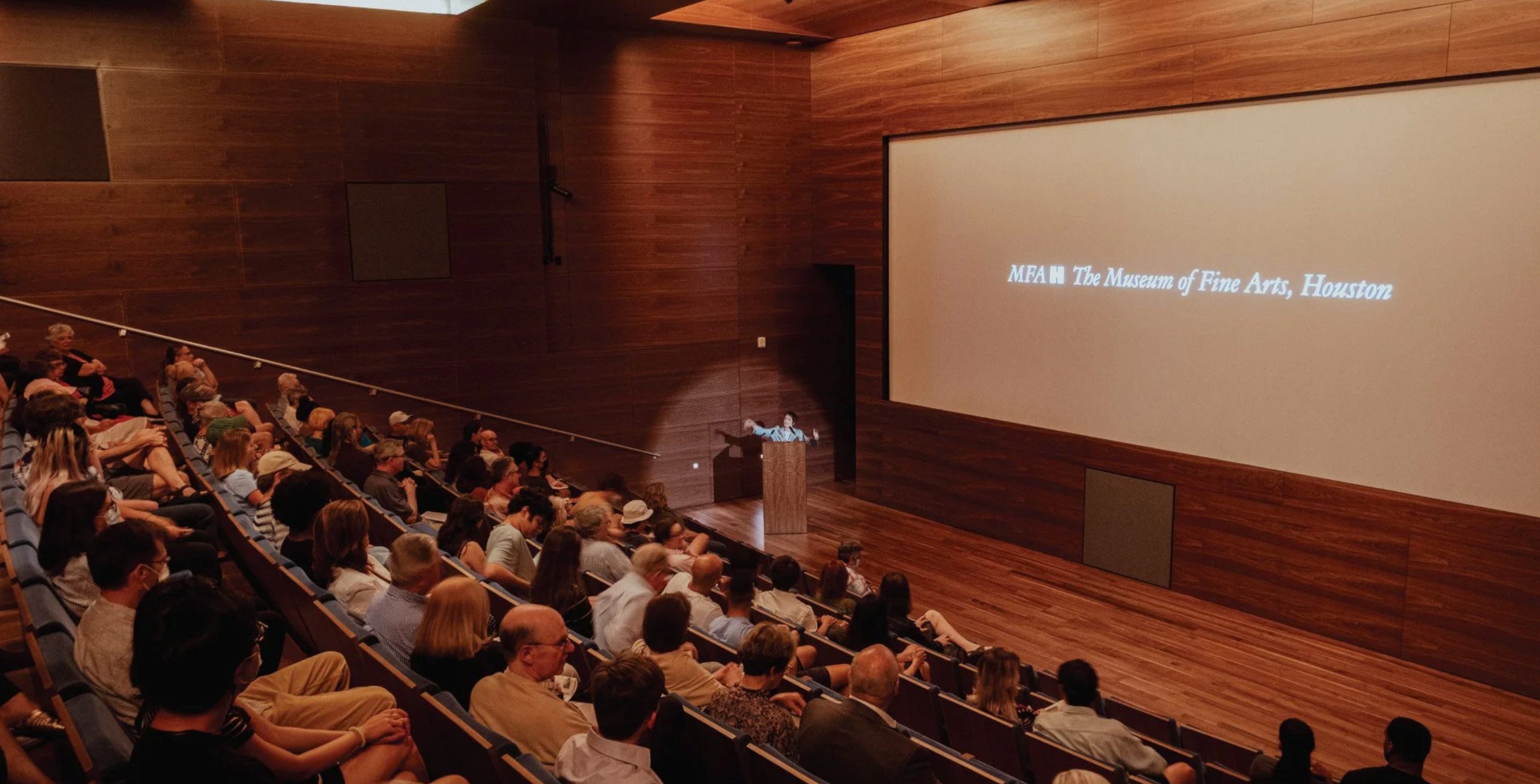
The Museum of Fine Arts Houston has celebrated cinema as an art form since 1939. The department of film and video exhibits and promotes the medium of film as a fine and popular art. To fulfill this mission, the department's primary goals are to introduce and/or expose the broadest possible audience to the genius of the moving image; to deliver state-of-the-art presentation; to respond to an evolving medium; to stimulate communication and/or dialogue through the shared experience of watching films and video on a big screen; and to inspire the next generation to value film and other screen arts
Marian Luntz, curator of film and video, has worked at MFAH since 1990. In a career focused on the world of independent film and media art, she previously held positions with Kino International, the American Film Institute, the American Federation for the Arts, and the Southwest Alternate Media Project (SWAMP).
How long have the film department and cinema been a regular part of the programming at the museum?
The Museum of Fine Arts, Houston is more than 100 years old. Our Archives reveals details of screenings dating back to the 1930s, using community theaters before we had a building! With the opening of our Mies van der rohe-designed Brown Auditorium (320 seats) in the 1970s, a commitment was made to showcasing the art of cinema by presenting films on a regular basis, with weekend arthouse programming continuing through the present. Our second venue, the Lynn Wyatt Theater (230 seats), opened in 2021. Both theaters are equipped with 35mm and DCP, with 16mm in the Brown, and are used for films, performances, lectures and public programs.
What are some of the unique characteristics of a museum cinema that may be different from operating a singular theater?
First, I want to mention that we embrace the acronym GLAM (galleries, libraries, archives and museums) for our niche in the exhibition community. In addition to new releases, restorations and annual festivals, our selections spotlight films on artists that often respond to our current exhibitions (right now including the hugely popular exhibition Frida: The Making of an Icon). We often collaborate with community organizations, making our venue available to draw their members for films of mutual interest. We don’t have concessions: I once saw another museum describe their films as being presented in a “pristine, popcorn-free environment” – that sums it up here. However, our café is an option, allowing filmgoers to enjoy a bite before a screening.
What do you hope for patrons to find when visiting MFAH for a film screening?
Our museum’s campus is a magnificent destination in the heart of Houston, spanning 14 acres with multiple buildings connected by artist-designed tunnels and a fantastic sculpture garden. We encourage filmgoers to allow time to also explore our galleries and exhibitions. We also hope they’ll join our loyalty program, Film Buffs, and return often.
Furthermore, what is a typical week in terms of number of film screenings?
We show films year-round on Friday-Sunday evenings, along with occasional matinees and Thursdays (the museum’s free general admission day). Most new releases and restorations are played at least twice on different days, and our festivals often include multiple screenings in a day. Currently we’re in the midst of our busy spring season including popular annual festivals Latin Wave: New Films from Latin America, Five Funny French Films and Jazz on Film.
How might other cinemas connect with MFAH on the Robert Frank Collection and what exactly can you share about it? I’d like the AHC community to know that we are the longtime distributor of films by Robert Frank (1924-2019), the Swiss-born photographer (The Americans) and filmmaker (Pull My Daisy, Cocksucker Blues and many more). He was a part of the New American Cinema movement and a denizen of New York’s downtown scene, even into his late years when passers-by might be greeted by Robert sunning himself outside his studio at Bleecker near Bowery. Frank’s filmography (we have 20 of his films available, made between 1959 – 2017, ranging from 4 – 90 minutes) reflects on his friendships with the Beats, filmmakers, artists and musicians, his family, and the second home he and artist wife June Leaf created in Nova Scotia, presented in a distinctive personal style. Our rental fees are user-friendly, with many titles available in new digital restorations created by MoMA. I’m glad to guide programmers through the collection and share personal favorites, and invite colleagues to contact me to request a copy of our forthcoming publication with newly-commissioned program notes on Frank’s films.
For more information on MFAH, their screening spaces, and the Robert Frank Collection, you can visit https://www.mfah.org/events/films. And don't forget to check out the MFAH Letterboxd list on AHC’s HQ!
Dara Messinger, Director of Programming, at Firehouse: DCTV’s Cinema for Documentary Film
In conversation with AHC Program Manager Colton Campbell
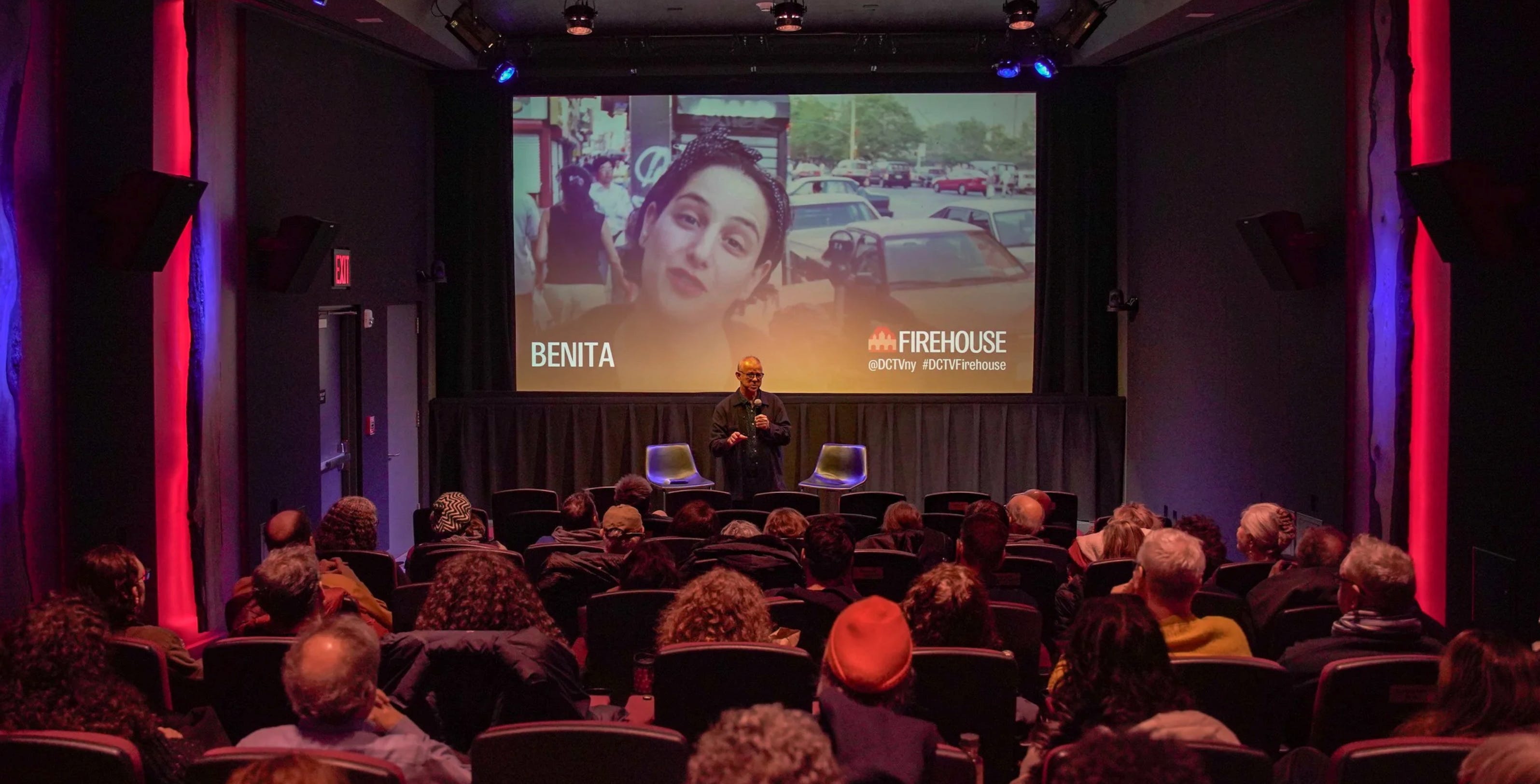
Firehouse: DCTV’s Cinema for Documentary Film opened in 2022 as a celebration of the 50th anniversary of DCTV. DCTV is a nonprofit media arts center in Manhattan founded in 1972. Firehouse Cinema operates as a year-round, 67-seat single screen cinema.
Dara Messinger is a filmmaker and programmer with 20+ years of experience in the documentary industry. As the longtime Director of Programming at DCTV in Chinatown, NYC, she has overseen the honored organization’s public programs. Her work as curator continues and deepens as she now programs its brand new Firehouse: DCTV’s Cinema for Documentary Film.
How does the mission of the Firehouse Cinema tie in with DCTV as a whole and how do both help build each other up?
DCTV is unique because it’s a multifaceted nonprofit media arts organization working at the intersection of education, production, and exhibition of documentary film – all under one roof – with the explicit goal of using filmmaking to catalyze, inform, and empower communities, from underserved New Yorkers to independent documentary filmmakers at large. Firehouse now helps to extend all this. It provides general audiences with a new cultural institution to visit and appreciate all different kinds of nonfiction films, and it provides filmmakers with an opportunity to get their work screened in NYC, and even qualify for the Oscars. We’re actively trying to remove the financial and cultural barriers that make documentary film inaccessible.
What is your hope for someone in the city or broader community to find when they visit Firehouse Cinema?
I want people to feel at ease, surprised, challenged, moved. I want them to feel like they’ve found one of the few authentic places left in NYC! And to know that they can keep coming back. Firehouse has so much to offer, as does DCTV with its various other services and resources. Membership is a great way to support all that we do while also getting some great benefits.
Do you have any exciting events upcoming in 2026 or any future news you’d like to share?
There’s a lot in the works. We’ll finally be sharing Debra Granik’s Conbody vs Everybody that’s been a decade in the making. She and her team have been a part of our community for so long, and it takes place on the LES, so it’ll really feel like a homecoming. We’ll also be having a Christine Choy retrospective that we’re really excited about. And we’re continuing to build out more curated series and developing new programs to support filmmakers directly. Stay tuned, it’s going to be a great year.
To you personally or your organization as a whole, what makes documentary films necessary to see on the big screen and why do you believe this screening space to be important to the city?
We opened Firehouse right as public life was finding its footing again after COVID – that moment where things were returning to “normal” but everyone knew it was a new kind of normal. People were hungry to gather again, to sit together in the dark and share an experience. Documentary film in particular asks something of its audience – it invites you to reckon with the real world, together. So many of our screenings are also followed by conversations with exceptional artists, scholars, cultural workers, and those convos spill over into the lobby over drinks. A space like Firehouse makes this all possible in a way that a screen at home simply can’t replicate. We’re also screening a lot of work that isn’t available to see elsewhere. That makes what we do feel even more special.
To learn more about Firehouse: DCTV’s Cinema for Documentary Film, check out their site at www.dctvny.org/s/firehousecinema. And check out some of Dara’s recently screened favorites on our Letterboxd.
Art House Convergence (AHC) is a 501(c)3 arts service organization that connects, amplifies and advocates for mission-driven, community-focused independent cinemas and exhibitors within the film industry, and arts and cultural sector. We provide professional development, and capacity and network building for the independent exhibition workforce; and advocate for independent cinemas in the greater, and ever-changing, exhibition and film landscape. Copyright, Art House Convergence 2026
No posts
Comments
Nothing yet. Say the first thing.
Sign in to join the conversation.