
Since 2020, my best friend, Katerina, has worked to keep a San Francisco independent bookstore not just afloat, but flourishing. Just over a year ago, she took on the task of sole-ownership and opened Noe Valley Books.1
Katerina knows books, and always surprises me with wonderful finds. Over the holidays this past year, she gave me The Art Lover’s Sticker Book.
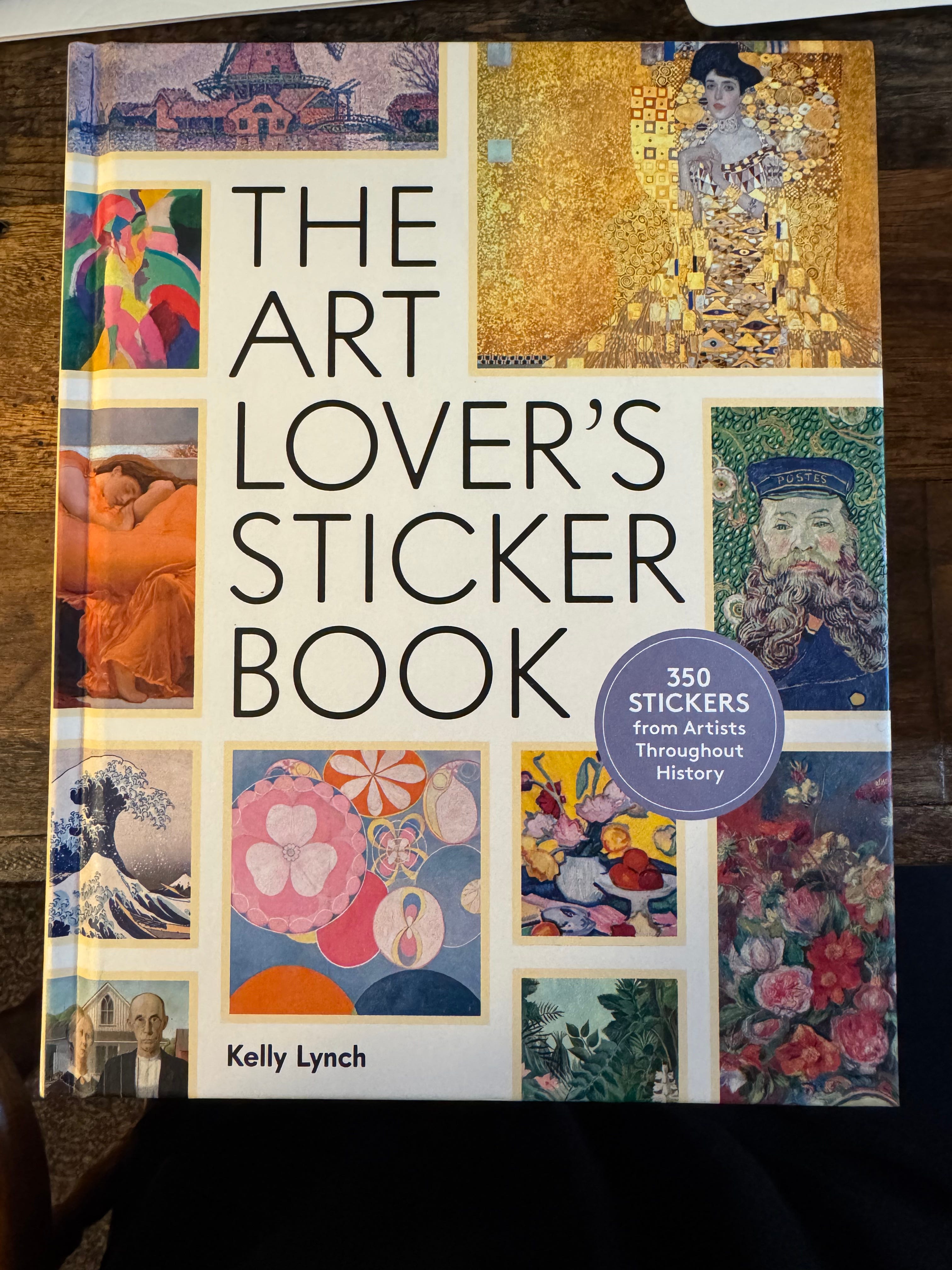
This book, thoughtfully designed by Kelly Lynch, contains matte stickers perfect for “master studies.”2 And, because there are so many stickers included, it also takes the pressure off any individual attempt. In short: though it’s not marketed this way, the book is a great resource for learning in a fun, low-key way, and a vehicle for adding another dimension to a regular art practice.
I also quickly saw a secondary use for the book itself, once emptied of stickers. It’s designed to have beautiful interleaved pages between sections, and it’s hardcover. As I slowly take out and use all the stickers, I am covering over the elements that made it The Art Lover’s Sticker Book with scraps of watercolor and drawing paper. In this way, it will transform into a kind of art journal—a place for writing, reflecting, drawing. It will have a second life.
I’m a self-taught artist, and have learned so much from attempting to remake other artists’ work—not to take credit for it, but to see, in however much detail I have time for, some of what the original work took to make.
There are lots of ways to add this activity into your practice, and I detail four low-stakes methods below.
One of my favorite ways to learn from the work of artists I love as a time-strapped parent, is to look through art books or photos of artists’ work, and then to focus on a detail of interest and, rather than trying to replicate the full work, only doing so with that more limited area. This can be a great way to see how artists create atmosphere.
Another way is using gallery cards or other small prints of artworks. This is an especially approachable method if you’re afraid to attempt a master study freehand, though not as limiting and rigid as making a full tracing.
With a gallery card in hand (or a printed copy of the artwork), first take a piece of tracing paper and draw out the main areas of shadow in the image. For this initial step, I like to use something that doesn’t press into the paper, like a marker.
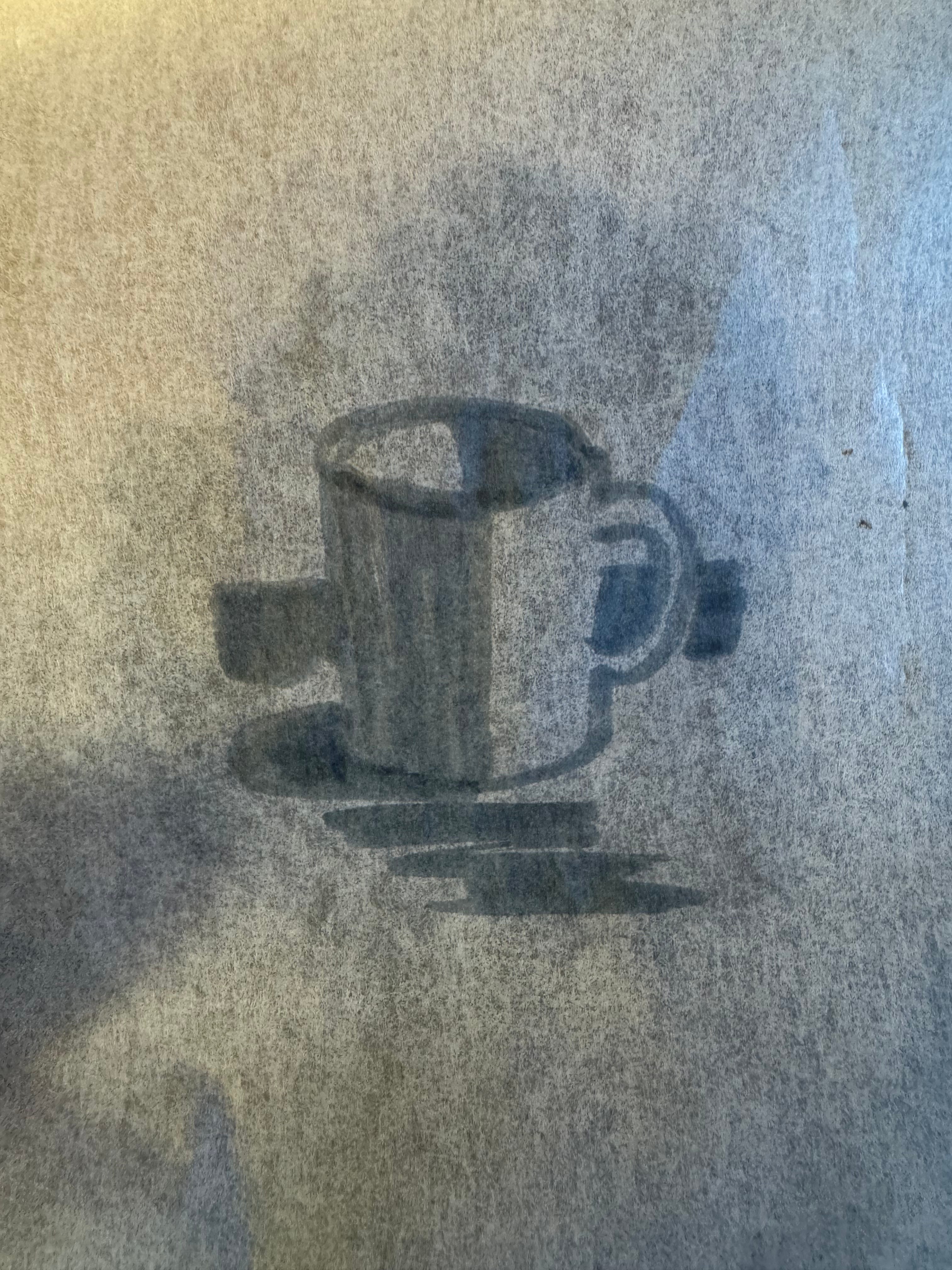
Next, take your tracing paper off the print and turn it over so that your simple sketch is facing away from you. On the backside of your sketch, use charcoal to lay down a uniform layer of black. (A very soft pencil also works for this.)
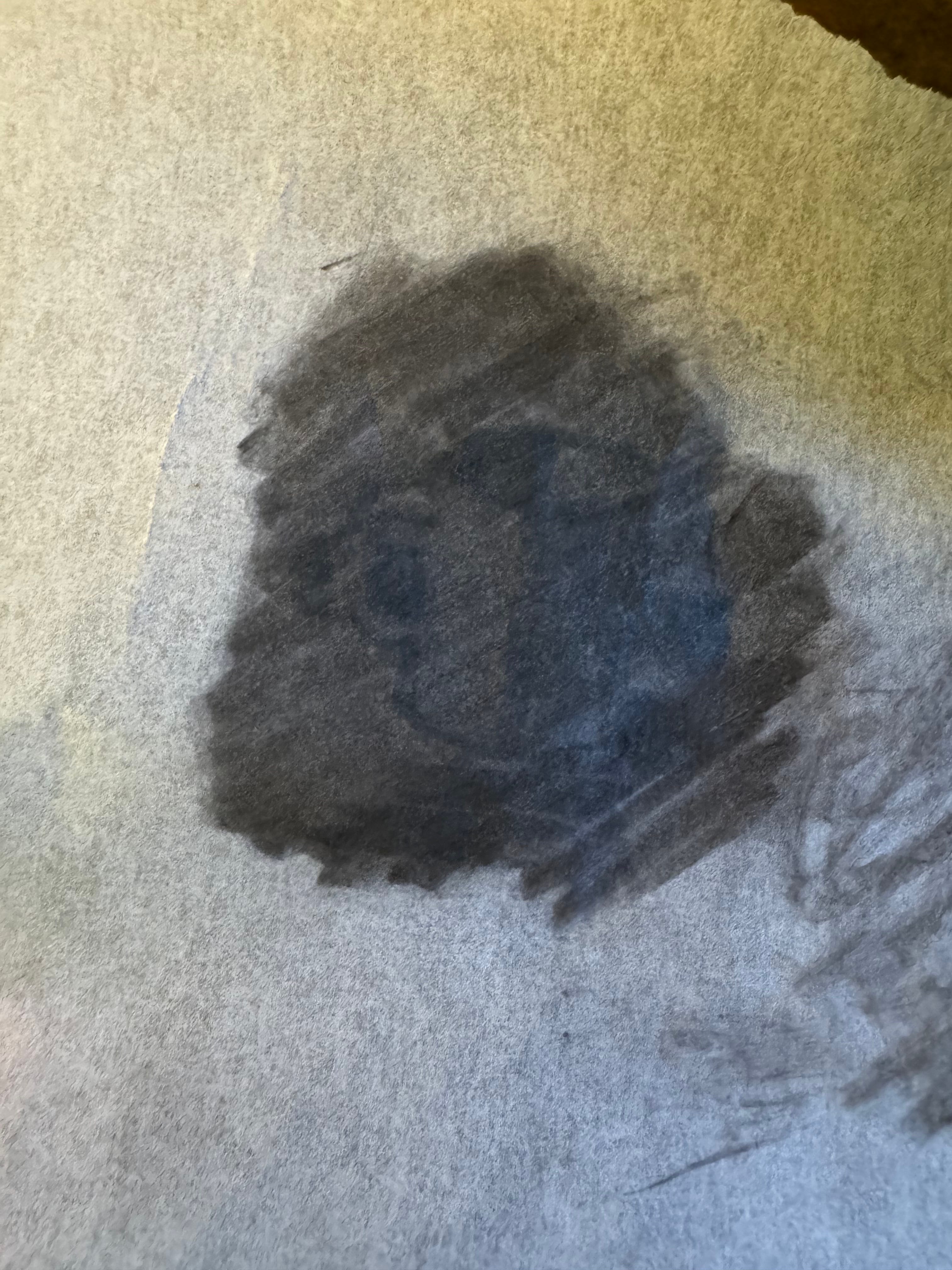
After that, lay the tracing paper, with the charcoal-side down, on your drawing or painting surface. Then, using a pointed implement (I used a red pencil), trace your tracing, pressing firmly enough that the drawing transfers.
Then, paint or draw in however much more detail you would like, using the image transfer as a guide.
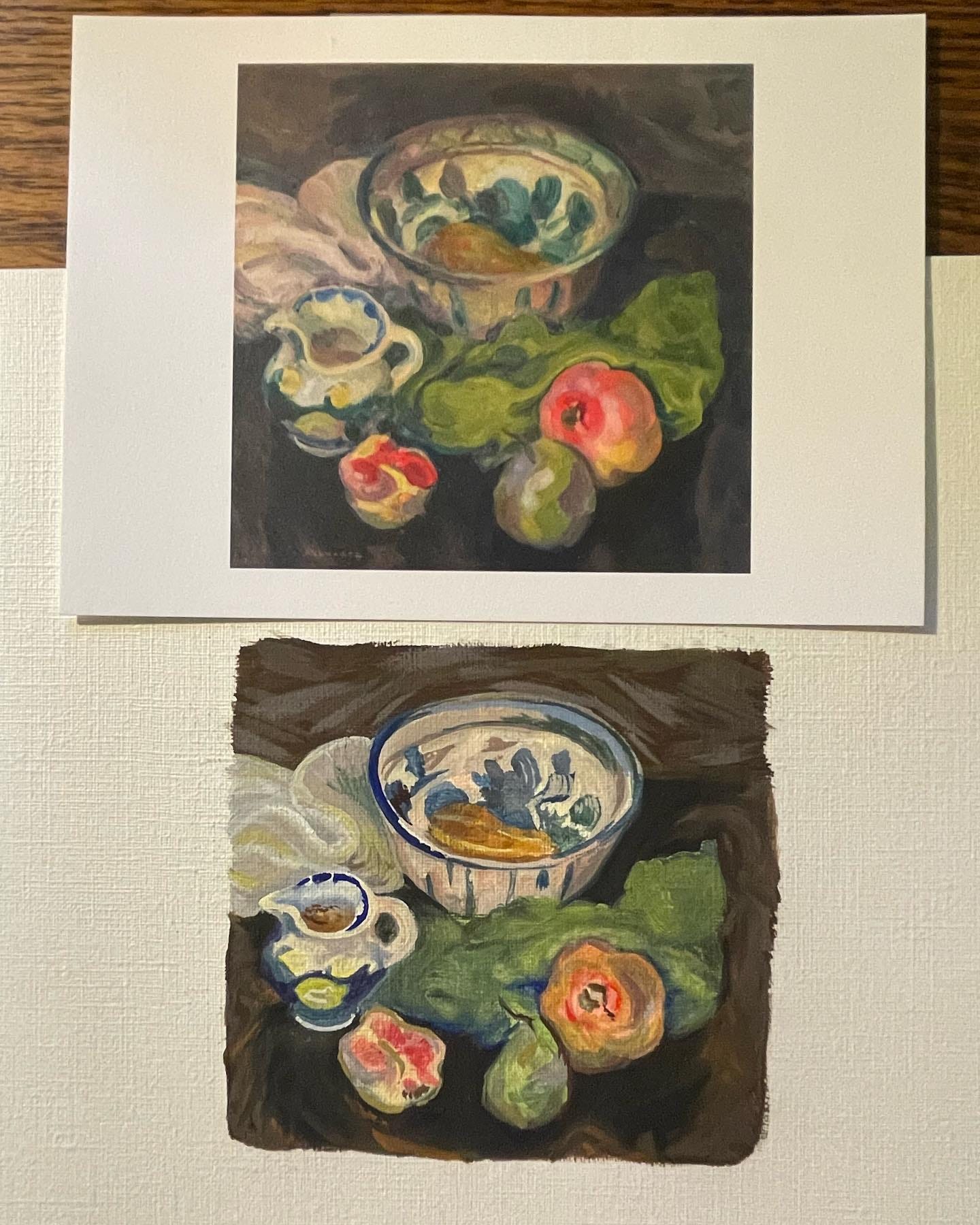
Here is a painting I did, using this method, of Mabel Alvarez’s Still Life (1916-1917). She made her painting (top) using oil on canvas. I used gouache (bottom).
A third way is to make impressionistic copies, only depicting one element, such as value (dark, mid and light tones) or shape. Below are some ways I did this, working from William Wendt’s paintings. If you want to study value, it helps to take a picture with your phone and convert the image to black and white. If you’re working with shape, squint or take your glasses off when looking at the original.
Lastly, you can make a freehand copy, as I do with the stickers.
For any of these methods, you do not need to render a perfect copy to make the exercise worthwhile. You will learn so much, even if you just mimic one thing (color, line, compositional elements, etc.).
Support Katerina and Noe Valley Books by ordering on their website, dropping by if you’re in San Francisco, or ordering through Bookshop.org, using the store’s affiliate link.
A master study is an attempt made by an artist to reproduce (in some capacity) another artist’s work, not to claim the work as their own, but to learn everything they can from said work. I put this term in quotation marks because who is a “master” is best determined by each individual artist, looking to learn. This is because we find the ways that we want to make things by learning from people whose work we love. These people might not be canonical artists. Find your sources of inspiration. (I keep a running list of mine! It’s hard to remember, otherwise.)
Comments
Nothing yet. Say the first thing.
Sign in to join the conversation.