
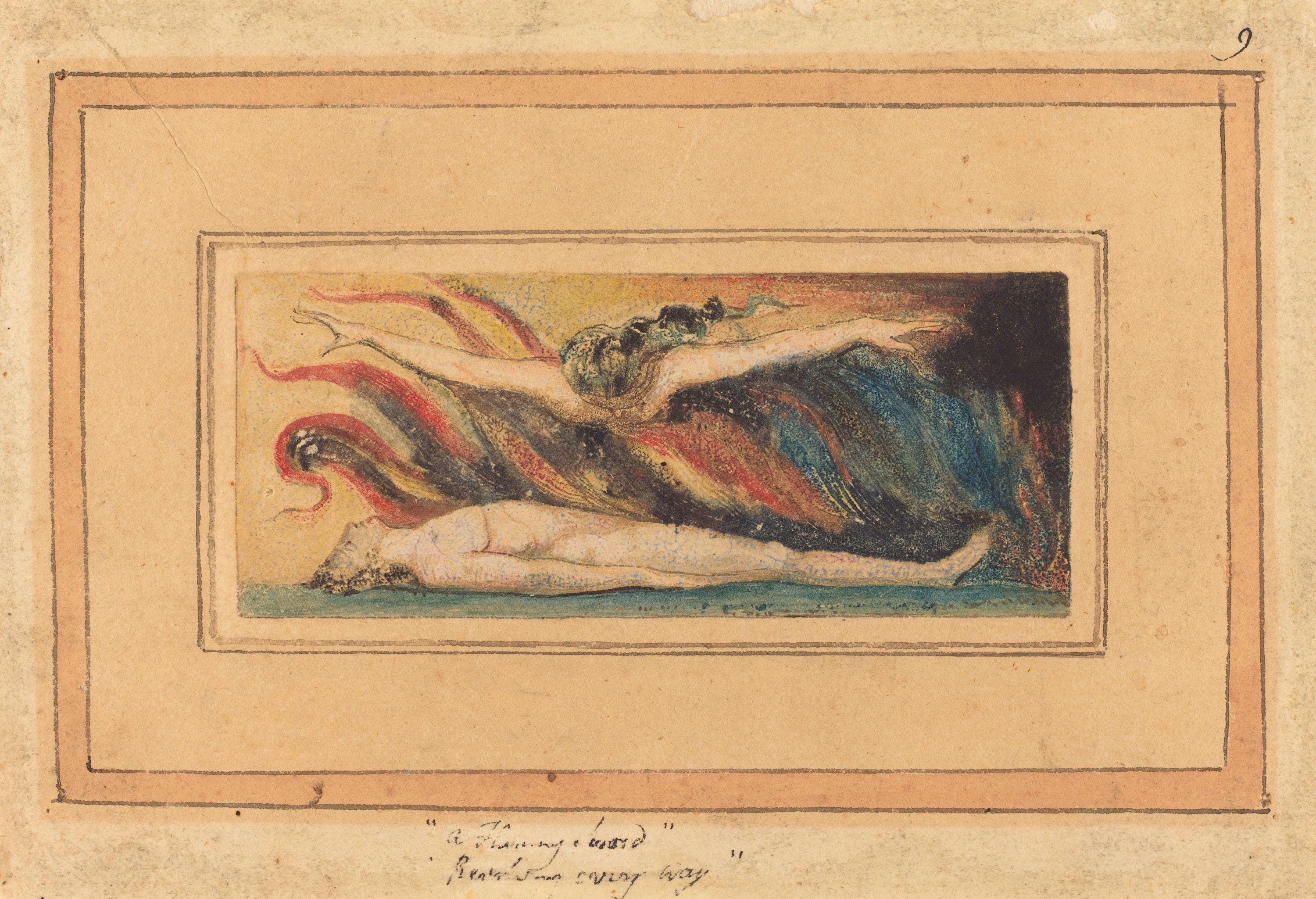
During my childhood, I believed I would be taken up to Heaven after my life ended and, there, folded into a new phase of being and belonging alongside family members and friends. What we would do in the after was pretty vague, and this was worrisome, given that we would be there for all eternity—forever and ever, amen—but at least I knew where I was going.
When people in my church spoke about Heaven, they mostly spoke about it as an achievement: the place you went if you had managed to avoid Hell. Its material qualities and “benefits” were also often emphasized—the streets of gold, houses given to believers, the granting of new bodies, and the presence of always bountiful food.
As I got older, this picture seemed very specific to my Baptist community, and to the wider strand of Christianity that links earthly wealth with God’s blessing. (Though this view is quite obviously antithetical to Jesus’s own teachings.)
Since leaving the religion I grew up in, about 15 years ago, I’ve often felt an intense fear of my own death. Where would I go, on that final day, after that final breath? This fear strikes when my kids are sick, or when I’ve been woken up in the middle of the night. There, in the midst of metaphorical or literal darkness, I slide into the old anxiety: no matter when I die, if it’s tomorrow or fifty years from now, I will never have done everything I wanted to do.
And I hate to leave a thing unfinished.
•
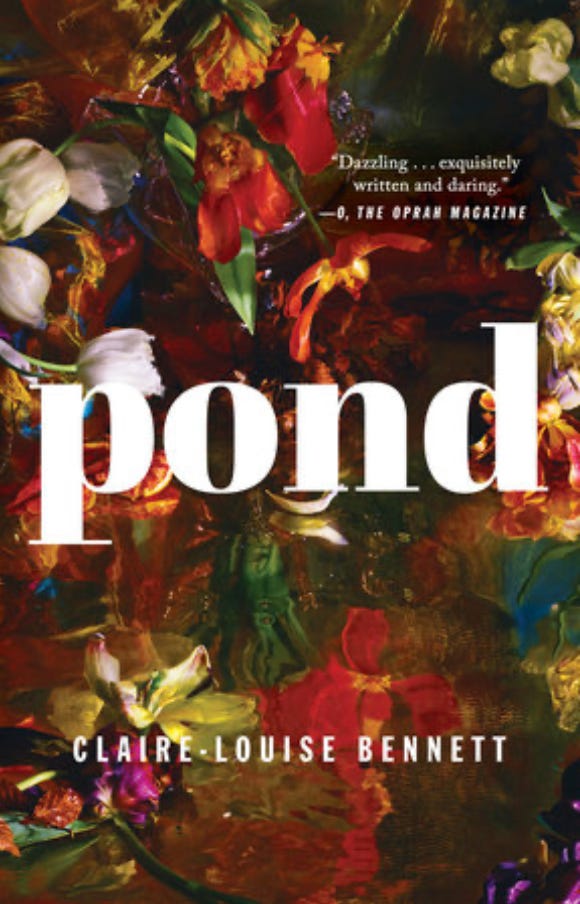
Recently, my mind quite suddenly shifted on all this. I had been reading Claire-Louise Bennett’s 2015 book, Pond, and delighting in the way her descriptions slowed me down enough to consider the best place for a bowl of whole fruits, and the prospect of what it would do to my life to live in a home with slate windowsills, cool to the touch.
The book has no discernible plot. It is about living in the world alongside others, and the frustrations and joys this living can bring, especially to an absorbingly observant person.
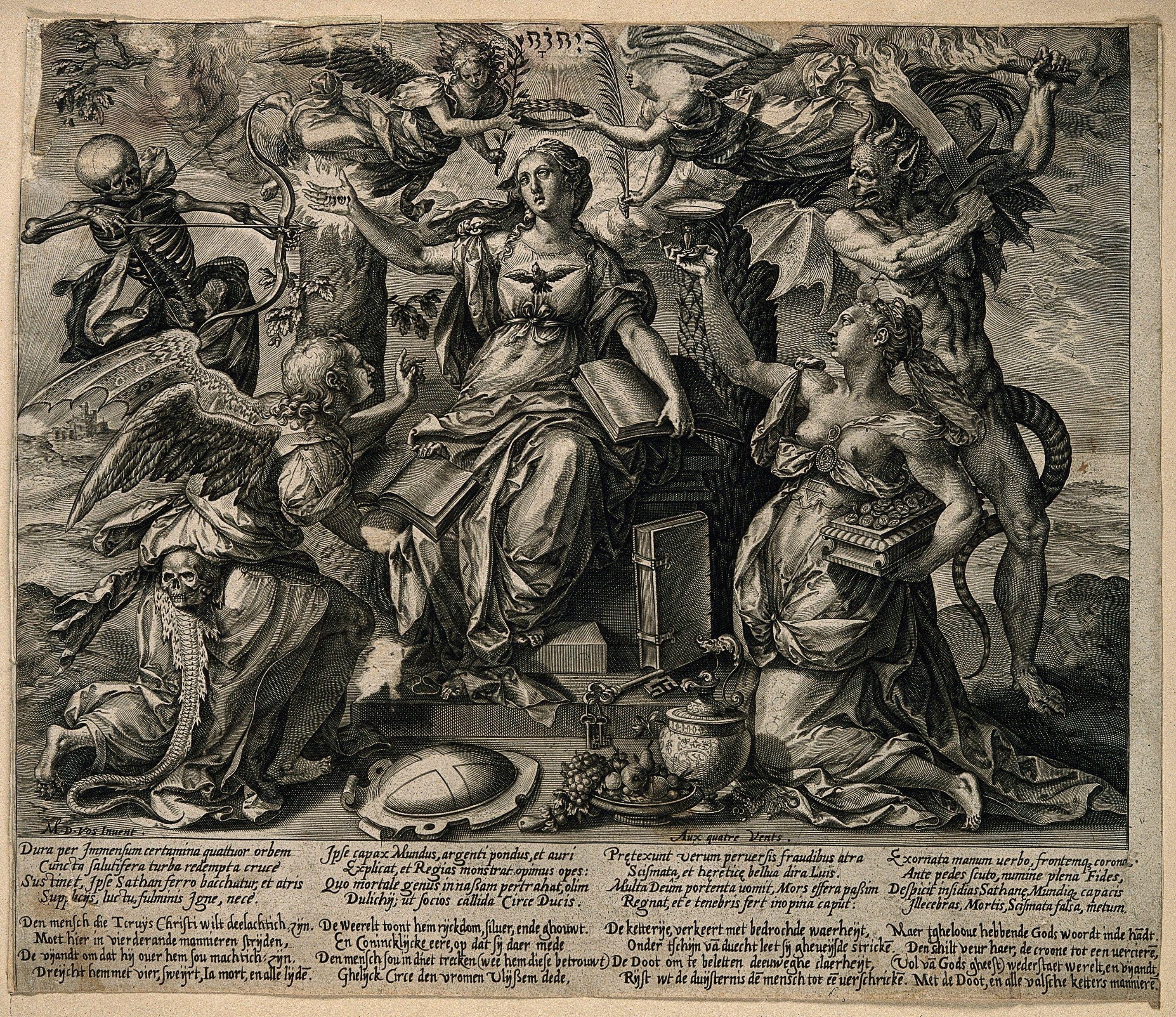
In the way that reading literature can tend to affect, I found myself unexpectedly changed by my experiences alongside the protagonist. One afternoon, while not reading, or even consciously thinking about what I had read, I realized that my vision of death was still tainted by the old connection between security and productivity, or monetary wealth and that, if I thought about my life using a different metric, I was already prepared to die, and no longer beleaguered like the “faithful” person at the center of the engraving below.
Instead of tabulating what I’d done (or not done), this other metric measured relational joys, sensations, and embodiment. Thirty-six years in a body surrounded by other bodies, able to push into discomfort and find a newness both in myself and outside, all this again and again—that’s a good life! Already.
The shift in my thinking is not permanent. I have to remind myself of it to spurn the death-anxiety. This really quite monumental change in my thinking wasn’t prompted by a religious encounter or conversion. It wasn’t handed to me when I expected to know something holy. It came to me through the experience of a really pretty profane book—a book about sex and sense and the feeling of leaning against a fence. In other words: a novel obsessed with the feeling of being alive.
•
Throughout my time in my comparative literature PhD program, I’ve often thought about the claims people make about books: that the very act of reading literature can be transformative; that books can help us to encounter “the other” (whoever or whatever that is, in each reader’s case); that we can travel without ever leaving home, or “live inside someone else’s skin.” As the world not so subtly falls apart, these claims have seemed, at times, to be merely the self-serving wishes of devoted book people. Will a novel about a queer kid really make a homophobic pastor question his ways? (Who would make his eyeballs track the words in the first place?) Can accounts of “humanity” — the stories that make a person, or a people, more relatable — stop wars?
Should we even expect this kind of power to emanate from language, whether spoken or written down?
I’m not sure yet, what happened while reading Bennett’s book. The experience, though, gave me a kind of name for the process I feel taking place when I read something that an author has clearly lived inside—it’s the difference between gimmicks and tricks, and a concept that someone has embodied. Bennett’s book is kind of messy in the way that a lot of literary fiction is—I wasn’t sure of the chronology. I was sure there wasn’t a traditional plot structure or “point.” I read these books because they make me come out of myself, not so I can go into someone or something else, but so that I can separate myself from my assumptions and predilections long enough to really observe.
I don’t think we have souls. But it does feel like this thing that reading does is to prompt a kind of suspended embodiment—a hovering, if you will. Awareness of this possible effect of reading might be part of why the affront of book bans feels so very egregious. What we’re losing is not just the stories themselves, but that chance to hover, however briefly, and see something clearly, maybe for the first time. ∆
Comments
Nothing yet. Say the first thing.
Sign in to join the conversation.