
It happens this way: I get to a point in a creative project and, feeling apprehension, stop pushing. Whatever aspect of the work caused the discomfort then stops evolving. I, the thing’s creator, have left off developing it because I felt uncomfortable and took that discomfort as a sign that I should stop.
But this is the exact opposite of what I should have done. That discomfort, rather than being the sign that many of us interpret it to be—that we don’t belong, are obviously bad at this (whatever “this” is), or have created something that’s failing—is actually the one signal I know of that is capable of showing me I’m about to get somewhere. Maybe. It’s not a sign that “success” is definitely coming, but that I’ve gotten the work far enough that something really interesting might be about to happen.
This means that a finished piece is one in which I know I reached that icky, uncomfortable place and one in which I know I took the risk and kept going past that point.
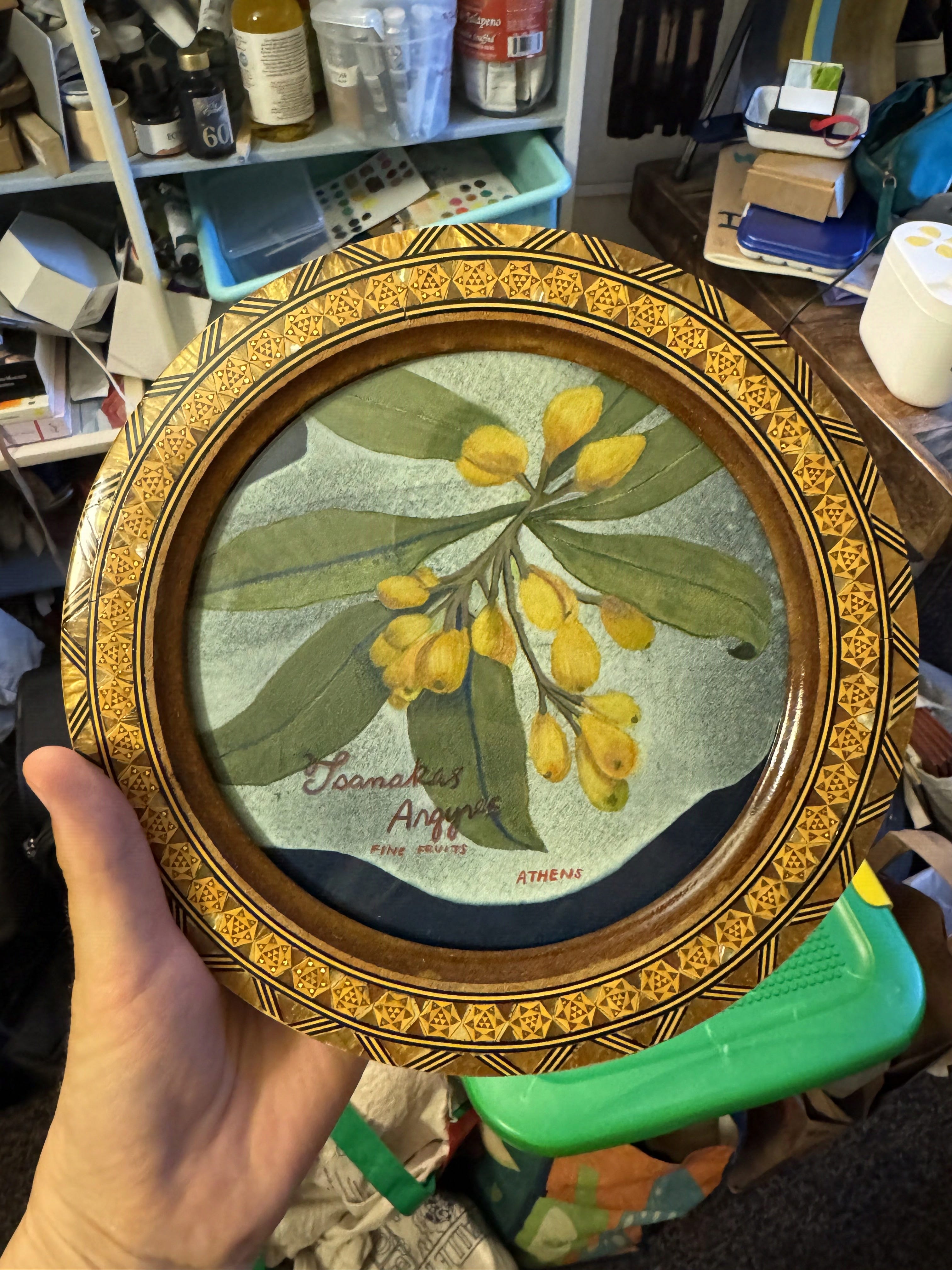
I made the above painting, which I ended up being very happy with, for my best friend’s birthday. Though I started working on it months in advance of her big day, I delivered it to her more than three months late because I got so caught up in unhelpful cycles along the way.
At several points, I knew I didn’t like how it was going, but I was afraid to try to reverse course and get it moving in a direction I could feel better about.
I also experienced the opposite: When it was going well, I became afraid to touch it, worried I would ruin it.
The piece is made up in layers — cyanotype using temporary, hand-made collage; paint; colored pencil — and with each layer I thought it was over, I’d ruined it.
Finding and buying the perfect vintage frame (from MossyMine on Etsy) let me finally stop waffling about what step to take next.
The frame came in the mail and gave me the courage to cut the shit out of the original work—it started out as 9” x 12”—which in turn allowed me to focus my attention on what I wanted to shine in the piece.
It had to be the fruit! I made the painting for her because she and her Yia Yia had loved to eat loquats together. I wanted it to look like a vintage fruit poster, with personal, familial touches just for her.
Anyway, the point of this story is that feeling the doubts—both about continuing a piece that already feels like it’s failing and about messing up a piece that’s succeeding—is an inevitable part of creative work. Getting caught up in them, though, is not.
One of the things I’m working on in my creative processes right now is getting comfortable with these doubts as unavoidable, and - hopefully! - learning to see them as the signal they sometimes are, that I’m about to do the brave and necessary thing of sticking with my work, of seeing it through.
Doing this — sticking with a project until the end (as defined above: through the places of difficulty) — feels risky. To get into this more deeply, and help myself navigate this part of creative life, I did a little research into risk as a concept, and reflected on what taking these risks can look like.
What even is risk?
“In non-technical contexts, the word ‘risk’ refers, often rather vaguely, to situations in which it is possible but not certain that some undesirable event will occur.”
— The Stanford Encyclopedia of Philosophy, “Risk”
In addition to this definition from the Stanford Encyclopedia of Philosophy, there are lots of technical meanings that have adhered to the word as the result of study and use, but the non-specialized version is well-suited to how I’ve been thinking about risk and how most people use the word.
The concept of risk is intimately linked to the unknown, to uncertainty. To risk something is to give oneself over to the possibility of an “undesirable” outcome. But! It is often also to admit the possibility of a desirable one. It’s the old quandary: In trying something, there is always the possibility of not getting to the place where you want to be. But if we don’t try, we also don’t give ourselves the chance to (eventually, maybe) have the effort pay off in some way.
What is risky to you may not be risky to me
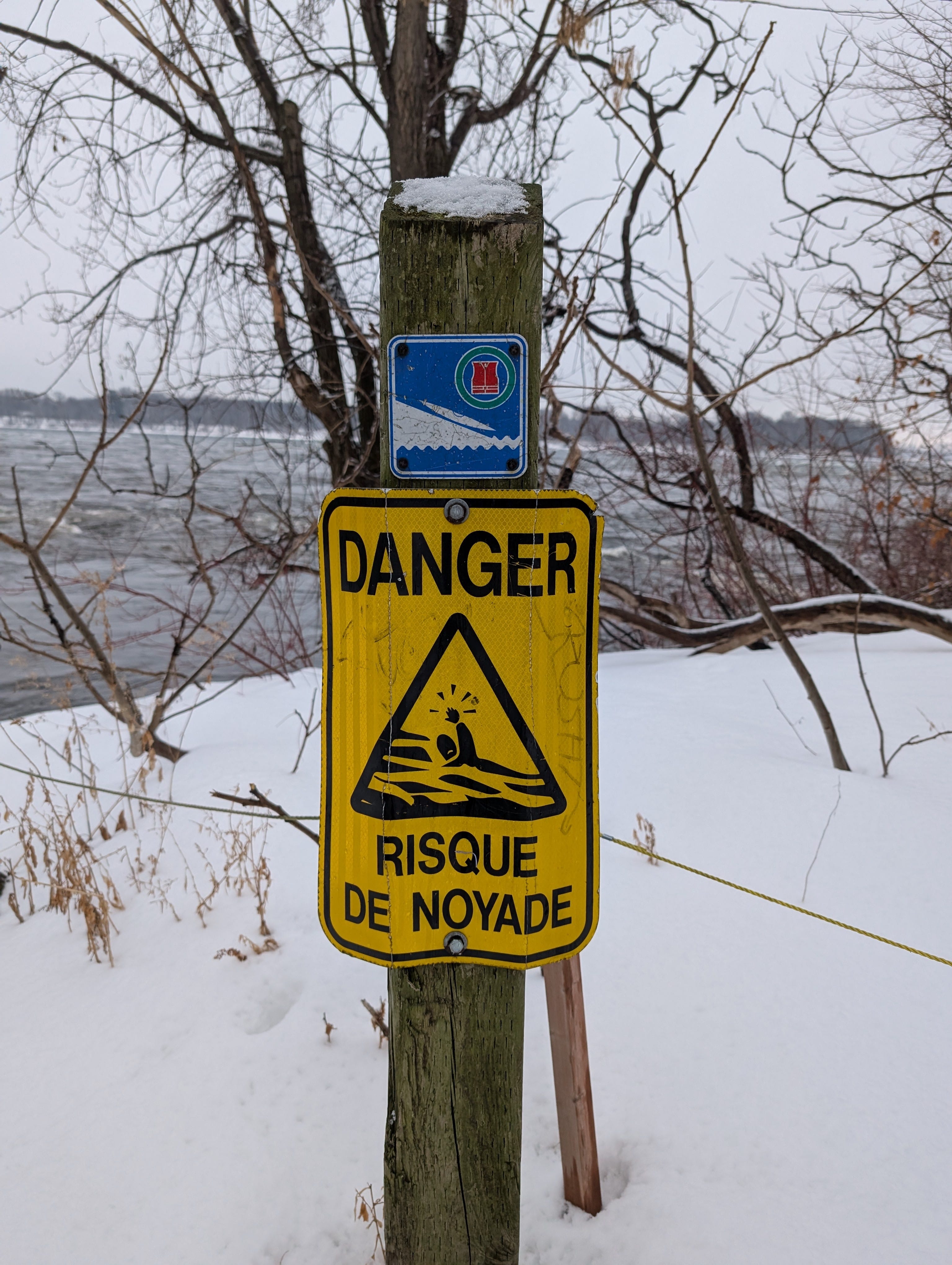
To learn to take risks in my own work, I had to think about what those risks might look like. (How can you stop avoiding something you don’t recognize?) What feels like a risk depends on the would-be risk-taker’s abilities, experiences, and beliefs. If I know how to swim, submerging myself in water becomes much less of a threat to my survival. What constitutes risk is also dependent on the social setting. A risky driving maneuver in one society may not be so dangerous in another.
In other words, knowing what is risky for you means understanding a bit about your abilities and about the social setting(s) of your work.
Some strategies
1. Push through what remains unknown
For writing, and I think visual arts, too, the teacher and author Brandon Taylor’s advice is invaluable. (I hope he turns his Substack pieces into a book.) In a recent essay, Taylor wrote about risk this way:
I sometimes find that people stop their scenes before the important thing happens because they do not know how to write it. You should write it. Write the hard thing. Blow up your scene. Write the thing that derails all of your plans. If you think you know how a scene will go, write the version you don’t know. Force yourself out over the tightrope. That is where the writing is. That vertiginous feeling that you’re about to lose the thread. That is real writing. But more than anything, stay with your scene. Longer. Force yourself to endure. Do not be elliptical. Write the thing.
— Taylor, “Story Basics #3: Scenes” (emphases added)
What Taylor is remarking on is the tendency a lot of us have to avoid working out what really needs to happen in our stories because we doubt ourselves or some part of the process. His advice could be extrapolated out to any creative work though, because what he’s noting here is our squeamishness around risk. Because taking on the hard things is to chance getting them wrong. And sometimes the “hard thing” is just having unknowns in your work. You don’t have to “solve” the problem right away. Make the unknowns into knowns. Think through what it is that remains missing or unanswered and try filling that space a few different ways. (I love voice memos and walking outside for this.)
2. Try something that might fail
For many people, to try something that might fail probably means they should try something new. For me, it is the opposite. I am always trying new things creatively. This sounds like a good thing, and it definitely has its pluses, but it becomes problematic when I let this compulsion toward being a beginner keep me from going deep.
What would it mean to “go deep”? Starting a painting on a large, expensive canvas. Making the big change in my novel draft that means I will have to make lots of other, smaller changes, all of which might take the life out of the project. Or it might make the project. I won’t know until I brave it. Finishing my PhD. (This feels like a good place to circle back, briefly, to the point I made earlier. While it feels risky for me to finish my PhD, for others, I’m sure it would feel very risky not to. Risk is personal.)
3. Subvert expectations
Get to the place where you feel like you know where everything’s going, and then make a conscious decision to change course, away from the known outcome, at least as an experiment. It can create intrigue and interest for your audience, and for you, as you figure out next steps. (This goes back to Taylor, too, really. His Substack is so valuable. I hope you’ll read it!)
4. Choose to walk away from what makes you feel safe
Are you comfortable drawing in public? Or do you only work at home? If you’re a poet, are you terrified to read your work for an audience? What makes you feel safe? What feels scary? What would it mean to face your fears?
5. Challenge your reader or viewer
This might happen by choosing to do something you know will make a lot of readers or viewers uncomfortable. This does not just mean doing whatever you want in a work and, if people don’t get it, saying it was too “challenging.” (Ugh.) It means thinking about what the work needs, thinking about what you need to do, and doing it, even if people might be upset by it.
If the main idea of a story is the psychological experience of being trapped, what creative decisions can the writer make to cause the reader to also feel trapped? This isn’t a question you need to answer on your own. There are many writers who have sat with their subjects long enough to craft elongated experiences of tension for readers. I think of Emma Donoghue’s Room. This example is doubly good since Donoghue pulled off another very tricky choice: writing from a child’s perspective. Learn from other people who have taken a similar risk to the one you’d like to take.
A last note
The whole creative process will not (and could not!) be defined by risk. There are so many other things that should be cultivated and experienced as part of artistic work: joy, fear, exploration, play, sadness. It can be a place to move through everything you’re feeling, and the moments you’re not feeling anything.
What constitutes a risk to any one of us will change over time. For example, it used to feel risky to ask for and receive feedback on my writing. Now, after more than a decade honing my practice, it would feel risky to put something out into the world without it going through those reviews.
It also might feel off to think about risk within a creative (and some might feel frivolous) context when so many people are facing extreme risk on a daily basis right now, and we’re seeing our communities and livelihoods be destroyed. For me, these things make taking risks in my work more urgent, and affirm my practices as one way among many to deal with the horrors. Lots of artists have commented on the increased need for art in times like these. What does this all mean for what you want to make?
Are you also trying to take more risks in your work? Or is this something you actively avoid? Tell me in the comments! I love hearing from you.
Comments
Nothing yet. Say the first thing.
Sign in to join the conversation.