
Cultural elitism as a concept is having a bit of a rough time of late. Firstly there’s that word “elitism” which has so many negative connotations in modern parlance that to mention it will most likely just conjure up thoughts of privilege, wealth and inequality.
But that has nothing to do with Cultural Elitism.
Then there’s that “culture” bit. How do you define culture these days? Trends move so rapidly that they barely have time to bed in or trickle down. Everything is available all the time across multiple formats and primed for passive consumption.
This has everything to do with Cultural Elitism, and specifically why it appears to be losing its vigour.
In the 1990s, Condé Nast had a Cultural Literacy Test as part of their hiring process. If you applied for a job at Vogue Magazine, you’d be confronted by a vibrantly diverse list of cultural artifacts that you’d be expected to be aware of. This list was recently surfaced in a book called Empire of the Elite by Michael M Grynbaum.
It’s really important to note that this list is chock full of highbrow and lowbrow culture. Stuff that’s relevant to fashion, stuff that’s separate from it. Famous faces. Movies you should have watched. Designers you should know. 178 notable people, places, institutions, titles and cultural ephemera.
Grynbaum describes it as an “obstacle course” for candidates. A successful applicant would need conversationally navigate their way through everything from Pink Flamingos, Squeaky Fromme, Frank O’Hara, The White Album, Cy Twombly, The Connaught and Siegfried & Roy, all to get in within the orbit of Anna Wintour and that coveted job at Vogue.
And why not? Does it not make for a more interesting candidate, employee and colleague? One that can discuss both the merits of a martini at the Connaught, the poetry of Frank O’Hara or debate whether or not the dog turd that Divine eats in Pink Flamingos was real.
Literate, progressive and balanced – that is true cultural elitism.
To be well read, to be well watched, to be well browsed, to be well versed in any number of things that you find interesting, or that are objectively interesting to the culture at large. Highbrow or lowbrow, mainstream or underground, it doesn’t matter.
Condé Nast knew that to be well-everything’d should be aspirational, and they knew that it was as important to their hiring process as it was to their own employees.
Because how are you supposed to drive culture or even document or interact with it effectively if you don’t understand it – if you’re not in touch with it?
Arguably, the largest intellectual obstacle these days is that cultural exploration has become extremely passive. This has rather unfortunately led many “old-heads” to the conclusion that people are stupider these days.
The data tells us that fewer people are reading for pleasure. We’re told that attention spans are dwindling. We’re at the mercy of an algorithm that tells us what we like based on the narrow parameters of what we have previously watched or listened to. It’s a world of ruthless conformity. But as Daniel Keller, coiner of the term ‘sloptimism’ said, “culture doesn’t always look the way you want it to”.
This doesn’t make us stupid, but it can make us lazy.
To be culturally elite is not to be especially smart, it’s not about being able to deploy 50 dollar words or having watched a tonne of challenging European Cinema.
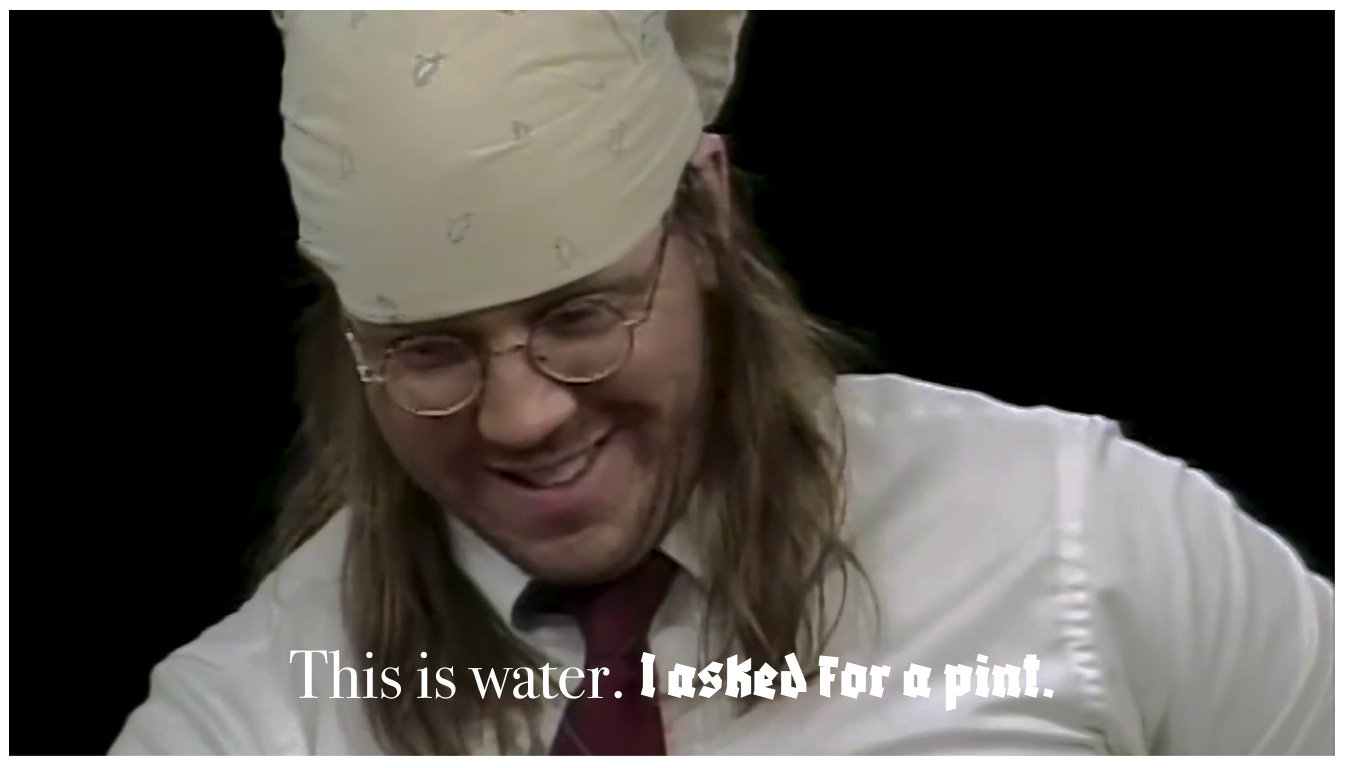
You could smugly soak up the approximately eight-hundred hours it takes to read Infinite Jest, and that doesn’t even come close to the 6,907 hours of Joe Rogan podcasts you could listen to. It doesn’t matter if one is more ‘worthy’ than the other.
David Foster Wallace and Joe Rogan can both teach us so much about culture. If you wanted an insight into contemporary masculinity, they are two incredibly important figures on both sides of the ego divide.
If you want to be a writer, you should probably still read The Great Gatsby. If you want to be a great writer you should probably watch some Love Island, listen to sports commentary, and read tweets from people you don’t agree with.
To be culturally elite is to be culturally progressive, culturally flexible, culturally optimistic and always ravenous for more.
It’s about sustaining the effort to seek out the new, and the nagging unquenchable need to stay in touch with what is moving, shaking, driving or even destroying the contemporary culture of our times. This is the challenging aspect of being culturally literate, and this is where the relevant definition of elite comes in.
The elite are the people that aspire for more. The culturally elite aspire to be “well-everything’d” in the past, the present and the future. As a premise, the Condé Nast list still holds up. But it’s way harder to be well everything’d now than it was in the 90s. If you aspire to enjoy a varied, eclectic and understanding of the cultural landscape, the parameters have changed significantly.
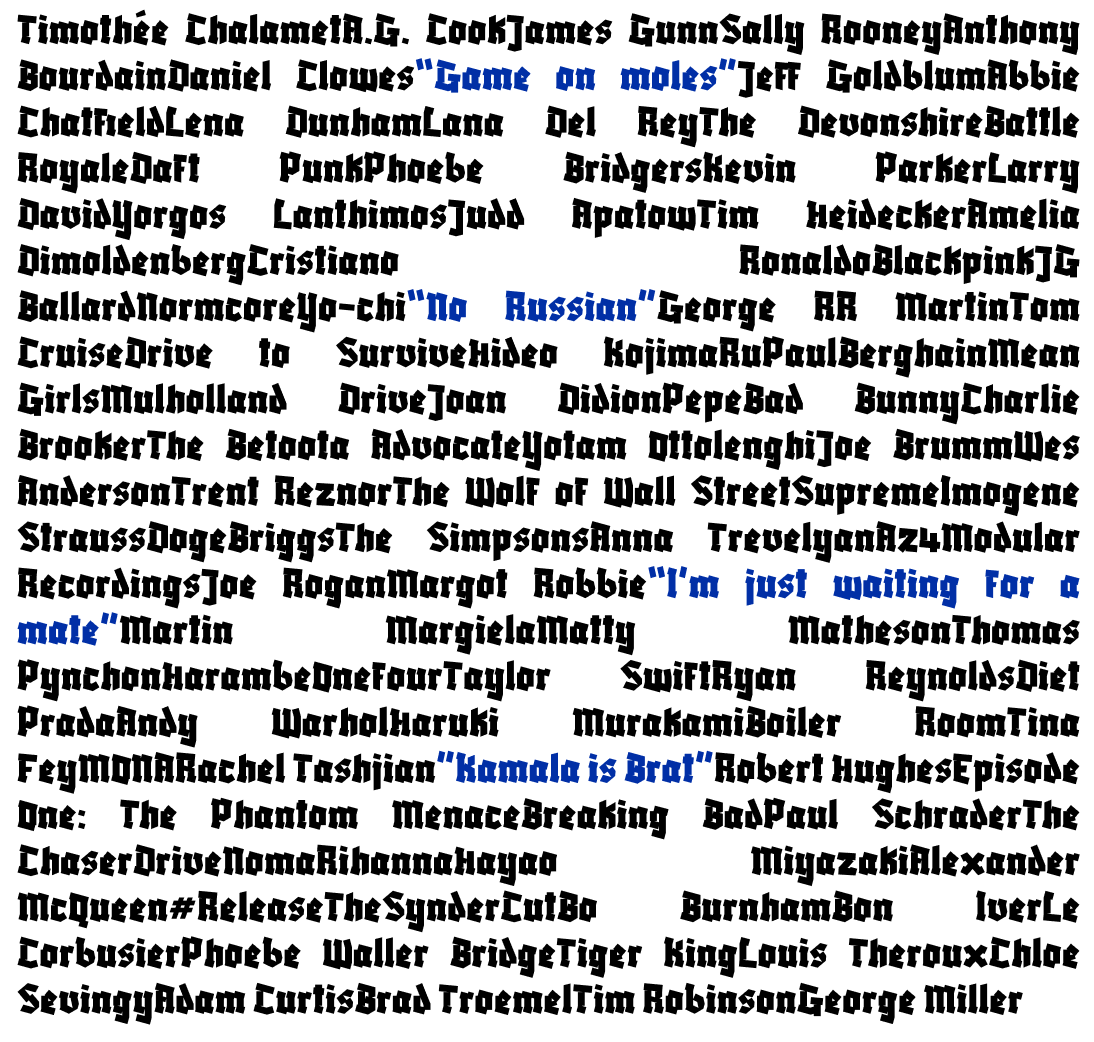
So how would one create the list for 2025? Here’s where I’d start:
Highbrow (difficult) and lowbrow (easy) culture are still essential as the vertical axis of this imaginary graph. The accessibility of the items within the following categories is then spread between them. Notable people, places, institutions and titles are nice and vague and are still relevant. However, the Internet is now the gigantic elephant in the room, adding fat to every category and essentially creating one more in the form of “memes”.
Adding “modern culture” and “contemporary culture” as two ends of a horizontal axis will give us our timeline from past to present, emerging and future. Finally, there is also the issue of place. For example, the Condé list was unmistakably New York-coded. A global list would be far too unwieldy, and to be fundamentally useful as a tool there would have to be an element of locality.
So, once you get the chaos matrix that best represents cultural literacy in your neck of the woods, you give it the old randomizer treatment and pop it into the cold, brutalist columns of a checklist.
Then you get to find out how culturally literate people are…
I’ll lay my personal cards on the table, here’s a stack of things pretty much off-dome that I think mean a lot to the culture in-and-around 2025…with the caveat that I live in Melbourne, Australia.
Cheers for reading something 🙏
Like, comment and subscribe etc!
Jonathan ✌️
👄 Thirst Trap
🐻 80 Years of Smokey
🐚 100 Years of Art Deco
🐔 Shut up
🍦Old ice creams
No posts
Comments
Nothing yet. Say the first thing.
Sign in to join the conversation.