
I’m Chris, writer here at The So What and head of creative and story at Artemis Ward. Every month or so I sit down with somebody who has a finger on the pulse the of creative, cultural, and brand moments unfolding in front of us — and together, in five questions + five answers, we try to understand what these moments really mean.
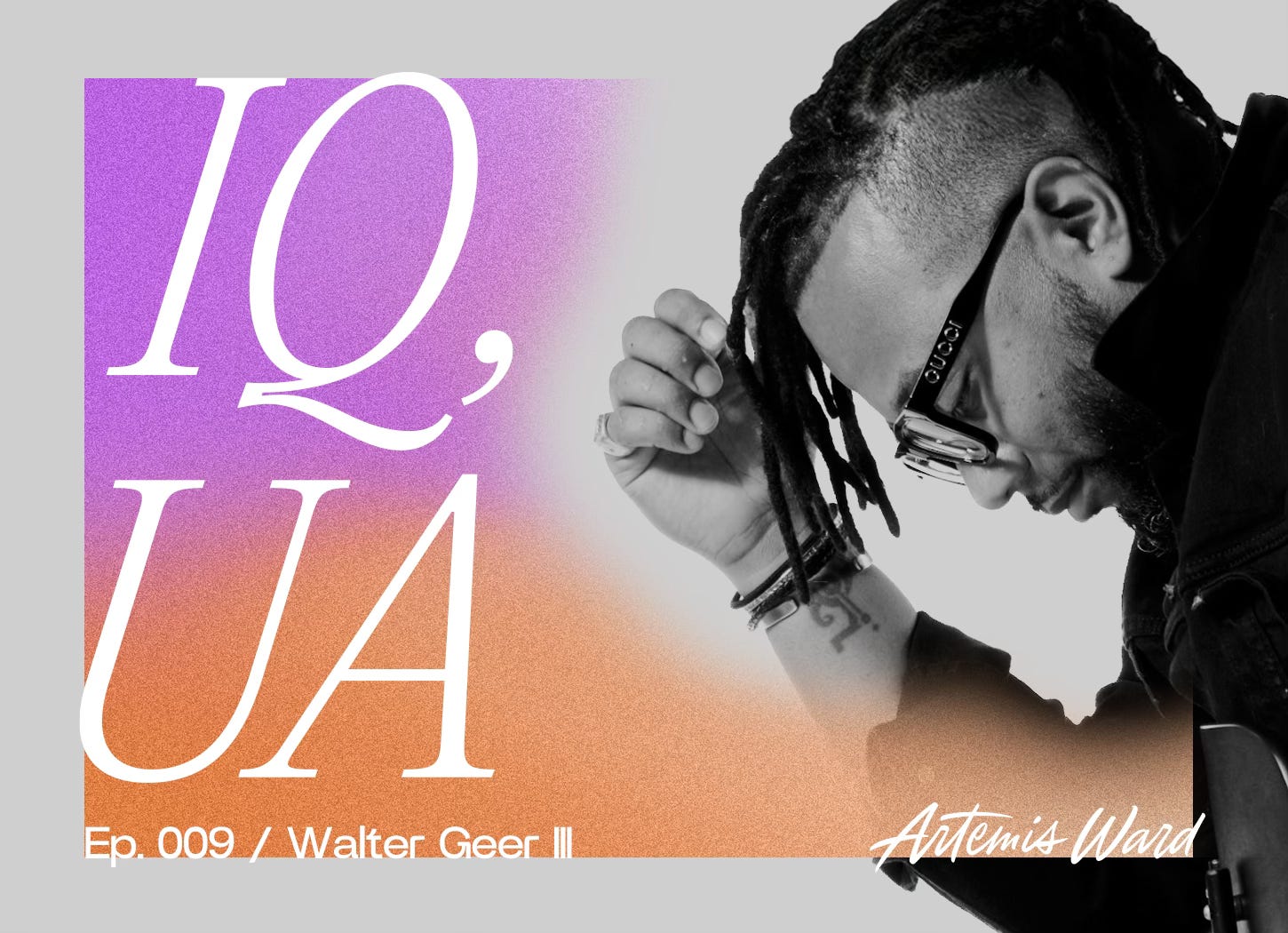
There’s no single title that covers the gamut of Walter Geer III’s output. Chief creative officer is the role he plays at VML, a global creative agency and technology consultancy, where his work stretches across healthcare, technology, and consumer brands. Inventor fits, too, thanks to the six patents he holds for digital ad formats. And there’s cultural architect, given his role as founder and curator at Blackweek, an annual forum and festival that brings together the leading and most innovative minds in tech, marketing, media, entertainment, art, finance, and more.
What seems to connect the dots between the many facets of Walter’s professional life is an enduring interest in people. Not people as represented in demographic reports and data sets, but people with behaviors and lived experiences and emotional depth. “How can we not lose the humanity that actually makes people connect?” he asks.
Walter and I recently caught up to chat about building brands and experiences that always keep people’s lived experiences front and center — and plenty more.
Over the course of your career, you’ve championed this idea of always staying inquisitive and never letting go of your curiosity. What are the questions or curiosities that are really grabbing your attention right now?
One of those questions that has my attention right now is: How are we living in this divide between access and understanding? We have so much data and information on individuals. We can see what people watch, what they click on, and how long they’ve stayed on (or scrolled through) something. Yet somehow, as an industry, we seem to understand people less. That’s interesting to me.
I’ve always believed that curiosity isn’t necessarily about collecting information. It’s really about chasing truth. And I think truth lies in lived experiences — the things we’ve grown up in and the things we’ve done, the experiences. It lives in emotion, which is the last competitive advantage we have as brands because it lives in the why that’s right behind the behavior. At the end of the day, curiosity should really lead you closer to people, not just closer to the data. While data is important, it should lead you closer to the people.
“People don’t want to be targeted. They just want to be understood.”
You're talking a lot about people. And I think, at their core, most of the questions that we deal with in our industry are about who our audiences are, what makes them tick, where they go to converse, what their behaviors are, what kinds of proclivities they have — and how we unearth these things to understand our audiences better. With that in mind, I'm curious about your approach to actually unlocking audiences.
I’ve spent a lot of time in media as well as on the creative agency side, and I can tell you that — from research and all the stuff we’ve learned — people don’t want to be targeted. They just want to be understood. And I think that there’s a really big difference when you start to break those two things apart. Understanding people means you have to really respect their lived experiences. And you have to really understand all the things that they’ve been through, and all the things that they care about, and what they’re actually navigating in a single day, throughout their week, their month, their life. So, people can look exactly the same on paper — same age, same income, same location — and be entirely different human beings because of their lived experiences. So, my approach has always been to not necessarily start with demographics, but with real, emotional truths.
This means you have to ask yourself things like: Where do they feel seen? Where do they feel overlooked? What brings them joy? What makes them sad? What makes them frustrated? And then from there, you can better understand the places that they’re showing up and how they’re communicating in the places they show up. Because platforms change and trends change, but the truth of human emotion never changes. And so, as creatives and strategists, our job is always to understand how people are feeling and then lean heavily into that.
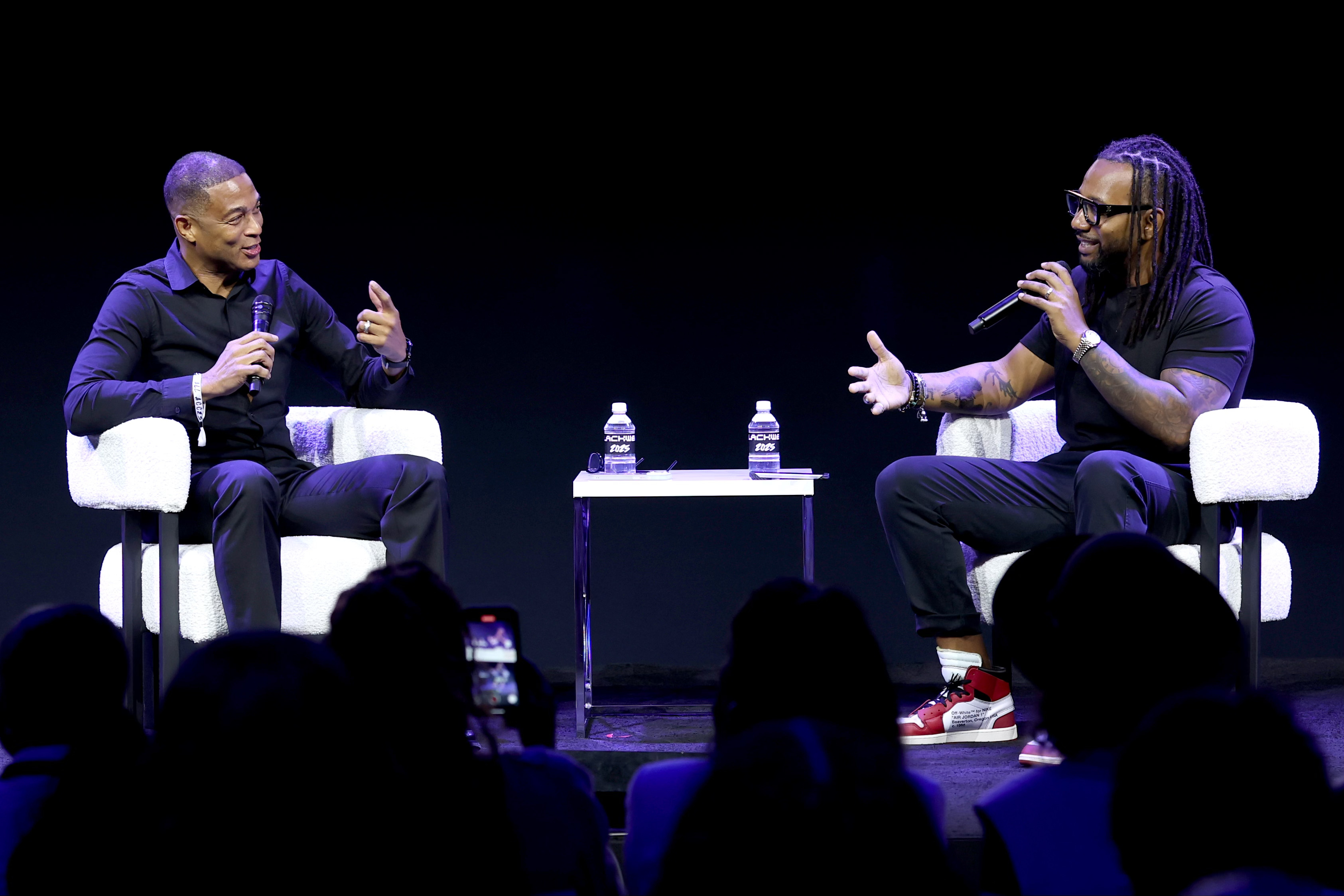
Which begins with listening and letting people be heard. There was a time when it felt like brands were largely planting a flag in the ground and inviting people to come to the flag. But now, people — their experiences, their stories, their take on the brand — are actually part of the brand presence itself. How do you think that changes the nature of the work that we do every day?
That’s a really good question. I mean, brands have always been storytellers — we created a narrative, we polished it, and we pushed it out into the world — but now consumers can participate in the story in ways we’ve never seen before. You look at TikTok, where people see something they like and almost immediately they remix it and make it their own. So, in this moment, brands need to understand that if you want to engage these individuals, you have to continuously push beyond the normal, traditional stuff that we’ve done. And that means that the work can’t just be something that looks good. It has to extend the conversation. It has to be something that really lives and breathes, something that people can step into, something that people can shape and start to make their own. The brands that do this really well are the ones that are brave enough to stop for a second and actually listen and be humble enough to co-create.
Too often, brands are fearful, so they’ll continuously and repetitively do the same things over and over and over. And they do that because it’s safe.
“A trend is something that people do, and a shift is something that people become.”
It can be easy to live in the safety of the way things have always been done. Which is the opposite of the territory you’re mining at Blackweek. You’re now a few years into Blackweek and have had a ton of success bringing folks together to explore not only what’s happening right now, but where we’re headed in the future — and how we can run toward that. As you’re curating the event, how do you distinguish between those flash-in-the-pan trends, which we’re swimming in every day, and then the bigger shifts that we actually really need to be paying attention to if we want to be ahead of the curve a month or two, or year or two, down the road?
Everything moves super fast right now. It’s like our news cycle is six hours. And every week, there’s a new trend and new conversation. But not everything is shifting culture. So the way to think about this is that a trend is something that people do, and a shift is something that people become. At Blackweek, we try to focus on the shifts, which is why our narrative and conversations change every single year. We look at patterns over time, we look at behavior across communities, and we look at what’s actually sticking and what’s not. But most importantly, we listen to people — to people who are actually shaping the culture. The folks that attend and speak at Blackweek, they are all culture shifters. They are individuals that are not just reacting to culture, but shaping it. And that often means listening to people on the edges.
It’s important to remember that culture has always been created from the margins and adopted by the mainstream. That’s not new. But what is new is the speed at which that transition happens. So, at Blackweek, we pride ourselves on being pretty nimble and being able to understand what matters — and what maybe doesn’t — in real time. If you’re only looking at what’s viral, you’re way too late. But if you’re actually paying attention to the deeper trends, the subtle nuances in the conversation and the tensions and unmet needs, then you start to see where things are going.
As you mentioned earlier, you’ve worked on the media side of our industry, the creative agency side, and you’ve worked with clients across a wide spectrum of categories. And you’ve done this in the ever-evolving digital age, which means you’ve sat at the intersection of technology and creativity for a few decades now. Today, technology — AI and everything else — seems to be pushing us forward at an exceptionally fast pace, and you often hear people expressing fear that it’s going to displace us. What’s your response to that? What does the future of creative look like, given what the landscape looks like at the moment?
I continuously tell people that these are tools. When I’m giving a talk to college students, I’ll ask: How many people have written one letter and stuck it in the mail in the past month? And then I’ll say, okay, how many people have sent ten emails in the past week? How many people have sent 100 text messages within the last 24 hours? You see the hands gradually go up and go up and go up. The simple reality is that technology has allowed us to be faster at communication — but at the end of the day, all those are just tools to communicate. Some just get us there faster than others. Some resonate more than others. A letter that I put in the mail and send to someone, something that I hand write, that just has an emotional weight to it that a text message with an emoji does not.
Which is all to say that I don’t believe technology is by any means replacing creativity. I think it’s exposing it. Because tools don’t create meaning, people do. We do. With AI, you can generate images and copy and scripts and mimic styles, but it doesn’t have lived experience. It doesn’t have perspective. It doesn’t have emotional memory. And that’s where real creativity comes from, right?
📲 Keep up with Walter on Instagram and LinkedIn. And check out the latest on Blackweek on Instagram and their website.
✉️ And, if you haven’t yet subscribed, click the button below so you don’t miss the next one with Olivia DuCharme.
Comments
Nothing yet. Say the first thing.
Sign in to join the conversation.