

Today I want to talk about a very important topic! A lot of creative people hold themselves back with a fear that turns out to be almost entirely imaginary. The fear is that they are not properly qualified, that somewhere there is a credential they are missing, and that without it they will be found out as someone who doesn’t really belong. I understand the fear, and I want to take it apart, because in this industry the thing you are afraid of not having is worth far less than the thing you can actually build. As someone who has actually studied fashion and branding, I don’t think someone has ever brought up my degree, nor do I even send out a CV besides having it somewhat filled in on LinkedIn.
When you upgrade to paid, you get access to archive of 250+ posts written on the creative industry, image-making, inspiration, practical tips and a lot more. You also get access to multiple programs like the Art Director’s DNA program, the Visual Curriculum and from Idea to Issue. Paid subscribers also get first access to Art Direction School launches and many more perks. <3
Let’s start with what a credential is for. The economist Michael Spence won a Nobel Prize for work on signalling, the idea that qualifications often function less as proof of skill and more as a signal, a costly thing you acquire to demonstrate to employers that you are the kind of person who can acquire it. In fields where the work itself is hard to assess from the outside, the signal carries a lot of weight, because there is nothing better to go on. The crucial part is what happens when there is something better to go on. When the work itself is visible and legible, the signal loses its power, because everyone can simply look at the thing you made and judge it directly.
Image-making is one of those fields. A body of work is the most honest signal there is, far more honest than any certificate, because it cannot be faked into existence the way a line on a CV can. Anyone can write that they studied something. Only the work shows whether they can see. This is why there is no single degree that produces an art director, and why the absence of one matters so much less than people fear. The discipline judges you on output, and output is something you can build from nothing, starting now, without anyone’s permission.
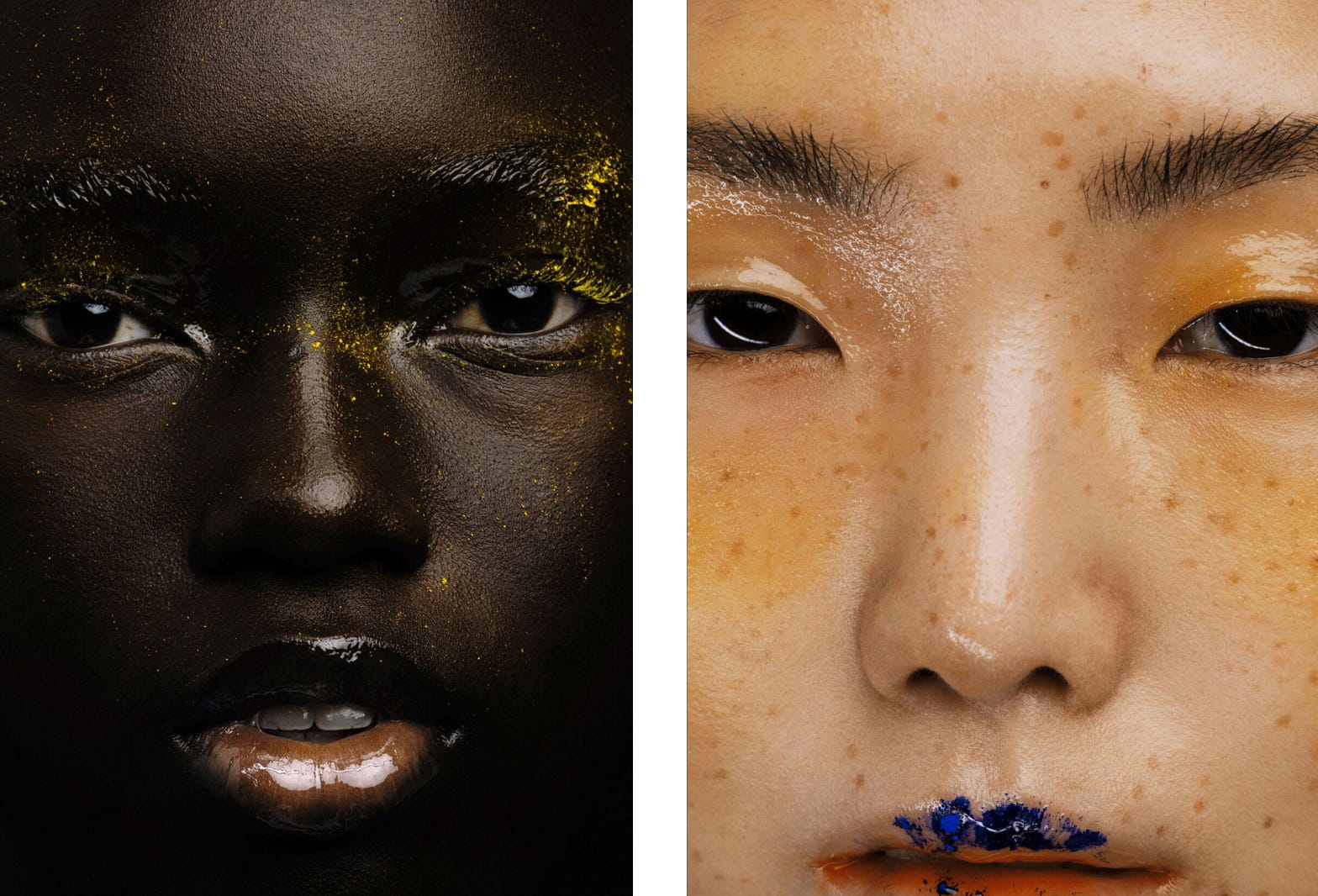
And so does the image history, which backs this up almost completely. A great many of the photographers and art directors we treat as masters had no formal credential in the thing they became famous for, and several had little formal training at all. They learned by looking, by assisting, by making an enormous amount of work and developing an eye that became unmistakable. Robert Greene (also the author of 48 laws of power, one of the most banned books in prisons!) made the broader case in his book Mastery, drawing on how skill has actually been transmitted across history. Long before the modern credential, there was the apprenticeship, the slow accumulation of real ability through doing the work under people who could already do it. Greene’s argument is that this older model never stopped being the truth. Mastery comes from deep, sustained practice and proximity to skill, and the paper qualification is a relatively recent and relatively shallow proxy for it. The certificate tells people you turned up. The work tells them what you can do, and only one of those is what actually gets you hired.
There is real freedom in understanding this, because it moves the focus of control back to you. If credentials were the gate, you would be at the mercy of institutions and their decisions about who to let in. If a body of work is the gate, then the path is clear even when it is hard. You make work. You make more of it than you think is enough. You make it visible, and you let the clarity of your eye do the arguing a certificate cannot. Then, yes ofcourse there is a big sea of people posting their work online. And that’s why you especially have to follow your heart, sharpen your eye and understand yourself as a creative in order to create the best work that can only be yours.
The people who will hire you for anything that matters are not scanning for qualifications. They are looking for evidence that you can see something they cannot, and that evidence is entirely yours to produce. I’ve seen creatives get work only with the presence of an Instagram account, there is no need for a degree, there is no need for a professionally designed website (any simple cargo or squarespace template will do, or even a google slides presentation).
The direction of the industry only sharpens this. As more people enter the field and the traditional gatekeepers lose their monopoly on attention, the work itself becomes the only credential that travels. A degree opens fewer doors than it once did. A body of work that is clearly, undeniably yours opens more of them than it ever has, because it is the one thing that cannot be replicated by someone simply better at acquiring credentials.
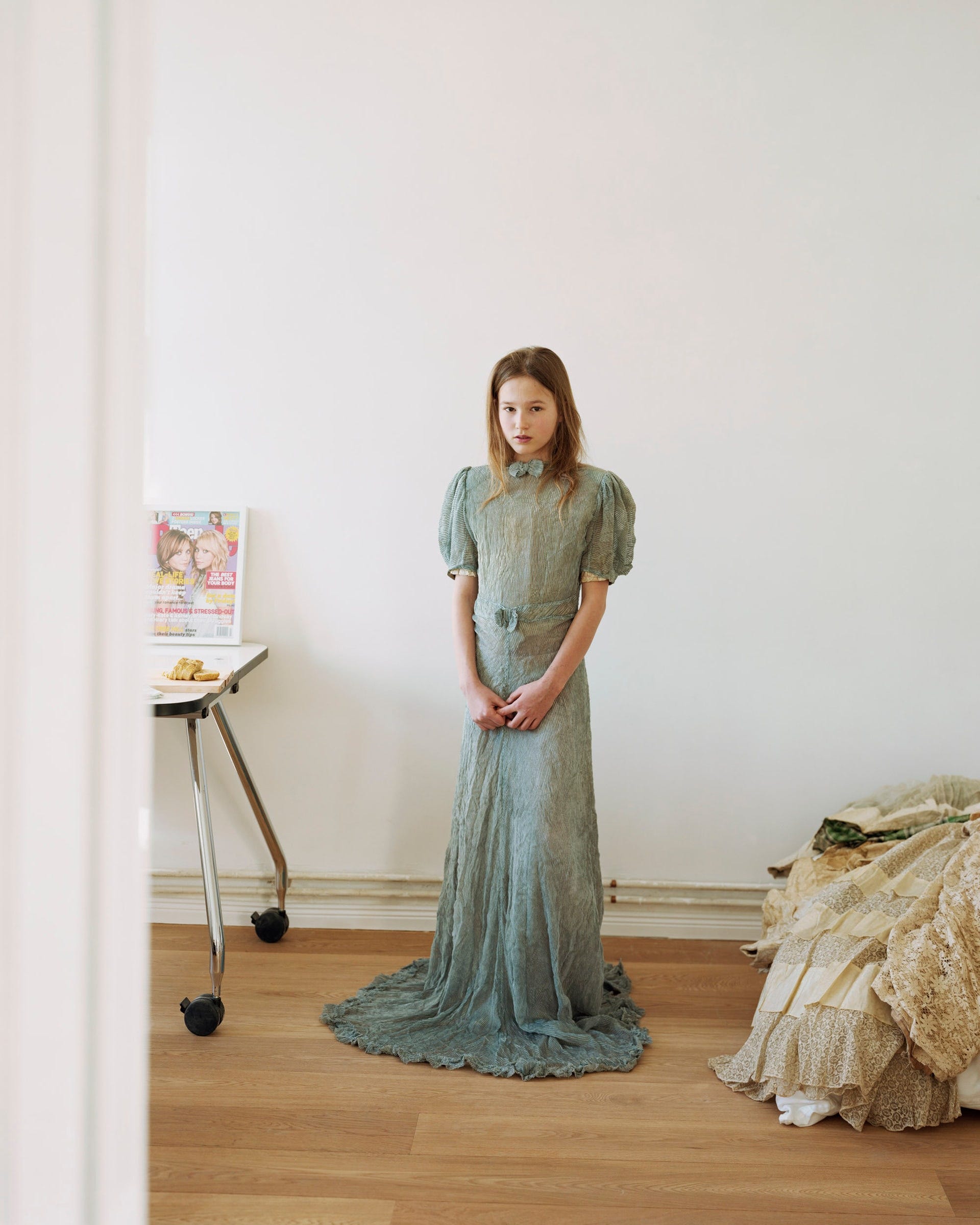
There is a catch worth stating plainly, because I’m not giving you a permission to be lazy or stop studying all together. A body of work only functions as a signal if it is legible, and legible means it has a point of view, a consistency, a clear eye running through it that a stranger can read in seconds. Volume on its own proves nothing. A hundred competent, unrelated images say only that you can operate a camera or assemble a layout. A tightly edited set of images that all clearly come from the same sensibility says something a certificate never could, which is that you see the world in a particular way and can make other people see it too. The work has to argue for a position rather than demonstrate activity. You can very easily be responsible for your own education, and educating yourself is super important. Understand where your references come from, find inspiration that you have to look harder for so it can be yours, follow your curiosity and act on any spark that could become an idea.
This is why the instinct to show range is usually a mistake. The fear of not being qualified often expresses itself as a portfolio that tries to prove you can do everything, and the result reads as someone with no centre, which is the opposite of the legibility that actually gets you hired. It can also read as desperate for work, and since there’s so much competition the industry rather chooses someone right for the job than someone who can do a little bit of everything with no point of view. The stronger move is to edit ruthlessly towards a single vision, to show less but make that less unmistakable. A body of work that argues one thing clearly beats a body of work that hedges across ten, because the clear one tells the viewer exactly what they would be getting, and certainty is what people pay for.
If you are afraid of the missing credential, the answer is rarely to go and acquire a different piece of paper. It is to get close to people whose work you admire, learn how they actually do it, and let your own body of work absorb what you see. The eye is trained by proximity and repetition, and both of those are available to you without anyone’s permission.
So if the fear of not being qualified is keeping you from starting, name it for what it is, which is a story about a gate that is mostly already open. The industry cares far less about where you trained than you imagine, and far more about what you can show. Build the body of work. Sharpen the eye until it is unmistakable. The certificate was never the thing that proved you belonged. The work was, and the work is the one thing nobody can hand you and nobody can take away.
Love,
Zoë
Comments
Nothing yet. Say the first thing.
Sign in to join the conversation.