
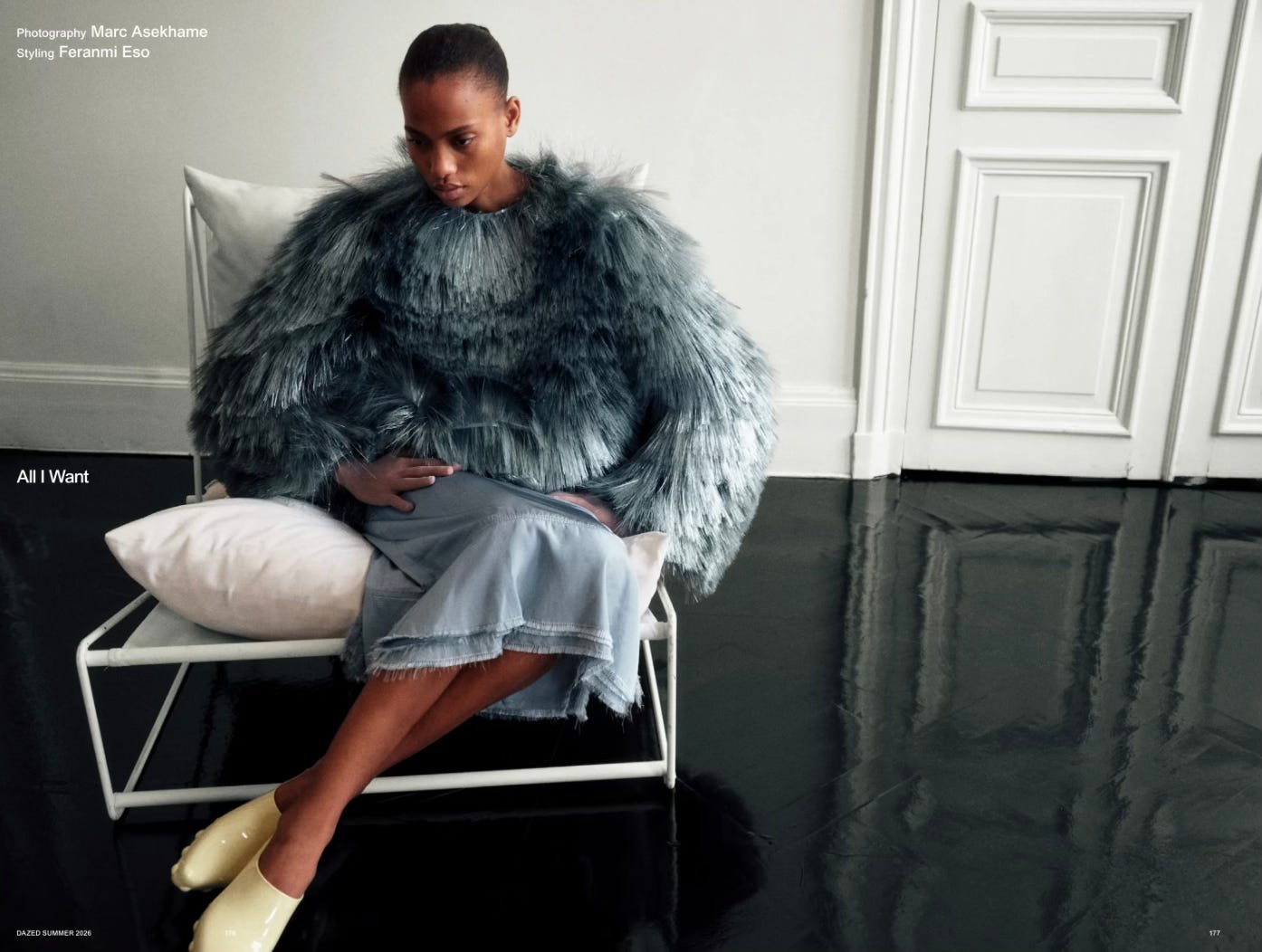
There is a particular guilt that comes with a quiet week. No brief, no shoot, no deadline, and instead of rest you feel a low hum of failure, as though the absence of output were the absence of work. I especially, doing many projects at once that I set for myself, feel particuraly guilty. I’ve felt guilt saying no to jobs that I felt like I wasn’t right for or that I couldn’t fully commit to, then downtime hits and I feel bad. I then force myself to use downtime to research into new trends, read essays or whatever but I absorb absolutely nothing. I want to argue the opposite, because the gaps between projects are not dead time. They are where the next idea is being assembled, usually without your permission and almost always while you are doing something that looks like nothing. In the last year I’ve gotten pretty good at taking downtime, and believe it or not, my work has gotten stronger because of it. I even took off for a couple of months last year (to travel Asia) and I had never felt more inspired and renewed than when I came back.
In 1926 the social psychologist Graham Wallas laid out four stages of creative thought in a book called The Art of Thought.
Preparation, where you gather and saturate yourself in the problem.
Incubation, where you step away and seem to do nothing.
Illumination, the moment the answer arrives.
Verification, where you test it.
The stage everyone tries to skip is incubation, because it looks like idleness, and yet it is the one doing the structural work. The idea is not arriving despite the gap. It is arriving because of it. Wallas understood, a century before the productivity industry insisted otherwise, that the mind solves its hardest problems while apparently off duty.
Neuroscience has since given the mechanism a name. When you stop focusing on a task, your brain does not switch off. It shifts into what researchers call the default mode network, the state active during mind-wandering, daydreaming and rest, and this is where the brain makes loose, unexpected connections between things it has gathered, the connections that focused effort tends to suppress. The answer that surfaces in the shower or on a walk is not luck. It is the default mode network finishing a job your conscious attention started and then wisely abandoned.
[This post has bonus content for paid subscribers. Upgrade to get full access.]
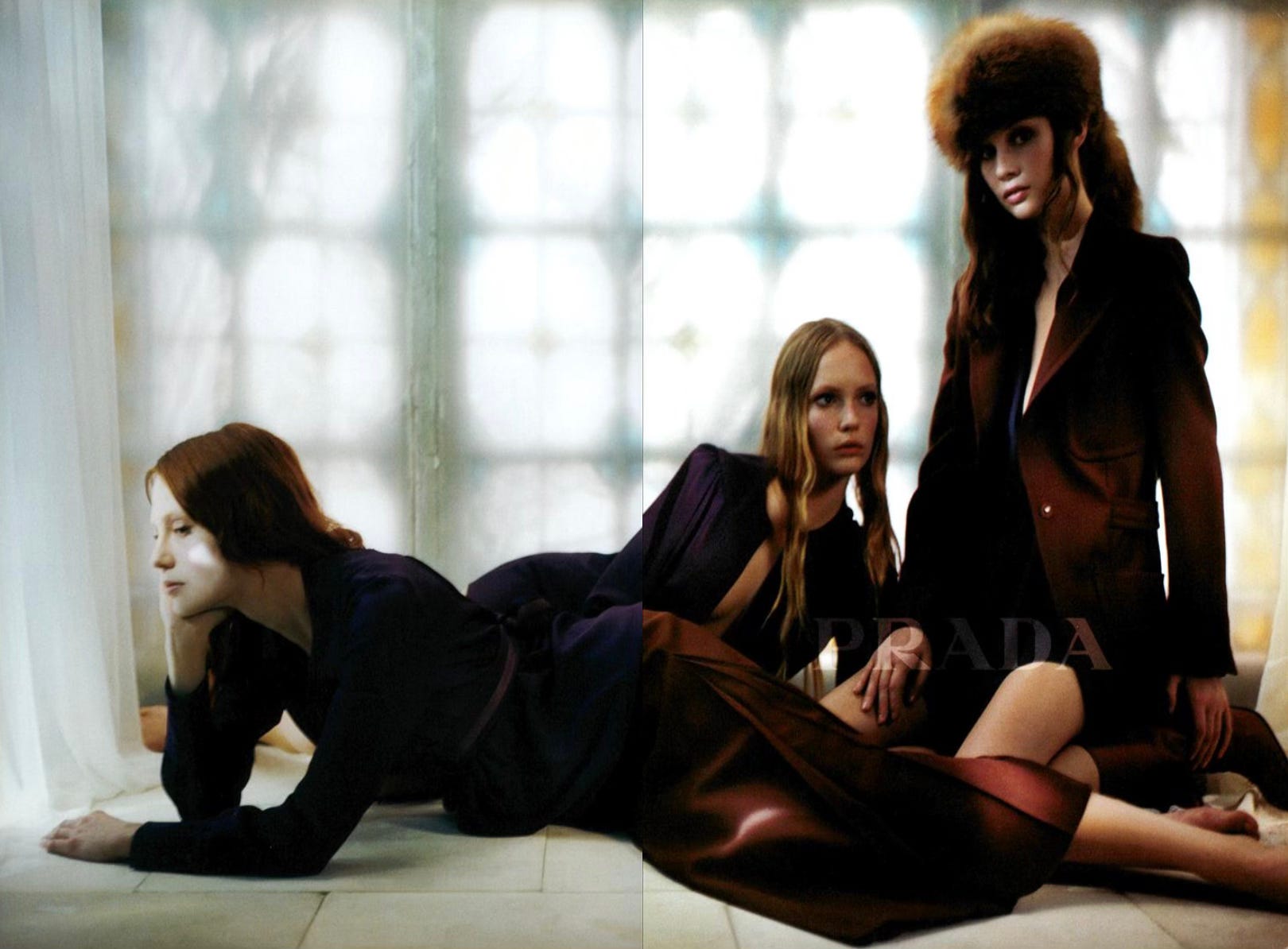
Image history is full of work that could only have come from long gestation. Sarah Moon’s photographs have a dreamed, half-remembered quality that no rushed schedule could produce. Paolo Roversi’s slow sittings, his long exposures and contemplative pace, build images that feel like they were waited for. The painterly, atmospheric vibes that both of them work in is the visible result of an unhurried relationship with making. You can’t fake that texture under pressure. It comes from time, and from a willingness to let an image arrive at its own speed instead of forcing it into tight deadlines.
This matters because our default mode is now under constant attack, especially in the creative industry. Our attention is harvested in every empty moment, the queue, the lift, the five minutes before sleep, all of it absorbed by a feed. We have access to work constantly, before the phone, you’d leave the office and let go of work for the rest of the time. Now we are constantly accessible to be productive. Cal Newport calls the protected version of attention deep work, and Johann Hari has written about the way our focus is being quietly stolen. Whatever you call it, the effect is the same. The brain never gets the unstructured stretch it needs to wander, because the moment it is free, we hand it a screen, and incubation will never begin.
It helps to look at how creative output worked before the feed existed. The artists we hold up as endlessly inventive were not more gifted than people now. They were less interrupted. Inspiration reached them more randomly, through a conversation that wandered, a film watched start to finish, an idea they ran into rather than one served to them by an algorithm. Some of them let years pass between major works, and the time was not a gap in the career. It was the work. Michael Jackson’s albums had a gap of 3-6 years between each release, which was completely normal at the time. Now someone like Harry Styles gets so much hate for ‘dissapearing’ for so long and working on his album that fans turn their back, it’s honestly sad. We have lost patience with that rhythm. When any artist now disappears for a few years and returns changed, the response is often confusion or resentment, as if reinvention were a betrayal rather than the natural result of having gone somewhere quiet long enough to become someone slightly different. We have more access to people than ever, and that access has curdled into a demand for constant presence, the exact condition under which no one can incubate anything. This doesn’t count for music artists only, but it’s a good example since fans often feel like the artist owes something to them. I also have many friends in the creative industry who feel bad not having posted new work on Instagram for months and get stressed about it.
Bertrand Russell saw a version of this coming in 1932, when he wrote in praise of idleness and argued that we had confused busyness with virtue. The argument holds even better now, when stillness has become almost transgressive. The image-makers who will matter in the next decade are likely to be the ones who protect their fallow seasons, who understand that a practice needs rest the way soil does, and who refuse to mistake constant posting for constant working.
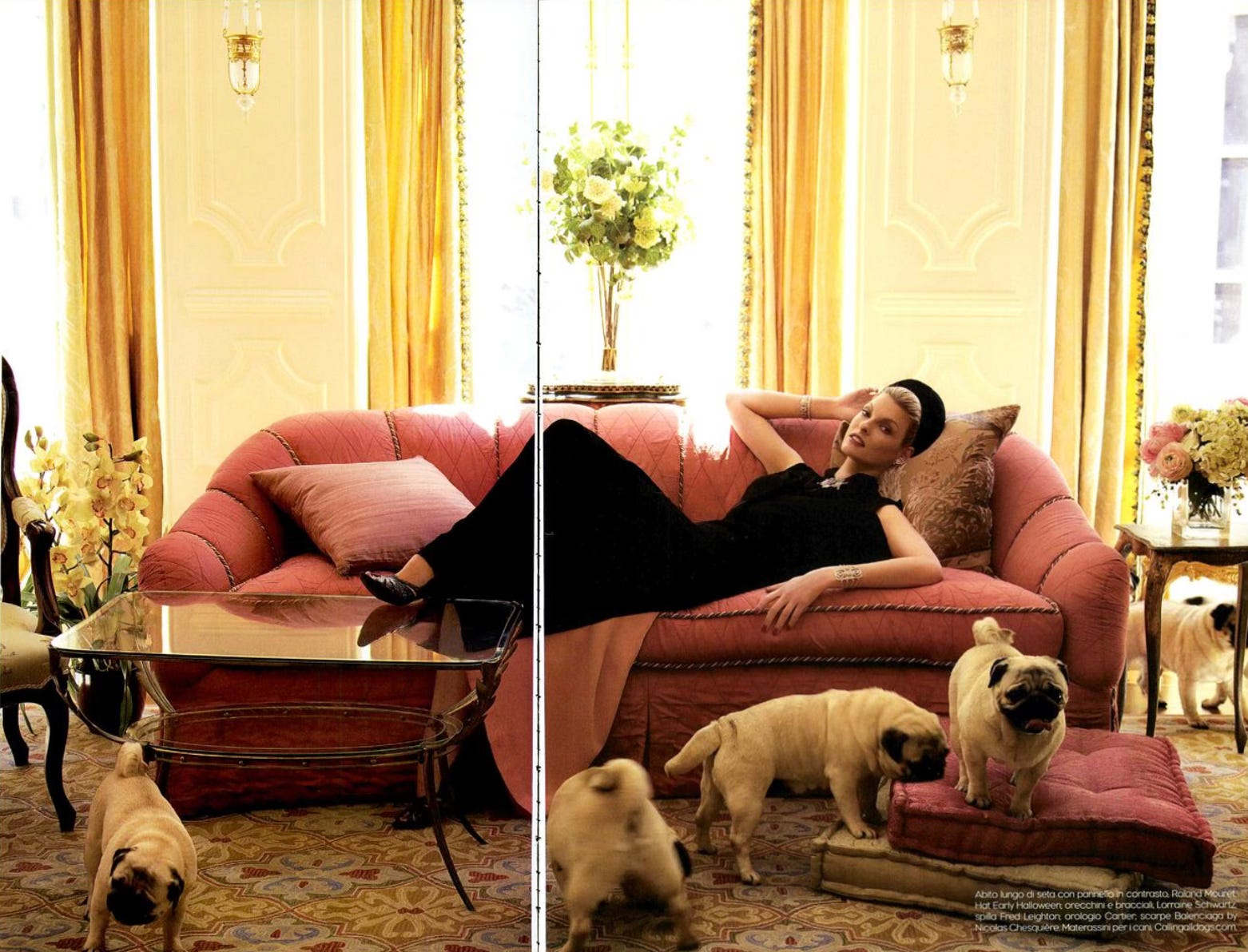
The trap most of us fall into is mistaking the feed for nourishment. Scrolling feels like input. It feels like you are gathering references, staying current, feeding the work, and it is doing almost the opposite, because the constant low-grade stimulation is precisely what stops the default mode network from ever switching on. You are never bored long enough to wander, never under-stimulated long enough to make a connection, and so the raw material that real incubation needs is never allowed to settle. A feed gives you the sensation of input with none of the depth, and it quietly fills the exact gaps where the thinking was supposed to happen.
Barbara Oakley, who has written widely on how we actually learn, describes two modes the brain moves between, a focused mode for concentrated effort and a diffuse mode for the loose, associative connecting that happens when you step back. The breakthroughs tend to come from the diffuse mode, and the diffuse mode only engages when you fully disengage. The shower, the walk, the long drive, the dull train journey, these are not interruptions to the work. They are the conditions the work has been waiting for. The problem is that we have eliminated almost all of them, plugging every one of those gaps with a screen the moment it appears.
Real input looks different from consumption. It is slower, it is more varied, and it usually comes from outside the field you work in. A novel, a long film watched without a phone in your hand, a museum visited with no intention of posting it, a conversation that goes nowhere useful. The inputs that feed image-making best are rarely other images in the same genre. They are the things that sit at an angle to your work and feed it sideways. So the practice is twofold. Saturate yourself deliberately in rich, slow input, and then walk away from it on purpose, protecting the empty time that lets the brain do what it does when you finally leave it alone.
So the next time a week goes quiet, try to resist filling it. Read something with no use in mind. Go somewhere with no phone in your hand. Let yourself be bored long enough to run into a thought. The gap is not the enemy of the practice. It is where the practice quietly does its thinking, and the next strong idea you have will almost certainly arrive on a day you felt you were getting nothing done.
How to spend a fallow week?
[This post has bonus content for paid subscribers. Upgrade to get full access.]
Would love to know how you like to spend your downtime?
Love,
Zoë
Comments
Nothing yet. Say the first thing.
Sign in to join the conversation.