
Hi Everyone,
Hoping you’re all well.
After devoting my last newsletter to launching the paperback of A Year in the Art World in the UK, this week is a return to form, and I am excited to share a number of art-related content suggestions I felt were worth your time.
First off, I want to recommend this recent video interview with Raphaël Millière, (scholar and philosophy lecturer at Columbia University) which was done by the Overthink podcast, which I had never heard of, but which I now plan to check out. I've been following Millière’s work since I read his article in Wired in July, “AI Art Is Challenging the Boundaries of Curation.” This is a more accessible conversation about the connection between AI and Art and Millière is definitely doing some of the most important thinking on the subject. I definitely recommend taking the time to listen to him if you are at all concerned about this subject.
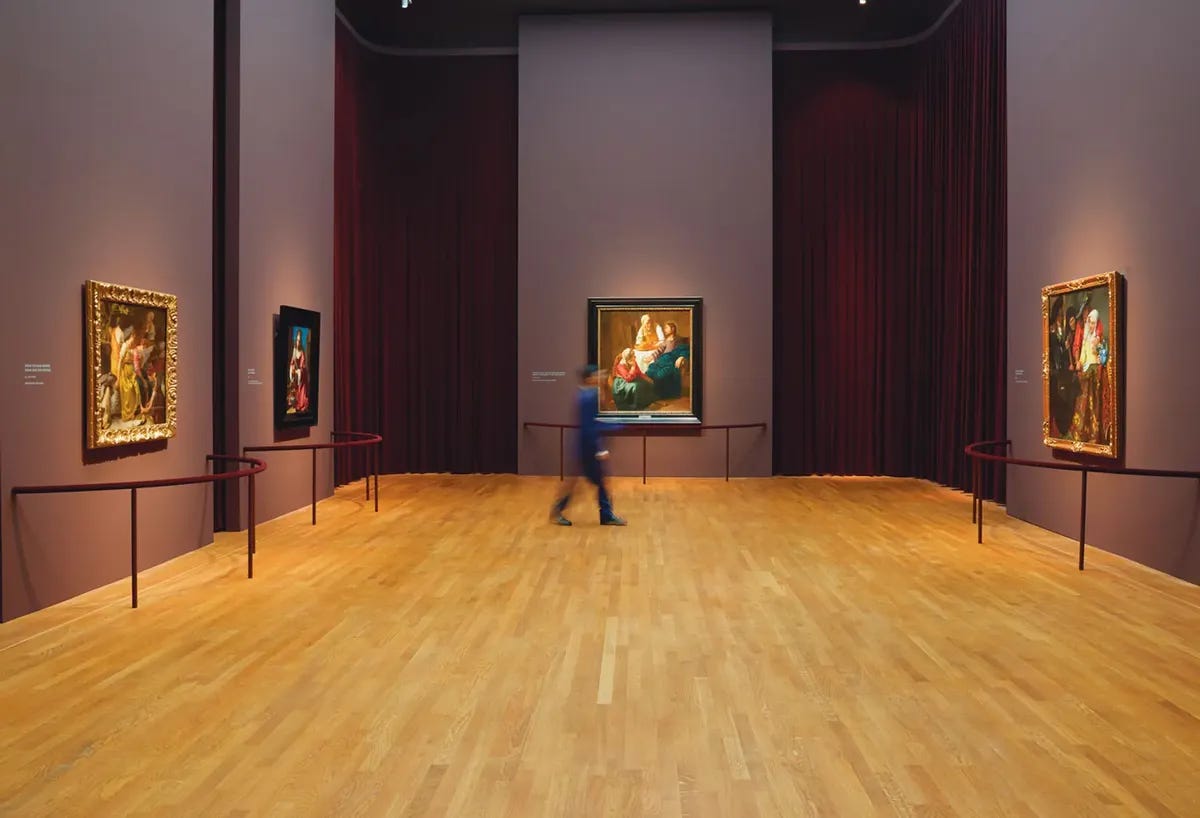
For those of you—like me—who were not able to see the landmark Jan Vermeer exhibition at the Rijksmuseum in Amsterdam (which ran from February through June this past year), The Art Newspaper recently published this list of every painting by Vermeer and where you can see them.
You might think this is basic knowledge, but I was trying to find another place where something like this existed online and couldn’t, and it’s often quite hard to quickly find the various location of any one artist’s paintings. It would be great, for one, if Google Arts & Culture mapped their artworks (outside of showing which collections you can find them in). But they don’t.
Something that I just recently came across and am delving into more is Lawrence Weschler’s Substack, “Wondercabinet,” which features re-postings of Weschler’s various writings from over the years. While I have to say I am not that familiar with all of Weschler’s writing, he is someone I greatly admire due to his biography of Robert Irwin, Seeing is Forgetting the Name of the Thing One Sees, which has significantly influenced my work.
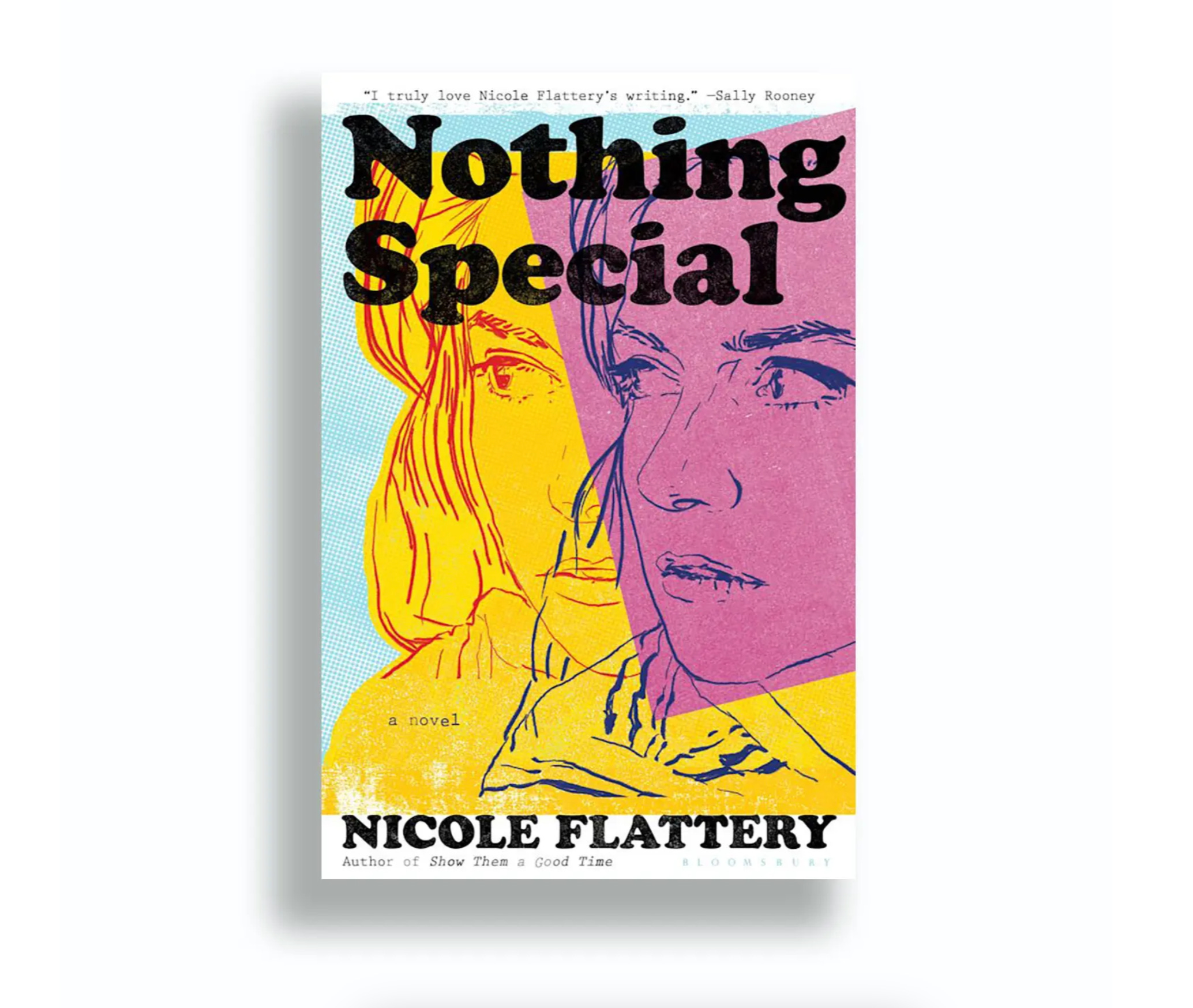
I also recently bookmarked this list of summer fiction recommendations from the New York Times because the book Nothing Special by Nicole Flattery focuses on a girl who becomes a typist for Andy Warhol. I wonder if any of you have it yet? As someone who has spent a lot of time researching Warhol, I wonder how close to the facts the book stays. I wonder how much she knows about Warhol and/or how much Warhol is just a stand-in for a generic artist. I hope it’s a good portrayal. I am depending on Sally Rooney’s endorsement of the book at this moment to encourage me to read it—but I would love another one.

I also thought Charles Keiffer’s recent “Landscapes of Despair: Book Covers and the Visual Culture of the Opioid Crisis,” which ran recently in Art Journal, was worth recommending.
Keiffer analyzes the covers of books that have concerned the opioid epidemic and argues that the covers’ consistent aesthetic present a kind of visual culture of the crisis. He says this is based on the fact that “a specific type of landscape photograph, a rural setting devoid of human figures, has been repeatedly used on the cover of nonfiction publications about the opioid epidemic since 2015.” The author argues further that the covers:
“Borrow stylistically from the “New Topographics” photographers Robert Adams (b. 1937) and Steven Shore (b. 1947), and their predecessors, namely Walker Evans (1903–1975), in the service of telling a particular story about the rising rates of opioid overdose in many rural parts of the country by using the exhausted American landscape as a metaphor. This is a marketing formula that began with Sam Quinones’s Dreamland: The True Tale of America’s Opiate Epidemic (Bloomsbury, 2015) and J. D. Vance’s Hillbilly Elegy (Harper, 2016), the latter focusing heavily on the author’s opioid-addicted mother. Both of these books were used as market comps for future books on the subject, so that a formula calcified for how to sell this subject to readers.”
You can read more here.
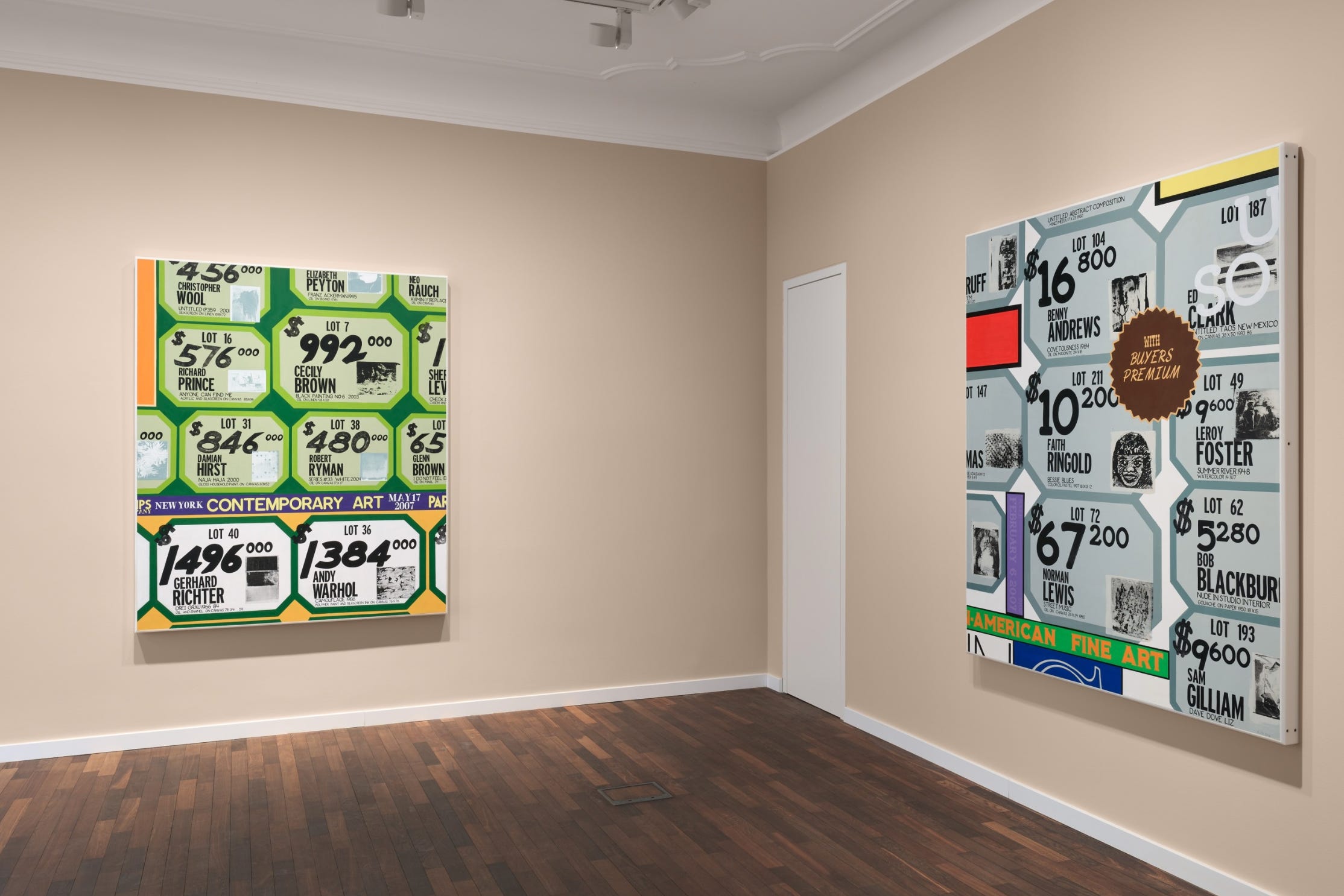
While I haven’t entirely bought into how the artworks in this show back up its thesis, I was intrigued by the ideas behind the recently closed “In Defense of Symbolic Value” curated by Isabelle Graw at Max Hetzler in Berlin.
In brief, Graw’s show calls attention to and criticizes the recent “resortisation” of the high-end gallery, a phenomenon which I would argue was definitely sped forward by COVID-19, when galleries needed to do more to bring their wares to their top buyers (and outside of major—COVID hotbed—cities). I think it’s worth continuing to monitor this development and ask ourselves whether it’s fair to really believe galleries at their core are meant for a larger population versus their top buyers. Graw explains:
In recent years, the art market has once again undergone a structural change. While, on the one hand, its actors have partly migrated into the digital realm, some mega-galleries, on the other hand, have opened their branches in analogue luxury resorts such as Aspen, Monaco or Menorca, where their wealthy clients may keep to themselves. I have coined the term ‘resortisation' for these developments, which significantly influence the conditions of artistic production and reception. ‘Resortisation’ means saying goodbye to the Habermasian ideal of a critical public sphere, which is traditionally responsible for evaluating art. In contrast, the analogue luxury resort opens its gates only to the economic elite who can afford the journey and the stay. Theoretically, everyone with an internet connection could participate in the events via social media. However, even there—on Instagram, for example—one remains in a resort-like bubble in which, according to Vera King, digital connectedness is confused with social relationships. The price of visibility on such platforms is the obfuscation of the social contexts which make artworks symbolically meaningful.
Read more here.
Finally, I like substantive, thoughtful efforts to hyper-simplify meaning and rank things, because while you lose nuance, it can challenge you to express what you really think about something.
Thus, I was excited to see this New York Times piece that asked their columnists to share one piece of culture they would recommend to someone to truly understand the United States. It’s a big ask, and you might think it absurd, but I found the responses interesting and provocative—and there were a few submissions I was not familiar with. I have linked all of them below so you can learn more about them:
I hope, as usual, that these recommendations are thought-provoking, and I wish you a good few weeks.
Best,
Matthew
No posts
Comments
Nothing yet. Say the first thing.
Sign in to join the conversation.