
Time again for another of the erratic, exasperating, and errant epistles that are these newsletters! This week we draw Dolly, do some MAD myth-busting, and ...on with the ‘Wretch!

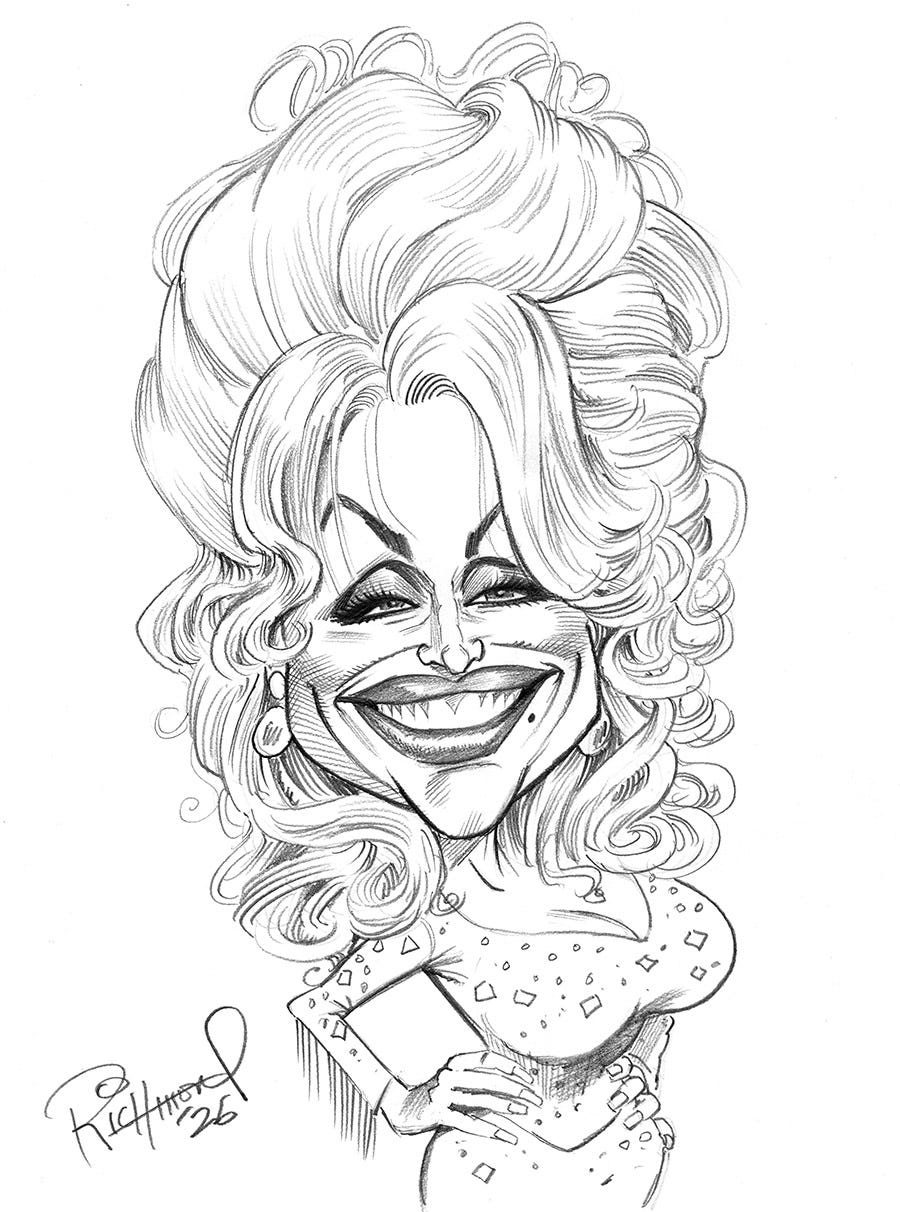
Click here if you are interested in this original sketch
I was right in the middle of my “Sketch o’the Week” Tuesday afternoon when the news that Dolly Parton had died came out. Of course I had to switch gears and draw her.
The outpouring of sadness and tributes to Dolly online tells you all you need to know about what an impact she made on this world. She was a powerhouse in the entertainment business of course, but her real superpower was how she used her wealth and fame to help people... often very quietly and without the need for thanks or fanfare.
Personally my grandkids have benefitted from her “Imagination Library” program. Parents or guardians can sign up their kids anytime from birth up to age five, and every month Dolly sends them a book in the mail for free. They partner with local school districts and county programs to distribute the books. Every month my grandsons get a book from her and have spent many hours reading them with their parents... and sometime Papa! That’s just one of many, many things Dolly did to make a difference in people’s lives.
Dolly was a national treasure and her loss is the world’s loss. We need more people like her on this planet.

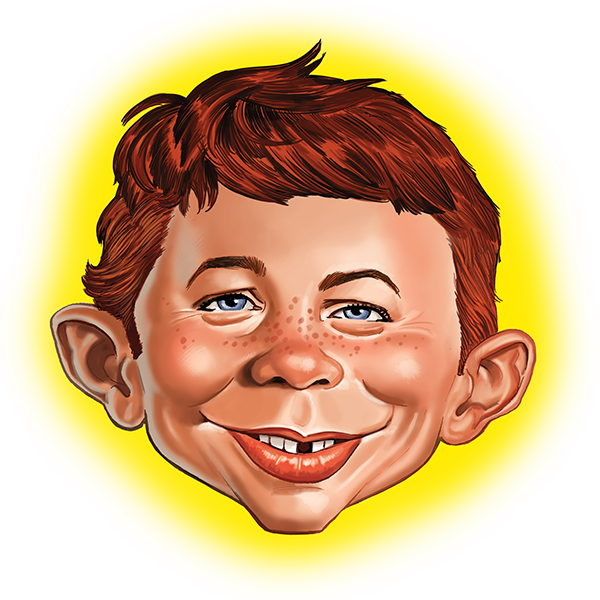
A few ‘Wretches ago I linked to a post by comics writer and historian Mark Evanier which was the best description I’d seen busting the myth that MAD switched to a magazine to avoid the Comics Code Authority (here’s that link if you missed it).
I thought we could do some more MAD myth-busting. This one is about MAD starting to take ads again in 2001:
Myth: MAD never took ads until they started doing it in 2001. Bill Gaines was always against it for philosophical reasons.
Both of those claims are false, although the second one is partly true.
I started with MAD in the fall of 2000. My first piece was in MAD #399. Starting in MAD #403 (March 2001), MAD started running paid advertisements again. That issue contained this note from the editors on the contents page:
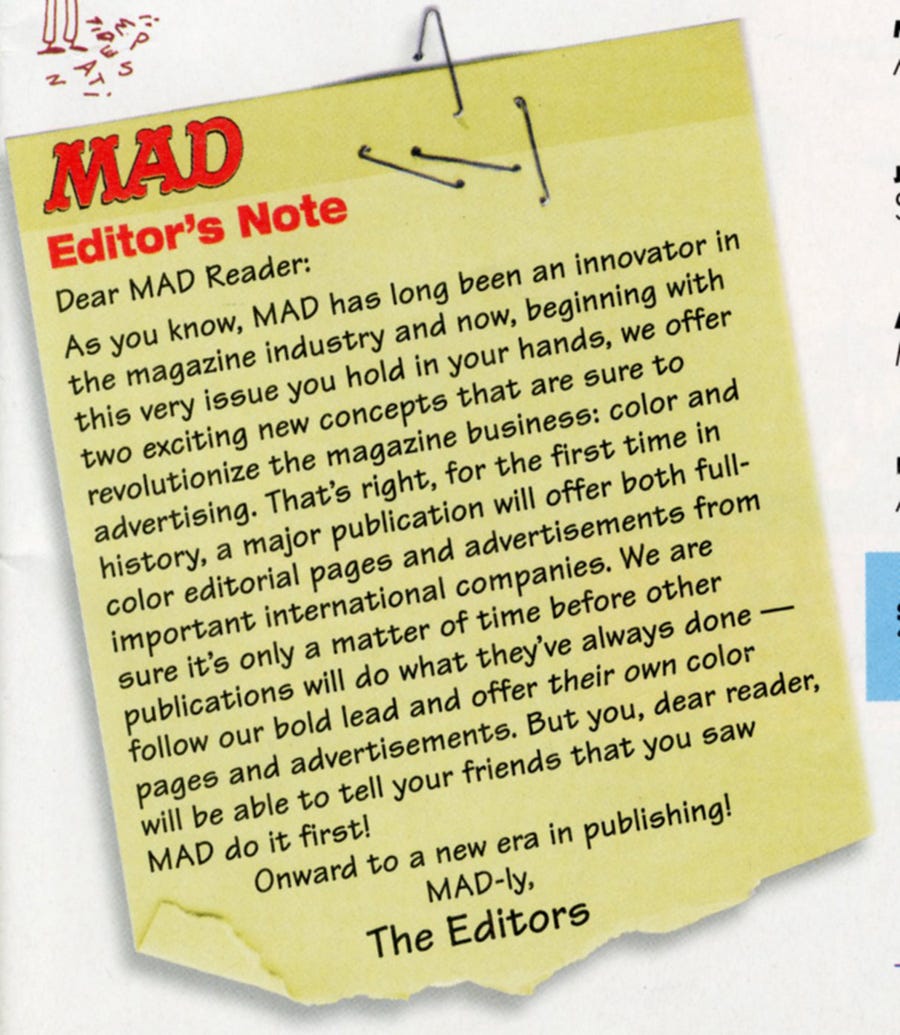
In typical MAD fashion they point out the absurdity (in advance) of anyone being upset about MAD switching to color and taking ads. They took on ads again to help pay for the switch to color and upgraded paper stock, which needed to be done if MAD was going to have any chance to continue very far into the 21st century.
That said it was pretty jarring for longtime readers to see actual ads in the magazine. #403 had ten ads. Most were for video games, a few were for a band’s new album, “Corn Nuts” and “Altoids”. Many readers were upset, feeling MAD had ‘sold out” and their ability to skewer whomever and whatever they wanted was compromised because they were now beholden to their advertisers.
First, let’s bust the myths:
I say MAD started running ads AGAIN because MAD used to have ads. When MAD was a comic book it had plenty of ads, like all comic books had. MAD also ran a few ads in its first two years as a magazine, which they labeled “real advertisement” to differentiate the actual ads from the ad parodies. The last real advertisement that ran in MAD prior to issue #403 was for “Famous Artists School” on the inside back cover of issue #32, April 1957.
Gaines was against running ads in the magazine, but only partly for philosophical reasons. Gaines was quoted in an interview on 60 Minutes that he felt MAD could not take ads because they wouldn’t be able to then poke fun at other companies or other ad campaigns: “We long ago decided we couldn’t take money from Pepsi-Cola and make fun of Coca-Cola.” However his main reason for being against ads was far more economically based. Gaines thought the small amount of revenue they generated was not worth the time, trouble, and extra expense of dealing with advertisers, who expected higher production values and better paper stock for the publication that would have negated much of the ad revenues. Also, MAD readers were having trouble differentiating between real ads and fake ads in the magazine despite the “real advertisement” disclaimer. It started out being more about not wanting to pay for better paper than any high-minded stance against bias.
As for MAD being unable to effectively satirize the world at large because of some ads for Corn Nuts, I saw no evidence of that. But who really knows? Maybe MAD had a really hard hitting piece in the works savagely taking Corn Nuts down and they had to kill it so they wouldn’t anger the influential Illuminati shadow corporation that is Nabisco. I do know I worked on several parodies of video games and video game culture over the years that ran in issues that contained ads for... video games. I seriously doubt there was ever a moment that the fact that ads were running in MAD affected the content at all.
The ads didn’t really last long. In just a couple of years most of the ads in MAD were in house ones for MAD books or DC Comics stuff. No one noticed.

I did a little different image for a couple of Jeff Dunham’s shows earlier this month, when he and Gabriel “Fluffy” IglesIas teamed up for a couple of nights in New York state:
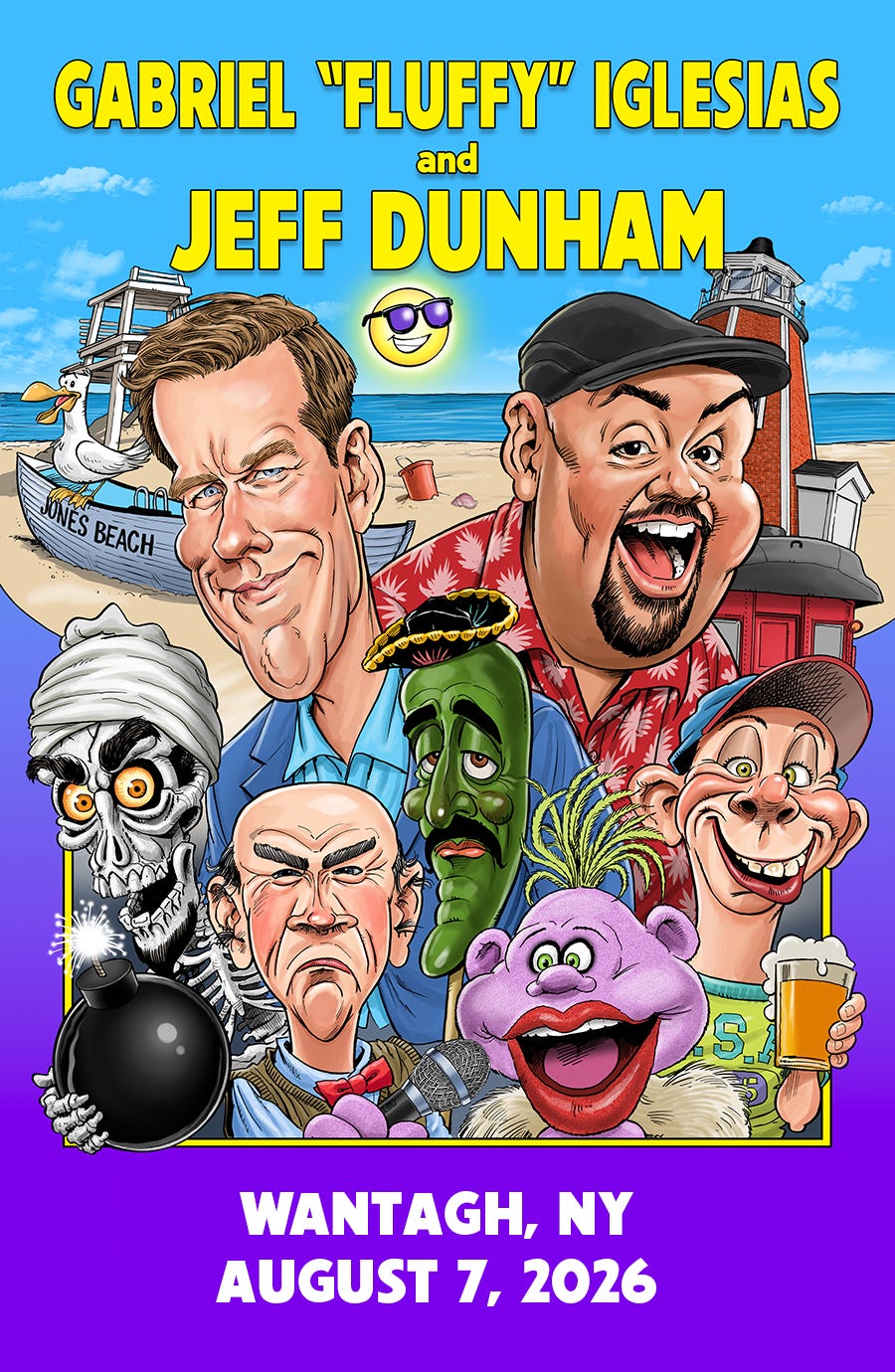
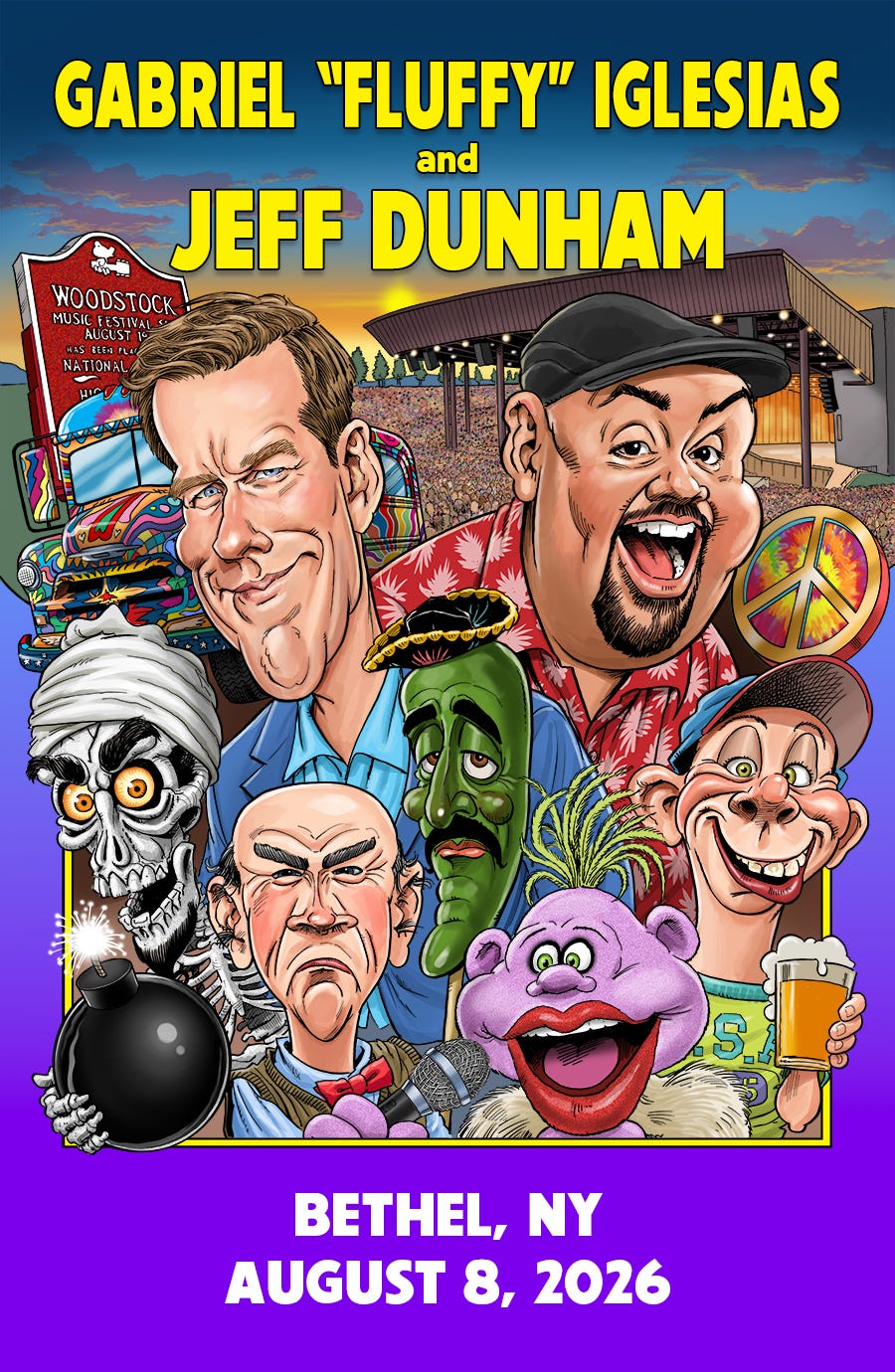
Like his other shows, these images were available to order On-Demand right from your seat at the show on T-Shirts and other stuff.

That’s it for this week’s “Ink Stained Wretch”! As always, if you liked what you saw please share it with others. Remember I’m always looking for feedback, questions for the mailbag, and suggestions for future Sketch o’the Week subjects. Just reply to this email with any of the above! And always remember... it’s crackers to slip a rozzer the dropsy in snide!

Comments
Nothing yet. Say the first thing.
Sign in to join the conversation.