
This edition of the newsletter contains
By the way,
Being hands-on is the best way for you to learn. Practice interesting programming challenges like building your own BitTorrent client, Redis, DNS server, and even SQLite from scratch on CodeCrafters.
Sign up, and become a better engineer.
Be the Person Everyone Wants to Work With
Beyond a point, your reputation determines how high you will go in the career ladder. And it takes months, sometimes years, to build one that truly matters.
The people who consistently grow, get trusted with important projects, and influence decisions aren’t always the loudest or most self-promoting. They’re the ones people want to work with, listen to, and trust.
Here are a few principles I’ve followed that might help you too.
be approachable and respectful
back your ideas with reasoning and data, not volume
follow through on your commitments
be honest, especially when things go wrong
You don’t need to build a personal brand, keep tweeting, or blogging to get noticed. Just do the basics well and consistently
deliver work on time, without surprises
understand your systems in and out
find ways to improve systems and processes
contribute meaningfully to design discussions
leave constructive comments on code reviews and design documents
The most important of all, share credit with the people who deserve it. One of the fastest ways to grow your reputation is to handle feedback well.
listen without defensiveness
thank people for their input
act on what makes sense and follow up
People notice when you’re genuinely open to improvement - it signals maturity and confidence.
Reputation isn’t built overnight. It takes consistent effort over time, but the rewards compound - more opportunities, greater autonomy, and lasting impact.
Be the person everyone wants to work with.
Here’s a video from me
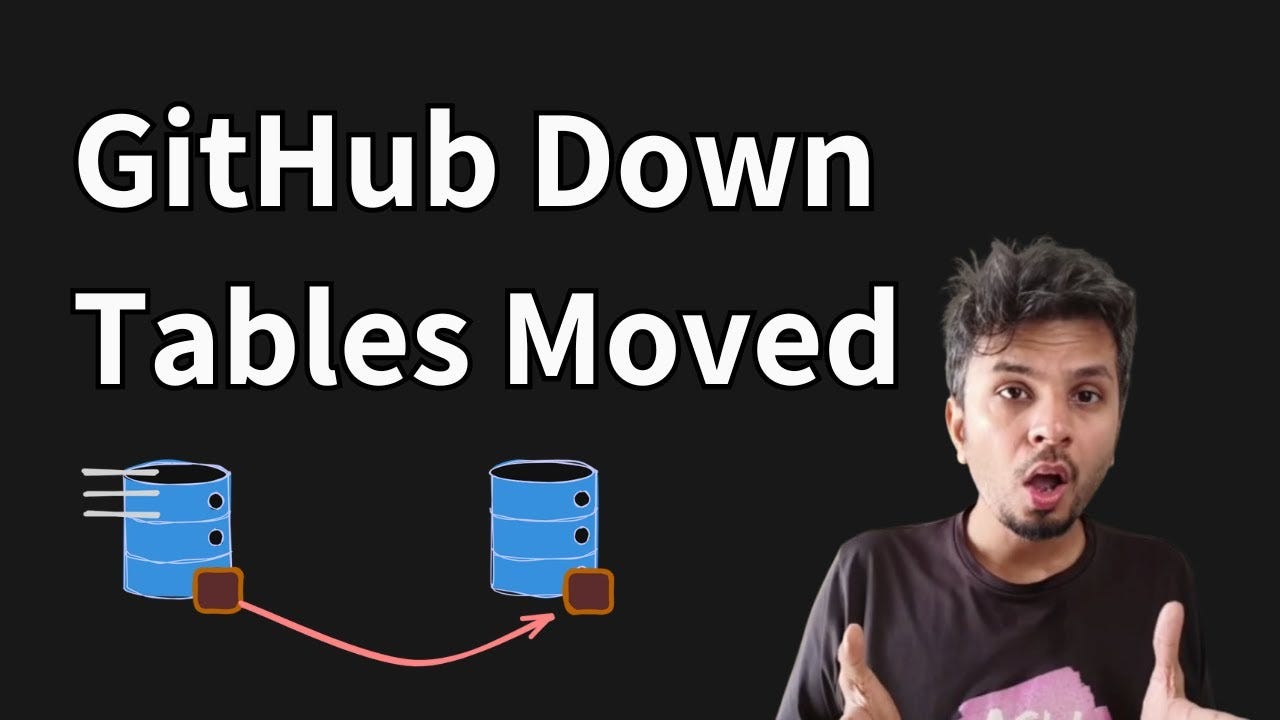
I published a video - Scanning Bug That Took Down GitHub
Imagine you are trying to create a new GitHub repository and it is failing, failing for 53 minutes.
This happened with GitHub in April 2021, when, for 53 minutes, people were unable to create any new repositories. This has to be one of the most amusing outages that I have seen in recent times.
In this video,
we dissect this outage,
understand the root cause of it,
look at an important development best practice, and
conclude with an understanding of their mitigation process.
Here’s a paper I recently read
I spent some time reading Megastore: Providing Scalable, Highly Available Storage for Interactive Services
Achieving strong consistency at a Google scale is an incredibly challenging problem. This week, I am reading a 2011 paper from Google titled Megastore.
Megastore leverages both NoSQL-like scalability with RDBMS-like semantics and goes all-in on synchronous replication using Paxos. This might seem okayish today, but think about it; this paper came out in 2011.
The core idea is to partition the data into entity groups, each with its own Paxos-replicated log, so transactions are strongly consistent but scoped. Thus, Megastore offered local reads at any replica, and could pull off writes with just a single WAN round-trip. Something which seems very common today :)
In 2011, Megastore handled 3B writes and 20B reads per day across petabytes of data. Most services using it had hit >99.999% availability, with typical write latencies around 100–400ms.
Google is certainly an engineering-first company. The decade-old systems there have become the norm for the rest of the world today. By the way, give this paper a read if you find distributed data systems interesting.
You can download this and other papers I recommend from my papershelf.
Three interesting articles I read
I read a few engineering blogs almost every day, and here are the three articles I read and would recommend you read.
Thank you so much for reading this edition of the newsletter 🔮 If you found it interesting, you will also love my courses
I keep sharing no-fluff stuff across my socials, so if you resonate, do give me a follow on Twitter, LinkedIn, YouTube, and GitHub.
Comments
Nothing yet. Say the first thing.
Sign in to join the conversation.