
Don’t mistake friction for fracture. While the tabloids market a “broken” heir in need of correction, the reality is a calculated hardening of the office. William isn’t being prepared for the throne; he is already doing the work of it.
There is a theatrical insistence—mostly among the more feverish outposts of the digital press—on describing the relationship between King Charles III and Prince William as a state of “war.”
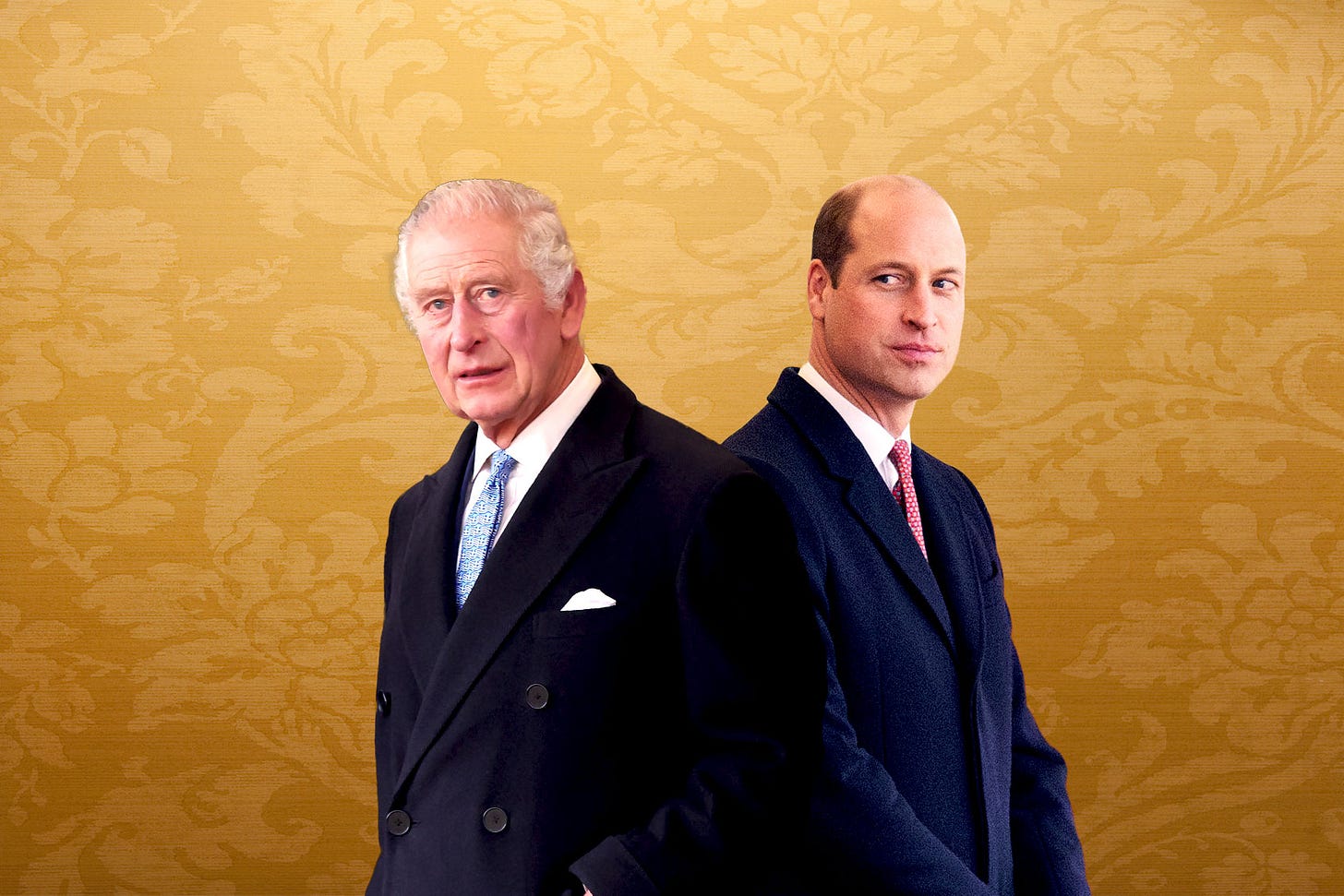
The latest iteration of this narrative—a claim that the Prince of Wales is in “therapy” to “train” him for the throne—is an arresting piece of fiction. It is also a revealing one. By framing the heir as a volatile student in need of parental correction, the story attempts to pathologize what is, in reality, a fundamental shift in institutional strategy.
What the media mistakes for a lack of diplomacy is actually the emergence of a new craft: the diplomacy of silence.
We are witnessing a divergence in constitutional philosophy. Where the King seeks to be the “Great Convener”—a man who believes in the power of persistent persuasion—his heir prefers the strategic utility of the boundary. William has replaced the “grey area” of the previous reign with clearly defined lines. This is not a failure of temperament; it is a calculated hardening of the office.
Narratives, like currency, rarely circulate without incentive. A portrait of a wayward heir serves certain interests—specifically those who find a disciplined, boundary-setting Prince harder to navigate than a “convener.” If one cannot influence the man, one instead markets the idea that he is “broken.”
By drawing closer to the machinery of state, William is closing the habitual gap between Kensington Palace and Buckingham Palace through competence, not the sort of “therapy” that arrives fully formed in headlines. These are not the gestures of a man being “corrected.” They are the habits of one preparing to decide.
The difficulty with stories of royal “war” is that they are hopelessly imprecise. They mistake friction for fracture, and strategy for sentiment. The monarchy has survived far worse than a disagreement over tactics. But the press prefers “war” because a fight is easier to package than the slower, less photogenic work of institutional transition.
Ultimately, the claim of “therapy” tells us nothing about the Prince, but a great deal about the desperation of the narrative-makers. They have mistaken discipline for obstinacy—and in doing so, they miss the real story: the Prince isn’t being prepared for the throne. He is already occupied by the work of it.
By Catherine White
FURTHER READING:
Does the King’s formal "duty" still hold more value than the Sussexes’ personal "register," or is the old language of the monarchy becoming a dialect no one speaks anymore?
Comments
Nothing yet. Say the first thing.
Sign in to join the conversation.