
Every Holy Day, there is a struggle, a great anxiety, for Christians. A pull away from what we are celebrating, what we are mourning. A pull away from our focus. A numbing from the world. A distraction from the enemy. A separation from God. In our most holy of days…
If we have been set free, why do we still live under the laws of the enemy?
If we are not of this world, why do we still participate in the ways of the world.
Separating ourselves from the world. From the pagan intrusion to our most holy of days. It can be a challenge. Especially if you have children. And you grew up in a secular culture like many of us did. Where our parents didn’t blink an eye as we fully embraced constant “commercial” holidays. As the years went by, mounds of gifts and treats easily replaced true meaning. We stopped letting ourselves feel the heaviness of the holiness. Instead, we chose to numb ourselves with merriment and our children with candy and toys.
Today
Most churches begin marketing their “Easter Sunday” weeks prior. Asking folks to bring a dish to the potluck. To volunteer at the Easter Egg Hunt. To donate candy and money to the celebration. They mention it over and over.
In the past, I would have to quietly tell our children, “No, no, we won’t be attending.” And later explain to them (again) why we don’t participate in “Easter”. Why we don’t do plastic eggs, candy, bubbles, bounce houses, Easter baskets, and the Easter Bunny.
None of it has anything to do with Jesus’ last days. Not a thing.
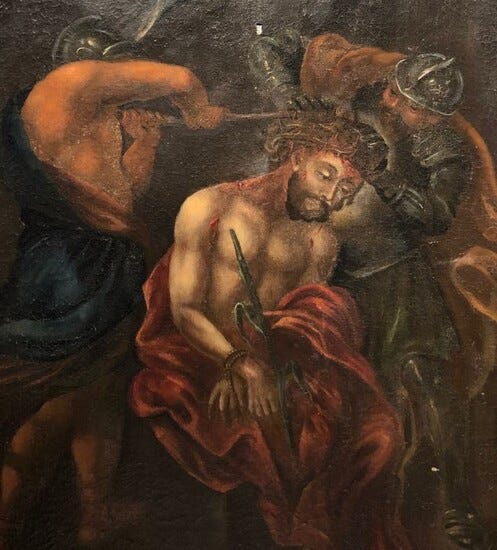
Easter
Like Christmas and other Christian holy days, Holy Week is often misunderstood, misrepresented, and miscelebrated.
Paul was the first to connect the risen Christ to Passover. In 1 Corinthians 5:7, he refers to Jesus as the paschal lamb who has been sacrificed for his people’s salvation. Add to that the fact that Jesus celebrated the Last Supper with his disciples during Passover and it makes sense that even today the Feast of the Resurrection is connected with the Jewish holiday.
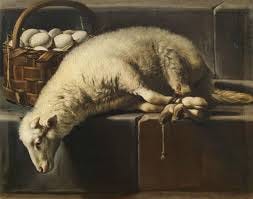
In the 2nd Century (around 100 years after Jesus’ Resurrection), early Christians were still celebrating Passover, which in Hebrew is Pascha. Although, they celebrated it for different reasons after the law was fulfilled. Because most early Christians were Jewish, they continued to honor the traditional Passover, now celebrating Jesus as the sacrificial lamb, and added Yom HaTechiyah, “Day of Resurrection” to their Holy Week celebrations.
It wasn’t until the 7th Century, after Christianity had spread throughout the world, that the word “Easter” was used to refer to Yom HaTechiyah. The Venerable Bede, a seventh-century Anglo-Saxon historian, writes that the word Easter comes from the goddess Eostre, an ancient goddess of fertility and the goddess of the dawn who originated in what is now Scandinavia. Over time, early Christians started referring to the Feast of the Resurrection by the name of the month in which it was celebrated—Eosturmonath (what we now call April). This theory neatly ties in with some of our other Easter customs. Easter eggs and the Easter Bunny, for example, are also considered ancient symbols of fertility and tied to the worship of Eostre.
Another, related theory suggests that Easter comes from an old German word for “east,” which in turn is derived from a Latin word for “dawn.” In the past, the word easter could mean “to turn toward the east” and didn’t necessarily have any implied religious meaning.
So, why in the world do we even use this term in the Christian Church when it literally has no meaning for us?
5 Days
Just as the Lord’s Supper was never just a “remembering” of the passion of Christ, the Pasch was never just an “anniversary celebration” of his resurrection. The celebration of the Pasch every spring was a way to relive the events of that week in a way that brings them back around so that we can participate in them — just like the celebration of the Passover brought back the events of the Exodus for faithful Jews.
We live in the time between these two “days.” So we, as Christians, actually have five Passovers. The hope of the messianic banquet was partly fulfilled at the Last Supper, when Jesus instituted the sacrament of the Eucharist. But then he said he would not drink from that cup again until the final consummation at the wedding banquet of the Lamb when the kingdom of God is fully revealed, after the final resurrection. (Jesus hinted at this in his parable of the wedding banquet in Matthew 22.)
The whole week is considered a single ‘holiday” or “holy day” in which Christians are meant to participate in Christ’s passion and resurrection.
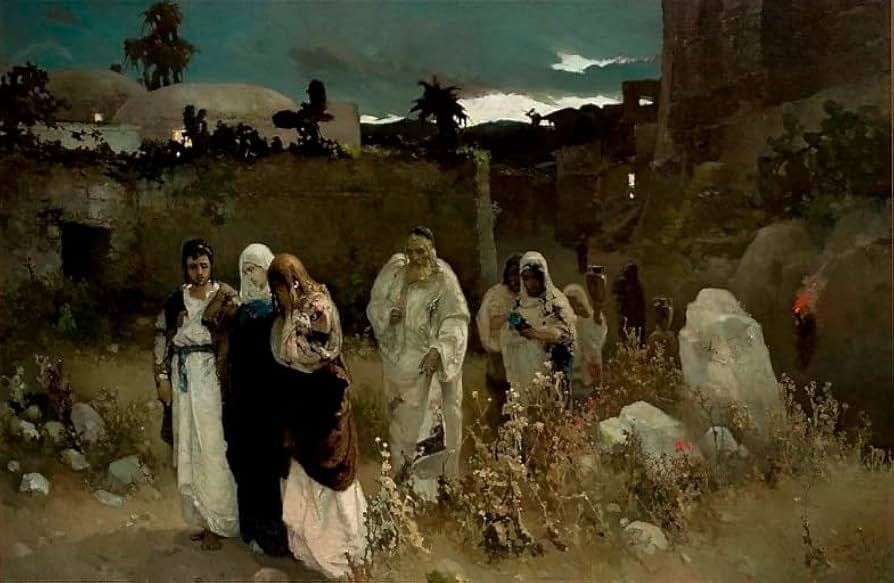
Renewal
There was also a certain way in which the early Christians treated Resurrection Day like the beginning of a new year, in the same sense that we might make New Year’s resolutions to improve ourselves and our habits. So the early Christians used Lent, and then the Pasch, to solidify ways in which they wanted to take their spiritual lives to the next level.
This is our beginning. Our New Year.
As Christians, we are called to use this season to make real changes in our lives. Not just go back to our old ways after the breaking of the Lenten Fast.
Each year, we are challenged to be more disciplined than the one before. To be healthier in our mind, body, and spirit. To be stronger. More obedient. More faithful. More bold. More loving. More serving. Less selfish. Less of this world. More radically different. Set apart. To allow God to make straight, transform, and elevate us onto the path to heaven.
This is what Jesus meant when he said that “no one who puts his hand to the plow looks backward” — to do the work of plowing you need to keep your eyes on the row ahead of you. Eyes ahead. Don’t get distracted. Focus on the work to be done. Luke 9:62
Recurring Rhythm
Pascha is not just one day. Or even the anniversary of one day. It is a part of the recurring cycle of God’s past providential intervention. It is the seasonal rhythm of our present participation in it.
Cartoon bunnies, and toys, and candy are a mere distraction. An early indoctrination. That we must trade the somberness with merriment. That we must distance ourselves from the darkness. That we must replace the pain with pleasure.
Live It
Walk with Jesus this week. Sit in the somberness. Praise in the darkness. Allow yourself to feel His pain as He was abandoned, betrayed, hunted, questioned over and over and over, mocked, spit on, humiliated, brutally beaten. Carry the cross with Him this week. Feel the heaviness. Hear his words. “Daughters, do not weep for me…” Luke 23:28
We do not lament as the daughters of Jerusalem did at the sight. But we do shed tears now. Not because it is the end. But for the crescendo of emotion. For what we know is coming on Sunday. For the new covenant. For a new beginning!
Walk with him to Calvary today, sisters.
Wait tomorrow. Let it be silent as the tomb where He laid.
Rejoice on Sunday! For Hell didn’t win after all! And He is Risen, indeed!
He is alive!
Because He lives, so do we! Eternally.
Walk through the emotions. Live it out. Teach it to your children. They will outgrow the candy and toys. The fun will fade. The numbness will wear off. But the meaning, the rawness, the real historical and biblical account, making it alive, that will carry with them for their whole lives. And will last long after we have left them for Heaven.
Be strong and courageous. Eyes ahead, sisters.
~Casey G.
Not Consumed, Holy Week Study (We love all of their studies! They have a big sale twice a year if you’re on a budget like we are.)
Resurrection Garden Project (A friend gave us this idea. We did it for the first time this year. And the boys truly enjoyed it. They were quiet and focused to make it look just right. Then we all stood back and admired it. They asked questions. For them, this was as close to Jesus’ burial as it gets.)
Children need hands-on projects while they study and learn. Meaningful, age-appropriate crafts we did this year: Chalk Art, Stained Glass Cross.
Here are some more ideas.
We’re going to do a version of this tomorrow. Instead of doing an Easter basket, I plan to replace the sin stones with paper notes of encouragement, forgiveness, and mercy.
Now, we don’t do “easter baskets”. We have a tradition of doing a “new season” basket with each season. This happened last week. The boys received clean candy (Yum Earth, Justin’s), some books they’ve been wanting (David series and The Three Little Pigs), new Christian CD for the car (they are huge For King and Country fans), DVD for road trips (They got David Movie and Joseph this year). Some things we’ve done in the past are calendars, bathing suits, cups, toys, something they’ve had their eye on. Remember this is not an Easter basket, or Christmas gift. It is to celebrate a new season.
Lastly, we slow down. We pause regular school. We cancel plans and play days and what events we can. We say “no”. We communicate to folks we are honoring Holy Week. We’ll catch ya next week. We lighten our plate. We stay home as much as possible. We talk about Jesus a lot. The boys have asked nearly one hundred questions about Holy Week. It’s been wonderful.
I personally read scripture each morning. I take my time. Allow myself to go through the emotions. Pray, lots of prayer, reflection, and quiet.
References: (A note on my references…I am not Catholic myself, although the Catholic Church has the most thorough research when it comes to the Early Church.)
https://catholicreview.org/the-truth-about-how-early-christians-celebrated-easter/
https://uscatholic.org/articles/201803/why-do-we-call-the-resurrection-easter/
https://www.sydney.edu.au/news-opinion/news/2017/04/13/origins-of-easter.html
No posts
Comments
Nothing yet. Say the first thing.
Sign in to join the conversation.