
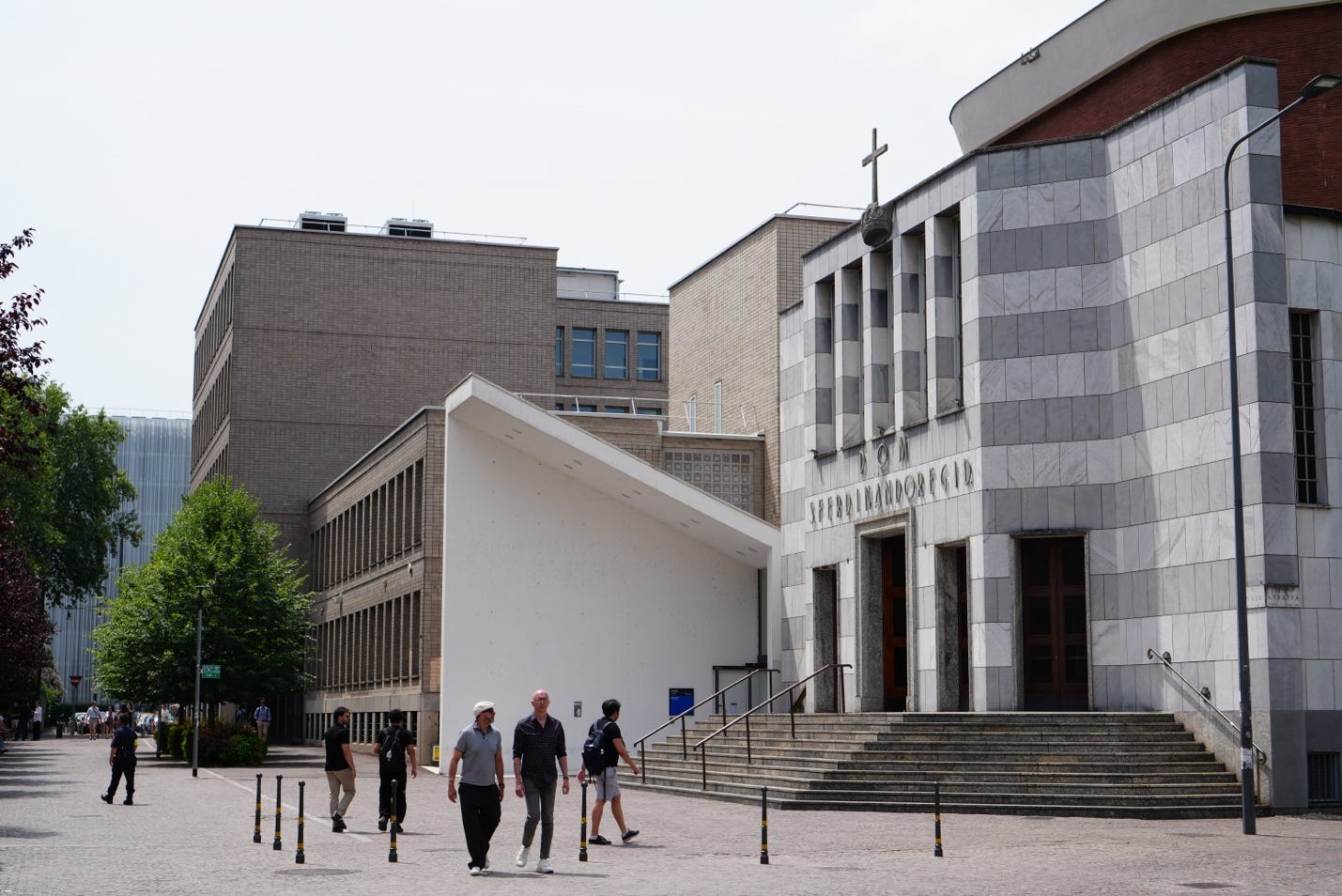
The neighborhoods around Bocconi University give off a sense of relaxation. I see older men in tan linen suits zipping around on vespas, groups of people sitting in cafes sipping on cappuccinos. I have been in Milan this week for European Conference for Information Systems, and most mornings I have walked the streets near campus, kind of just meandering around to see what I can find. The architecture is unmistakably European, and it reminds me of Stockholm, even though the sense of relaxed ease is different here.
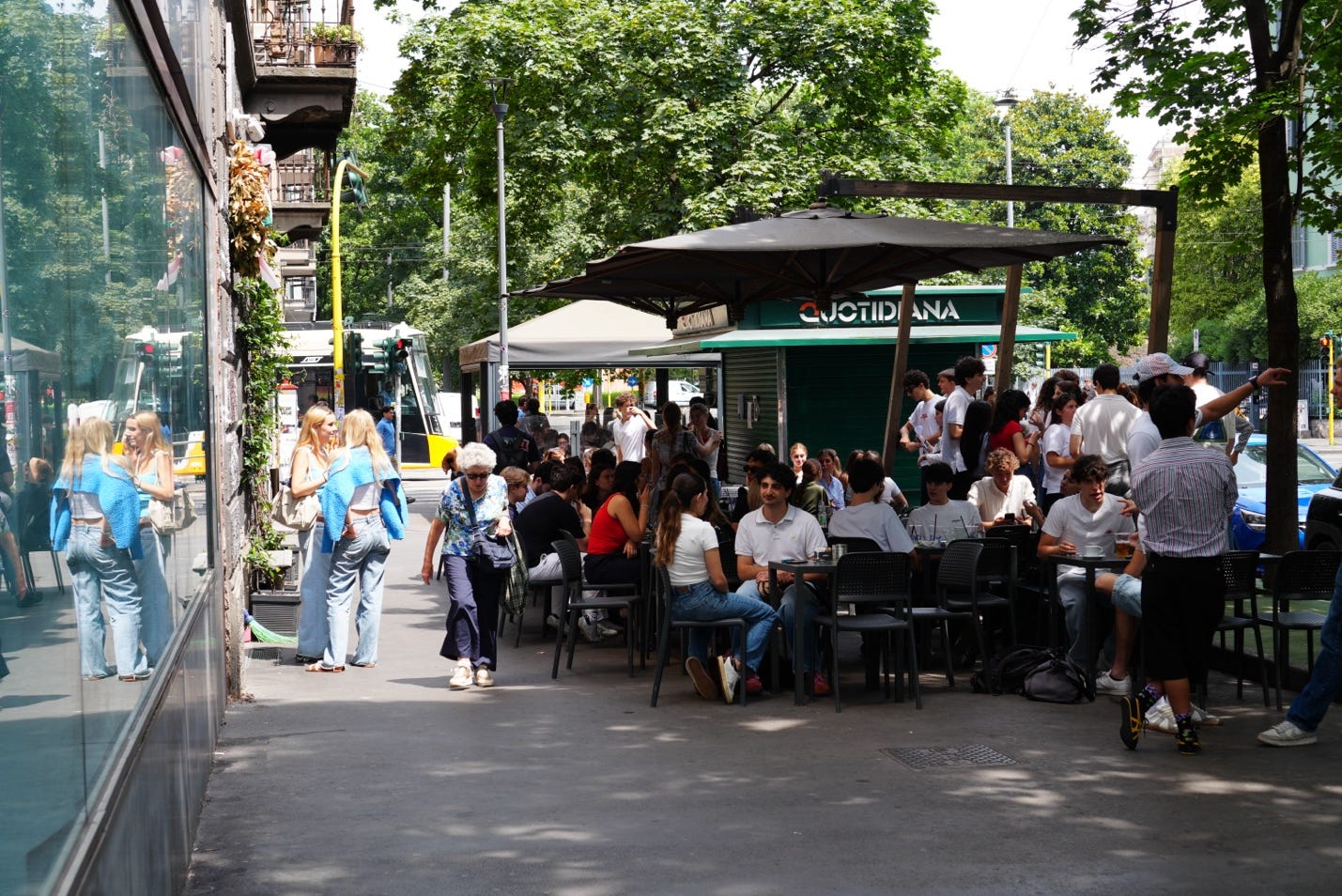
I noticed that the environment helped stimulate the reflective side of my mind, and I found my thoughts to be more creative than usual. Part of it is probably being outside of my normal routine, but I also think that the sense of ease provided by the physical space and the people around me contributed to this state of mind. Walking around campus, watching people spill out of a seminar and keep arguing on the sidewalk, I was reminded that this is what a university is supposed to feel like. An intellectual community, yes, but also a physical space that supports said community. People who meet, on purpose and by accident, to share what they are thinking. That thought would have been unremarkable in the past. Unfortunately, it is not unremarkable now.
As for many of us, most of my professional life now arrives through a screen. Meetings are more often than not on Zoom. Many conversations happen in various chat channels and messaging apps. None of this is bad—remote work and digital mediation is often convenient and enables collaborations that could not have happened without it. But the convenience has a texture that sometimes vexes me. I can go through an entire day having spoken to thirty people and seen none of them face to face. The digital tools that connect us to everyone at once are very good at keeping us slightly apart from each of us.
I think AI will exacerbate this trend. The more capable our tools become at standing in for another person—drafting emails, summarizing meetings, etc., the easier it becomes to never actually interact directly with other humans. The friction that used to push us into each other’s company is increasingly being engineered away, one agentic workflow at a time.
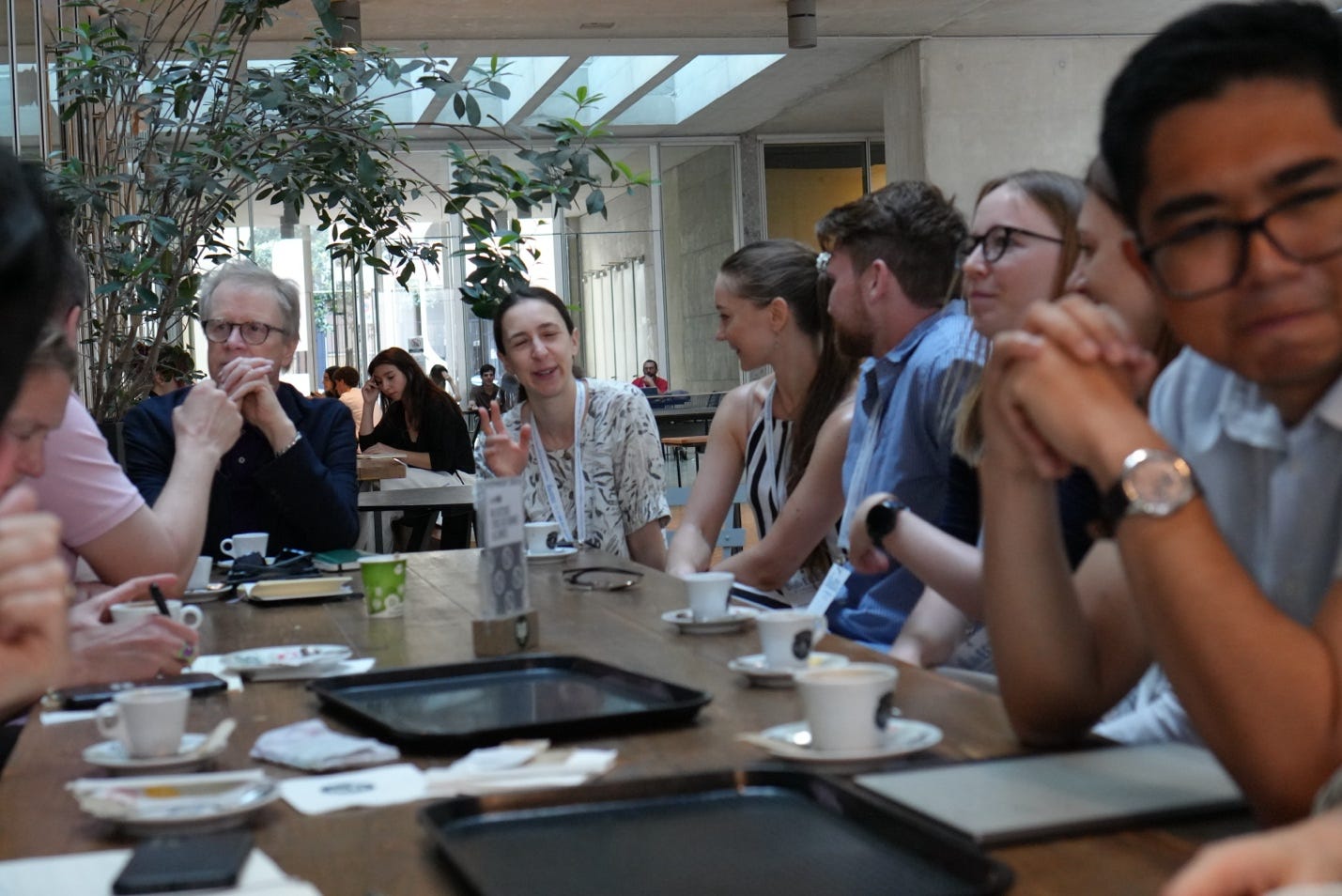
When you share a physical space with someone, you are not just exchanging information. You are reading their face, catching the half-formed idea they would never put in writing, noticing that they hesitated before agreeing. A seminar room is dense with this kind of signal. A video call strips most of it out and leaves you with the words alone. It is media poor.
I think that while remote work can serve as a useful adjunct to in-person meetings, it needs to be anchored by meeting each other face to face, by working in the same physical environment. I think this is so because the main output of a university is not static knowledge, but rather the process of shared inquiry—the slow, social, irreducibly human business of thinking alongside other people and being changed by it. That happens in a place. It happens when young people flood university campuses each fall and the energy becomes something you can feel in the air. It happens on the quad, the lab, the seminar that runs long. A university can use remote tools, and should. But it cannot be remote-first without ceasing to be the thing it exists for.
This means that the task ahead of us is not only to adopt the new AI tools that will be churned out in the next few months and years, immensely capable as I am sure they will be. It is to deliberately build and rebuild the places, cultures, and institutions where people still meet face to face. Educators are already reporting that students are struggling with loneliness and difficulties in connecting with each other, and their communities, in healthy ways. Milan reminded me how good it feels when a place gets this right, and how much work we have to rebuild the physical communities that allow the digital spaces we build to be useful as complements, not replacements.
Thanks for reading Building with Machines! Subscribe for free to receive new posts and support my work.
Comments
Nothing yet. Say the first thing.
Sign in to join the conversation.