
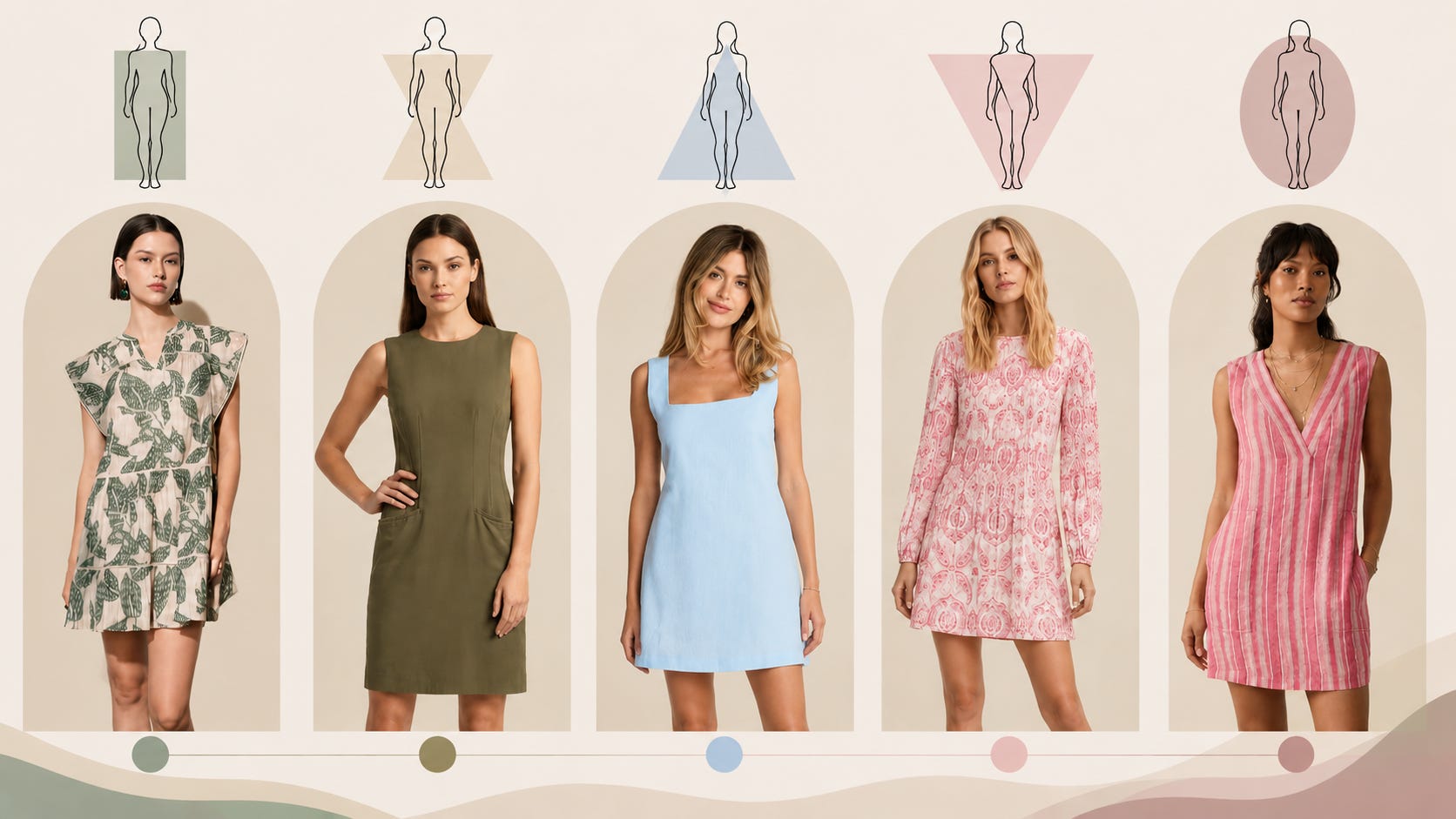
The shift dress has always sold us a fantasy: effortless, chic, vaguely French woman running late to lunch. In reality? Most of us have put one on and immediately thought, Why do I look like a lampshade?
A shift dress is a dress that hangs straight from the shoulders with little to no waist definition. It skims the body rather than hugging it, creating a clean, easy silhouette that’s known for its comfort and versatility.
The style became popular in the 1960s, but today’s versions range from minimalist and tailored to bold and fashion-forward. While classic shift dresses are cut relatively straight through the waist and hips, modern interpretations may include subtle shaping, sculptural details, statement sleeves, interesting necklines, or textured fabrics.
Done right, a shift dress feels cool, clean, and expensive. It skims instead of clings. It survives heat waves. It works for work, dinners, vacations, gallery openings, baby showers, and those mysterious “smart casual” events no one can define. Done wrong, though, it can feel shapeless, flat, or corporate.
The trick now is knowing how to choose one ideal for your body shape. The biggest misconception about shift dresses is that they only work on one type of body. In reality, almost everyone can wear a shift dress. The key is choosing the version that creates balance instead of fighting your proportions.
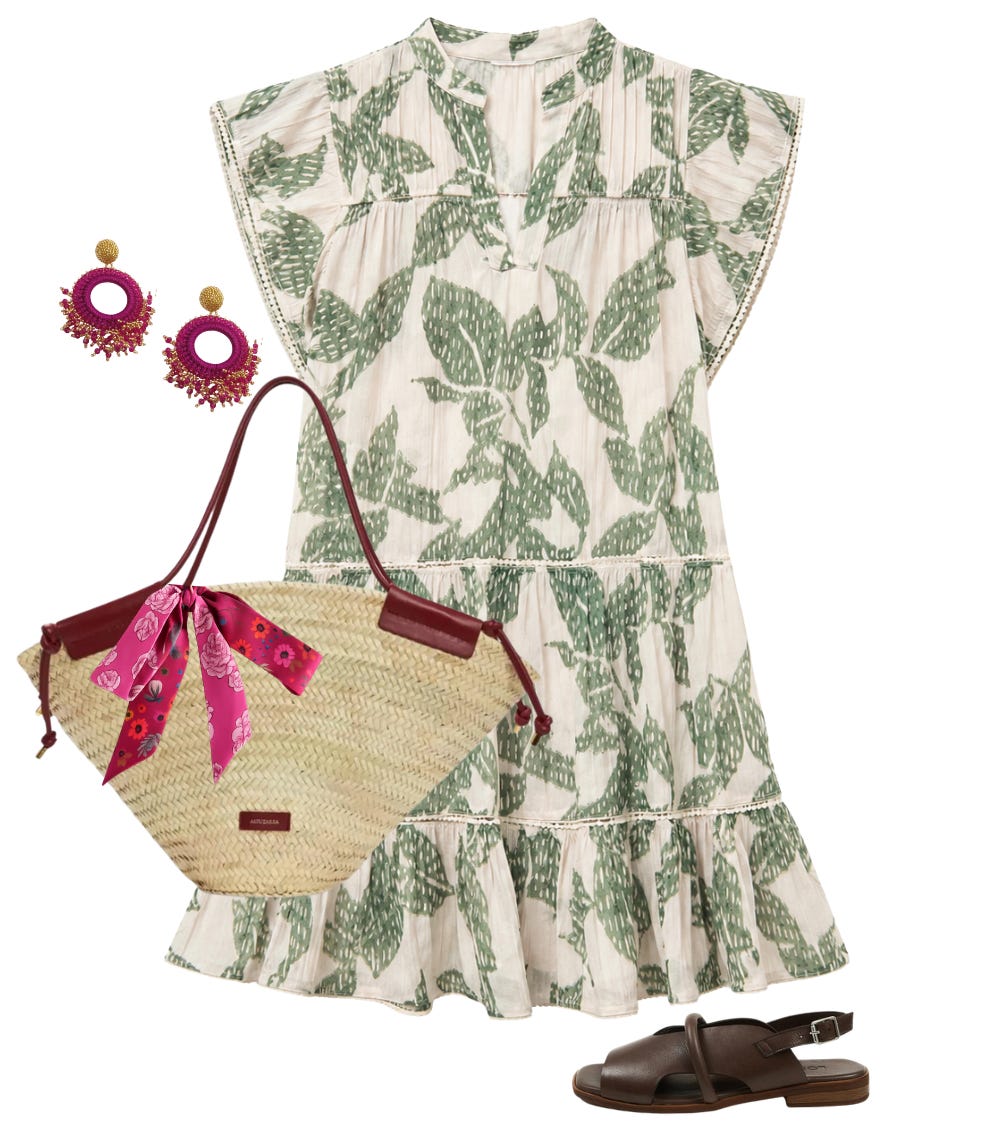
Best shift dress: A shift with structure, texture, or sculptural details.
If your shoulders, waist, and hips are fairly aligned, the goal is creating dimension.
Look for:
Statement sleeves
Shoulder detail
Subtle A-line shaping
Bold prints or texture
Utility pockets or seams
Avoid ultra-thin, straight-cut fabrics that hang completely flat.
Why it works: You’re adding shape and visual movement without needing a fitted silhouette.
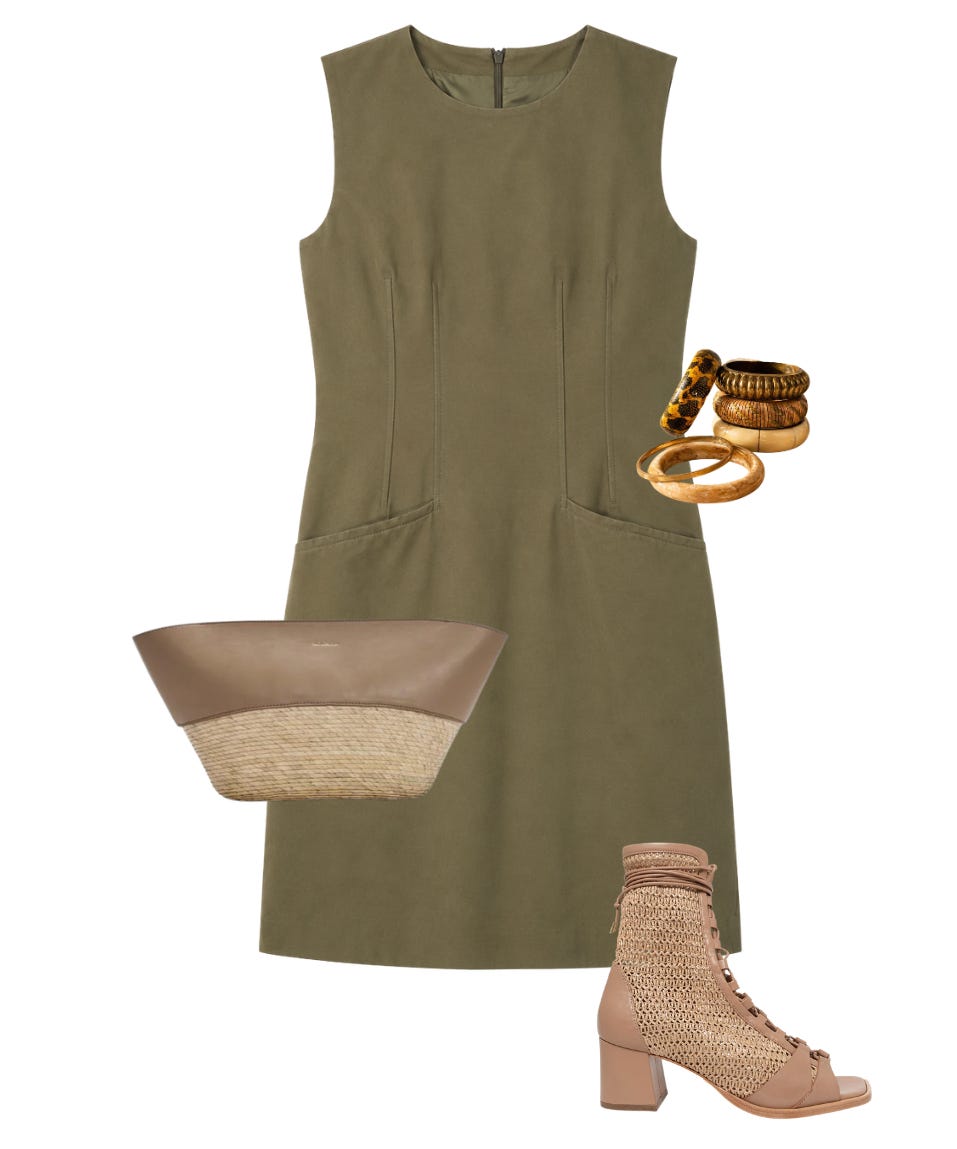
Best shift dress: A softly tailored shift that skims instead of swallows.
Many hourglass women assume shift dresses “aren’t for them” because oversized versions hide their shape entirely. The fix:
Choose structured fabric
Slight tailoring through the waist
Seaming that follows the body
Shorter sleeves or sleeveless cuts to keep visual lightness
Avoid oversized tent-style shifts.
Why it works: You keep the ease of the silhouette without losing all definition.
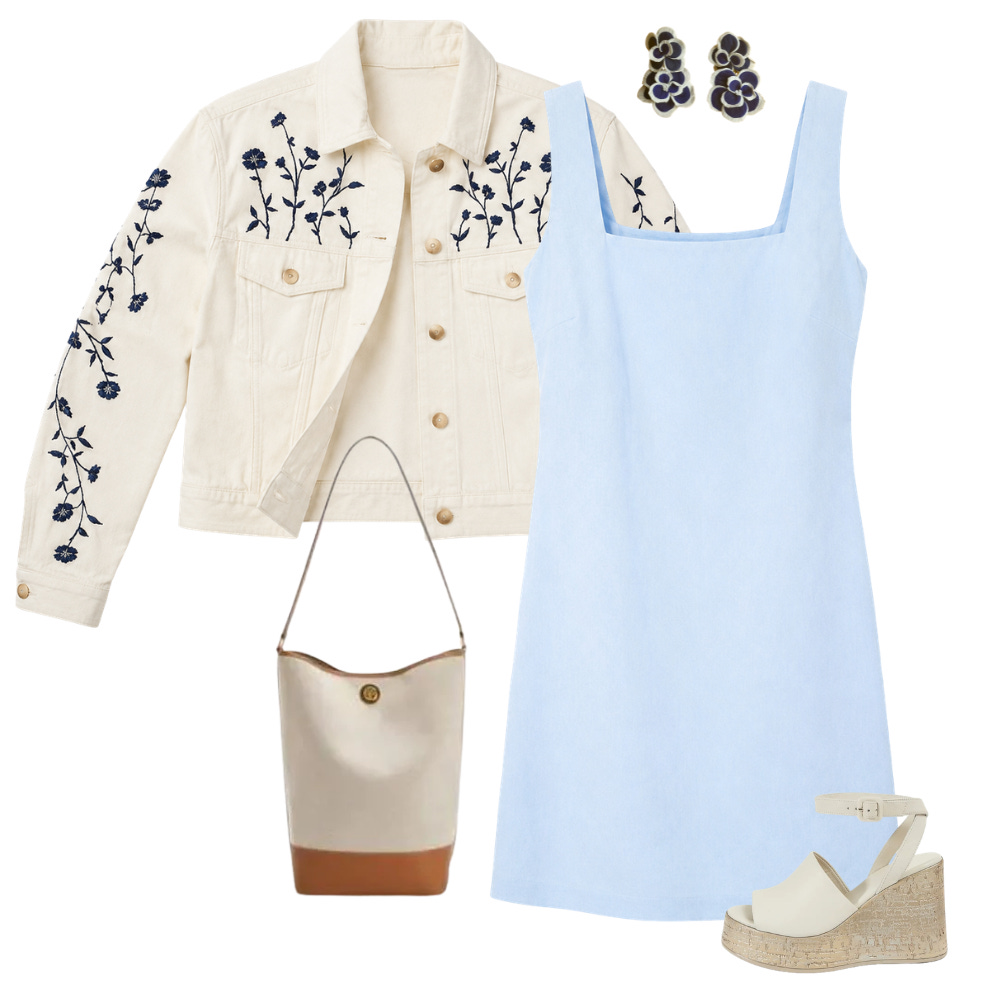
Best shift dress: A shift that brings attention upward.
The ideal version balances proportions by adding visual interest on top:
Boat necks
Embellished shoulders
Puff sleeves
Statement earrings with clean dress lines
Slightly wider neckline
A-line shifts also work beautifully here.
Avoid clingy fabric across the hips.
Why it works: The silhouette glides over the lower half while creating balance through the shoulders and neckline.
Best shift dress: A cleaner top with movement through the bottom
If your shoulders are broader than your hips, choose shifts with:
Simpler necklines
Minimal shoulder detail
Slight swing shape
Hem movement
Texture or detail below the waist
Avoid exaggerated shoulders or cap sleeves that widen the top further.
Why it works: The dress softens the shoulder line while adding balance lower down.
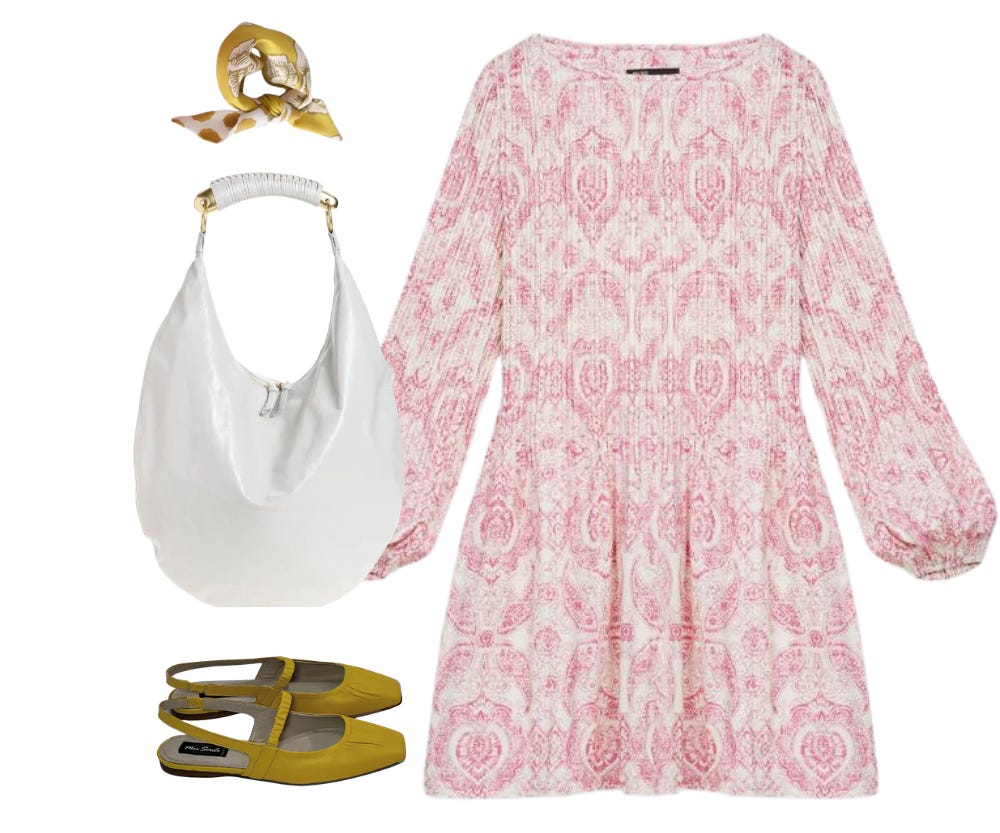
Best shift dress: A structured shift with clean lines and strategic drape.
The magic words here are structure and flow. Look for:
V-necks
Slight tailoring
Longer lengths
Matte fabrics with movement
Vertical seams or elongating details
Avoid stiff boxy cuts with no movement at all.
Why it works: A great shift dress creates a long, elegant line without clinging to the midsection.
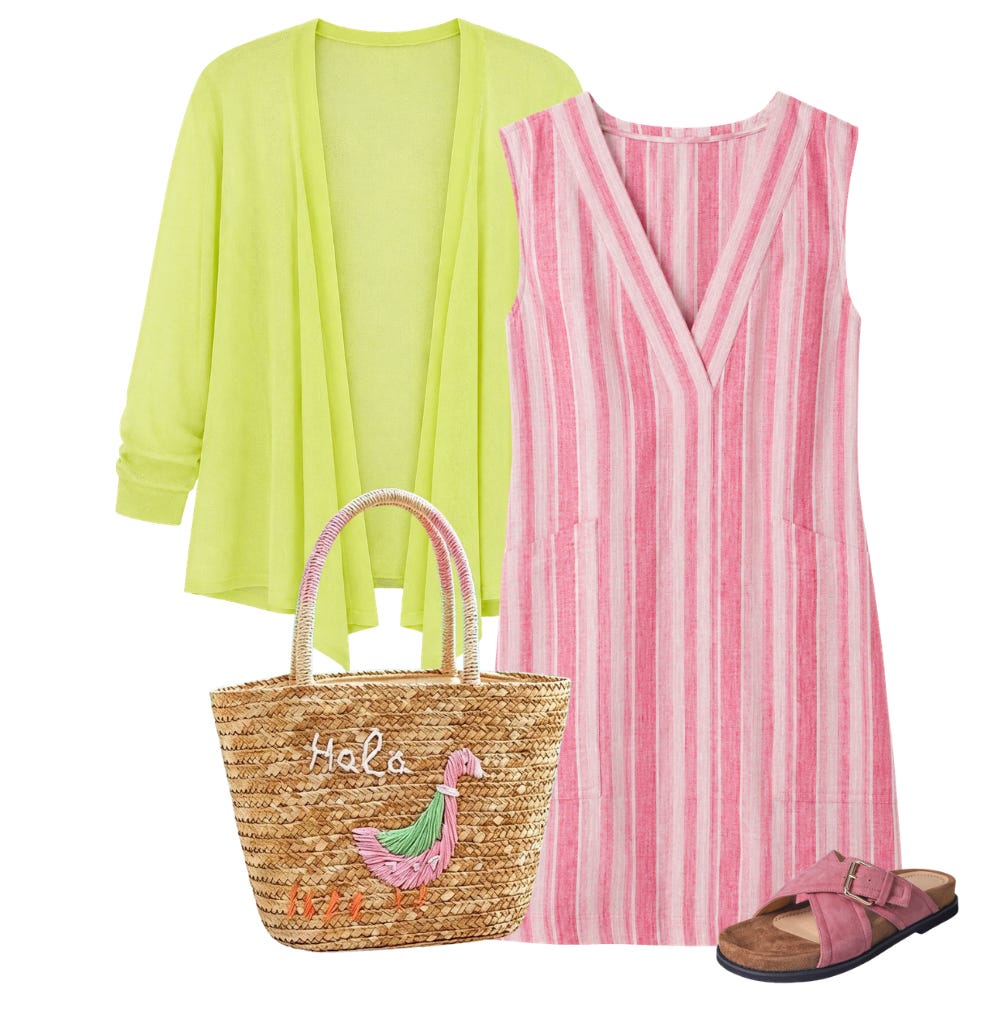
No matter your body shape, the most flattering shift dresses usually have:
Some structure
Intentional tailoring
Strong accessories
Great shoes
When a shift dress is done right, it becomes the ultimate one-piece wonder. Easy, polished, and the kind of dress that gives you fashion freedom instead of another outfit problem to solve.
From Our Closet to Yours,
-Armoire
Lookbooks
Annual Trend Report
Jan 27
If you’ve already flipped through Armoire’s Annual Trend Report, you know what we’re about to say next: this year is all about elevated confidence and fearless expression. And if you haven’t yet…well, consider this your official invitation to check it out.
Thanks for reading Dot Style! This post is public so feel free to share it.
Comments
Nothing yet. Say the first thing.
Sign in to join the conversation.