
It’s February of 2016 in Peoria, Arizona.
Shohei Ohtani won’t be posted to the MLB for another 2 years.
But at the Peoria Sports Complex, he’s taking reps on a back field with other Hokkaido Nippon-Ham Fighters. The staff on hand outnumber the fans watching the players, the select few aware of the generational talent that has traveled thousands of miles and lost 16 hours due to the time zone difference.
What seems something completely random as a Japanese baseball team traveling halfway across the globe is a longstanding and quiet tradition.
Arizona and Japanese baseball have a longstanding history, dating back prior to the inception of the NPB. In April of 1936, the Tokyo Yomiuri Giants would make a tour of exhibition games that had them play at Phoenix Municipal Stadium against the local all-stars.
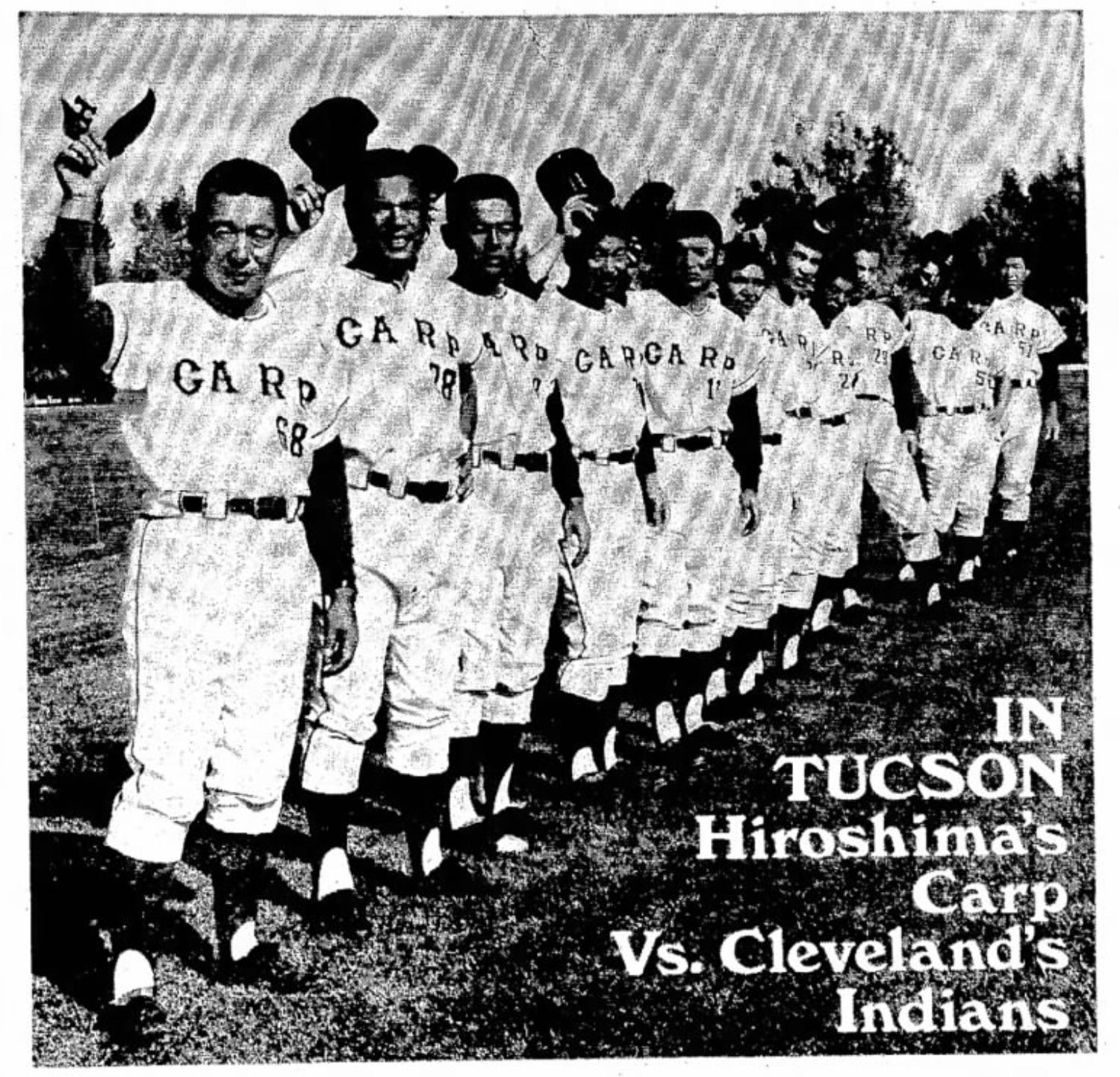
What we know of the NPB today has had teams spend spring training in Arizona since the early 70’s. Hiroshima Toyo Carp played the then Indians in Tucson.
The Lotte Orions(now Marines) being hosted in Casa Grande by the Giants in the since demolished Francisco Grande facility.
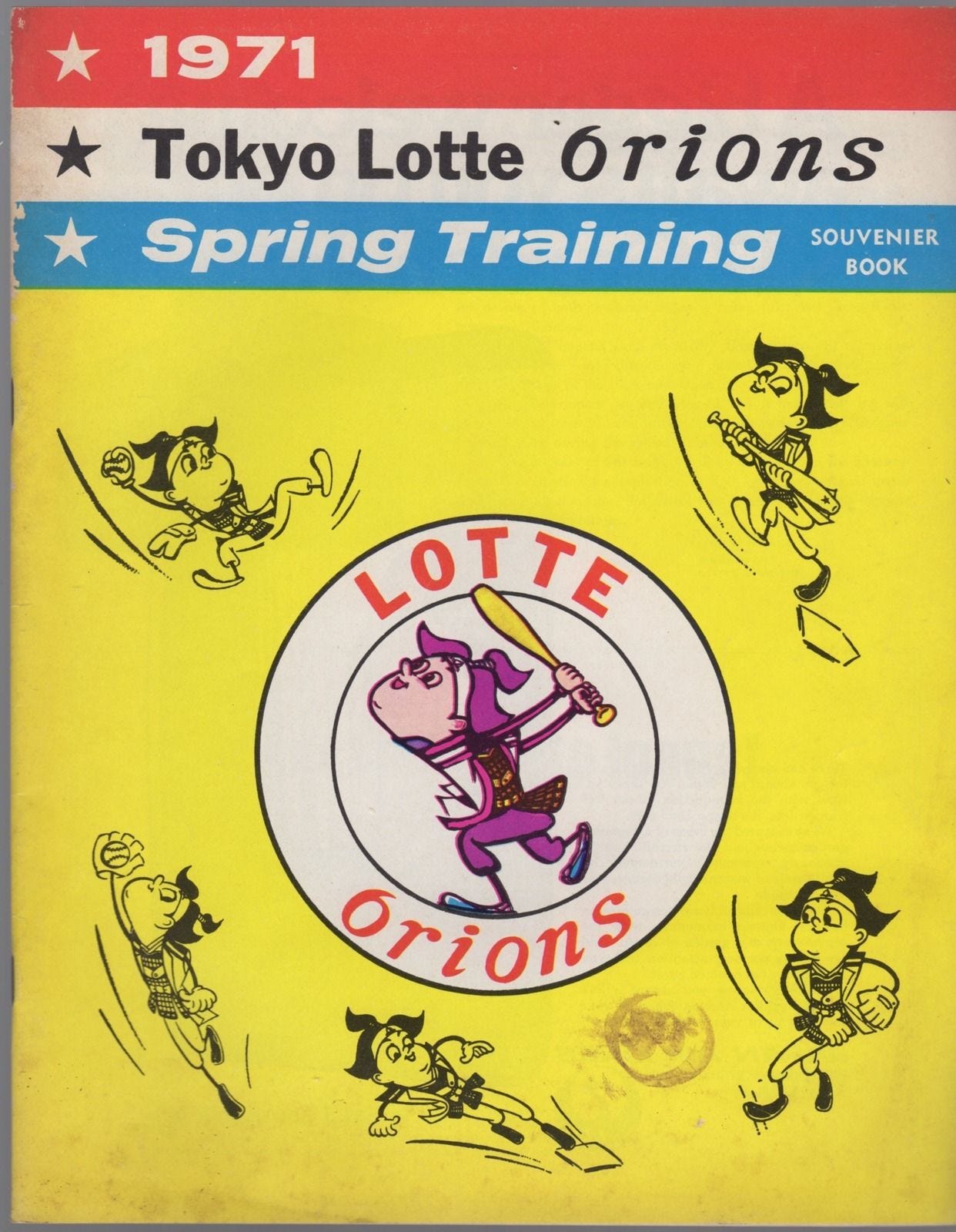
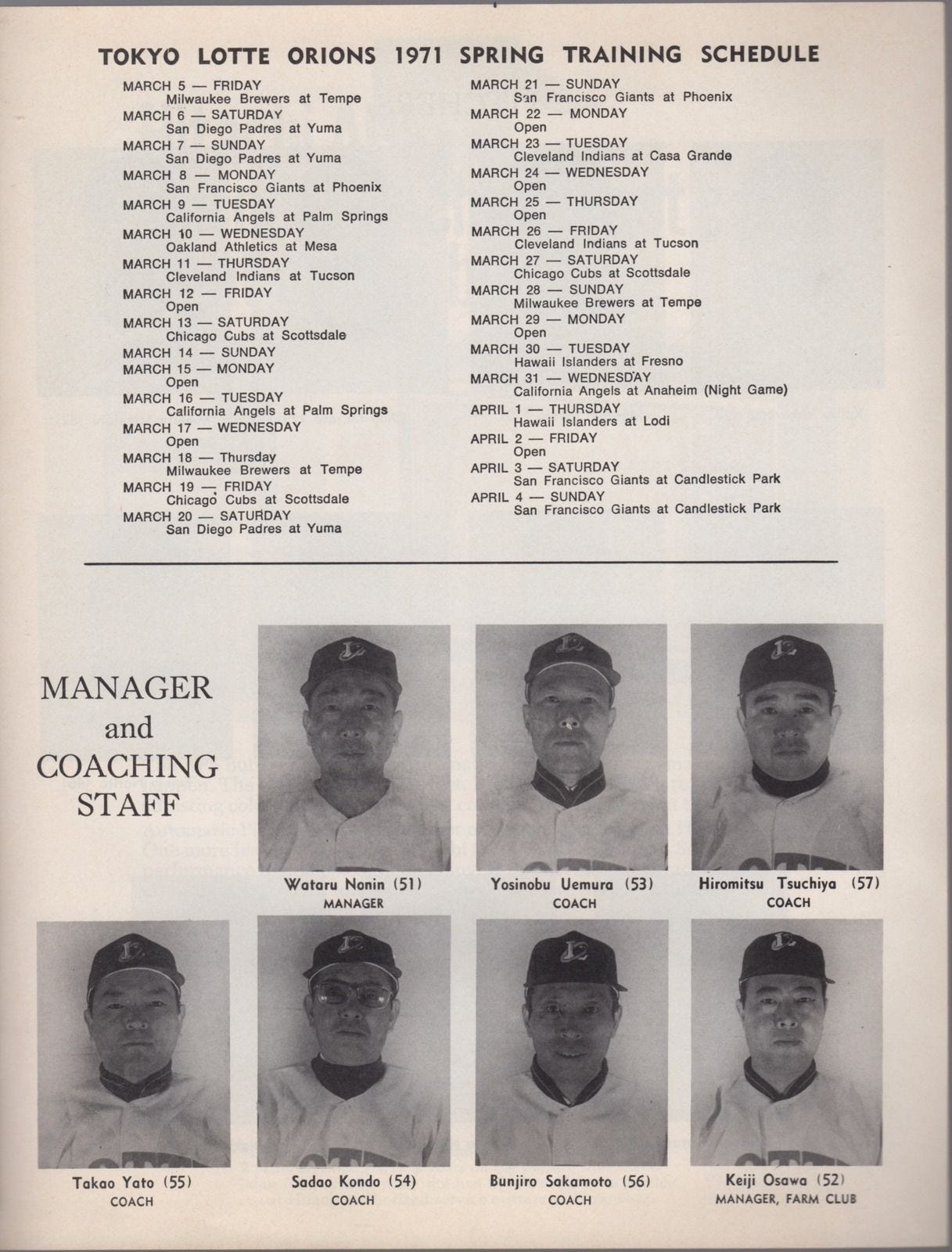
What brought these teams was instructional leagues ran in Arizona, several Japanese players taking part in 1966. Teams felt the improvement, which had more players sent over until entire teams came over to train.
In fact, the Yokohama DeNA Baystars, Chunichi Dragons, Hanshin Tigers, Hokkaido Nippon Ham Fighters, Yomiuri Giants and Seibu Lions all had intermittent spring training time throughout the Cactus League stadiums. This marks a majority of the NPB having taken residence in Arizona at some point.
Most notable though would be the Yakult Swallows who arrived in Tucson in 1978 would take residence in Yuma in 1979 with the San Diego Padres. The longest residence in Arizona at Desert Sun Stadium until 1999.
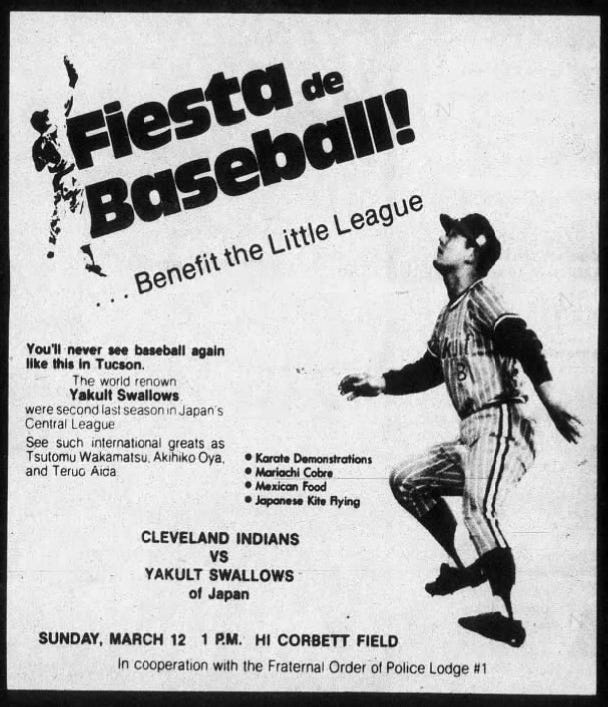
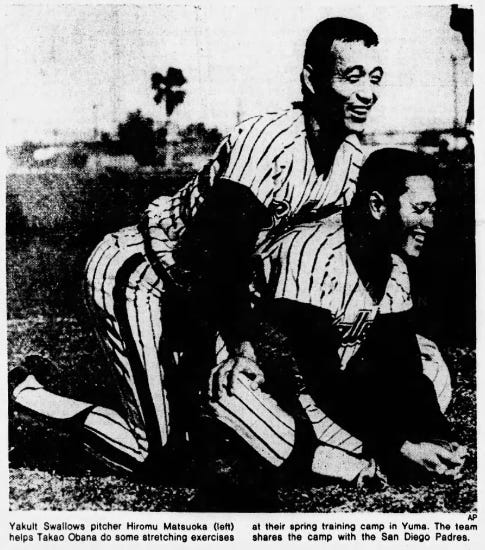
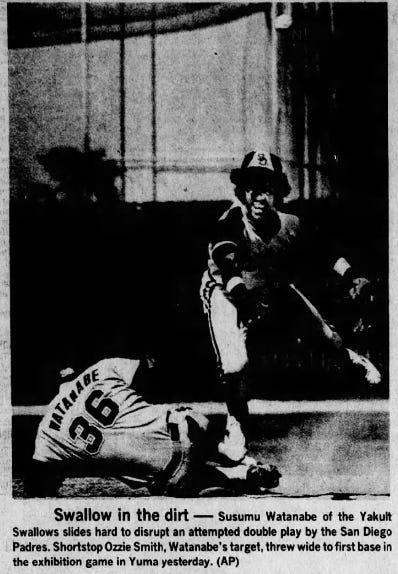
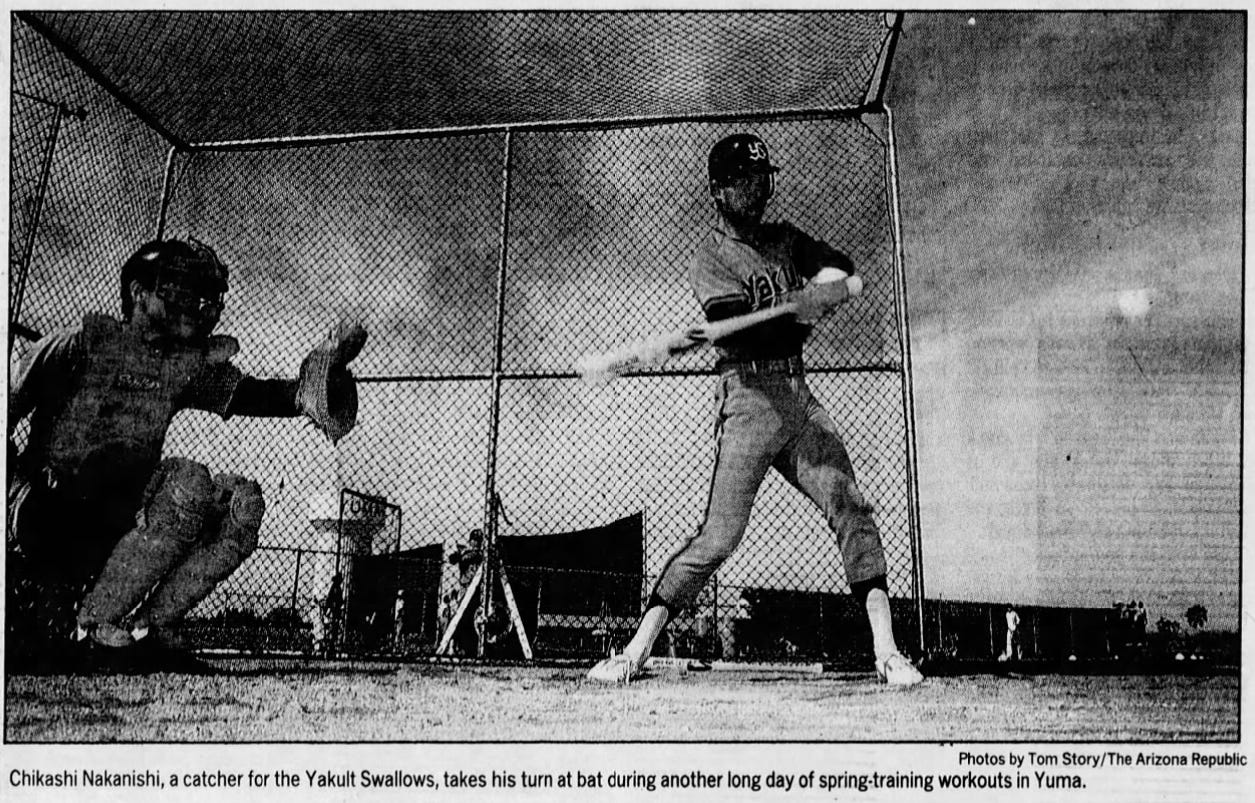
The Swallows developed a 2nd home in Yuma, taking part in an annual benefit game that helped raise money for Yuma’s youth baseball program. When the Padres would leave in 1993 for Peoria, the Swallows kept the tradition going and cementing themselves as part of the community.
Eventually the cost of making such a monumental journey each year would prove too much. In 1999, the cost of the team coming to Yuma was around $800,000 and the team could no longer justify the expense. It would be the last year that the Swallows took spring training in the quiet desert town before moving their spring training to Okinawa Japan.
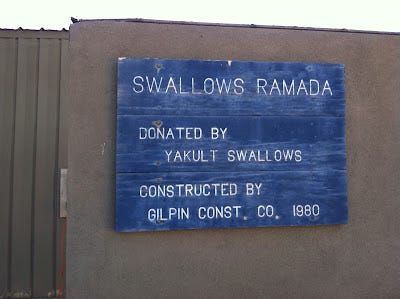
What remains of the Swallows in Yuma is a small sign attached to a ramada donated by them, a lingering token of generosity.
Somewhat fitting is that as baseball entered the ‘moneyball’ or statcast era, NPB teams stayed in Japan for spring training for both ease and financial purposes. Not until 2016 did the Nippon Ham Fighters return to Arizona. 2016 and 2017 at Peoria and 2018 and 2019 in Scottsdale.
COVID would derail at any new tradition taking hold with the world shutting down in 2020.
We arrive at 2025 with the NPB hitting an all time high of visibility. Japan took the World Baseball Classic over USA, Ohtani takes the honor of the first MLB player in Fortnite and American teams start looking at Japan for the next best player.
With what tragic history the Japanese people hold in Arizona, this partnership and intertwining of professional baseball that spans continents brings warmth and hope for future partnerships.
No posts
Comments
Nothing yet. Say the first thing.
Sign in to join the conversation.