
If you’ve ever sought out the beach or river to calm a chaotic mind (or tuned in to a meditation track using rain sounds or crashing waves), you’re acting on a biological instinct.
it turns out that simply being near water (watching waves, sitting by a river, or even listening to the sound of rain) can slow your thoughts and ease up stress.
It’s called Blue Mind… and though you may not have heard of it, but you’ve definitely felt it.
Listen to the episode here:
🎧 3 - Tapping Into Blue Mind: The Great Green Escape by Aristaios
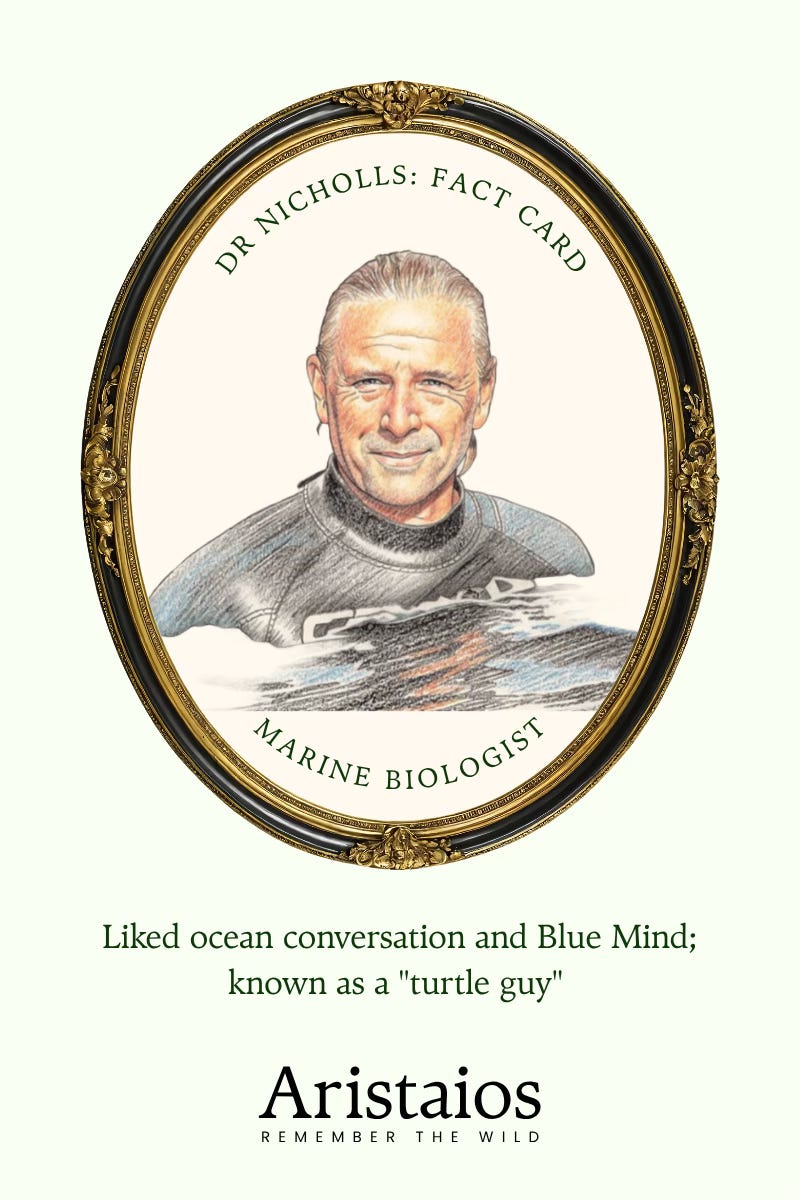
The scientist behind Blue Mind
American marine biologist and conservationist, Dr. Wallace J. Nichols, coined the term in his best‑selling book Blue Mind, where he describes it as
“a mildly meditative state characterised by calm, peacefulness, unity, and a sense of general happiness and satisfaction with life in the moment.
It is inspired by water and elements associated with water, from the colour blue to the words we use to describe the sensation associated with immersion.”
In other words, Blue Mind is the opposite of an overloaded, anxious feeling which many people face day-to-day.
Why water ‘works’ on your brain
Scientists think several things are happening when you’re near water:
Your brain slips into ‘involuntary attention’
Waves and ripples are simple and hypnotic. They are easy to look at without effort. They can help to fade out your thoughts and give your attention a rest.Happy chemicals rise and stress hormones decline
Some researchers have noticed that water increases dopamine and other neurotransmitters linked to relaxation and pleasure. At the same time, cortisol often goes down.
Blue Mind isn’t just for surfers
You don’t need to live on the coast to tap into Blue Mind. Nicholls emphasises that it can be activated by
an ocean, a lake, or a river
a backyard pool or fountain
even the sound of rain or a recording of waves
A personal note about the water
For me, Blue Mind started as a child, watching sunlight create wiggly light patterns on the bottom of my friend’s pool. Later, as an adult, it was Coogee Beach in the summer. It’s crystal clear enough to see the fish, which makes me feel safe to laze around and let go.
Some of you may know our show’s resident storyteller and musician, Lachlan. On the show, he shares how his piece of Blue Mind has evolved to dipping his hands and face in rivers and streams around the world. He sees it as leaving a bit of him behind and taking some of that place with him.
A simple exercise to start your Blue Mind practice
Try this next time you’re near any water:
Stand still
Notice the SOUND of the water.
See how it MOVES.
FEEL it in your skin (if you can).
If your mind is active, loosen your grip on your thoughts and let them float away.
Do this for a few minutes, and notice any physical or mental changes. That’s Blue Mind you’re experiencing.
Listen to the episode here:
🎧 3 - Tapping Into Blue Mind: The Great Green Escape by Aristaios
Thanks for reading The Great Green Escape: Field Notes! Subscribe for free to receive new posts and support my work.
Comments
Nothing yet. Say the first thing.
Sign in to join the conversation.