
I’ve recently been listening to audiobooks by Lindsay C Gibson, PsyD., who wrote the popular book, Adult Children of Emotionally Immature Parents. In general, I found that to be an incredibly validating book and is one I now recommend. I then followed that up with another of her books, Self Care for Adult Children of Emotionally Immature Parents.1 Two chapters from that latter book resonated so strongly with me, that I’m going to write about them for this and the next post.
Today, I want to focus on Chapter 8 from the Self Care book, which is titled “Why You Are Emotionally Fatigued.”
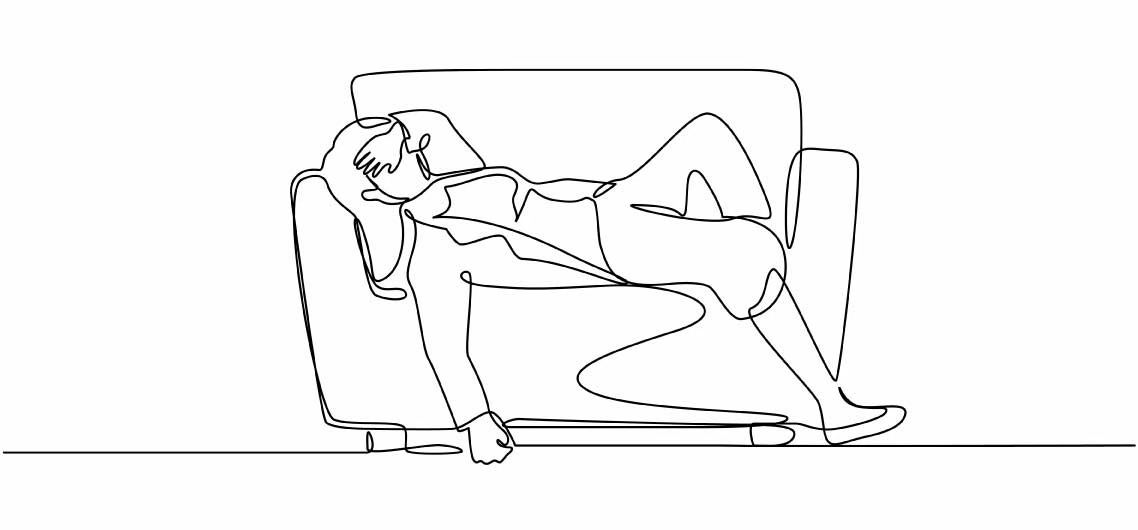
I have long been convinced that it makes perfect sense that being a highly sensitive person (HSP) is tiring because we have to process more emotions and emotions are exhausting. (I also strongly suspect that most people who have chronic conditions like long covid are probably highly sensitive.) Gibson expanded on this in a big way with two more reasons why emotions, and especially repressed emotions, are so hard on the body.
First, your brain and nervous system use up so much energy just to function. As this article points out, “The human brain, a mere 2% of our body weight, astonishingly consumes about 20% of our energy.” That percentage of energy consumption increases the more active your brain and nervous system are, even if the activity is just thinking. It turns out that elite chess players can burn up to 6000 calories a day during tournaments, even though all they’re doing is sitting and thinking. Apparently, the combination of thinking that intensely and being so stressed out by the competition burns a lot of calories.
Most of us already knew that we can get tired and snacky after a stressful day, and very few of us are thinking with the intensity of an elite chess player. However, we may be using more brain power than we realize. As Gibson mentions, people who are highly sensitive and who have higher levels of empathy are activating their brain’s mirror neurons more than others.
Elaine Aron first identified the highly sensitive person traits, known more formally as Sensory Processing Sensitivity (SPS), and her work confirms that SPS does lead to greater brain activity. In one paper, Aron’s team noted, “HSP scores were associated with increased brain activation of regions involved in attention and action planning,” while, in certain instances, “SPS was associated with activation of brain regions involved in awareness, integration of sensory information, empathy, and action planning.”
Processing our emotions, the emotions of others, and the world around us is EXHAUSTING, especially when we’re genetically wired to process more and at a deeper level. But as Gibson points out in her book, there’s even more to repressed emotions that makes them so tiring.
When the fear pathways in your nervous system get activated, they trigger your fight-flight-freeze response. Fight or flight are both actions that your body can take, and if someone chooses one of those options, then it looks as if they are expending more energy. From the outside, it can appear as though the people taking action or having an emotional outburst are expending more energy than the person who freezes in the midst of conflict. However, Gibson argues that the opposite is actually the case.
The person who freezes still has the energy coursing through them to take the physical action, however, instead of just releasing that energy, the body has to expend even more energy to keep the person restrained, frozen in place. She argues that it takes more energy to repress the emotional outburst than to allow it.
Your nervous system is essentially trying to take two opposing actions at once—it’s trying to apply the gas and the brakes at the same time. The brakes may win, but the engine is revving away and using up a ton of fuel. Continuing with this analogy, your nervous system’s “brakes” are taking both a physical and energetic hit as they apply increasing pressure to keep all of your revved up emotions constrained and hidden (possibly even hidden from you, as this may all be happening subconsciously).
Another analogy that came to mind when I listened to this chapter was that of a scene in movie where a person is trying to launch into a schoolyard fight and it takes a couple of other students or teachers to hold the person back. That’s the battle that’s raging inside of you: instead of one or two people keeping you restrained, your nervous system is doing all the work to hold you in place. You have all the energy primed for a fight (or flight), but then you spend even more energy to keep yourself contained.
This idea is 100% consistent with my own lived experiences. When I allow my emotions to flow freely, it’s tiring and I may need to rest, but then I can recover much more quickly, and I don’t have physical symptoms. However, if I repress my emotions, I’m much more likely to experience debilitating exhaustion and the physical symptoms return.
Given that the holiday season is now upon us, and we have to spend so much time socializing with friends and family, this seemed like an especially timely reminder that exhaustion is reasonable and understandable. Every interaction you have triggers your mirror neurons, which require energy. The more empathetic you are, the more those mirror neurons are firing and using up energy. Every time you have to repress your own emotions to keep those around you happy, it requires significant energy.
You are justified in feeling exhausted. So please be kind to yourself if you need to spend more time than you wish locked away in bed and hiding from people.
Thanks for reading The Healing Pathways! This post is public so feel free to share it.
I really liked the first third of this book, and for me, that alone was worth reading the book, though I didn’t find the second two-thirds as helpful. Also, as a reminder, even though I’m linking to books that can be purchased, I always recommend seeing if you can get books or audiobooks from your local library to save some money.
No posts
Comments
Nothing yet. Say the first thing.
Sign in to join the conversation.