
It’s been said that memories change each time you reflect on them. The core elements likely remain the same—your mom was there, the dog was barking, you were elementary-aged—but many elements fluctuate over time (was the window open? I swear the radio was on, but was it?).
Memories are like a game of telephone. The genesis remains the same, but the details differ each time you remember, and remember, and remember.

The first time I remember hurting myself, it was an accident.
I was a child (maybe four, but certainly younger than six), and at the time, my favorite show was Rugrats. Nothing excited me more than Tommy et. al’s shenanigans (except for maybe an episode of Blue’s Clues, which was a close second).
The bones of this memory never change: One of my parents (my dad?) was in the kitchen prepping (what I believe was) my lunch for the day. I sat at the breakfast table (doing what?), from which I could see the living room TV, and more specifically, a Nick Jr. marathon (or whatever children’s Nickelodeon offshoot existed in the late 90s). The screen brightened with animated toddlers, and the room filled with the sound of the iconic xylophone title sequence—a new episode of Rugrats was on.
I remember running. I don’t remember falling, but I remember the impact—my gums on the sharp corner of our wooden center table. I remember the blood. There was so much blood. I don’t remember the car, getting in, or getting out. I remember the big, sliding glass doors (a dentist? emergency room?). I don’t know what treatment I needed, but I got it. The sliding glass door again, on the way to the parking lot. My mom’s hand in my left hand and my dad’s in my right (this part of the memory is crystal clear), and them swinging me over the curb. I don’t remember the car, the ride home. I don’t know what happened in that episode of Rugrats.
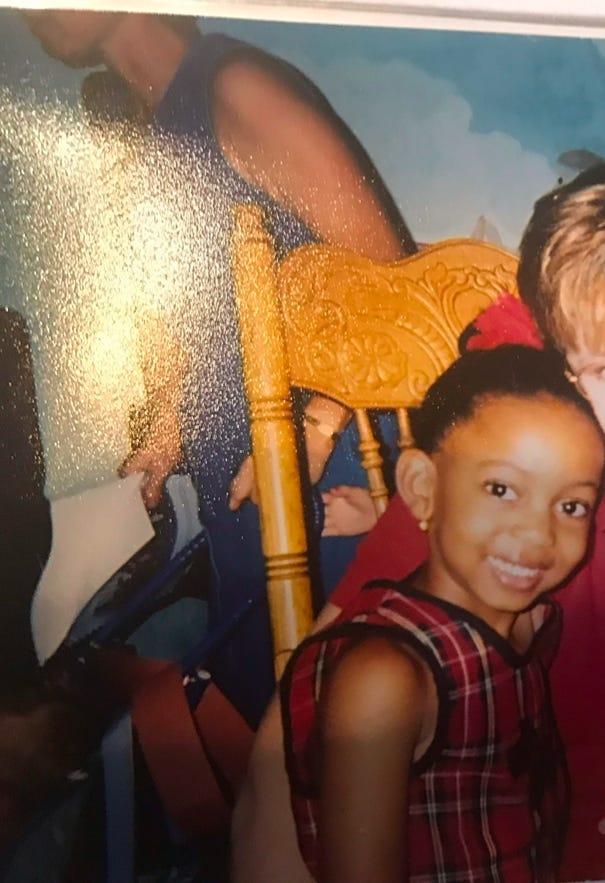
Why this became a core memory of mine, I’ll never know for sure, but the belief it created was undeniable: If I harmed myself in a way that was that big, it would make my parents late for work. It would make them worry. I equated harm with being “in trouble,” even though my parents did nothing to make me feel like I was. I just knew that hurting myself made their day harder. And the next time I hurt myself, I made it no one’s problem but my own.
From then on, scraped, bloody knees and elbows, punches from bullies, falls and trips—I got back up with no complaints. I let the blood drip and crust and rubbed dirt in my wounds like the boys next door did. I would never make my pain an inconvenience ever again.
So, when my depression crept in during my teenage years, I handled it the way I knew best: alone. I disguised my self-harm and pretended to be happy—I didn’t want to burden someone because I was hurting.
I know this split-gum memory isn’t the only reason why I obscured my depression from my family and most of my friends. There are dozens of other little memories just like this one—at school, at my grandmother’s house, hanging out with the neighborhood boys—that solidified my belief that if I am to suffer, it’s best to do so in silence.
Many days, I wish I could unravel my brain matter like a spool so I could pinpoint each moment something changed for me. But every time I remember these moments, something is different. To remember is inherently to have forgotten something, even if only the intensity or tangibility of the experience, to want to reignite the parts of the brain that were alight when it happened to you.
I don’t remember what it was like to be small. I only know I existed, that things happened, that some moments stayed, and some moments didn’t. When I reflect on the past, again, and again, and again, I remind myself that it’s okay not to remember what it felt like, what I could touch, who I was.
Those moments existed. And because I’m still here, those moments are still here, too, even if they’ve grown and changed alongside me.

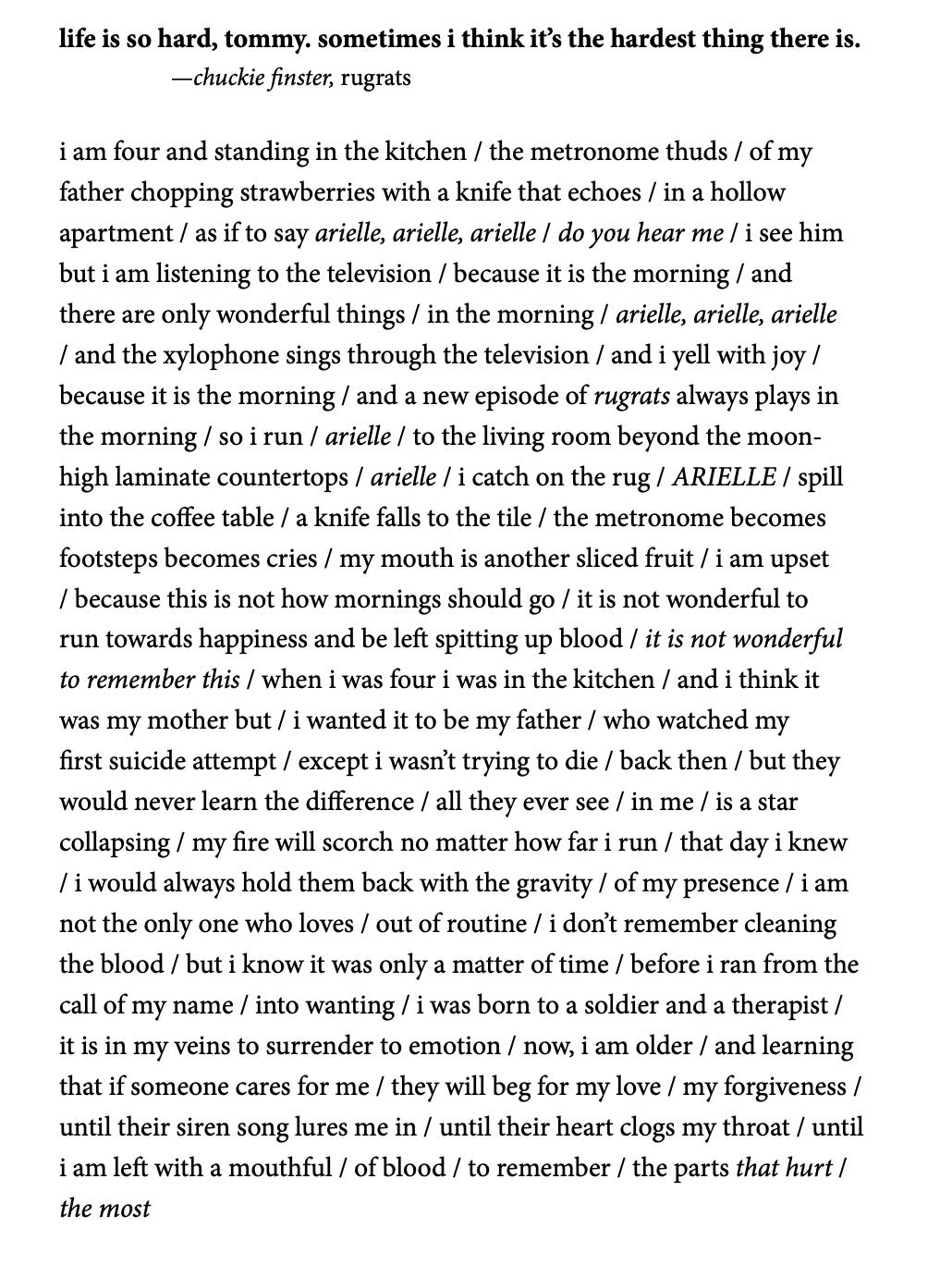
Because I didn’t have time to do a thorough poem search this week, here is a poem from my second collection, unfold, about this moment (or, what I could remember of it).
the tender poets club is a reader-supported publication. To receive new posts and support my work, consider becoming a free or paid subscriber.
song of the week:
Demi Lovato dropped a new recovery anthem and I’m so here for it:
all the love, all the warmth, all the light,

housekeeping:
i made a doc full of book recommendations for people who want to read more poetry but don’t know where to start!
don’t forget to complete your one click today to support aid efforts in Palestine
unfold: poetry + prose, is available on amazon, bookshop, indigo, b&n, or wherever you get books <3
you can still buy paper girl from amazon, barnes & noble, indigo, or your local indie.
i love you. and i see you. and i am so glad you're here.
free and paid subscribers get the archive of essay reflections, poetry + music recommendations, and more — thank you for supporting the tender poets club <3
who i am: a writer, a lover, and a very Black + queer person. i love deeply, forget rarely, and spend most of my time cuddling with my dog, my cat, and my partner.
who i'm not: a therapist, mental health professional, or emergency service. i love hearing the stories of your experiences, but please don't send explicit or triggering details of your story without my prior consent.
if you're in crisis, please call 911 or use any of the following resources:
National Suicide Prevention Hotline: 988
National Domestic Violence Hotline: 1-800-799-SAFE (7233)
Crisis Text Line: Text HELP to 741741
S.A.F.E. (Self Abuse Finally Ends): 1-800-DONT-CUT (366-8288)
Eating Disorders Awareness and Prevention: 1-800-931-2237
RAINN (Rape, Abuse, & Incest National Network): 1-800-656-4673
the tender poets club is a reader-supported publication. To receive new posts and support my work, consider becoming a free or paid subscriber.
Comments
Nothing yet. Say the first thing.
Sign in to join the conversation.