
Flu season is an annual reality, but for residents of Metro Atlanta, this year’s outbreak carries an unexpected and serious threat that extends beyond the usual fever and fatigue.

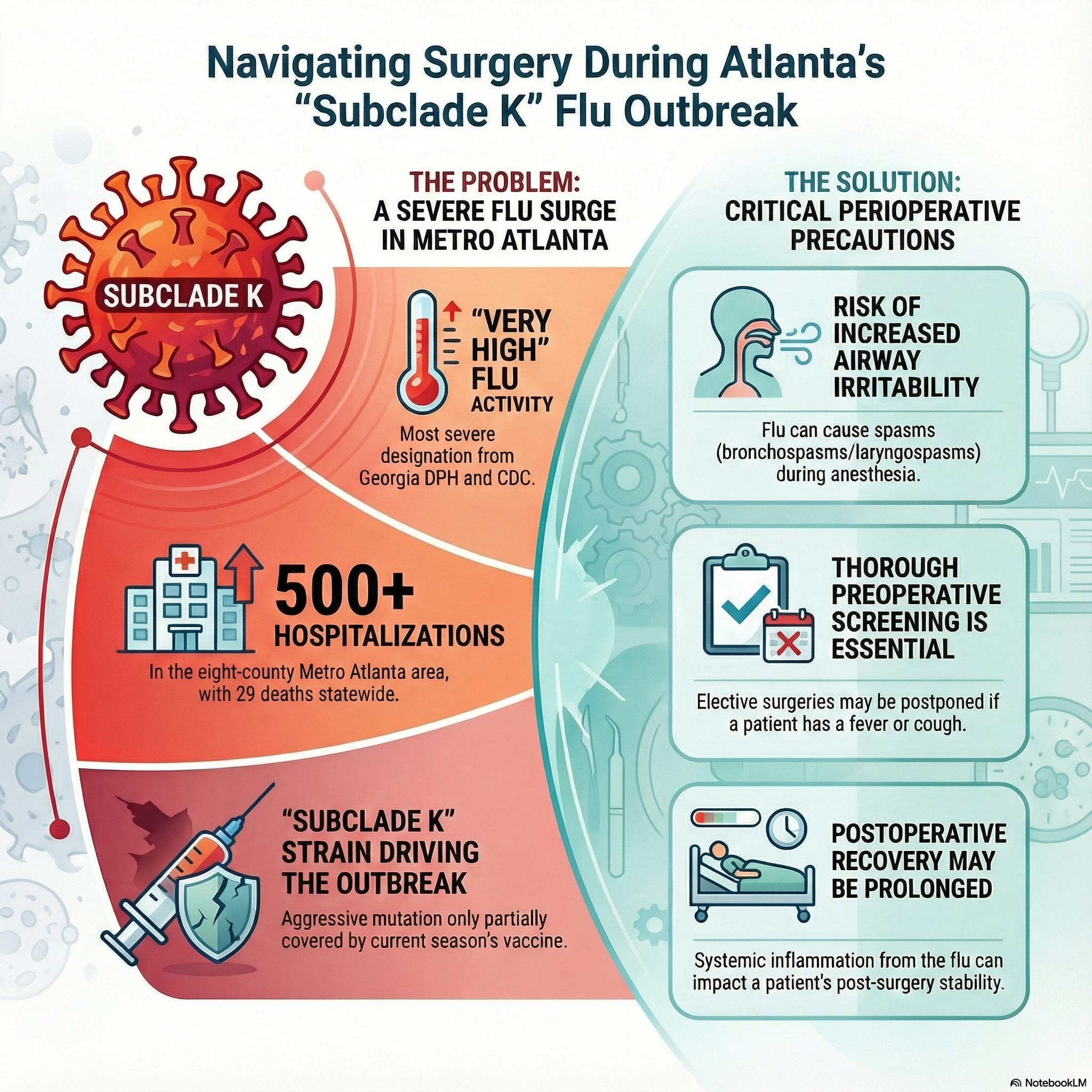
The primary driver of the current surge in Atlanta is a highly virulent new mutation of Type A flu known as “subclade K.” According to Anesthesiologist Assistant Ariana Nicole Lyons, AA-C, this specific strain is only partially covered by this season’s vaccine. This critical fact means that even vaccinated individuals must maintain a higher level of vigilance, as their protection against the dominant local strain may be limited.
2. It Turns a Routine Procedure into a High-Risk Event.
Perhaps the most surprising danger of the subclade K flu is its ability to make receiving anesthesia significantly more dangerous. The flu causes “airway hyperreactivity,” a condition where the respiratory passages become inflamed and highly irritable. This means the patient’s airways are on a hair-trigger, reacting to the insertion of a breathing tube the way a person with a severe sunburn reacts to the slightest touch.
Lyons emphasizes that such irritability can increase the risk of bronchospasms or laryngospasms during the induction or emergence from anesthesia.
This direct link between a common seasonal illness and the high-stakes environment of the operating room is a risk most people would never consider. As Lyons explains, a resulting bronchospasm or laryngospasm can cause the airway to clamp shut, severely restricting or cutting off a patient’s ability to breathe and turning a routine procedure into a life-or-death emergency in seconds.
3. That Lingering Cough Could Postpone Your Surgery.
It is precisely to avoid these life-threatening airway emergencies that Anesthesia Care Teams across Metro Atlanta, from Smyrna to the city center, are now enforcing stricter protocols. Patients must understand that elective surgeries may be postponed if they exhibit lingering flu symptoms, such as a high fever or a productive cough. This is not an overreaction; it is a necessary safety precaution to minimize postoperative complications and the negative impact of systemic inflammation on recovery.
The current subclade K flu surge in Atlanta is therefore more than a public health nuisance; it is a critical patient safety issue where a partially effective vaccine and the hidden risk of airway hyperreactivity are forcing difficult but necessary decisions in the operating room. As new viral strains emerge, how should we rethink our personal health decisions, not just for our own sake, but for the safety of our entire healthcare system?
Comments
Nothing yet. Say the first thing.
Sign in to join the conversation.