
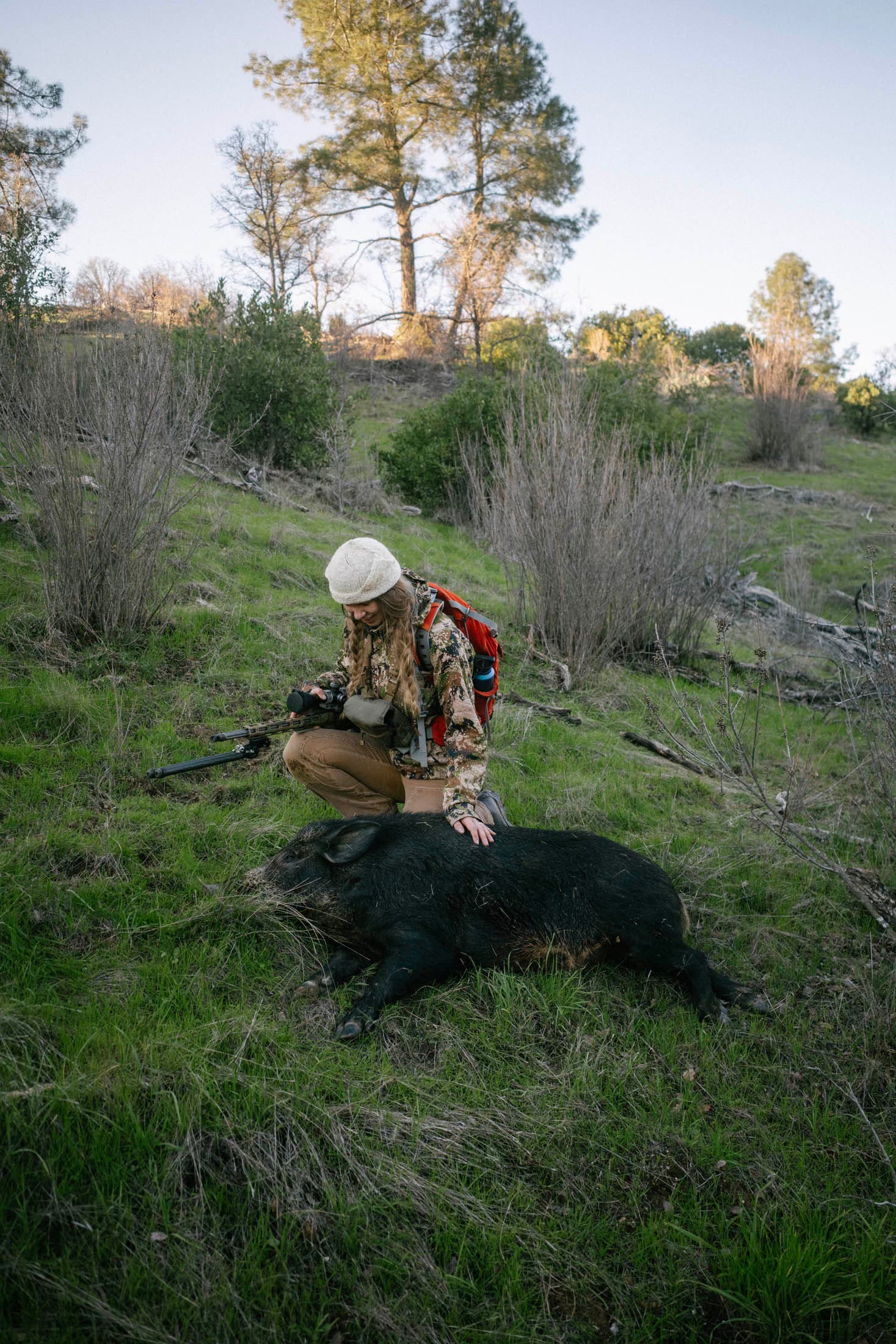
Dry-curing meat from an animal that most people deem a pest and a revulsion requires a bit of fortitude and an open mind. Since I got into hunting wild pigs, I've always wanted to slow-cure the meat and make prosciutto or capicola. In Europe, wild boars that eat acorns are a cherished delicacy, especially in Spain, where making cured meats from wild boar goes back thousands of years. In Northern California, wild pigs thrive in the rolling oak savannah of the central valley and the inner coast range along the 101. Hunting them is reserved primarily for rednecks and disgruntled weed growers, unlike Europe, where boar hunts are communal activities steeped in tradition. Pigs in California are far more difficult to track down compared to other areas with wild pigs in North America because of the habitat they live in. In the south pigs live in the river bottoms surrounding farm lands. In California, they live in the thickest northern slopes of ridges and hillsides. Because of the thickness and ruggedness of where they live, they tend to live longer and grow bigger than their southern counterparts. Most importantly, their diet is different from their southern brethren. In California, they survive off of acorns of the multiple species of native oaks, as opposed to the scraps of industrial agriculture. I wholeheartedly believe that the wild boar of California is a drastically underrated animal to hunt and eat.
I've waxed poetic about making prosciutto with these acorn-fed wild boars to any of my friends that showed the slightest amount of interest in hunting and cooking for years. Having the idea and maintaining the vision of what to do with the meat through the fog of killing an animal in the backcountry and turning it into food back home in my freezer is a different thing entirely. So, despite my fantasies, the wild boar prosciutto has eluded me.
Lillian, my girlfriend, grew up vegetarian and started eating meat in her 20s. She never hunted or shot a gun. Last fall, she started showing interest in going on a hunt with me. She loved the idea of slow-curing part of a wild pig and making prosciutto and if she was going to eat meat, she wanted to experience the process. We started going to the range and working on her form shooting a rifle. She practiced deploying a bipod and finding the pig in the scope. On a 3D archery boar target in my yard, I walked her through the anatomy of a pig, specifically a cartilage guard protecting its lungs and vitals. After a handful of range trips where she practiced shooting clay pigeons on the hillside from kneeling and sitting positions, I felt she was ready. She was a natural.
On a cold, clear day a few days after Christmas, we were up well before sunrise and hiking at first light on a friend’s ranch a few hours north of Sacramento. From the start, I told her the first day we really would just be looking for pig sign and trying to figure out where the pigs were.
Comments
Nothing yet. Say the first thing.
Sign in to join the conversation.