
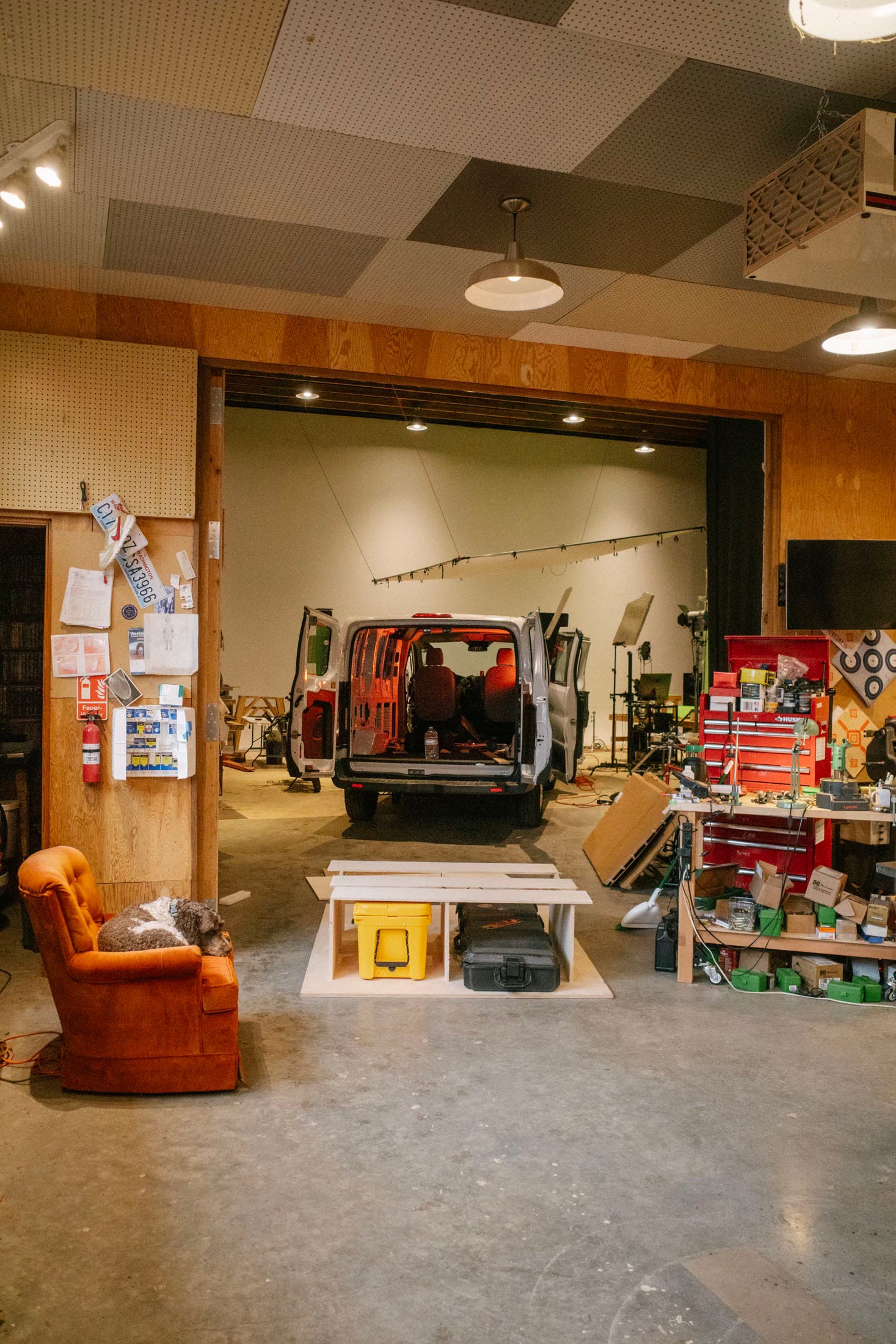
With the heavy lifting of the Transit Ballin’ on a Budget Build PT 1 out of the way, I focused on building out a modular platform that I could quickly and easily remove but also had enough space and organization set up to keep the stuff I need for a variety of different trips. Whenever I build out a truck, camper, or van, the first thing I do is a very honest assessment of how I’m going to use it and what key gear I’m going to use. For the last few years, I have been consumed by backcountry hunting, and a major goal for this van build is getting all of my gear to the trailhead and being a base of operations. I also want to get back into the ocean and surf more. 90% of my trips will be 3-4 nights, and therefore I won’t need to bring as much food and outdoor cooking gear as I do with my Ford F350 and Bison Camper. The Transit build needed to have enough sleeping space and floor space so that Lillian and our dogs can come with us wherever we go. It also needed to be attached to the camper with ratchet straps so that I could quickly and easily remove it. All of these considerations percolated in my mind for weeks as I hemmed and hawed about what van to get and what style of buildout to do. I’d weigh the pros and cons of one setup while walking down my driveway to get the mail, discard it, and entertain another configuration on the back way up.
The first decision I made was picking a mattress size and orientation of the bed. Sure, custom mattresses can be ordered in any size, but picking an existing size is much cheaper, faster, and works better with existing sheets. If I were going to be traveling solo, I would have picked a bed size that maximized storage, potentially allowing me to haul my bike inside of the van. If I were a few inches shorter, I would orient the sleeping platform east to west. And as the old adage from loggers in the area I grew up in goes, “And if my aunt had nuts, she would be my uncle.” I zeroed in on two sizes, a full-size queen mattress (60 inches by 80) and a short queen (60 inches by 75) oriented north to south. I cut off cuts of plywood, screwed them together, making two rectangular boxes in two different dimensions, and laid them out. Although only 5 inches shorter, the short queen was the difference between having 3 feet of floor space and two feet and change. Settled, the buildout platform is going to have a footprint of 60 inches by 75 inches.
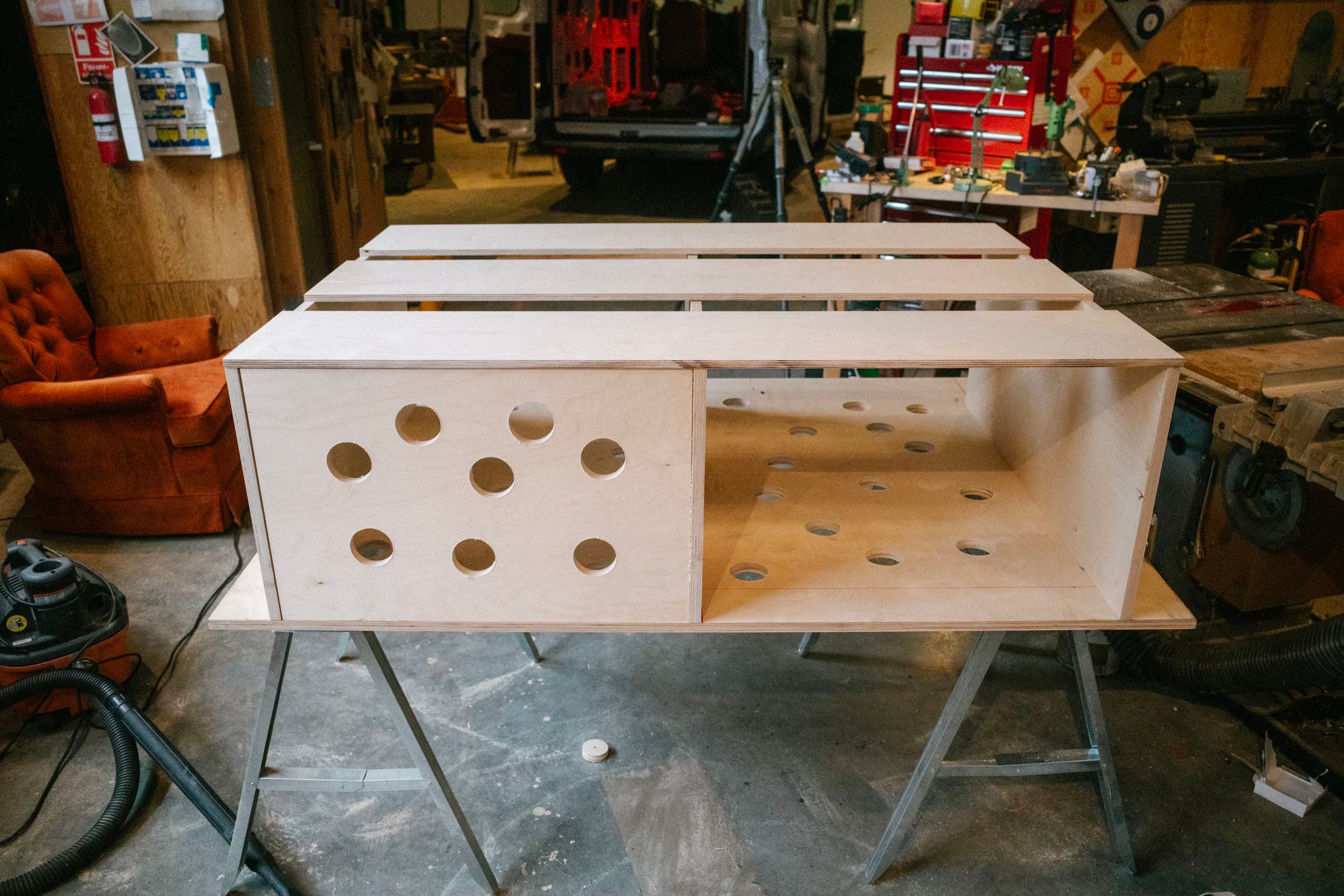
From there I narrowed down what objects I was going to bring and measured everything, specifically figuring out how high the platform should be and how wide the dividers should be. In a low-top van, headspace is always at a premium, so every inch saved in terms of platform height is another inch of headroom while lying or sitting in bed. I started measuring various cases, boxes, and coolers to see how high to build the platform. I settled on 17 inches of vertical storage space and started mocking things up. With carpentry, the less you can leave to the hypothetical and the more you can confirm in practice, although time-consuming always leads to a better end result. I picked a spot and broke the platform into two sections that were within reach of the factory tie-downs. As far as dividers go, I wanted to have one section that passes all the way through that’s wide enough for big gun cases and to haul a few 23-inch surfboards stacked on top of each other.
Comments
Nothing yet. Say the first thing.
Sign in to join the conversation.