
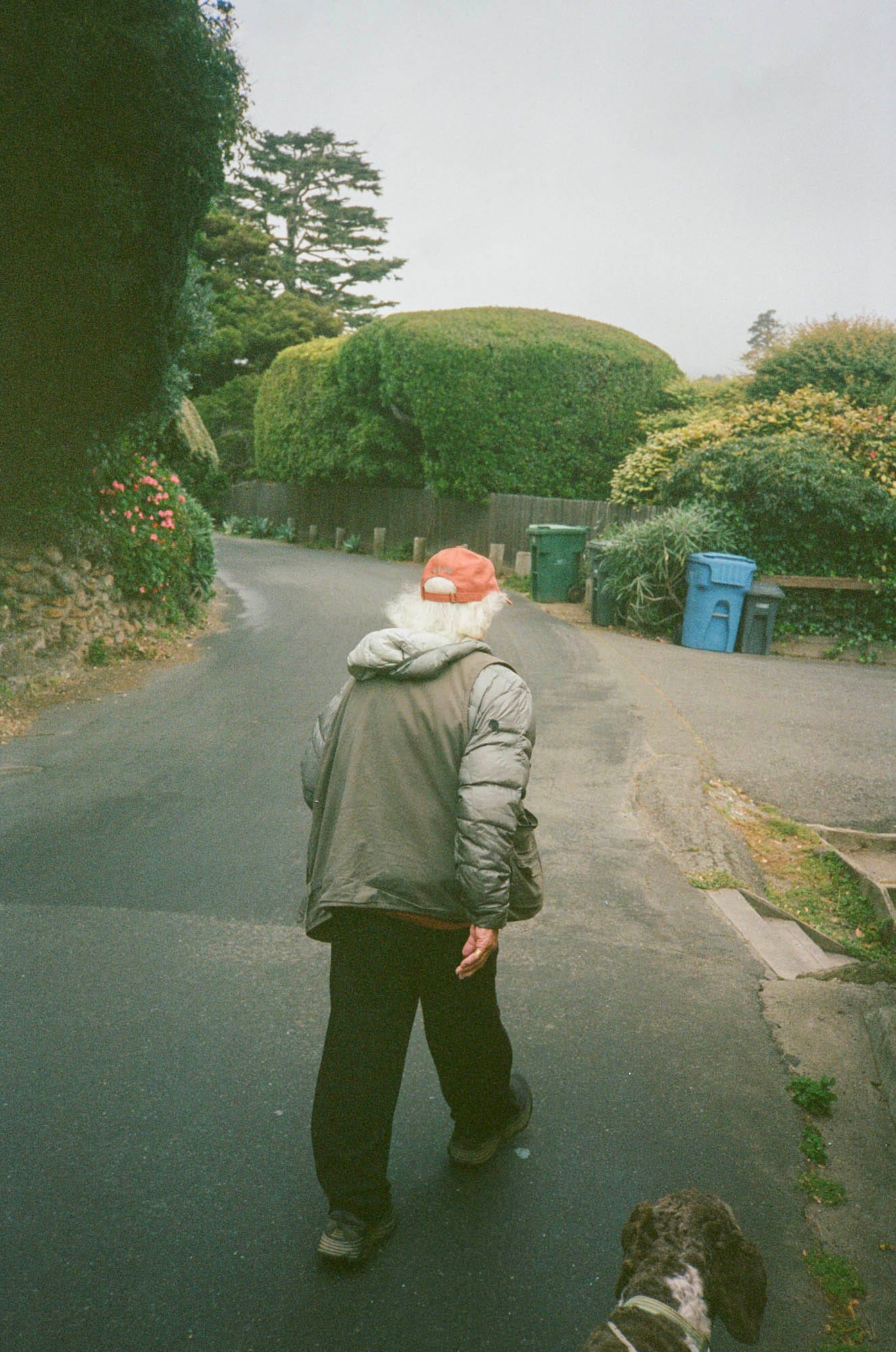
“Advice is like belly buttons or assholes—everyone has them, but some stink worse than others.” A successful friend’s dad said this to me during the summer between my last year of high school and my first year of college when I asked him what I should study. It’s stuck with me ever since. In general, I believe that most advice is damn near worthless, and if received from, should be discarded. It’s usually contaminated by bias and serves the interests of the giver, not the receiver. On the flip side, most people seeking it already know the answer they want to hear and are simply looking for external validation. Because of this, I rarely ask it, and I do my best to hold my tongue rather than dish it out. More and more these days I get messages from people asking for advice on getting started in photography and filmmaking, or wanting to buy me a beer and ask advice. I don’t know how to respond and rarely do. I’m an introvert and like living in the woods. On some level, I feel that I’ve let them down, but I also don’t think they would want to—or should—hear what I have to say.
Either way, here’s a bit of what I’ve learned working as a photographer, film maker and writer over the last 20 years:
The media landscape is very different now than it was when I started taking photos and writing a blog. The proliferation of good cameras, capable editing software, and the shift away from tangible media has created a sea of images and videos where it’s increasingly difficult to stand out. Add AI-generated imagery and video to this deluge, and it’s a complete wash. Ten years ago, I made the switch from photography and documentary-style projects to starting Movie Mountain and focusing on stop motion. I saw the writing on the wall with the declining value of the still image and high-production-value documentary filmmaking. Since then, I’ve watched the value of high-production social media content come and go, roughly peaking during COVID. Because of the declining value of images and videos, companies have been spending less money creating them and increasingly relying on in-house production and AI. If they aren’t already, product photos and videos will soon be AI-generated. High-end commercial production will shrink, with the top jobs going to Hollywood directors, DPs, stylists, and camera operators. Recently, I caught up with an old friend who’s been a commercial director for years. He told me the budgets for the high-end commercials he’s been working on have been cut by an order of magnitude and are now heavily augmented by AI. If current media trends hold, the streaming giants will produce less original content, allocating their budgets to prestige projects with megastars and creative titans while continuing to purchase nostalgic properties like Friends. This downward pressure is creating a continuous game of musical chairs, and the losers will be the freshest meat.
The only place where independent visual creators are really flourishing is YouTube. Google was smart to cut creators in on the action and give them fuel to run. Independent filmmaking is alive and well on YouTube—it just doesn’t fully align with my aesthetic or my idea of good content. Instead, I watch subject-based videos like hunting shows, camper builds, news, and old music performances. Despite the formulaic thumbnails and the default reliance on the vlog format, it still has worlds more personality and grit than anything you’ll see on the streaming platforms. It requires a different skill set than the one I have, and you have to be comfortable in front of the camera. But as of 2026, I think it’s the only viable option for filmmakers and creatives to truly make a living from their work. Like putting all your eggs in any one basket, though, my friends who make YouTube videos are beholden to the whims of Google and a constantly changing algorithm. Viewership is also down for longer-form content as increasingly rat-brained audiences spend their time watching Shorts, Reels, and TikToks. Even so, with a large enough potential audience, many different types of content can still succeed.
I believe that fame, media success, and the larger world of entertainment are dangerous forces that you can’t see but that can alter you—eventually kill you—if they aren’t treated like a melted down nuclear reactor. Get in wearing a proper protective suit, grab your one shovel of reactor graphite, get out, go through the decontamination protocol, and you’ll probably be fine. Stay a little too long at ground zero in Los Angeles, however, and you’ll get acute radiation poisoning. Your bone marrow will start breaking down, your skin will blister, your hair will fall out, and you’ll start believing in astrology or transcendental meditation. You’ll begin treating people less famous than you like peasants. Grown men will start posting selfies or press photos of themselves. You’ll forget how to change a tire, mow your lawn, and you’ll start believing that this lasts forever. If organ failure and internal bleeding don’t get you, the damage to your DNA will lead to a slew of heinous cancers that cut you down in your forties. Very few people I know have managed prolonged exposure to this enthralling source of power well. And even if they’ve somehow managed it long enough to start a family, their kids will likely fall victim to it. People get into it with good intentions—the desire to be an artist on a big stage—but through contamination, whether by bad people or the industry itself, they lose their path and start making the same stuff everyone else is and caring about the same shit everyone else does.
Do not trust ad agencies. If you’re going to do commercial work, work directly with companies. From my experience, companies are far more fair, honorable and easy to work with. Agencies are the used-car salesmen of the creative world: fleecing old women trading in their dead husband’s car, then turning around and selling it to a teenage single parent with an hour-long commute to a dead-end job at 25% interest, all while calling themselves geniuses. They are culture vultures, composed of people who never had the gumption or conviction to give being an artist a serious go and resent the people who did. The model of expecting photographers or directors to present them with ideas free of charge, then cherry-picking those ideas, packaging them as their own, and increasingly executing them in-house is batshit crazy and doesn’t get nearly enough pushback. Behind closed doors and among friends, directors and photographers all say the same thing about agencies but never do anything about it for fear of reprisal or missing out on the future scraps of commercial work. One of the few silver linings of the impending AI tsunami is that it’s going to wipe out agencies as we know them today. I’d recommend either forgoing agency work altogether or setting very strong boundaries. Don’t be an idiot like I was and give away location ideas or too many references. Like with car salesmen, if you’re nice to them, they’ll walk all over you. If you’re direct and call them on their shit, they’ll generally cut to the chase and give you a far better deal.
A RESTLESS TRANSPLANT is a reader-supported publication. To receive new posts and support my work, consider becoming a free or paid subscriber.
As cliché as it sounds, creativity—especially from a commercially viable perspective—is a marathon, not a sprint. It’s about creating a body of work, learning from your mistakes, adjusting, and moving on. I have very talented friends who are great sprinters creatively but get discouraged and look elsewhere. This is the really hard part, and it requires discipline. If you’re a writer, write every week. If you’re a filmmaker, force yourself to make films and put them out regularly. If you’re a photographer, always have a camera with you, and make sure to stop and take photos whenever that little part of your mind tells you to. A friend of a friend once rode a chairlift at a film festival in the Rockies with Werner Herzog and asked him what the one piece of advice he’d give a young filmmaker was.
“Physical stamina. This business is all about stamina.”
Remove as many middlemen as possible and go straight to the people you want to connect with. If you’re interested in making a book, self-publish it. My favorite—and most lucrative—books have been the ones I self-published and sold directly to people. My favorite videos have been the small ones, without the agencies, clients, producers, and endless rounds of edits. Some people thrive on being the star of the high school play. I just like making stuff, and I’ve set up my life to reflect that. I’d recommend focusing on platforms like Patreon, Substack, and YouTube, where you can build a following and a business that doesn’t require helping other people sell their shit and can instead focus on selling your own.
This could very easily be the disgruntled rant of a soon-to-be-40, over-the-hill artist that lives in the woods, but I doubt it. My friends, ranging from their late twenties to their mid-fifties, all have a similar story, with the message usually being something along the lines of, “I’m glad we got in when we did.” There are certainly ways to make a living as a creative over the next decade, but they’re not going to come from replicating the success of people from my generation. My advice to people with a knack for storytelling is to believe in yourself and use the technology that exists today. Eventually, the pendulum will swing back away from vlogs and stagnant streamers. When it does, the people who’ve been slogging it out and making ends meet will be the ones best positioned to benefit. One of the few connecting threads among my friends who have become successful artists is the absence of choice. Most of them found creativity at a young age and pursued it with a conviction that defies logic. It wasn’t a calculated decision but, more often than not, an inability to do anything else. Like anything worthwhile, it takes a lot of luck, a lot of determination and timing. It’s impossible to predict where things will go over the next five to ten years, but we’ll always need people pointing out the beauty, calling out the bullshit, and looking at the world from a new direction.
Thanks for reading A RESTLESS TRANSPLANT! This post is public so feel free to share it.
A RESTLESS TRANSPLANT is a reader-supported publication. To receive new posts and support my work, consider becoming a free or paid subscriber.
Comments
Nothing yet. Say the first thing.
Sign in to join the conversation.