
Hello Friends! Let's Explore How Hadoop Makes Storing Big Files Easy!
Have you ever wondered how we can store really big files like movies or large documents? It sounds tough, especially if we lose just a tiny part of the file. But no worries – that's where Hadoop and its special system, HDFS, come into the picture to help us out! 🌟
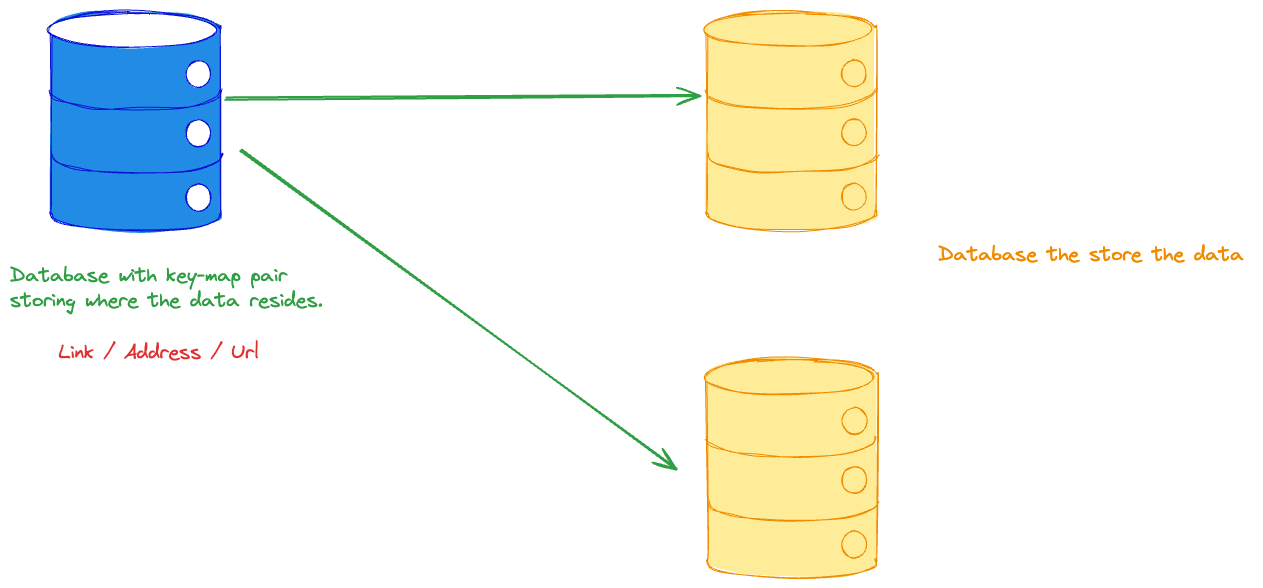
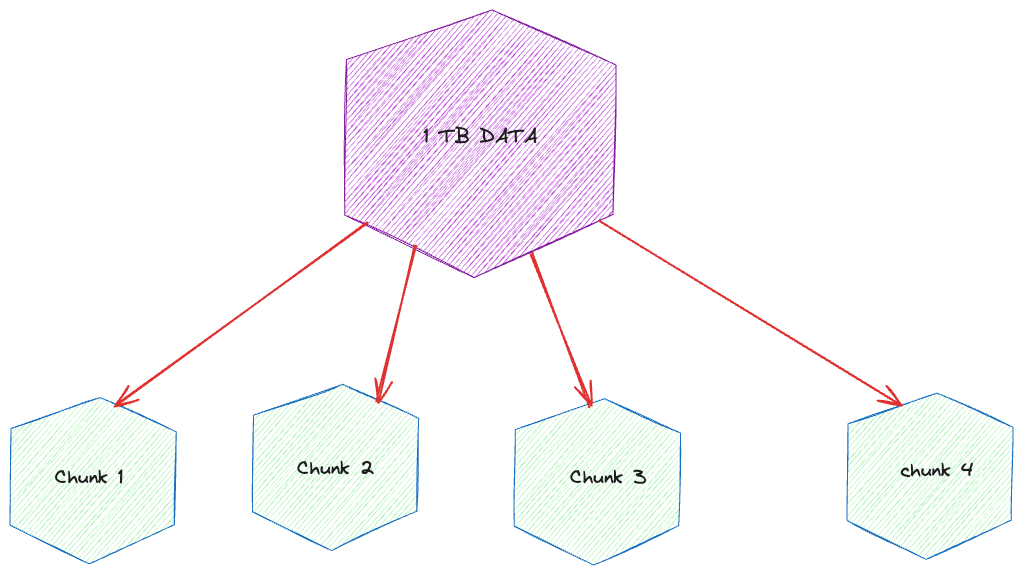
HDFS stands for Hadoop Distributed File System. It has a clever way of dealing with big files by breaking them down into smaller pieces. This method is like slicing a big cake into smaller, more manageable pieces. Here's why it's helpful:
Easier to Manage: Storing smaller pieces, rather than a huge file, makes things much simpler.
Quicker to Move: Sending smaller pieces over the internet is faster. If we lose a piece, we just resend that small part, not the entire big file.
Easy to Grow: As we get more and more data, it's simple to add more space for these pieces.
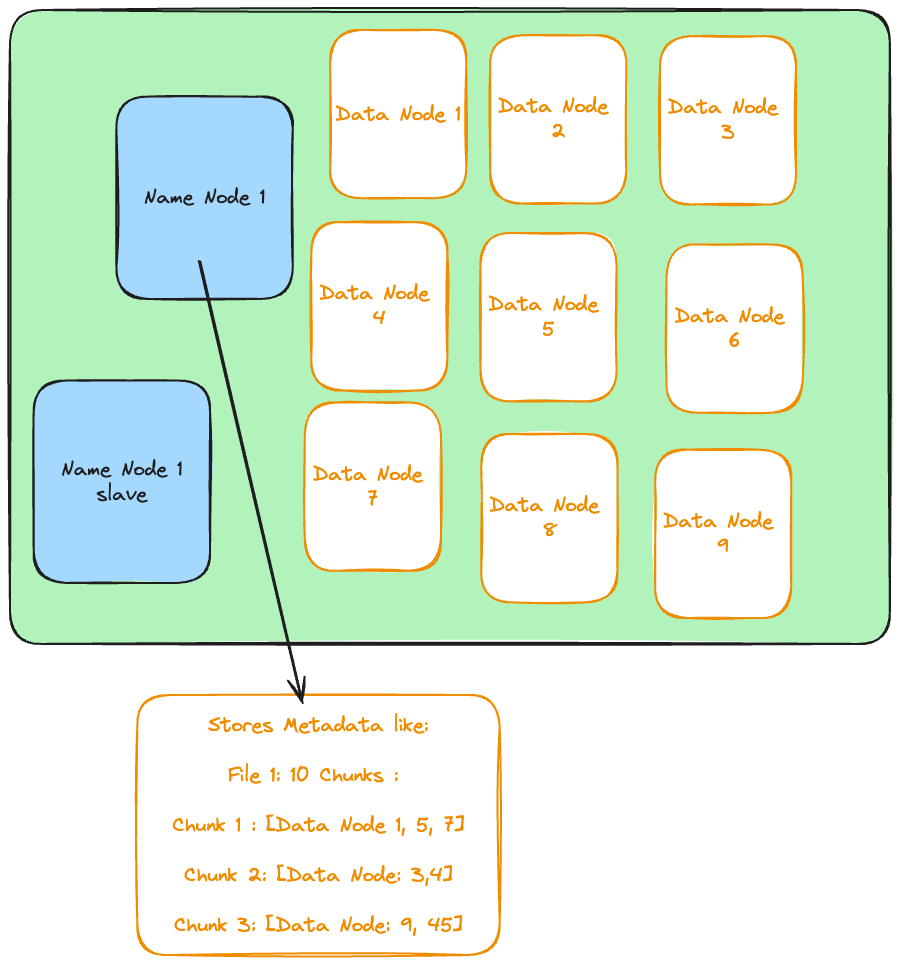
In HDFS, there are two main types of computers that work together: the NameNode and DataNodes.
The NameNode: Think of it as the boss who keeps track of where everything is stored. It doesn't store the actual data but knows which DataNode holds which piece of our file.
DataNodes: These are like workers. They store the actual pieces of our files. When we want to save a file, the NameNode tells us which DataNodes to put the pieces on.
When we save a file in HDFS, this is what happens:
Start: We tell HDFS we have a file to save.
NameNode's Role: The NameNode decides where to store the pieces of the file.
Storing the Pieces: The file is saved in pieces across different DataNodes.
Extra Safety: HDFS makes copies of these pieces on different DataNodes for safety.
When we need to get our file back, HDFS makes it easy:
Requesting the File: We ask HDFS for our file.
NameNode Helps: The NameNode tells us where each piece of our file is stored.
Collecting the Pieces: We go to the DataNodes and collect all the pieces of our file.
HDFS is not just about storing data; it's also about keeping it safe:
Multiple Copies: It keeps several copies of each piece of our file. So, if one piece is lost, we have backups.
Great for Analysis: HDFS is also good for analyzing large amounts of data with different tools.
HDFS is a great tool for storing big files. It's smart, keeps our data safe, and works well with other tools. It's perfect for anyone who works with lots of data and needs a reliable way to store and use it.
Stay curious and keep exploring the world of big data with Hadoop and HDFS!
No posts
Comments
Nothing yet. Say the first thing.
Sign in to join the conversation.