
Get an exclusive 45% off an annual subscription 🏳️🌈
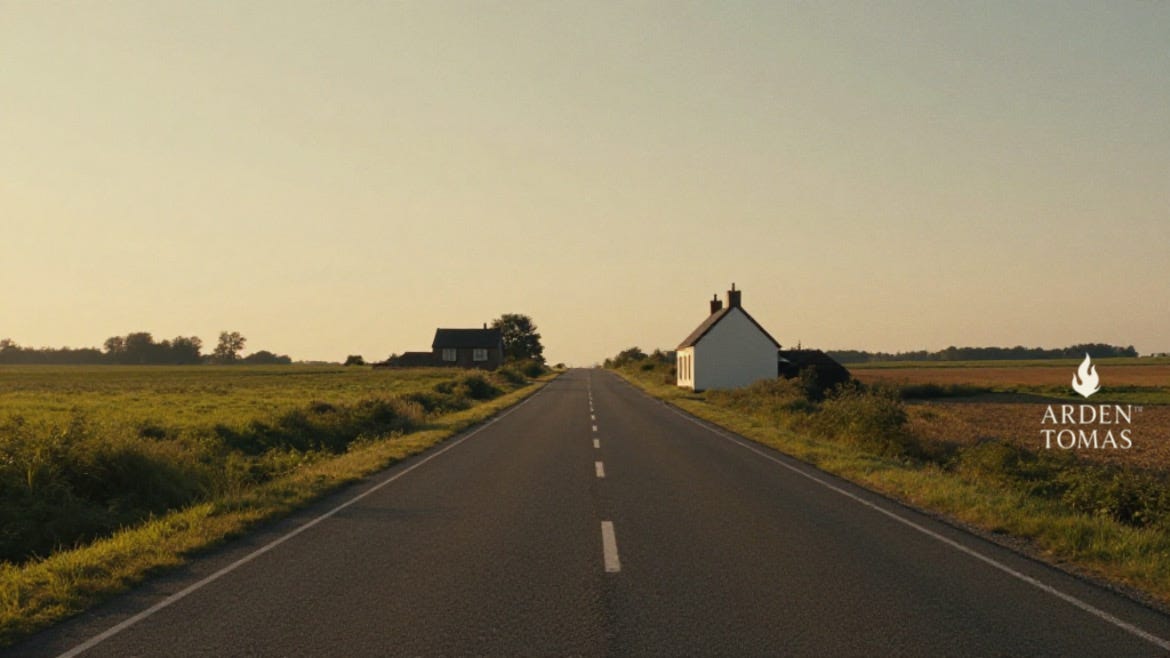
Clara slid the key into the lock, but the door was already unlocked. She didn’t close it behind her. She just stood on the threshold, her purse slung over her shoulder, her eyes searching for the spot in the entryway where the suitcase usually stood. The space was empty. Of course it was. The shoes on the rack—the black leather dress shoes, the brown lace-ups, the hiking boots—were all gone. Among the coats, only the ones Clara had bought for herself remained.
She walked in. Into the kitchen. The cabinet door was ajar—the cabinet where Jacob kept the coffee. The coffee was gone. The grinder, too. Clara set her purse on the table and sat down. She didn't cry. Not anymore. She had cried at the police station, in the car, in the mall parking lot, at the pharmacy where the doctor had called in a prescription for the sedatives. Now there was no reason left to cry. The house was quiet. Jacob’s silence. Jacob was always quiet—that was one of the things Clara had loved most about him. That he wasn’t loud. That he wasn’t angry. That he wasn’t... Clara didn’t finish the thought. Wasn’t what? Manly? No. Jacob was manly. Broad shoulders, a deep voice, large hands. It was just that... he wasn't. Clara paused again. She refused to follow any thought to its end. She stood up, opened the fridge, and shut it. The milk was gone, too. Jacob always drank milk. Half a liter a day. Right. Protein. Muscles. Clara pressed her lips together and forced herself to walk into the bedroom.
The bed was made. Jacob always made the bed. Even at the motel—Clara had seen it in his eyes when the police questioned him. Asking what the room had been like. If there had been anyone else there. Clara hadn't answered. She had just looked at the officer and said she wouldn't press charges. The officer had looked at her. Clara had looked back. The officer had closed the report.
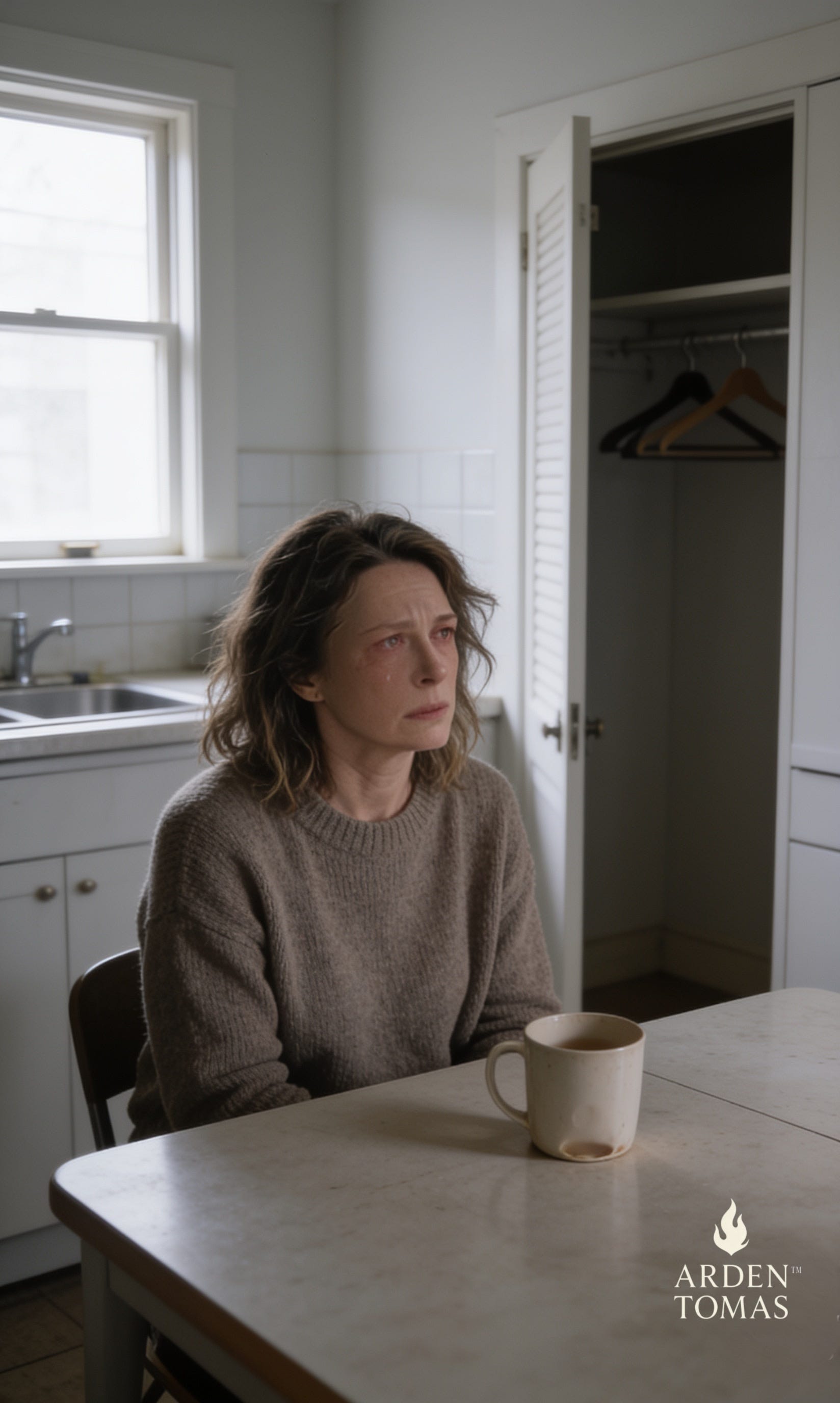
The closet. Clara opened it. On Jacob’s side, nothing hung from the clothes rack. The shelves were bare. The shoeboxes—Jacob always kept smaller items in shoeboxes: watches, belts, handkerchiefs—were all gone. Clara closed the closet door and sat on the edge of the bed. On the edge where Jacob used to sleep. On his side. The side that was now empty, and had been empty for months—Clara understood that now. Not yesterday. Not in Thessaloniki. That side had been empty for years; Clara just hadn't wanted to see it.
Her phone chimed. A text from Jacob’s lawyer. Clara didn’t open it. The phone lay on the nightstand, and Clara looked at it without reaching for it.
It was Monday morning. Clara knew the boys were coming. They had agreed over the weekend—Benjamin had called to say that he and William were coming home for a day, and that Jack was with them. Clara was glad. At least something. At least something good. The boys. The twins. Benjamin and William. Clara had always known they were the one thing she and Jacob had done right together. Not the marriage. Not the careers. Not the life they shared. The boys.
Clara stood up. She washed her face. She looked at herself in the mirror—swollen eyes, a red nose, dark circles beneath her eyes. She opened the medicine cabinet. The sedatives. Two pills. Her hand trembled. She put the bottle back. No. Not today. The boys were coming. She wouldn't have them greeted by a drugged mother. She would pull herself together. She’d cook something. Make coffee—no, the coffee was gone. Buy milk—no, the milk was gone, too. Clara sat at the kitchen table and rested her head on her hands.
Two hours later, she heard the car. Benjamin’s car—the old Opel Clara and Jacob had bought him when he started college. The car stopped in the driveway, and Clara heard the boys' voices before they even opened the door. William was laughing at something. Jack was laughing, too. Benjamin said something, making all three of them laugh. Clara stood up. She straightened her hair. She tried to smile. In the mirror, the smile looked like a mask—thin, brittle, ready to snap.
The door opened. Benjamin walked in first. Tall, broad-shouldered—a carbon copy of Jacob, only younger, stronger, his hair darker. Behind him was William. William was leaner, taking more after Clara’s build, but his face—that face was Jacob’s. The blonde hair, the blue eyes, that calm gaze that had always put Clara at ease. And behind them was Jack. Jack was shorter than both twins, with dark hair, brown eyes, lean, quick-moving, always smiling. Jack, who had been William’s friend since childhood. Jack, who had always been there. Jack, whose presence in the house was as natural as if he were a fourth son.
"Mom!" Benjamin crossed the threshold and wrapped Clara in a hug. Strong arms, a warm body. Clara felt him pull her close, and for a moment—for a single moment—everything was fine.
"Mom, hi!" William hugged her next, followed by Jack. Clara looked at Jack’s face—the boy was smiling, but his eyes were already searching, scanning for signs. Jack was always sharp. He always noticed what others missed.
"Come in, come in," Clara said, turning toward the kitchen. Behind her back, Benjamin exchanged a look with William. Something was wrong. Mom’s voice was different. Her body was different. Her movements were slower, more guarded, as if there were something fragile inside her that could shatter at any moment.
In the kitchen, Clara set coffee in front of the boys—her own decaf, which Jacob never drank—and sat down. The boys sat opposite her. Benjamin on one side of the table, William and Jack on the other. Side by side. As always. Clara looked at them and tried to hold onto her smile.
"How are you guys? How’s university?" she asked, and her voice betrayed her. Not the words. The tone. The tremor in her throat. Benjamin’s head snapped up immediately.
"We’re good, Mom. But how are you?" Benjamin looked at her. Clara looked at her son and saw Jacob in him. The same gaze. The same focus. The same silence.
"I’m..." Clara began, then stopped. The words were there in her throat, but they wouldn't come out. How could she tell them? How could she tell them that their father—perfect Jacob, quiet Jacob, strong Jacob, the Jacob who had never raised his voice, never argued, never come home late, never...—that their father had moved out? That their father had cheated on her? That their father... Clara swallowed. Her eyes filled with tears.
"Mom?" William’s voice was soft, cautious. Clara looked up and saw all three of them staring at her. Benjamin’s eyes narrowed. William’s mouth parted slightly. Jack’s hand rested on the table, and William’s hand lay beside it—almost touching, but not quite. Clara didn't notice. Not now.
"Your father moved out," Clara said. Plainly. Just as it was. The words left her mouth, and silence fell. The silence of the kitchen. Steam rose from the coffee on the table. Benjamin didn't move. William didn't move. Neither did Jack.
"What do you mean, he moved out?" Benjamin broke the silence. His voice was calm, but his hand clenched into a fist on the table.
"I mean he moved out." Clara swallowed hard. "It turns out... he cheated on me."
The silence now was different. Not the everyday silence of a kitchen. The silence that follows the moment something shatters, while the pieces are still hanging in the air, before hitting the ground. Clara looked at the boys and watched realization ripple across their faces—not just about what she had said, but that she, their mother, who had always been strong, who had always smiled, who had always held down the fort, was crying now.
"Mom..." William stood up and sat beside her, placing a hand on her arm. Clara felt her son’s hand—warm, strong, young—and the tears came spilling over. She couldn't stop them. The sobs dragged up from deep inside her chest, from the place where she had been holding them back for months. She had held them back at the police station. In the car. At the pharmacy. Now she couldn't hold them back anymore.
Benjamin stood up, too. He knelt in front of his mother and took her hands. Jack stood frozen in the kitchen doorway, his face pale. He didn't know what to do. This wasn't his family—and yet it was. He had been here since he was fourteen. He knew Jacob. He knew Clara. He knew the house, the kitchen, the smell of coffee, the garden. Now he stood watching their mother crumble, unable to move.
"Mom, who is she?" Benjamin asked. His voice was no longer calm. It was sharp. Protective. "Who did he cheat on you with? Do we know her?"
Clara shook her head. She wouldn't tell them. Not today. Not like this. Not in the kitchen over coffee, in front of the boys who were still children—no, not children, college students, adult men—but right now Clara saw them as children. Her children. Jacob’s children. She wouldn't tell them. She wouldn't tell them that their father—the Jacob who had taught them to play soccer in the yard, who had carried them in his arms on their first day of school, who had stood in the kitchen making pancakes on Sunday mornings, who fell asleep in front of the TV during matches, who was always, always there—she wouldn't tell them that their father was with a man.
"No," Clara said. "I'm not telling you. Not now."
"But Mom—" Benjamin began.
"No, Benjamin." Clara’s tone hardened. After the weeping came a firmness. That signature Clara resolve the boys knew so well. "Not now. I don't want you finding out like this. Not like this."
William squeezed his mother’s arm. Jack stepped forward and set a glass of water in front of Clara. Clara looked up at Jack and tried to smile. She failed.
"Mom, when did this happen?" William asked quietly. "How long has it been going on?"
"I don't know." Clara took a sip of water. "I don't know how long it’s been going on. All I know is... it’s over."
Benjamin stood up. His face was set, but his eyes were red. William stood beside him, keeping a comforting hand on their mother’s shoulder. Jack remained in the background—silent, watchful, hands shoved into his pockets.
"The perfect relationship," Benjamin said softly, and Clara couldn't tell who he was saying it to. Himself? His brother? Their mother? "We always thought..."
"I know," Clara nodded. "Me too."
The boys looked at their mother, unable to comprehend it. Their parents. Jacob and Clara. The Jacob and Clara who grilled in the garden, who laughed together, who sat around playing cards on New Year’s Eve, who never—ever—argued. Not like this. Not loudly. Not in the kitchen, not in the living room, not in bed. Never. Silence had been their marriage. A silence Clara had believed was security, but which now—now had proven to be something else entirely. Something that wasn't safety. Something that was emptiness. Clara didn't say it out loud. The boys didn't know.
"Go to him," Clara said suddenly. The boys looked at her in surprise.
"What?" William asked.
"Go see your father. He needs to be the one to tell you. He needs..." Clara swallowed. "He needs to face you. Not me. Him."
"Where is he?" Benjamin’s voice was dry.
"At the inn. On the edge of town. The old inn by the road." Clara knew the address. Jacob was there. Oliver was there, too. Clara didn't speak Oliver’s name. Not now. Maybe never.
"Mom, are you sure?" William asked. "Are you sure you want us to..."
"Yes." Clara stood up. Her legs were shaky, but she stood. "Go. Talk to him. I... I need to be alone right now."
Benjamin and William exchanged a glance. The twins—that silent language that had always existed between them. Eye movements, hand gestures, subtle shifts. Jack watched them and waited. He always waited for the twins to decide. It wasn't his place. Not yet. But soon it would be.
"Alright," Benjamin said. "We’ll go. But Mom... we love you. You know that, right?"
Clara nodded, not trusting her voice. Benjamin hugged her—hard, a man’s embrace, the way Jacob used to hug her. William hugged her, too. So did Jack. Clara smoothed Jack’s back and closed her eyes. The scent of the boys—young, clean, alive—and Clara knew that right now, in this moment, they were the only reason worth getting up for.
The boys walked out. Clara watched from the window as they got into the Opel. Benjamin behind the wheel. William in the passenger seat. Jack in the back. The engine started, the car backed out of the driveway, and Clara was left alone in the house. In the silence. Jacob’s silence.
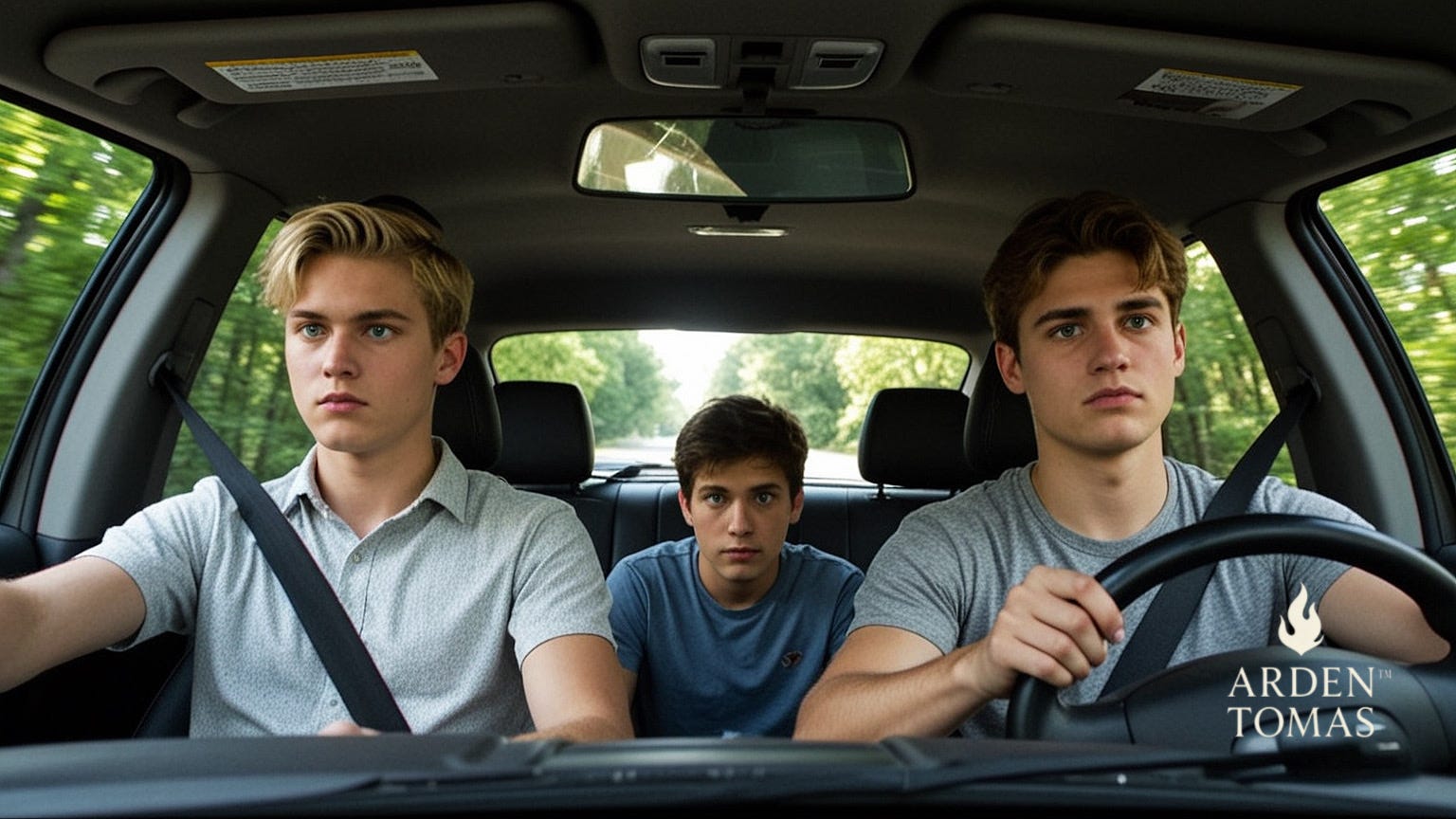
In the car, Benjamin drove. William sat in the passenger seat, Jack in the back. They were near the edge of town, along the old industrial road, when William turned around to face Jack.
"Jack," he said quietly, loud enough for Benjamin to hear. "What do you think?"
Jack leaned forward from the backseat. His face was serious—not the smiling Jack they all knew. This Jack was grown up. This Jack was weighing the situation.
"I think there’s trouble," Jack said. "Big trouble. And it’s not just that he cheated. There’s something else. Something your mother isn't saying."
Benjamin gripped the steering wheel tighter. "My mother doesn't lie. If she says she won't tell us, she won't. But she’s right—Dad has to be the one to say it.
William remained silent. He kept his hands on his thighs, watching the road. The road to the inn—old, gray, lined with trees. It was summer, the trees were green, and the sun was shining, and William found himself thinking how unfair that was. That the sun was shining while his mother was weeping. That the trees were green while his father had walked out. That the world kept spinning while his was falling apart.
"Will," Jack’s voice came from behind. Soft. Just for him. Benjamin heard it, but said nothing. The twins knew when to be quiet.
"Yeah?"
"That thing..." Jack hesitated. "The reason we came back. The thing we wanted to tell them. Do you think... now? In the middle of all this scandal? Shouldn't we wait?"
William turned around, searching Jack’s face—the brown eyes, the dark hair, the boy he had known his entire life. The boy who lived next door. The boy who had sat beside him in school from day one to the very last. The boy who had stood in their dorm room on their first day of college, looking at him, when William had known—known right then that this wasn't just friendship. It never had been. Never.
"I don't know, Jack," William said. "I don't know. But... if not now, when? I don't want to hide anymore. I don't want to live like..." He stopped. He didn't say it. Not now. Not in the car, where Benjamin could hear. But Benjamin heard the silence, too. Benjamin always heard it.
"Will," Benjamin’s voice came from the driver’s seat. Calm. "If there’s something you need to tell Dad, tell him. I don't care what the situation is. If Dad’s going through something, if Mom’s going through something—you’re their son. You’re my brother. There’s nothing you can't say."
William looked at his brother. Benjamin held the wheel, eyes fixed on the road, his profile strong and sharp—Jacob’s face when he was young. William looked at his brother with affection. Benjamin had always been that—the protector. The strong one. The one who forged ahead. William behind him. Jack behind William. But now something had changed. Now William wanted to step forward.
"Thanks, Benji," William said. Jack reached out from behind and touched his shoulder. William didn't turn back, just nodded. The three boys sat in silence. The car kept moving. The inn was drawing near.
The inn stood at the edge of town—an old, whitewashed building right off the main road. A garden, a few rooms, breakfast provided. Jacob and Oliver had moved here after Clara went to the police. They had nowhere else to go. The inn was the first place that had come to mind—cheap, quiet, away from everything. Jacob was in the room when the car pulled into the parking lot. He saw the Opel from the window. He saw the boys get out. At first, he didn't believe it. Then his heart—the heart that had been constricted in his chest for weeks—let go and leapt into his throat.
He went to the door. Opened it. Benjamin stood before him. Behind him was William. Behind him, Jack. Three boys—three young men—in the sunlight outside the inn, and Jacob stared at them, unable to speak.
"Dad," Benjamin said. And Jacob could see on his son’s face that they knew. Not everything. But something. Clara had told them something.
"Son," Jacob’s voice broke. A single word, and his voice cracked. Benjamin stepped forward and pulled his father into an embrace. Jacob rested his head against his son—the son who was taller than him, broader than him, stronger than him—and wept. Not quietly. Not stoically. He sobbed. The sound tore from deep inside his chest, from the place where he had kept the fear, the shame, the terror locked away for weeks. Now it burst out. Benjamin held him. William moved in, too—wrapping his arms around his father’s side. Jack stopped on the steps, his face serious, his eyes glistening, but he didn't step forward. He waited. This wasn't his moment. Not yet.
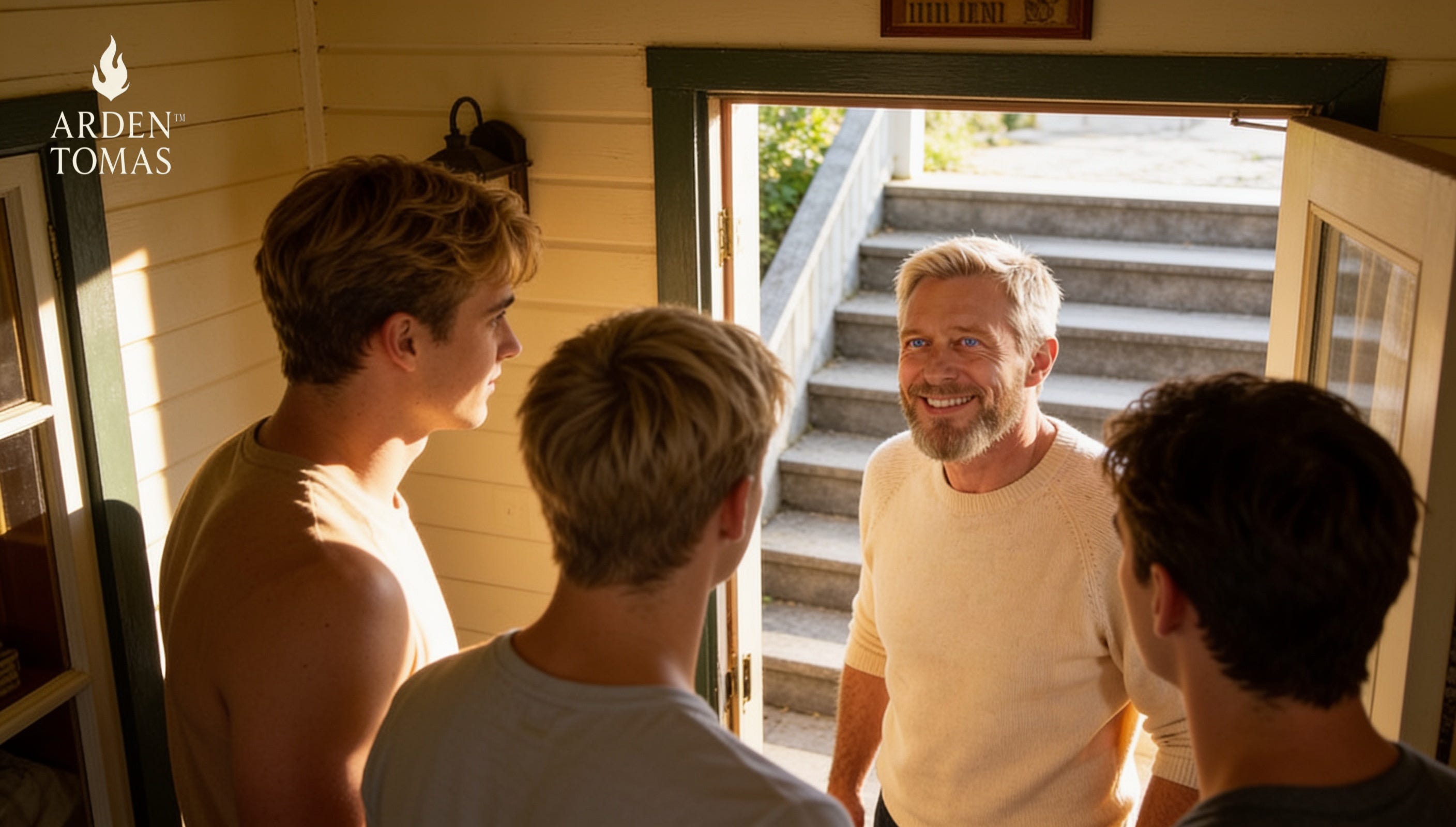
Jacob sobbed, and through it, his mind raced. Thoughts tangled together—Clara, the police, the motel, the empty closet, the boys, their faces, their eyes, the questions that were bound to come. And one thought remained beneath everything else, like a stone in a riverbed: he had to tell them. He had to tell them the truth. Now. If not now, when? The boys were here. He was crying. The walls were down. Now.
"Come inside," Jacob said, his voice raspy, his eyes red, his hands trembling. "Come inside, boys."
The room was small. A bed, a table, a chair, a couch in the corner. Jacob sat on the couch. The boys sat on the bed—Benjamin on the edge, William next to him, Jack beside William. Jacob watched them sitting there—the three boys who meant everything to him—and tried to catch his breath. He failed. His chest was tight. His hands shook. He opened the fridge—the small fridge in the corner provided by the inn—and pulled out drinks. Two bottles of Coke, a bottle of mineral water. His hands trembled so violently the bottles clinked against each other as he set them on the table.
"Dad," Benjamin’s voice was calm. Always calm. Benjamin was the one who kept things steady when everyone else lost their footing. "Dad, there’s no rush. We’re here."
Jacob nodded. He sat back on the couch, hands in his lap, watching the boys. The blonde hair—Benjamin’s darker, William’s lighter, Jacob’s blonde but thinning, graying now. The blue eyes—all three of them had blue eyes, except Jack, whose eyes were brown. Jacob had always loved Jack’s eyes. Brown, warm, lively. Now those brown eyes were fixed on him, and Jacob saw the question in them that Jack hadn't asked. Not yet.
"Soda?" Jacob asked, hating himself the moment the word left his mouth. Soda. The boys had come to find out what had happened to their father, and he was offering them soda. Benjamin took one of the Cokes and opened it. Jack did, too. William didn't reach for a bottle. William was watching his father, and his gaze—that calm, blue, Jacob-gaze—wouldn't let go.
"Dad," Benjamin set his Coke down. "Whatever happened, we love you. Just tell us. What happened? How long has this been going on? And do we... know the woman?"
The woman. Jacob froze. The word hung in the air—the woman—and Jacob felt something tighten in his chest. The boys didn't know. How could they? Clara hadn't told them. Clara hadn't told them it wasn't a woman. That it had never been a woman. That Oliver—Oliver with his brown hair, his brown eyes, his slender hips, his smile, his hands, his body—Oliver was a man. The boys didn't know. And now they were sitting here asking if they knew the woman, and Jacob looked at his son—Benjamin’s face, his strong jaw, his blue eyes, his resolute gaze—and couldn't make a sound.
"Dad?" Benjamin’s voice softened. He could see his father was somewhere else entirely. "Dad, what’s wrong?"
Jacob swallowed hard. His mouth was dry. His hands clenched into fists in his lap, then opened, then clenched again. His eyes were fixed on the floor. He couldn't lift them. He couldn't look his sons in the eye. Because if he looked up—if he looked into Benjamin’s blue eyes, into William’s blue eyes, into Jack’s brown eyes—he would have to say it out loud. And once he said it, there would be no going back. No going back, and the boys' faces would change. The love would change. The way they looked at him would change. Jacob couldn't bear that.
"Boys," Jacob’s voice was a raspy whisper, barely audible. "What I’m about to tell you... is very hard. And I am so deeply ashamed. And... I’m afraid. I’m afraid you’ll turn your backs on me. That you’ll hate me. Like... like your mother does."
The room was silent. The inn was silent. The world was silent. Benjamin and William looked at each other. That silent twin communication. Jacob couldn't see what they were passing between them. He couldn't see their eyes, only the tops of their heads—Benjamin and William, side by side. Then they turned back to him.
"Dad," William spoke first. Softly. Calmly. That William composure that had always been there, but now mingled with something else. Some kind of knowing. "Dad... am I right in guessing... that you’re gay?"
Jacob lifted his head. He looked at his son. At William—his blonde hair, his blue eyes, his face, which was his own, young and clear and unfrightened. The boy knew. Jacob didn't know how, didn't know since when, but William knew. The room spun. The floor tilted. Jacob gasped for air and couldn't find any. Then—from somewhere deep inside his chest, from the place where he had kept it locked away for decades, where the emptiness had been, where the silence had been, where the I-wasn't-myself had been—from there came the voice.
"Yes," Jacob said. "Yes, sons. I am gay."
The words were out, and Jacob braced for the explosion. The anger. The cold silence. The slamming of the door. The faces shifting in disgust. He waited. His heart hammered. His hands shook. His eyes were on the boys—Benjamin, William, Jack—and the explosion didn't come. The anger didn't come. The door didn't slam. Jacob looked at the boys, utterly bewildered.
"How did you figure it out, Will?" Jacob asked, his voice different now. Not raspy. Not trembling. Just surprised. Just relieved. Just open.
William looked at Benjamin. Then at Jack. The three boys looked at one another—the three of them who shared a dorm room, who laughed together, ate together, studied, slept, and who knew. William knew. Jack knew. Benjamin had probably guessed, but had never said it out loud. Now William had spoken it.
"Dad," William sought Jack’s hand on the bed. Found it. Intertwined their fingers. Jacob watched their hands—his son’s hand and his son’s friend’s hand—and didn't understand. Not yet. "We sensed it. Especially me and Jack. We talked about it a lot. We said... if you weren't married, if you didn't have a family... you’d definitely be gay."
Jacob stared at his son in shock. The room stood still. Time stopped. Jacob saw his son’s hand in Jack’s hand, saw their gaze—William’s blue eyes and Jack’s brown eyes—and something moved inside him. Something that had been squeezing tight finally let go.
"Dad," William continued, his voice trembling for the first time. Not from fear. From courage. "That’s why we came home. To make an announcement." William swallowed hard. Jack’s hand tightened in his. "Dad... Jack and I are together. We’re in love with each other. Dad... I’m gay."
The room fell completely silent. Jacob didn't move. He sat on the couch, hands in his lap, looking at his son—his blonde-haired, blue-eyed son—and at his son’s hand holding Jack’s hand, and at Jack’s face—the dark-haired, brown-eyed boy who had been in their house since he was fourteen, who played soccer in the yard, sat at their table, slept on their couch, who was always, always beside William—and Jacob understood. Suddenly, in a single instant, he understood everything. The dorm room. Applying together. Being roommates. The way Jack always sat beside William. The way Jack always looked at William. The way William always looked at Jack. Jacob understood, and in his chest, something—something that had been constricting him for decades, the I-wasn't-myself, the silence, the lie, the secret—let go.
Benjamin was smiling. Sitting on the edge of the bed, looking at his brother’s—his twin’s—hand holding Jack’s, and he was smiling. Not surprised. Not shocked. Smiling because he knew. He had always known. Benjamin had been the first to notice—seeing the way William looked at Jack, the way Jack looked at William, the way their gaze was different from mere friends. Benjamin had never said a word. He had waited. Waited for William to say it himself. And now William had said it.
Jacob stood up from the couch. Slowly, like a man waking from a dream, like a man standing on his own two feet for the very first time. The boys watched him—all three of them—and Jacob didn't know what he was doing. Then he knew. He stepped forward and pulled William into an embrace. He buried his face against his son—against the blonde hair that matched his own, young hair that hadn't yet grayed—and wept. William held him tight. Jack was right beside them, and Jacob put one arm around William, the other around Jack—around the boy his son loved—and Jacob felt that this arm around Jack was right, too. This was family, too. Then Benjamin joined them. Benjamin stood up from the bed and stepped over, and Jacob pulled him in—his other son, the other half of the twins, the strong, quiet, watchful Benjamin—and all three of them—all four of them—stood there in the inn room, the tiny room with the tiny bed and the tiny fridge and the soda on the table, holding one another, and Jacob wept, and William wept, and Benjamin’s eyes glistened, and Jack was silent, but his hand rested on William’s shoulder and didn't let go.
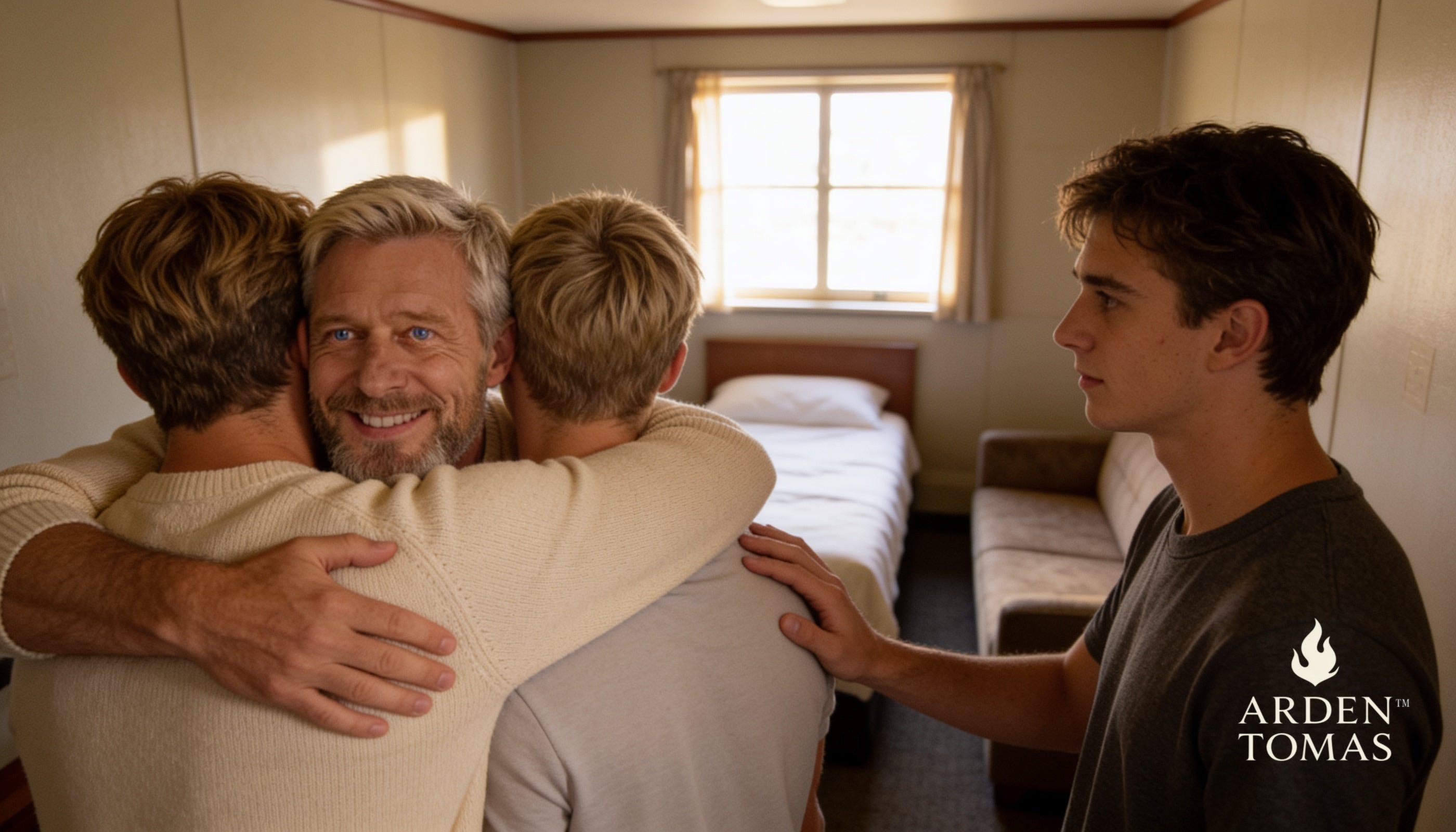
They talked for a long time. Jacob on the couch, the boys on the bed. Benjamin asked questions—always Benjamin, practical, logical, organized. When had he realized? How had he told Mom? How long had it been going on? Jacob answered—slowly, carefully, searching for the right words. He didn't tell them everything. Not the sex. Not the hotels. Not Oliver’s body, his mouth, his hands. Not those details. But the rest of it—the realization, the fear, the trip to Greece, the lovemaking—Jacob searched for the word and found it: love. He said: I am in love. The boys listened and didn't interrupt.
William and Jack shared their story, too. Jacob listened as his son explained how they had realized, how they had told each other, how they had come together. William’s voice was steady, but his hand held Jack’s the entire time, and Jacob could see that holding hands wasn't just a gesture. It was an anchor. A steadying point. Jack talked, too—about college, their roommates, the first night when William had sat on the edge of his bed, not knowing how to say it, and Jack had taken his hand and said: Me too. Jacob listened and felt something warm spread through his chest. Not shame. Not fear. Something else. Something he couldn't name, but that was there, and that felt good.
"Dad," Benjamin asked, "what about Oliver? Is he... is he gay, too?"
"Yes," Jacob nodded. "Oliver, too. He’s... he’s the one I..." Jacob didn't finish. The boys didn't press. They knew it was too soon. They knew there were things that didn't need to be said just yet.
"And Mom?" Benjamin’s voice dropped lower. "Does Mom know about him?"
"Yes." Jacob swallowed hard. "Mom... found out."
The silence changed once again. Not the silence of an explosion now, but the silence of sorrow. The boys knew—Clara knew, and Clara was broken, and this whole thing—this room, this conversation, this honesty—the price for all of it was Clara. Clara, who was sitting at home in the kitchen with her decaf coffee, her swollen eyes, the sedatives in the medicine cabinet. Clara, who hadn't told the boys it wasn't a woman. Clara, who still hadn't said a word.
"Dad," William spoke up. "Mom... needs to know. About us, too." William looked at Jack. "That we told you. That you..." William didn't finish, but Jacob understood. The boys were wondering if they should tell Clara their own secret now, while the family was already shattered.
"I don't know," Jacob said. "I don't know when... or how. But yes. She needs to know. Someday."
The dilemma hung in the air. Clara—who didn't know her son was gay, too. Clara, who was grieving their father, unaware that her son was walking the very same path. Clara, sitting in her kitchen waiting, completely unaware that at the inn—in that tiny room with the tiny bed and the tiny fridge—her husband and her son had spoken the exact same word at the exact same time. Gay. And that the word hadn't been destruction. The word had been a release.
The door opened. Oliver walked in. Brown hair, brown eyes, comfortable shoes, a canvas bag in his hand—he’d been grocery shopping. He stopped in the doorway, and four men in the room turned to look at him. Jacob on the couch. Benjamin, William, and Jack on the bed. Oliver’s eyes darted straight to Jacob—to his red eyes, the tear tracks on his face, his trembling hands—and knew something significant had happened. Then he looked at the boys. He didn't know them. Only from photos—on Jacob’s phone, the pictures he’d shown him in Thessaloniki, in bed under the sheets in the dim light.
"Oliver," Jacob stood up. "These... these are my sons. Benjamin and William. And Jack, William’s..." Jacob searched for the right word. William’s friend? William’s partner? William’s... "Jack," Jacob finished. Simply. Just as it was.
Oliver set the canvas bag on the counter—the small counter where the coffee maker sat. He looked at the boys. Benjamin stood up—tall, broad, a carbon copy of Jacob. William stood up, too—blonde, blue-eyed, his father’s face. Jack stood, too—smaller, dark, unsmiling, but his eyes were sharp and attentive. Oliver knew the boys knew. Jacob’s face gave it away. The redness, the relief, the fear and the peace all at once—Oliver recognized that expression. He had worn the exact same face when he told Eva.
"Hi," Oliver said. His voice was quiet. Not shy. Cautious. "I’m Oliver."
Benjamin studied him. His eyes measured him—not hostiles, not judging. Assessing. Benjamin was the one who always assessed. Who always knew what people were made of. Who always saw the glances, the gestures, the words behind the words. Now he looked at Oliver, and Oliver met his gaze. He didn't look away. He didn't cast his eyes down. He stood his ground and looked right back.
"Hi," Benjamin said. "I’m Benjamin." He didn't offer his hand. Not because he didn't want to, but because this moment wasn't about a handshake. This moment was about his father—quiet, dependable, reliable Jacob—living in an inn with a man. A brown-haired man holding a bag of groceries, who looked at his father as if... Benjamin searched for the word. As if his father mattered. As if he were precious. And Benjamin—who had always known his father mattered, but had never seen anyone else see it that way—saw it now. And that realization made him pause. Not in a bad way. It just made him stop.
William stood up, too, Jack beside him. "Hi, Oliver," William said. "I’m William." And Jack: "Jack."
Oliver nodded. He looked at Jacob—his eyes asking: Are you okay? Jacob nodded back. His eyes answering: Yes. Now I am.
Oliver sat down on the chair by the table. The canvas bag remained on the counter. Jacob sat back down on the couch. The boys sat on the bed. The room was small, now holding five people, and the air was thick—not with tension, but with pure presence. Five people in one room. Jacob and Oliver. Benjamin, William, and Jack. Father and son. Lover and lover. Brother and brother. Friend and friend. And the dilemma—Clara—hung from the ceiling like an unlit lamp that was nevertheless right there.
"Oliver," Benjamin spoke up. "How long... have you known my dad?"
Oliver looked at Jacob. Jacob looked back. Their gaze—that connection that had begun in Thessaloniki, at the harbor over ouzo in the twilight—was now exposed before the boys. Openly. They didn't hide it. They couldn't hide it. This was who they were.
"From work," Oliver said. "We’re colleagues. And then... in Greece..." Oliver searched for the words in front of the boys. In front of his lover’s sons. The boys who now knew their father was gay, and that this man—this quiet, brown-haired, brown-eyed man—was the one their father loved. "In Greece, we grew closer."
Benjamin nodded. He didn't ask anything more. Not now. Neither did William. Nor Jack. The room fell silent. The silence now was not empty. The silence was full. Everyone was there. Everyone knew what they needed to know. The rest—the details, the how, the when—that would come later. For now, there was only the silence. A good silence. The kind of silence that comes when the walls have fallen, and people truly see one another without turning away.
Yet within that joy—because it was joy, Jacob knew it, a joy he didn't deserve, but that was there nonetheless—shadow lingered. Clara. Clara, sitting alone at home. Clara, who didn't know her son was gay, too. Clara, who didn't know her son’s friend—the childhood friend, the roommate, the boy Clara had always loved, who had always been in their house, at their table—Clara didn't know that Jack wasn't just a friend. Clara didn't know that her son—her twin, the blonde, blue-eyed son who shared her eyes—had spoken the exact same truth his father had. Gay. Clara didn't know, and she was already broken. Clara was already sitting in the kitchen with her sedatives and decaf coffee, her swollen eyes, her empty closet, and her empty side of the bed. And now—now the boys knew, and their father knew, and Oliver knew, and five people sat in an inn room knowing the truth, while Clara sat alone in the dark.
"How do we tell her?" William broke the silence. His voice was barely a whisper. His hand held Jack’s tightly. "Mom... how do we tell her?"
Jacob looked at his son. At his blonde hair. His blue eyes. The hand holding Jack’s hand. And he didn't have an answer. He didn't know how they could tell Clara that her son was gay, too. He didn't know how to add another crack to a woman who was already shattered. He didn't know how to explain that the scandal—the scandal that had destroyed Clara’s marriage—was now tied to her son as well. That Clara wouldn't just learn her husband was gay, but her son, too. That the word—gay—wouldn't belong only to Jacob, but to William, too. And Clara—Clara sitting in the kitchen waiting—didn't know.
"I don't know," Jacob said. "I don't know, son. But... we’ll find a way. Together."
Oliver sat in his chair, listening quietly, hands folded in his lap. He didn't interrupt. This wasn't his family—not yet. This was Jacob and his sons’ moment. But he was there beside them. The canvas bag sitting on the kitchen counter. The bread, the milk, the tomatoes—everyday items bought at the store, now sitting on the counter as if this were a normal afternoon. As if this were a normal house. As if this were a normal family.
It wasn't. Not yet. But maybe—maybe one day. Maybe this was the start. Not a perfect beginning. Not a fairytale start. A real one. A messy, beautiful, terrifying, human beginning.
Jacob looked at the boys. At all three of them. At Benjamin—strong, quiet, protective. At William—blonde, blue-eyed, his own flesh and blood. At Jack—dark-haired, brown-eyed, the boy his son loved. And he knew—right then, in that room—that his fear had been in vain. The boys hadn't turned away. The boys didn't hate him. The boys held him close. The boys knew—and loved him anyway. And this—this was the mirror. Not the mirror of shame. The mirror of love. A father’s and a son’s. Both of his sons'. And Jack’s, who wasn't his son, but who held him now as if he were.
Clara’s face appeared before Jacob’s eyes. Her swollen eyes. The kitchen. The silence. The question left unasked: How do we tell her? How do we add to her pain? How do we break her one more time?
Jacob didn't know. But the boys were here. And Oliver was here. And the bread was on the counter. And the sunset filtered in through the window. And the room—the tiny inn room—was full. Not with furniture. Not with belongings. With people. With love. With fear. With hope.
The dilemma hung in the air. But not today. Today, his sons were here. Today, a father was gay, and his son was gay, and his son’s boyfriend held his hand, and his other son smiled, and Oliver sat in the chair having brought home bread. Today, that was enough. Tomorrow would bring Clara. Tomorrow would bring the hard conversation. Tomorrow would bring the mirror that Clara would become. But today—today, five people sat in an inn room, knowing one another completely, refusing to turn away.
Today, that was enough.
To be continued.
Comments
Nothing yet. Say the first thing.
Sign in to join the conversation.