
I spent last week on an intensive five day course learning all about the traditions and techniques of Indian Miniature painting. I learnt a lot of different processes in that time: how to make my own Wasli paper, the importance of a rare limestone called Kariyha and I even learnt how to grind up my own paints from earth pigments like Malachite. But actually the biggest thing the course clarified for me was this: I need to start doing my own workshops. This isn’t a new realisation, running workshops has been on my to do list for a long time. I was supposed to make it happen last year but I lost momentum when my own perfectionism around how it should work got in the way.
But no more! I’ve set up a pilot one day event for the middle of June to test out my plans, there are just four spots available.
Last week not only helped to remind me that workshops are something I really want to do, it also showed me some mistakes I would like to avoid and what I think is important for the participants on a course. Here are some things that I think really matter about workshops based on my experiences last week.
There were over twenty people on my course last week. On one hand its great that something so niche and traditional was so popular, but in practice a big group means that the people who run the course need to make it more like a bootcamp than an art course. If there’s no one barking out orders to a group that size then the time for the work planned just disappears.
Participants will have plenty of questions about techniques that are being demonstrated, things they’ve been wondering about all on their own they can now finally put to an expert in the flesh rather than getting more confused by trying to google it. These questions will often be off topic or have already been answered five minutes before, its distracting and annoying for the tutor to answer but its part of their job to respond.
The problem is that if twenty people start doing that then the tutor will quickly be sapped of their strength and focus. The technique they were demonstrating will get lost in the sea of queries and the participants will also loose their own focus and start getting sucked into side conversations and discussions which only creates more chatter and disruption.
But if there were only a handful of people these questions would be much more manageable. The tutor is less likely to get badly sidetracked and flustered. Which means that everyone gets a better course because their teacher’s energy isn’t getting drained so quickly.
No one wants to be ordered about like they’re doing one of those horrible military fitness bootcamps in the park. There needs to be a level of freedom and flow alongside the structure for it to feel welcoming and a smaller group allows for that to happen.
Short courses like these aren’t serious academic study. But at times last week it felt we were being shown techniques and gaining understanding to then go away and write an essay, or maybe even come up with a PhD title. I could probably deliver a decent thousand words on the importance of Kariyha limestone in Indian Miniature painting now, but I’d much rather have come home from five long days of study with my own little painting to show for it.
Instead we waited four and half days to pick up a brush and get down the actual business of our paintings. Which inevitably meant our work was rushed (not good with Indian Miniature painting) and incomplete. In part that happened because we were shown so many different techniques and processes by multiple wisened tutors over the week.
In theory I should have loved learning all those different aspects of the craft. As a ‘professional’ artist I was there to learn new skills that I could go away and apply in my own work. But actually, it turns out I’m just like the hobbyists or the retirees doing it for the experience - I want to go home with something that I can say I made to show to my friends and family that reminds me of that time spent learning.
Objects matter. Completing things feels good. Even if your hand is held the whole way through making it, that finished painting feels like its yours and thats an enriching experience.
Most people do these courses as an antidote to working lives where they never get to feel the satisfaction of physically making something with their hands. The final object they take home anchors that experience for them as a reminder that they are capable of making things and that making things is fun as well as frustrating.
Now, I don’t want to throw any shade of my tutors last week, they were lovely people, but there were some communication issues that got in the way of making a successful workshop. Some of this was a language barrier, nothing wrong with that of course, but how you manage it is important. When the complexity of what they needed to convey became too much for their English and they switched to Hindi there were ad hoc translations done for them by some of the bi-lingual students in the group. Mostly this was just quite interesting and enlightening, but in the big twenty person group it also opened the door to whole lot more chatter and distraction.
One of the things that has perhaps held me back from teaching workshops before is a kind of imposter syndrome adjacent feeling of not knowing enough or not being ready. But actually having thirty or forty years of experience in a craft may be impressive but if you can’t communicate it easily or worse you actually don’t like being a room full of people whose attention you need to hold then its not worth as much.
There were quite a few moments last week when I saw a tutor explain some important detail about a process to just a handful of the students because they didn’t want to shout above the din to get everyone’s attention. At the end of the day these were craftspeople, not lecturers, they’ve spent the majority of their working lives on their own in deep individual focus. Herding cats is a separate skill entirely.
Before I went full time as an artist and sign painter I worked in primary schools as a teaching assistant. So I’ve also got a basic understanding of herding cats and what it takes to handle a room of unruly children, which I think will come in handy.
I might only have a decade or so of experience in my craft but I’ve spent the majority of that time communicating it to an audience of thousands on Instagram. Articulating the different processes and techniques in my work is something I’ve developed a lot in that time. And as someone who taught themself from old books and snippets of information online I think I’ve got a good understanding of how to learn things without spending years as an apprentice to a master.
It can actually be very damaging to have spent years under a master craftsperson who instills in you a ‘right’ and ‘wrong’ way of doing things. It might help give you a rock solid discipline and technique but when you come to teach those skills to handful of amateurs as a day long experience decades later that harsh attitude can re-emerge. All you’ll end up doing then is discouraging people who are just there to have a go and play around.
Of all the different techniques we learnt last week the thing that got people most excited by far was when the gold leaf came out. At that point I tried my hardest to not be that know-it-all guy on a course and start spewing all of my own gold knowledge. But once the other students cottoned on that I’d done a fair bit of gilding in my time the questions started flowing.
Gold leaf is as alluring as it is scary to the student craftsperson or artist. Not only is it very expensive its also temperamental, liable to fly away out of unpractised hands and get trodden into the floor. You can waste a lot of money very fast if you don’t know what you’re doing. There are also a lot of different techniques for applying it, many of them thousands of years old, steeped in tradition and clouded in jargon. It’s all very confusing and intimidating if you’ve never used it before.
But that’s where I can help. I can cut through the noise, give you a structure and hold your quivering hand as it floats those first few leaves of 23.5 carat gold to the surface.
And this year I’ve come to see gold as elemental to my practice rather that just one of the materials I use, so it feels natural to make gold the focus of workshop offerings. I could offer lots of different classes based around the various gold techniques I know: oil gilding, water gilding, mirror gilding, matte gilding, directional burnishing etc etc.
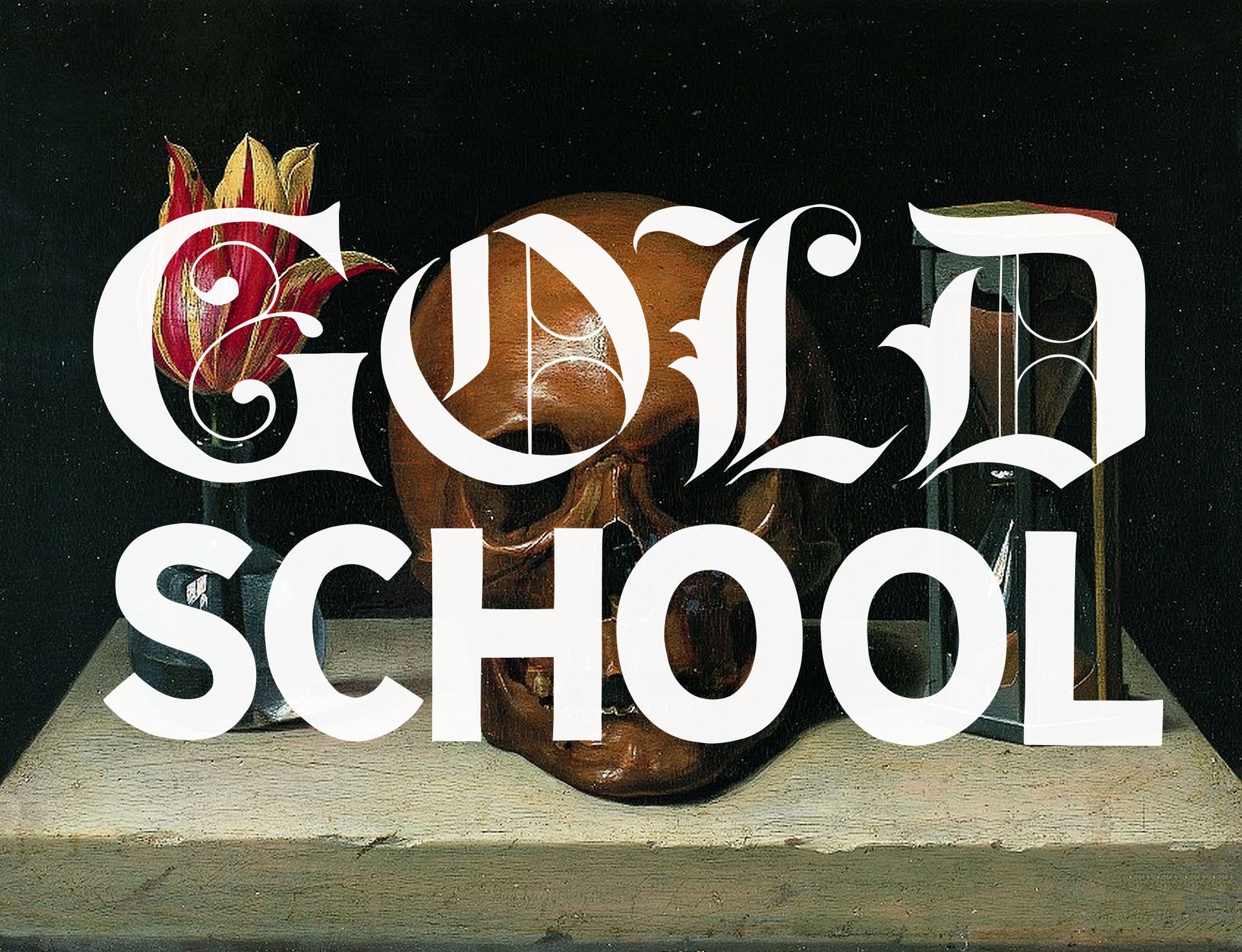
I’ve even come up with a name: ‘Gold School’, its kind of a half pun on ‘old school’ because you’ll be learning a load of old traditional techniques.
I’ve also already designed a draft logo for it before actually sorting out any of the other logistics. What can I say, type design is my game!
Work(shops) in Progress
Where my previous workshop plans have gone awry has been this idea that I need to come up with a big ambitious multi-day course where you learn all of those techniques at once. But if my experience on the course last week has taught me anything its that it makes much more sense to start with something manageable and clear.
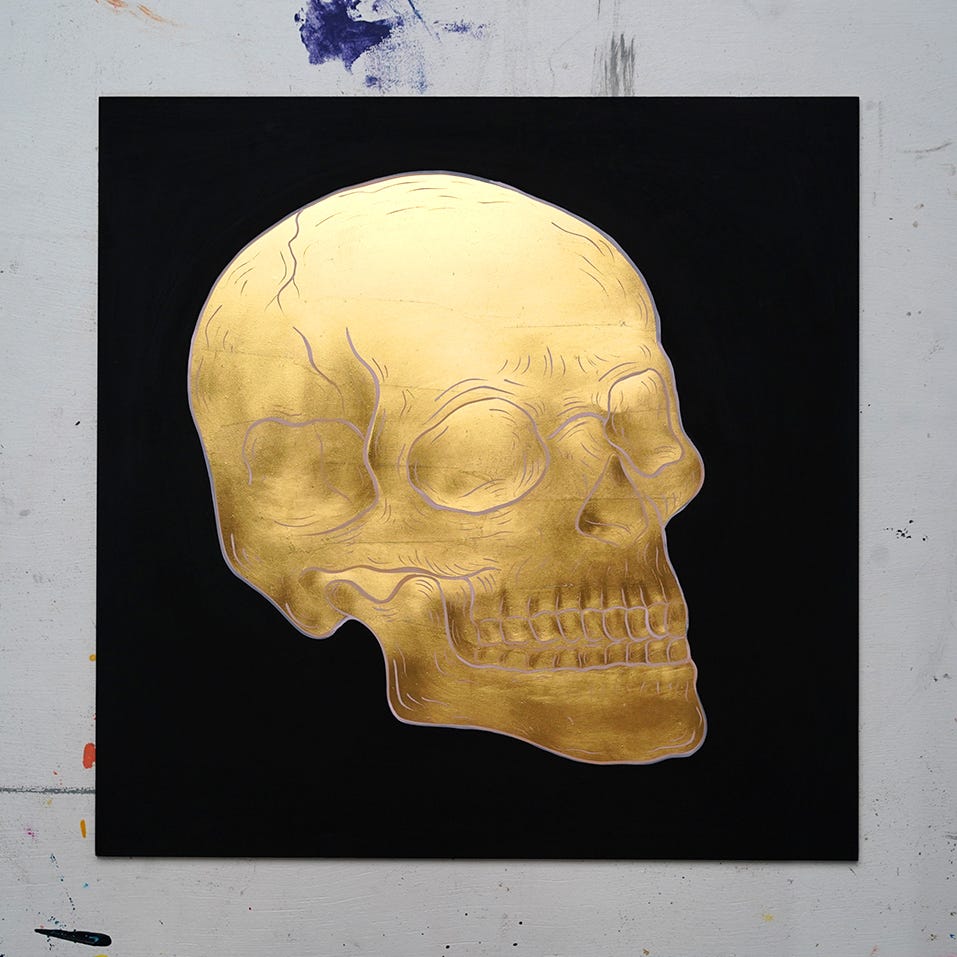
So how about this: a one day course where you come to my studio in a group no bigger than four and I guide you through the process of surface gilding and the magic of directional burnishing with velvet. At the end of the day you go home with your own unique artwork, made by you, framed and ready to hang on the wall.
Sound good? Do you want to be in the pilot?
I’m going to run the first ever class on Monday the 16th of June for a cheap introductory price. You can book one of four spots below.
Book onto the Gold School pilot
If you cant make that date then keep your eyes peeled for the future dates that I’ll add once I’ve completed the pilot and I’m happy with how its all working.
No posts
Comments
Nothing yet. Say the first thing.
Sign in to join the conversation.