
There are zenith points in the vocation where one feels content. One such point is when an individual has the skills to do work at a grade that they desire. We see this in the fine artist who desires to be able sketch a hand, who then does a hand study, and now has the skill. Excited about their newfound capabilities. However, this feeling is fleeting. It is soon replaced by a vision which is newer, fresher and far off into the future. Because it does not take long for them to see that other aspects are lacking. Yes they can sketch a hand, but what about the feet, the eyes, the shape of the hips. Growth situates itself in new desires. A hunger grows and the process begins again.
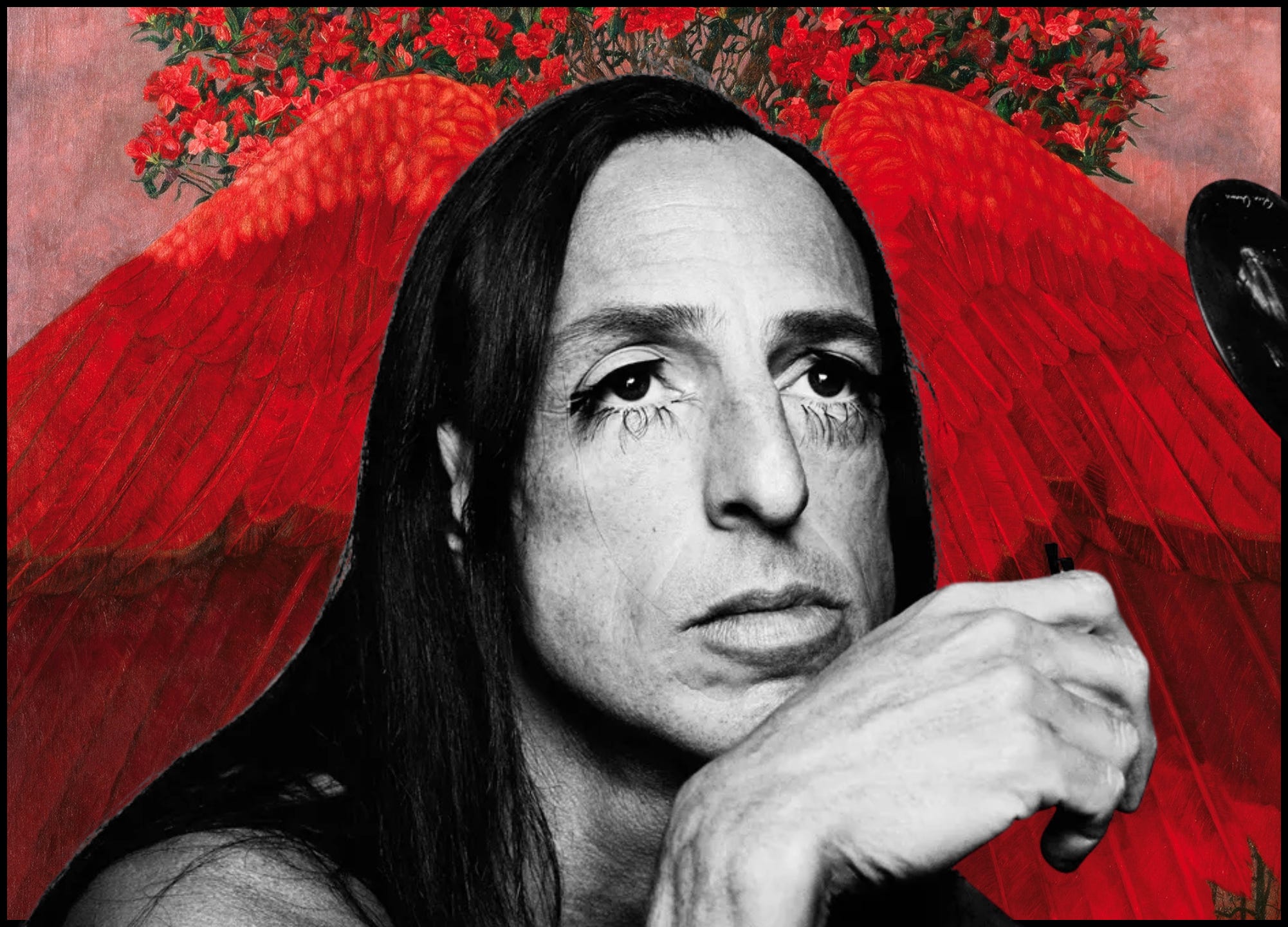
Those who practice craftsmanship learn over time that this cycle continues to repeat until either they officially step away or meet Thanatos, the Ancient Greek deity who personified death. They also learn to look for this cycle. Rather than seeking only an end point, they use their craft to push beyond the boundaries of their current limitations. Rick Owens is a living example of this.

A challenging designer for some, and the only designer for others, Owens has a die-hard following who adore his work. Giving voice to non-conformity, beauty beyond traditional aesthetics and an expression for those who want to claim rebellion in their personal expression. With the ability to synthesise elegance and edge, his taste has become iconic. However, it did not begin this way and Rick has found himself being consistently challenged throughout his path. In learning his craft and the continual improvement in it, he has been faced with taking risk after risk; coming out of the shadows, staying true to his vision in an industry that demands regular turnover and even designing brutalist furniture are some such risks. In the development of his craft and the relationship that he has to it, he has placed himself into situations that demand growth and has risen to them all.
Craftsmanship expands what we are able to do in this world.
Think of the ‘self’ which contains who one is, both consciously and unconsciously. There are parts of us that we will not be aware of. This includes skills. Those who do not practice craftsmanship attach themselves to the conscious side of their capabilities i.e. “My voice does not go that loud.” This is limiting and restricts future experience based on previously held notions of identity.
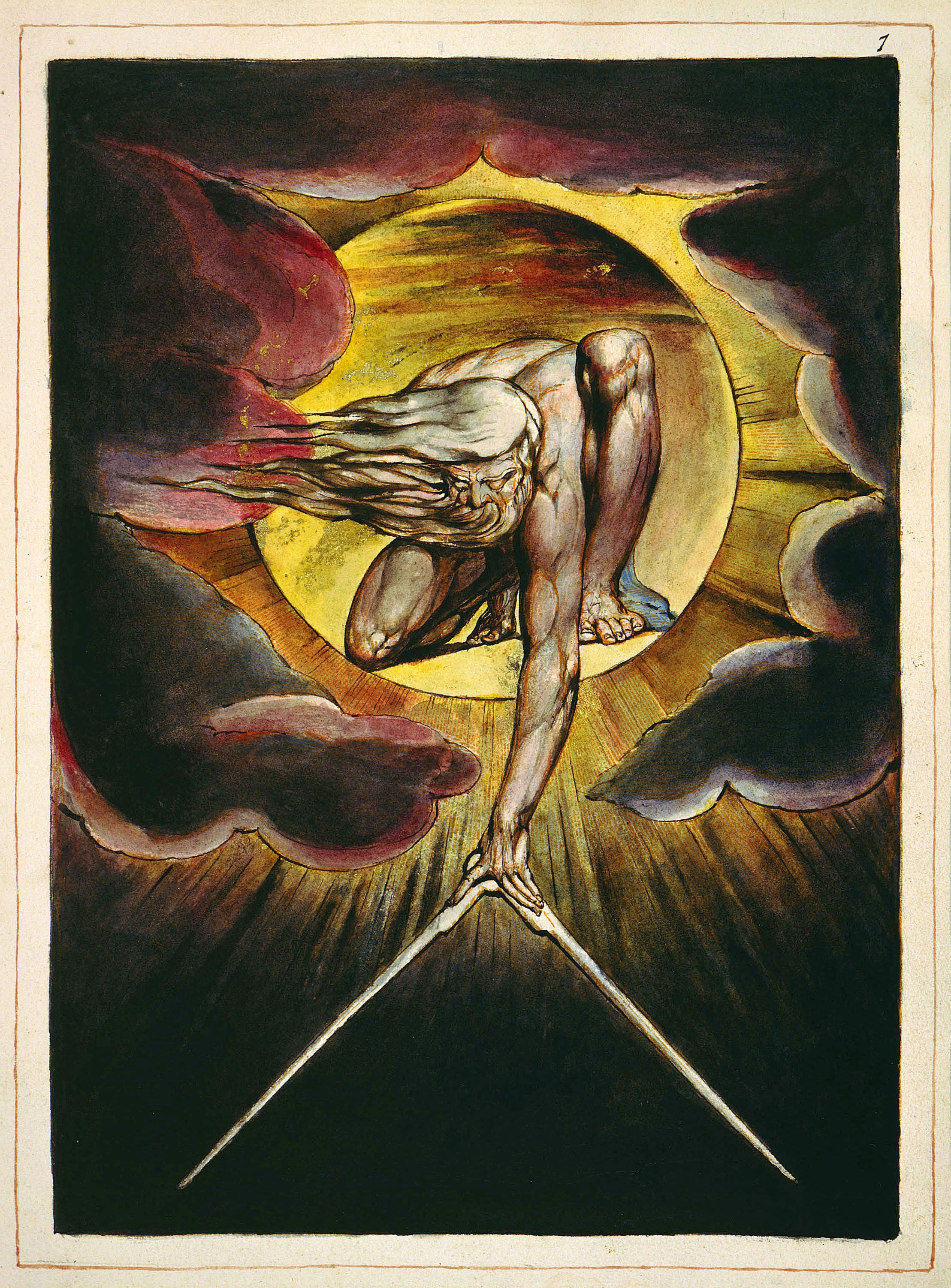
However craftsmanship does not hold these beliefs and even challenges them. This is because in its practice, an individual is asked, regularly, to move beyond what they thought they were capable of doing. Metaphorically, it is the singing teacher who ignores the singer telling them about the limitations of their voice and then corrects their posture. Now listening to them singing at a volume that they previously denied was possible. Our craft interacts with us like a bridge which allows us to venture into territory that has not yet been experienced. Yet is there, waiting to be lived. It pushes us outwards in all directions, a demiurge like the one depicted in William Blake’s painting entitled Ancient of Days. Creating form from chaos which keeps us alive.
If an individual’s approach to their craft isn’t evolving they are not practicing craftsmanship. This also causes the vocation to suffer from staleness.
During an interview at the Palais de Tokyo in 2023, Rick spoke about forcing himself to do new things but in his own way. Presenting this as an exercise he sets himself. Saying, “I would never do sequins but if I did, how would I do it? Then I end up doing sequins.” Here we can view the interaction between what he knows his craft to be and then also, how to approach pushing himself into foreign territory. Both knowing who he is and simultaneously, being curious enough to find out more.
There are certain tasks, styles, presentations, materials, shapes, ideas etc. that individuals grow comfortable with. Whereby what they originally learnt, is now repeated without thought and goes unchallenged. However, every now and then they have to be questioned. By holding onto them in an ideological way, it causes a self-determined future to take effect. Whereby an individual cannot grow because the conscious part of themselves has set austere parameters of growth from the standpoint of an omnipresent God. But the vocation asks us to be willing to attempt new skills, works and tasks which provide us with growth and self-understanding.
If one is always comfortable in the doing of their craft, they are not practicing craftsmanship.
Craftsmanship is both a practice and concept that an individual can take with them into any type of work. This is because it’s primarily concerned with the quality of the work done and the experience of the maker.
Images in current culture regularly depict craftsmanship as a solo act; the lone individual in their workshop with no one else around them. Whilst this image holds the essence of craftsmanship underneath it, and there are those who practice craftsmanship well who fit this image, fixating on the presentation of the image superficially can lead to viewing it as only ever existing in these aesthetic conditions.
For example, craftsmanship can exist in collaborative environments. Think about an individual dancer who begins their path practicing different movements religiously for hours each. Though the path may begin this way, it may ask them to choreograph others later on. Craftsmanship is no longer self-contained and now a collaborative effort is required. They cannot practice the change over between scenes on stage with the entire cast, alone in an empty studio. The next stage of development in the vocation continues to hold onto craftsmanship, however, it is being practiced in a new location of experience. There is always a graduating process in one’s craft. Though it may not be a social one, as in the example given, craftsmanship will have to be practiced under new conditions as the individual grows
When Rick Owens spoke about no longer sewing in certain aspects of his work, “I don’t do that anymore” he was emphasising how his craft has developed over time. Because there was a time where he would sew everything himself, however, as he has progressed in his own path, he sees certain types of work as, ‘Wasting the best part of me.’ One has to remember that Rick did not begin as a creative director. Rather he went to a trade school and learnt how to make patterns. Later landing jobs in the garment industry around Los Angeles where he would make patterns all day for items such as Versace jackets. Doing this over and over again. Setting a strong foundation of skill in his craft. This is enough until it is not.
What is common in the practice of craftsmanship is that an individual will learn their craft and it satiates for a time, but because it has no individuality in it, they begin feeling discontented. In copying and repeating, what originally helped, now hinders their growth. The graduating necessity is now found in imbuing their work with their own essence. Which Rick did in venturing out on his own. But imbuing one’s essence in their work does not end things, it continues on as there is always a better of the work that’s possible. We see this when Rick has a breakthrough in his own vocation, being received by the fashion world and finding complementary partners.
Bringing ideas down from the heavens, so that they can exist here on earth, is fundamental to craftsmanship.
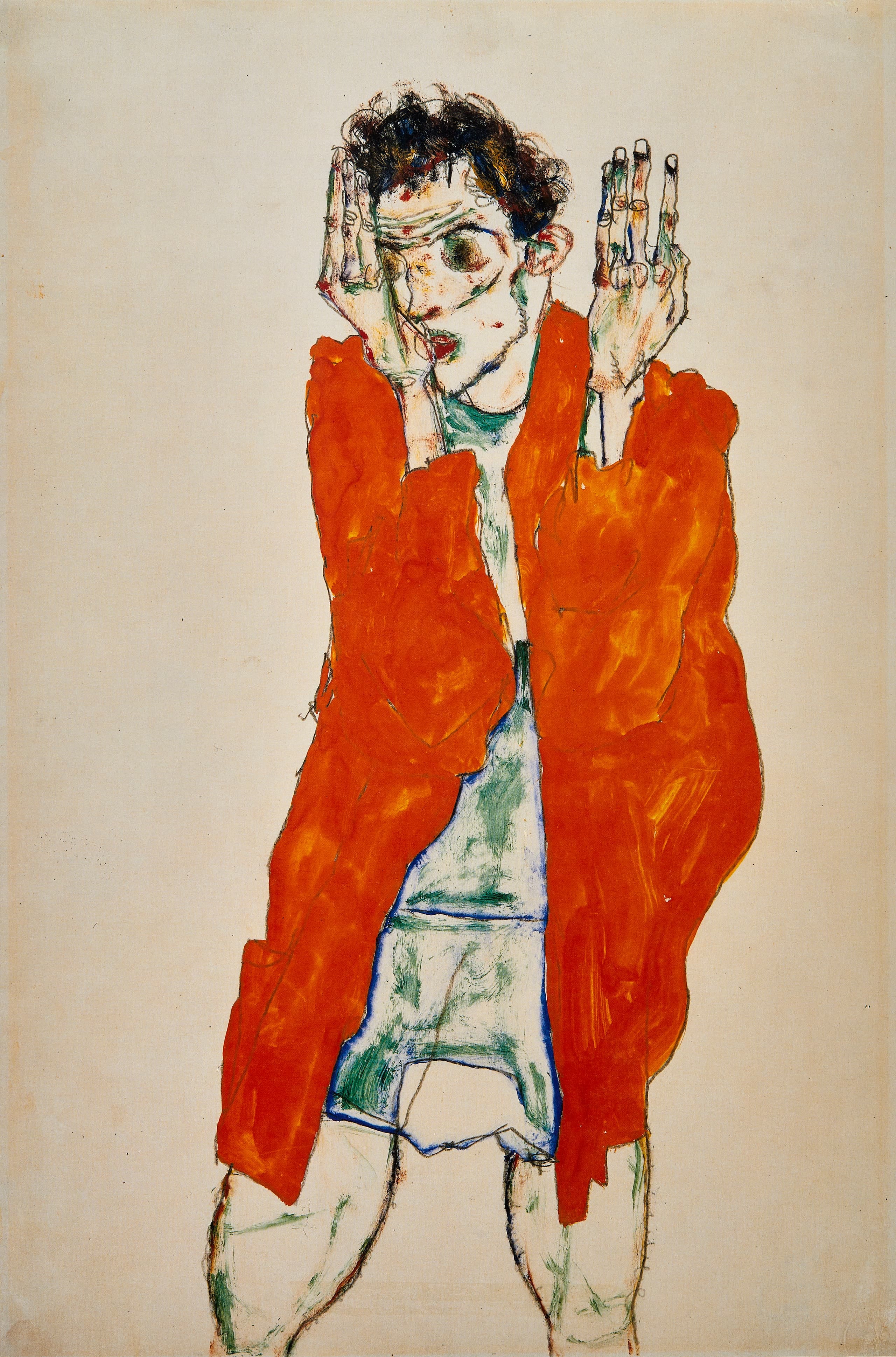
Having the idea begins the process but one must also be able to guide that idea downwards and give it form. Allowing it to live and breathe in the time period one is participating in. Like an Egon Schiele artwork that depicts body distortion and angst, calling attention to fringe, raw and twisted states of experience. His artwork could not be expressed in ideas alone. He had to show us the psychological and physical conditions through his craft. But this is a hard task to do, as ideas are fragile. An idea can easily be lost if an individual cannot communicate it correctly or does not have the skills to bring it forth. They may also convolute it with another idea that has entered their awareness, which is for another work later down the path. Their lack of confidence may also dilute the boldness of the original idea, stripping it of its power. Which is why craftsmanship is not simply about having ideas, rather it’s about executing the vision of an idea or set of ideas that are seeking to come through in our true works.
Rick Owens makes it clear as to how important he thinks execution is, saying, “I think creativity is five percent and ninety five percent is execution.”
He speaks regularly, throughout many interviews, about how delicate the process is. With his attention on ensuring that the right touch is given to a look and the cohesiveness of many elements come together in the right way. It is also why he champions the idea of being in a relationship with someone who is business minded that simultaneously respects his creative process. His works of craftsmanship are then able to expand beyond the perimeters of a small boutique. Meticulous in executing his vision, caring about giving people clothing that defies commercial beauty standards and making clothes people can wear which are not simply for the runway.
The vocation asks us to bring works into the world, as they are transformative and progressive acts that move us forward. We can thereby do this through the careful execution of practical outcomes which take us towards our vision. Giving ideas life, in the real world.
Craftsmanship gives us an access point into growth. Through which we are then able to see what we’re capable of and bring works into the world which elevate culture. No matter how the craft evolves, craftsmanship has to remain with us if we are to take steps that are truly forward. Without them we coast, we do not experience self-refinement and the works we do never penetrate into the territory of original works. Every zenith point that one reaches in their vocation, where they feel content, is not an end state, but a resting place before we go again.

We are offering a 10 week Summer School alongside our Career Archetypes Course, a course & community we have developed to help people take the first step towards finding their calling. It is an extremely popular time to join, and in the past we have had hundreds of students join us for summer school. Looking forward to meeting 2026’s students!
“The Career Archetypes course helped me to finally accept that I am a poet” — Tiara, Career Archetypes student
No AI was used throughout the process of creating this article.
Comments
Nothing yet. Say the first thing.
Sign in to join the conversation.