
Please note: ALL photos are taken by yours truly, words are mine also, unless otherwise indicated. Copying photos allowed only with permission. Thank you.
By late Summer and into Autumn, the mushrooms have arrived. Not in every place of course. But those in areas where rainfall and moisture is more consistent,—some would say constant, like the Pacific NW—well, you folks have it made in the fungi department.
Here in the high desert of the Rocky Mountains, I seek higher elevations. Where it’s cooler, and Spruce and Mountain Maple trees shade creeks—but you have to time it right. Foray into the woods a day to three after it rains in order to see what pops up in these parts. Not much fungi, as it’s so dry.
Just last month, I had a pleasant surprise in the lawn. A rounded, white mushroom began to push through the grass below the flowering Crab-apple. And then another, and another and one more! Puffballs! Pretty sure they are ‘Western Puffballs’—they have an interesting hexagonal raised pattern. Inside, completely white and sponge-like.
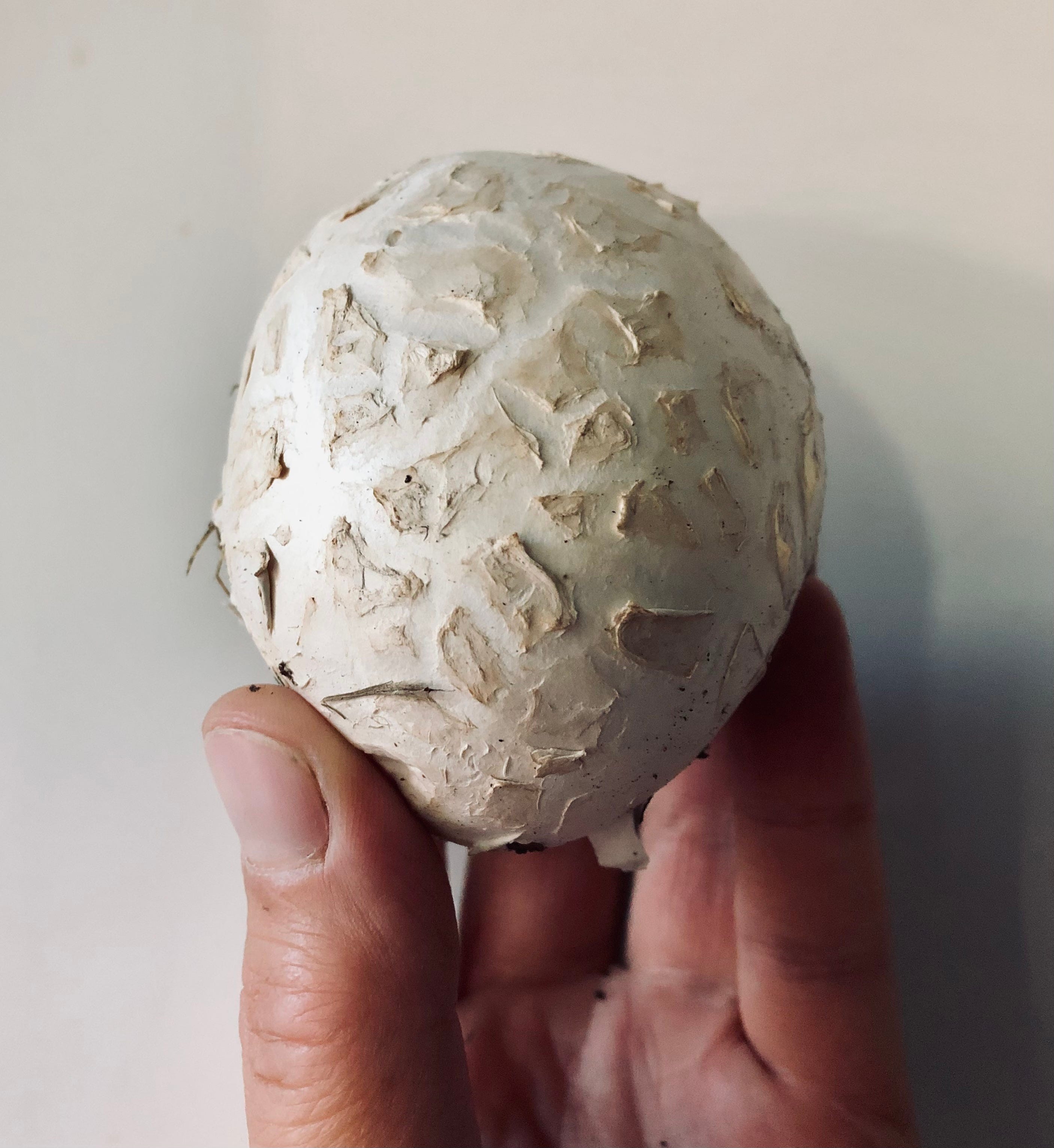
I harvested two to eat and left the others to spore out and hopefully produce more. Younger specimens are generally better than older when it comes to mushrooms. Puffballs seem to be a ubiquitous sort of fungi, turning up in all sorts of locales. My dad showed me a Puffball larger than a basketball when I lived in northern Wisconsin. In our Alaskan backyard, Gem-studded and Pear-shaped Puffballs proliferated on rotting stumps and mossy ground surrounding—so amazing to forage for wild mushrooms out one’s literal front door.
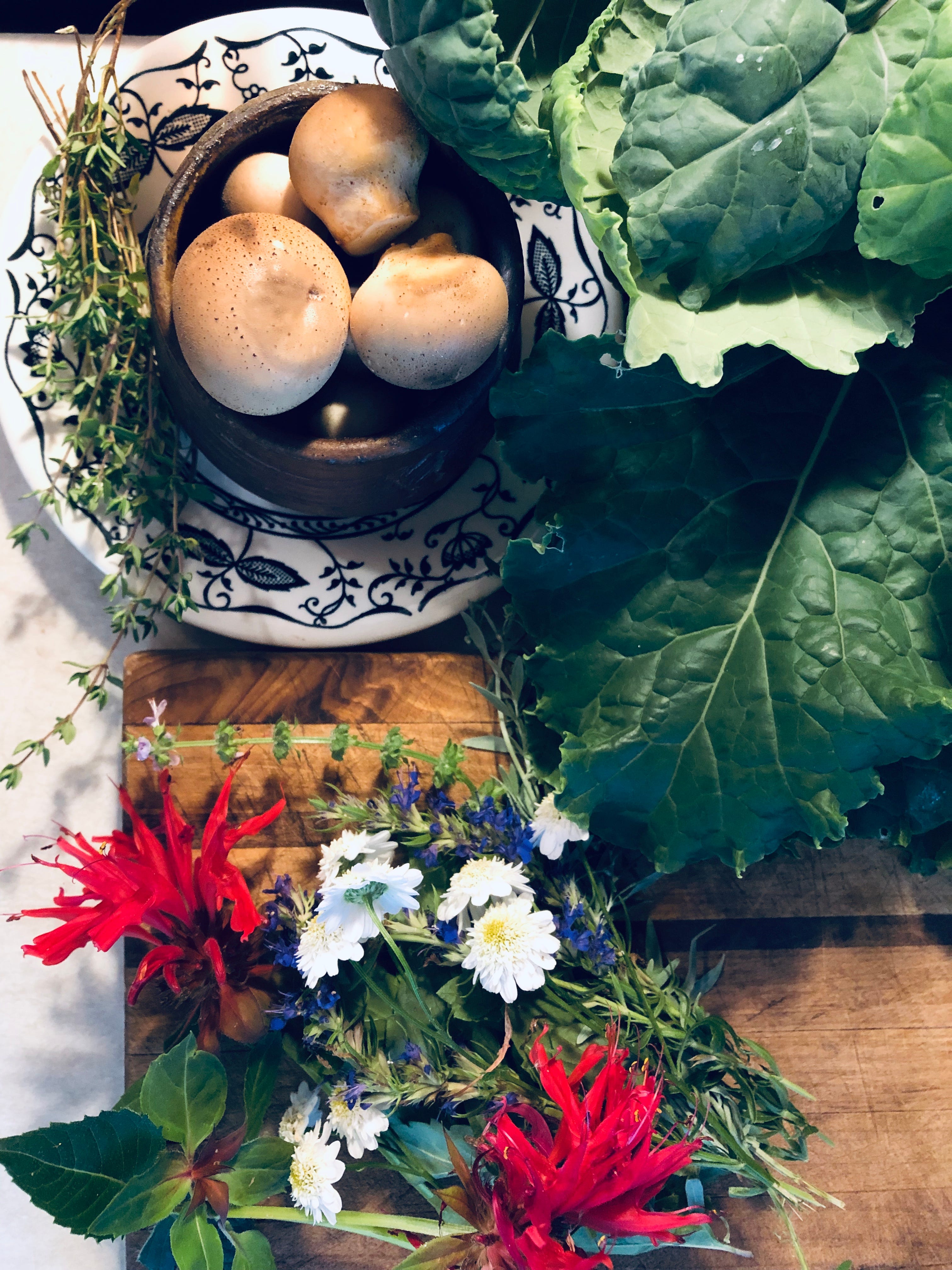
Now, as with any wild, edible foods, please do your own research and identification to be sure that what you’re eating is what you think it is—don’t depend only upon AI mushroom apps—these can be useful to start, but always follow up with a notable author(s) or knowledgeable person(s) in your area.
Do spore prints! Cut them in half, what’s in there? Is there an open cavity? What color is the cap? Does it have pores/holes or are there gills under the cap? Is there a skirt, known as a veil, close to the cap? Is there a stem? Does it turn a color after cutting? Does it smell sweet like Anise? What color are the spores?
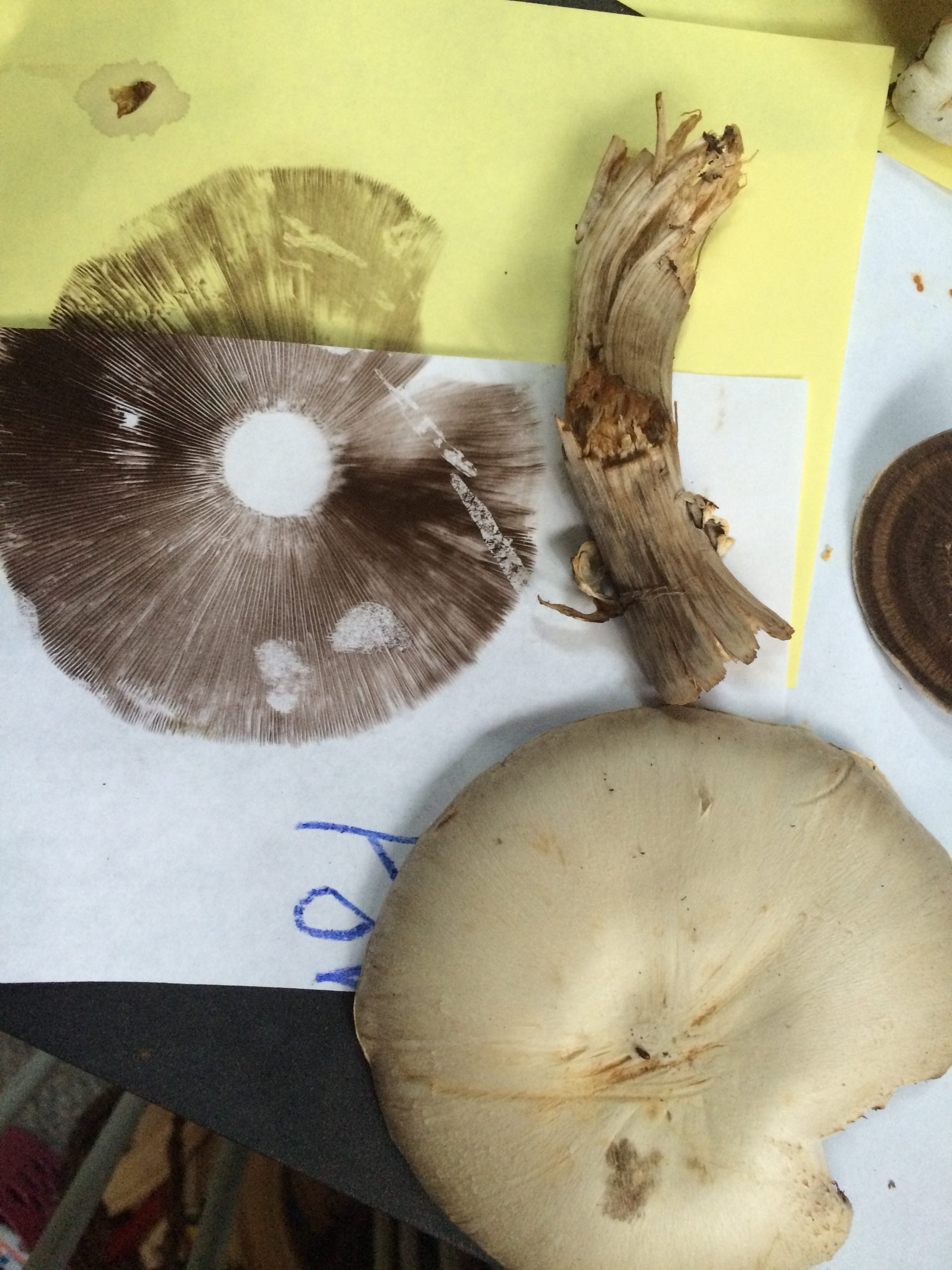
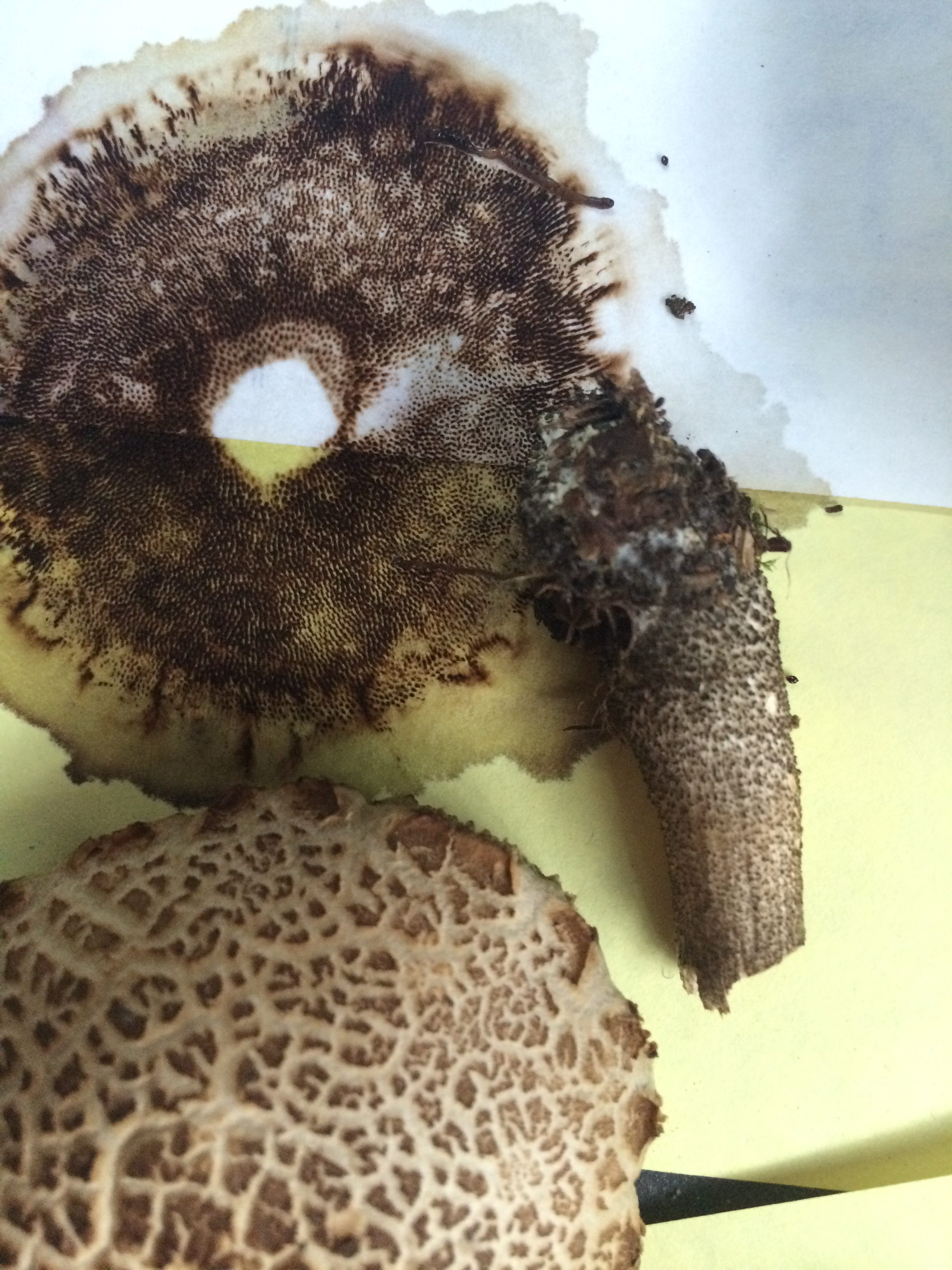
Observe, observe, observe! While some mushrooms grow in the same spot year after year, their mycelium network is shifting all the time, and where you once had no mushrooms (like in my lawn for the last four years), you might see ‘random’ fungi growing. Of note, it just may be that the mushrooms showed up because the diversity in my lawn improved. I’ve planted numerous trees and shrubs, maintain a good-sized garden, adding in leaves and rabbit poo, compost and fertilizers…AND, I don’t spray any non-organic pesticides/herbicides. No Round-Up in my yard. Pretty sure that wasn’t the case before we moved in…
Also, and this is my humble personal opinion, but if I only see ONE mushroom, I like to leave it be. Let it spore out, fruit some more. Take some good pictures, draw it if you’re handy that way. If there are more mushrooms and you’re trying to ID, then take one for a spore print, cut it in half to see what is inside, take a sniff and see what it smells like…
I am of the belief that while yes, it is sometimes imperative to just look with your eyes and “leave no trace” -- however, if done with care and intention and with good, ethical harvesting techniques in mind, you’ll learn far quicker and have a better chance of proper identification if you touch, smell, taste (sometimes) and cut open a mushroom that you’re wondering about. Like an Apple is to a tree, the mushroom is to the mycelium network (the fungal network—sometimes I like to think of it like underground capillaries) from which it sprouts from…
Mushrooms fascinate me. And I had the opportunity to live where they LOVED to be, studying them year after year.
And yet you could probably find the following info if you asked ChatGPT/AI all the right questions. It would glean the internet for such writings that follow. Synthesizing and posturing the perfect answer for you in mere seconds. It took me years, decades actually, to know the following. It took hours to write, days to finish. I don’t even know with the photos. So, as an extra thank you to those who financially support this work and sharing of Plant story, well in this case, Fungi story…
What follows is a pictorial exploration of 4 readily found fungi and ways to identify. Plus, my favorite mushroom books at the end. PURCHASE FROM REPUTABLE AUTHORS—there are AI mushroom ID books—do not trust them!
Comments
Nothing yet. Say the first thing.
Sign in to join the conversation.