
Social media feeds, bookstores, and motivational seminars are all filled with catchy phrases aimed at lifting our spirits in today’s world. We always hear, “Believe in yourself,” “You are enough,” and “Follow your heart.” At face value, these sayings seem harmless, positive, and encouraging in nature. They make us feel good and seem to offer a boost of confidence when we are feeling down. However, if one considers these ideas from an Islamic perspective, the underlying philosophy is fundamentally different.
The central issue is that modern self-help culture focuses entirely upon the “Self,” in Islam known as the Nafs. This suggests that the power to control our lives emanates from within us. In contrast, Islam teaches that true power and control belong to the Creator and not to creation.
The Reality of the Human Self
From an Islamic perspective, relying 100% on oneself is a risky strategy. Why? This is because the human self is imperfect. Humans are fragile by nature. We get tired, emotional, make mistakes, and have limited knowledge of the future. Theologically, the Nafs is not created to stand alone as a guide. It is prone to weakness and may easily be misled by malignant forces such as Shayṭān (Satan). Building our house on our own selves as if it were the ultimate authority is sure to weaken the foundation. For the human soul to remain straight and right, the hand that holds it should be steady. It needs guidance from a source that is perfect, all-knowing, and unchanging: Allah.
Learning from the Humility of the Prophet
This lesson is most powerfully taught through the example of Prophet Muhammad. In the Islamic faith, he is respected as the greatest human being to have ever lived. Despite his high status, he never claimed that he could do it alone. He taught his followers a beautiful and profound prayer: “Oh Allah, I hope for Your mercy. Do not leave me to myself even for the blink of an eye.”
This supplication is a profound reality check because if the most righteous, guided, and beloved person to Allah feared depending upon himself for even less than a split second, what makes us think we are “enough” ourselves? Therefore, the concept of absolute self-sufficiency is an illusion. True wisdom comes from recognizing our need for Allah at every moment of our lives.
The Hidden Dangers: Arrogance and Changing Feelings
There are two spiritual dangers in adopting the “me-centric” mindset of much of modern self-help, often without our realizing it.
First, it encourages a subtle form of pride, called Kibr in Islam. In effect, when someone says, “I create my own destiny,” they are arrogating an attribute for themselves that only Allah has. And as Muslims, we apply this humble creed: “There is no power and no strength except by Allah.” Recognizing this does not make us weak; it connects us to the Ultimate Source of power.
Advice such as “Follow your heart” or “If it feels right, it is right” encourages us to follow our personal desires, known as hawa. The problem with following our hearts is that our feelings are constantly changing. One day we may be happy, and another day we may be sad. One morning we wake up angry, and by evening we are calm. If we use our feelings as a compass, we will always be lost. For a Muslim, however, the compass is objective and steady: the guidance of the Quran and the Sunnah, the way of the Prophet. These truths do not change with our moods.
True Confidence
It is critically important to add here that this critique in no way implies that Muslims should have low self-esteem or think adversely about themselves. Islam wants us to be strong, dignified and capable. However, it changes the source of confidence.
Instead of “Ego-Confidence,” which thinks, “I am great,” Islam teaches “Theocentric Confidence” (Allah-centered confidence). This is the concept of Tawakkul, or complete trust in Allah. A Muslim stands tall not because he thinks he is a superhero but because he knows he is supported by the Greatest Power in existence.
The Example of Moses (Musa)
A perfect historical example of this kind of confidence is the story of Prophet Moses at the Red Sea. Visualize the scene: he was trapped with the sea in front, a huge enemy army behind, and his people terrified and full of despair.
At that impossible moment, Moses does not look inside himself to find a solution. He didn’t say, “I believe in myself, so I can swim across.” He did not panic either. There and then, he proclaimed absolute trust in Allah: “Indeed, with me is my Lord; He will guide me.” His confidence was rock solid, but it was not in his own ability to fight or swim. It was confidence that Allah would provide a way out. And, as we know, Allah did.
Conclusion: Tie Your Camel
While the self-help industry’s catchy slogans promise empowerment, they often lead to a fragile form of self-worship that collapses when life gets hard. True, enduring strength comes from shifting our focus from our weak, changeable selves to the All-Powerful Creator.
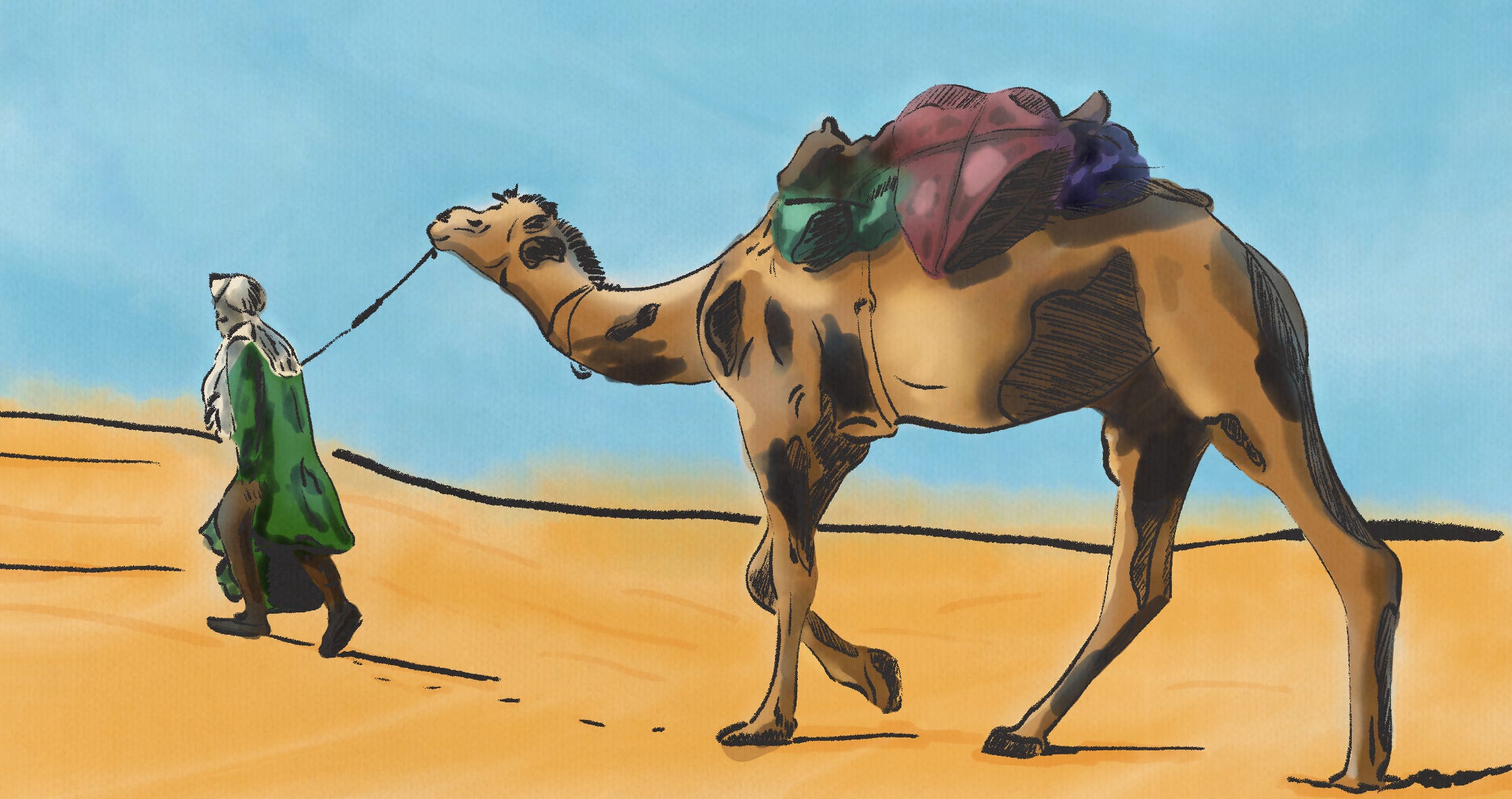
This is best summarized by a famous piece of advice from Prophet Muhammad. When a man asked if he should leave his camel untied and trust in Allah, the reply from the Prophet was: “Tie your camel and trust in Allah.”
This is the beautiful formula for a successful life: we put in the hard work, we prepare, and we do our best, tying the camel, but our hearts remain at peace knowing that the final result is in Allah’s hands. This is true, unshakeable empowerment.
Want to watch the video discussing this topic? You can watch here via this link:
No posts
Comments
Nothing yet. Say the first thing.
Sign in to join the conversation.