
Every generation of technology has a moment where building stops being the hardest part.
The early internet was about getting computers to talk to each other. Once that became possible, the real work shifted toward making the web searchable, reliable, and usable.
Computers themselves followed a similar path. The first challenge was simply getting them to work. Eventually, the hard problems became debugging, profiling, version control, monitoring, and understanding increasingly complex systems. Entire industries were built not around creating software, but around making software understandable.
AI feels like it’s approaching that same transition.
For the last few years, almost every breakthrough in AI has been measured in capability. Models have become larger, faster, cheaper, and dramatically better at reasoning. They can write production code, discover scientific insights, generate realistic media, and increasingly operate as autonomous agents. What felt impossible just a few years ago is quickly becoming routine.
As these models become infrastructure for companies and products that millions of people rely on, an interesting gap has started to emerge. Our ability to build increasingly capable systems has improved at an extraordinary pace, but our ability to understand why they behave the way they do has barely kept up..
Yet when these systems fail, the answers are often surprisingly primitive.
A model starts hallucinating after a fine-tune.
An agent suddenly develops a strange behavior.
A capability quietly disappears between checkpoints.
A jailbreak works on one version but not another.
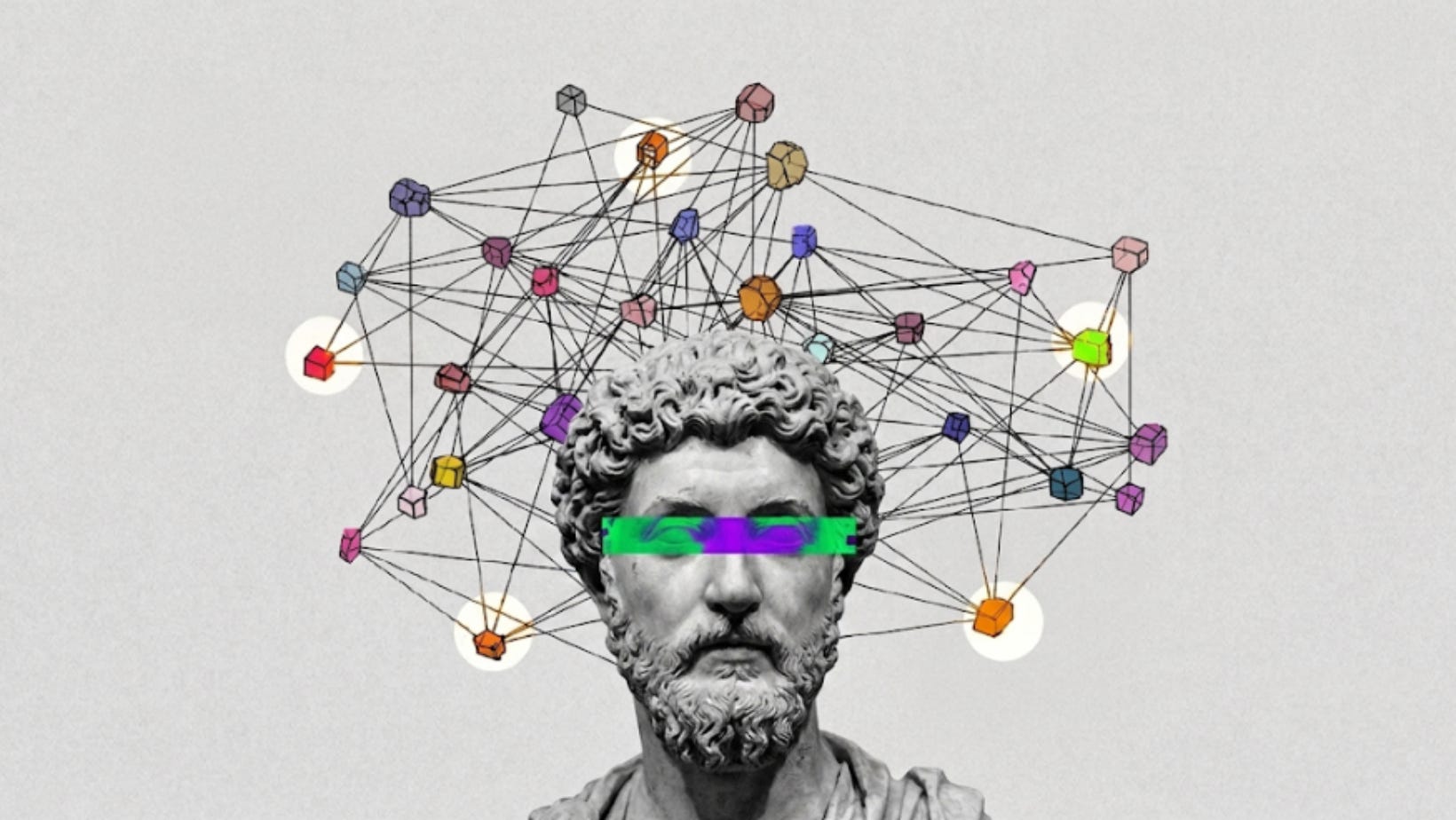
Most of the time, we respond by trying another prompt, collecting more data, or retraining the model. Sometimes that fixes the problem, sometimes it doesn’t, but we rarely understand what actually changed inside the model itself.
Imagine if software engineering worked this way.
Imagine deploying a distributed system without logs or tracing. Imagine debugging a production service where the only thing you could observe was the final output. You would know that something failed, but you would have almost no visibility into why it failed.
That would feel absurd for software.
For AI, it’s still surprisingly normal.
Most of the ways we evaluate models today happen entirely from the outside. We compare benchmark scores, run evaluations, inspect generated outputs, and collect human preference data. All of these are valuable, but they’re ultimately measurements of behavior rather than explanations of behavior. They tell us what happened without giving us much insight into why it happened.
History suggests that this stage never lasts very long.

Scientific revolutions are often remembered because of the discoveries they produced, but those discoveries were usually enabled by better instruments. The telescope expanded what astronomers could observe. The microscope revealed an entirely new biological world. DNA sequencing transformed genetics not because it changed biology itself, but because it gave scientists a fundamentally new way of looking at it.
Engineering evolves in much the same way.
Software engineering didn’t become a mature discipline because programmers suddenly became better at writing code. It matured because developers gained tools that exposed what had previously been invisible. Debuggers made execution inspectable. Profilers revealed performance bottlenecks. Version control made changes traceable. Observability platforms made distributed systems understandable.
The tooling didn’t just improve software.
It changed how software was built.
AI is beginning to reach a similar point.
The interesting question is slowly shifting away from “Can the model perform this task?” and toward “Why did the model behave this way?”
That shift changes almost everything.
If a hallucination can be traced back to a specific internal mechanism, it becomes something engineers can investigate rather than simply measure. If a fine-tune causes an unexpected regression, we should be able to identify which representations changed instead of treating the entire model as an opaque object. If a safety behavior emerges or disappears, we should understand the computation responsible rather than discovering it accidentally through evaluation.
This is what interpretability ultimately enables.
Not perfect explanations for every neuron or every token, but a transition from guesswork toward engineering.
As models become larger and more capable, understanding their internal computations stops being an academic curiosity and starts becoming practical infrastructure. Companies deploying AI systems will eventually expect the same kinds of tools they already rely on for software: debugging, inspection, monitoring, root-cause analysis, regression detection, and reliable ways to explain why a system behaved the way it did.
The goal isn’t to replace better models.
The goal is to make better use of the models we already have.
Looking back, every important engineering discipline eventually developed instruments that allowed practitioners to inspect what had previously been hidden. Electrical engineers built oscilloscopes. Network engineers built packet analyzers. Software engineers built debuggers. Scientists built telescopes and microscopes.
Artificial intelligence is unlikely to be any different.
The models themselves will continue improving, but capability alone has never been enough to mature a field. Maturity comes when engineers stop treating a system as something they can only observe from the outside and start treating it as something they can inspect, reason about, and deliberately improve.
Perhaps the defining challenge of the next decade isn’t simply building more intelligent systems.
Perhaps it’s building the tools that make intelligence understandable.
Because history suggests that once we can truly see inside a system, we stop treating it like magic.
And that’s usually when the real progress begins.
No posts
Comments
Nothing yet. Say the first thing.
Sign in to join the conversation.