
Welcome to Something Out of Nothing, a newsletter about meaning—making it, finding it, offering it. I talk about the writing life, teaching, thrifting, books, travel, obsessions and idle interests, and much more.
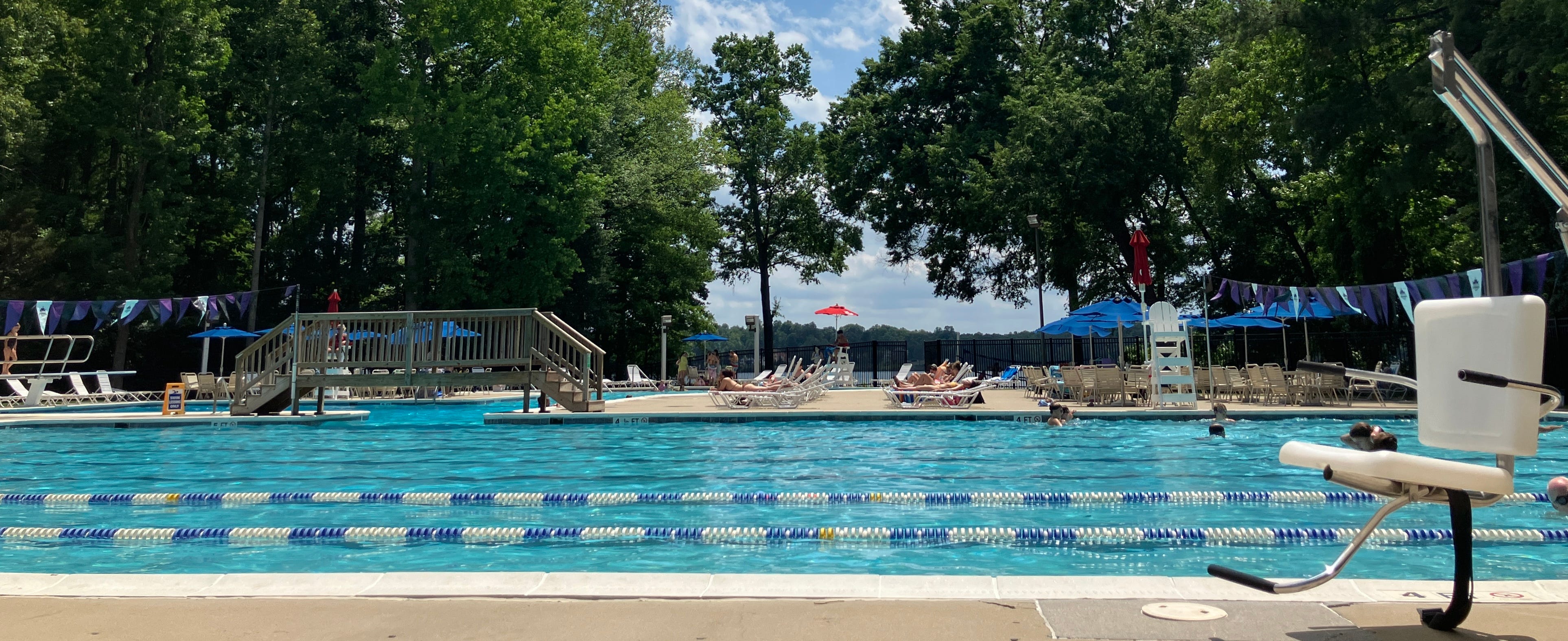
At some point in the spring, I was on my back on the couch in my therapist’s office, talking (again) about the weighted fatigue I couldn’t escape and she asked me to describe my average day to her. I did. She then explained those routines back to me in a one-thing-leading-to-the-next kind of way before concluding of it all: Numbing behaviors. It’s anxiety. The weirdly scattered thought patterns. The inability to get out of the house in a timely manner. A looping sensation behind my eyes—I’m remembering, forgetting, busying myself until I find what feels lost, a half hour has passed, I make food, sit back down at my desk, another half hour passes—and it all feels not unlike the endless scroll, compulsive and ungraspable.
What are you trying to avoid by pushing through the days in this way? What are you keeping yourself from feeling? And how can you find ways to rest that are actually restorative? These are the questions I was left with after that session.
As a result, I went into this summer with only two goals: go to the pool and work on my book, which I mentioned in the SOON recap issue last month. And I’ve done both things. Not perfectly. Mostly consistently. Just trying to show up as much as I can. Trying to shake off words like progress, efficiency, successful, production, achievement, satisfaction, good, bad, wasted, worthwhile, worthless.
I’ve been daydreaming about getting into a pool since January when I read Swimming Studies by Leanne Shapton, a fabulously niche memoir of an adolescence and adulthood spent swimming, both competitively and casually.
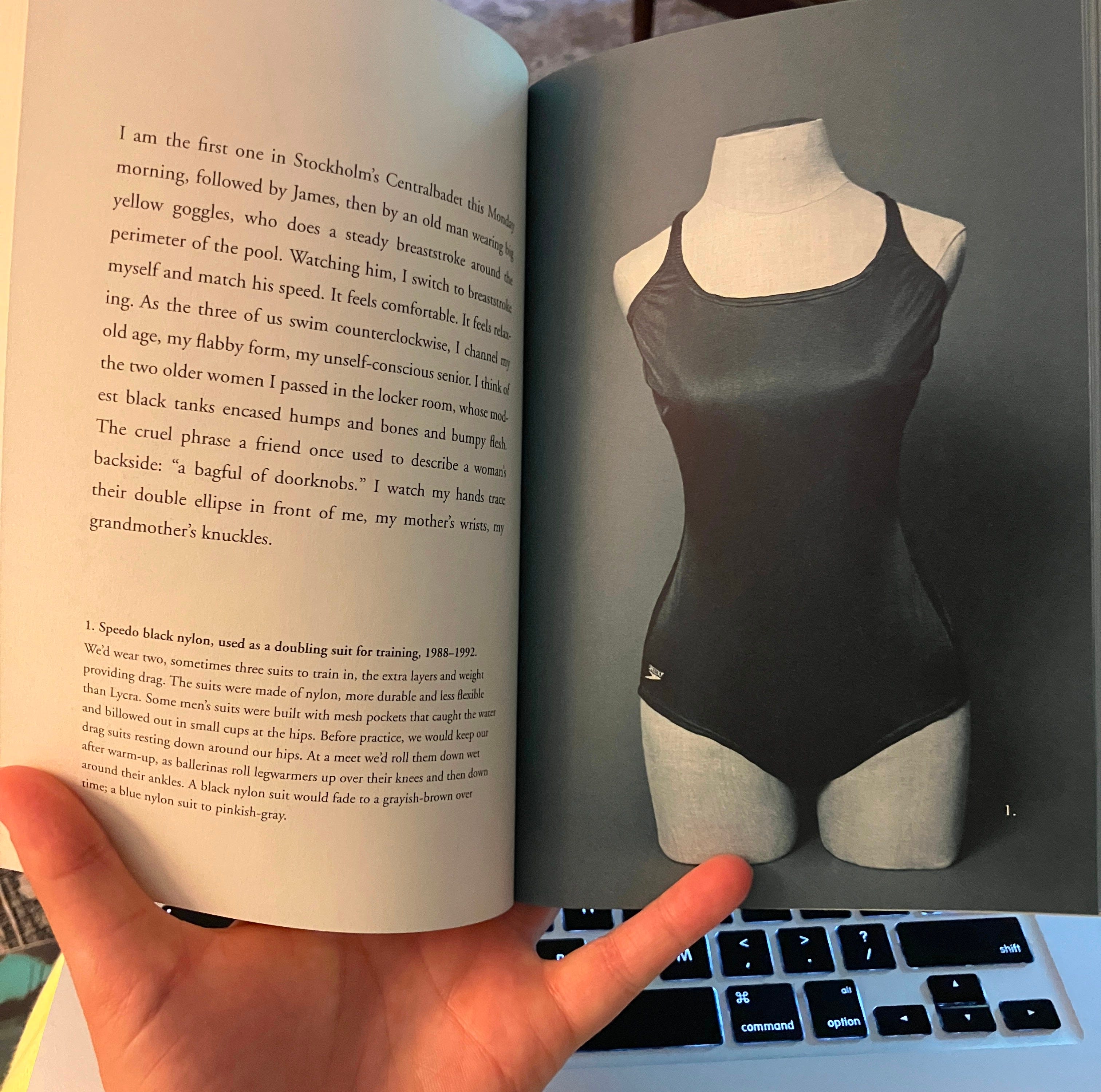
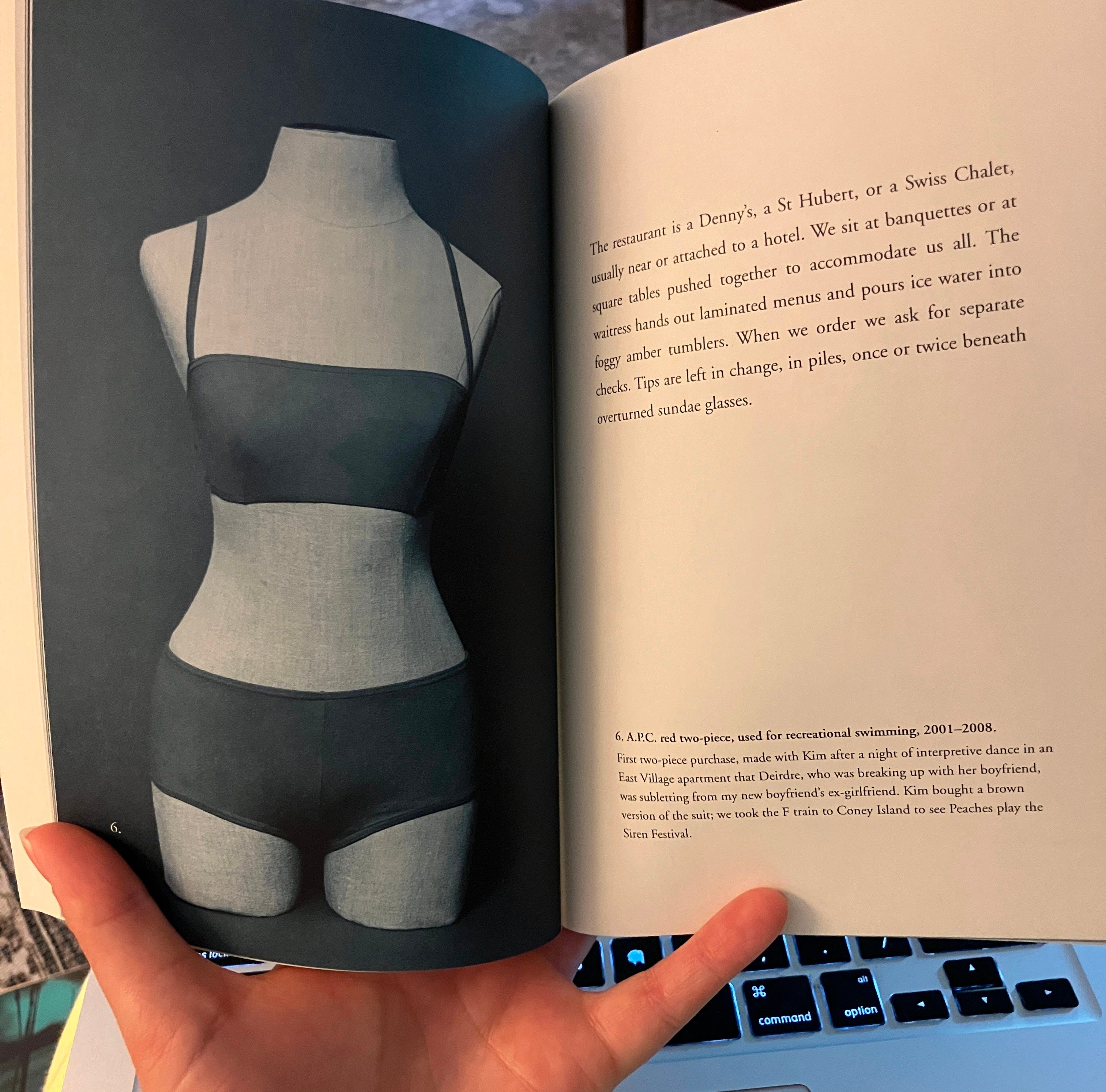
I didn’t learn to swim until I was thirty-years old. As a kid, I failed beginner’s swimming classes three times and then I think my parents just didn’t know what to do and we moved on. I hated the freezing indoor pool, the clammy suit stuck to my skin in a locker room full of strangers, and I can still summon the visceral bodily memory of the instructor urging me to jump off the diving board—my seven-or-eight-year-old self gripping the metal railing as I stared down at them in the water, every part of my little frame shaking uncontrollably. I did jump. But I never jumped again.
As a young adult, I knew how to float on my back but could not tread water. I panicked if I couldn’t touch the concrete pool bottom or, in open water, the sandy muck. I was very hesitant around water. I understood that I was quick to panic and didn’t know how to survive, not really. When some palm reader on a tourist beach told me, in my early twenties, that I needed to be careful around water because it was a danger to me, I believed him, even though I didn’t really believe he was psychic. His intuition or easy prediction (we were on a beach, after all) carried real weight to me, regardless, because I knew what was true of myself.
At some point I chose thirty as a deadline and then time came around as it tends to do and I signed up for the YMCA group swimming classes. In our first session, we—a teenager, some younger adults like me, then senior citizens in their 60s and 70s—held hands in a circle and sank down into the shallow water to blow bubbles. This was a very slow-speed class. Still, it was clear that we all had shared fears around learning to swim. The teenager didn’t make it beyond a couple of sessions; she wept and shook and simply could not let herself relax enough to lay back and try to float—even in shallow water, even with the instructor physically supporting her.
We wore goggles and fins and learned how to do laps and take breaths. None of us were good at it, but we learned the concepts and we tried. We went from leaning on the wall in the shallow water to clinging to the wall in the deep end, then releasing the wall and treading over the scary nine-or-ten-foot depths. I wore fins as I tread in the deep end, but I can still remember the awe and gratitude I felt as my body made it happen. More than a decade later, I wouldn’t say I’m strong at treading water but I can do it. And I still tend to panic but I can calm myself. I can acknowledge the feeling of panic in the water without fully and immediately letting my body respond to it.
A few years back, I was swimming in Croatia with a couple of friends. The water there is very salty and your body floats more easily. My confidence was buoyed, and I followed my friends, one day, as they scrambled over some large jagged rocks into the open water; Croatian beaches are rocky generally, and you have to wear swim shoes, which can weight your feet a bit and mess with your rhythm as you paddle or tread. I followed my friends out into the depths, beyond the mucky bottom. There were no breaking waves but large swells pushed back on us. We were swimming against the current, headed for an entry point back to the beach that was less rocky and easier to access than the spot we’d entered.
With the swells rising and falling, the heads of my two friends started to grow smaller and harder to see. Each stroke felt more effortful than the last, and I was doing okay but conscious of my labored breathing, and then, abruptly, I was not okay and totally depleted, my limbs weak and weighted and the sense of nothingness around my treading legs—no floor, no ground, no pool wall to reach for—was immediately terrifying. I didn’t know how deep it was and I had this illogical desire to just stand up to help myself. But that wasn’t possible. I had to keep treading water.
No energy left to continue pushing against the current, I turned back toward the rocky area where we’d entered. It wasn’t that far but also too far for the energy I had left. I understood that I couldn’t keep myself calm for much longer. The swells kept coming. I turned onto my back and floated. I called the word Help as loud as I could, knowing if I started to yell or scream that I would be lost to the panic and that would be much worse. Help. Help.
Later, my friends told me they’d heard my voice faintly. One friend said to the other, I think April needs help. No, she’s fine, said the other one, she’s floating. No, she needs help, insisted the first.
The thing about that experience that sticks with me is that I thought I was fine and then I was not fine at all. The sensation flipped instantaneously. I’d been over-confident in my abilities in an unfamiliar place. But I’d also kept myself as calm as possible for as long as possible. (And I would not have had the skills, physically or mentally, without that YMCA class.)
Ultimately, one of my friends reached me just as I reached the closest rock I could. We waited there while I breathed. Then I clung to my friend’s shoulders and he paddled us both back to the shallows. I’ve never swam out in open water like that again. I don’t think I ever will. The boundlessness and instability of open water, the sense of unknown cosmos in those depths, a place that isn’t about us or meant for us.
In Swimming Studies, Leanne Shapton writes,
“I compare my comfort in swimming pools to my discomfort in open water and my contentedness with solitude to my anxieties in close company. I think about limits, how easy life can be when it’s limited, how manageable. Limits appeal to my controlling nature. I ask other former competitive swimmers about open water, and most feel the same way. My former coach Byron does. His first objection is to the cold, his second to having to look to see where he’s going, and his third he describes as the ‘What the hell is down there?’ factor.”
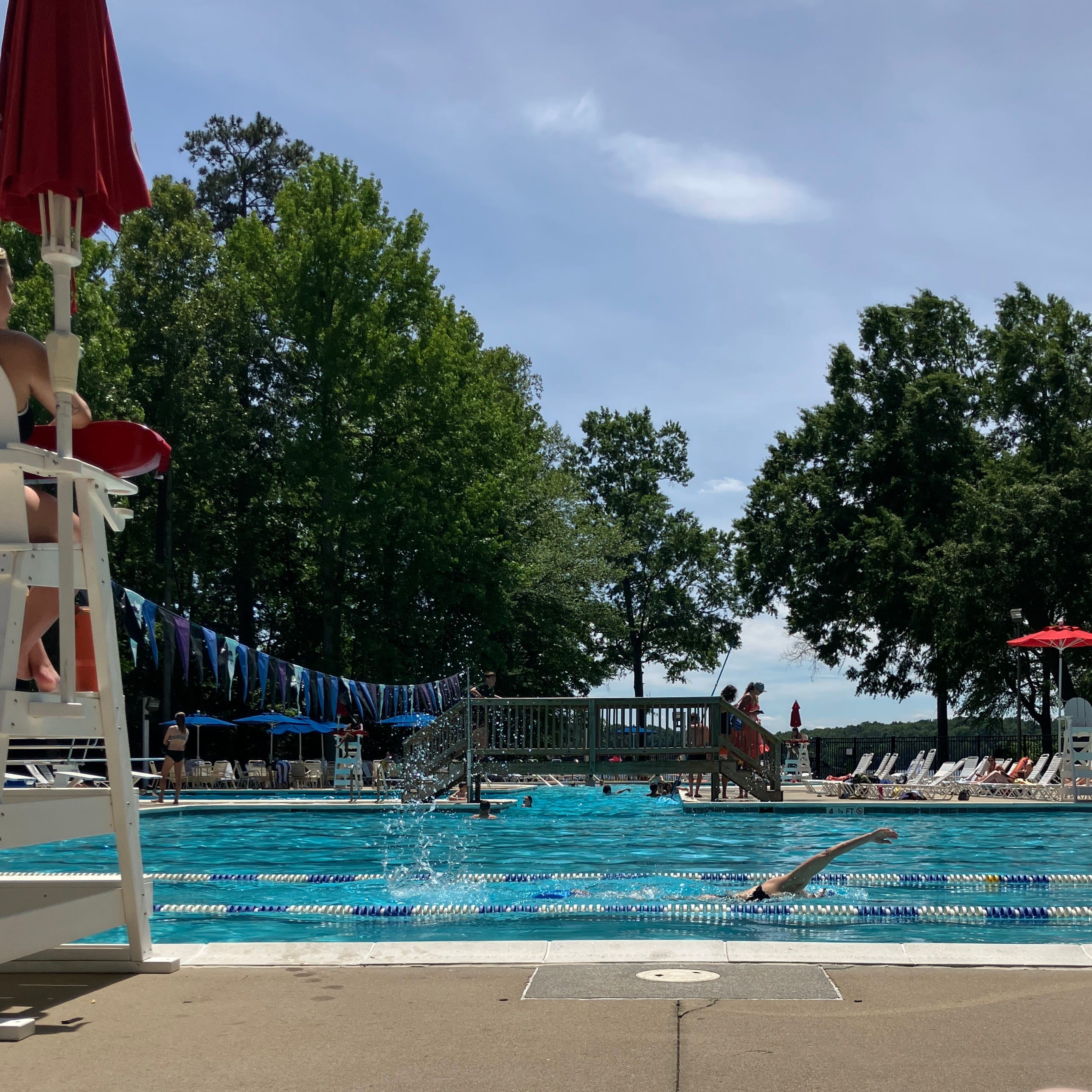
This summer, for me, it’s been a balm to laze by the pool in the heat (slathered in sunscreen) with no expectations outside of the sensory experience. Trees arcing overhead. Cacophony of voices and splashing. I took this audio-visual snippet from early in the summer, I think you can tell how enamored I was feeling with all of it:
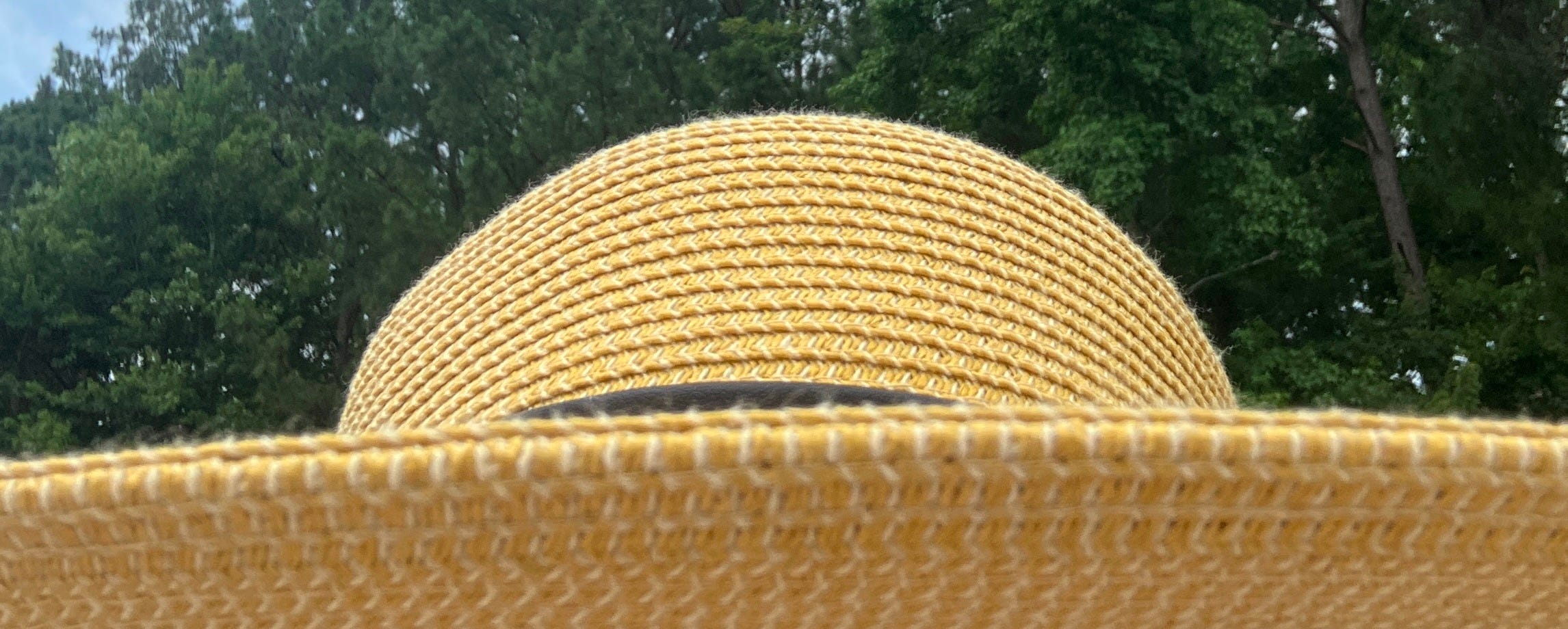
I can’t really swim laps, though I’ve always admired folks who do. Maybe I’ll be one of those people one day. For now, though, I’m the woman in the wide-brimmed hat side-stepping back and forth the length of the pool, twenty times, before laying out to dry in the sun. It’s also just felt good to be in the world, in a gathering place, one of many together, enjoying the same sort of thing.
Earlier this year, I was telling my husband, who is also a teacher, that we have to be better about living with the seasons. I was half-joking, essentially quoting the algorithm, but I also meant it. We can’t always be waiting for spring break or summer, I told him. He rolled his eyes but then—for months—he repeated my own words back to me, whenever I was particularly flattened from the treadmill of class prepping week by week, sometimes day by day, unable to shake my own avoidance and get ahead, and full of angst because of it.
What each of us was saying, essentially: live in the present as best you can. You don’t want to push through your life to get to the “better” part. There are no guarantees. All the things we all know but have to arrive at again and again.
As I write this, there is one week left before another teaching semester begins. My youngest stepson has left for college. Two more are leaving at the end of the month. The oldest is settled into a full-time job and living his life. And in another month or so, my husband leaves for an 11-month deployment with the Army National Guard. Our lives have been shifting for awhile but it’s seen, heard, felt daily now. And my own self within it, she is shifting, too.
In Sea Change: Alone Across the Atlantic in a Wooden Boat, Peter Nichols is five days into his solo voyage when he notices “a line of pattern disruption” across the surface of the water:
“[T]he rhythm of [the boat’s] progress—something my body has grown used to—alters slightly. We don’t slow down, but I feel a change. I go below and look at the soundings on the chart beneath our position. We are crossing over the edge of the continental shelf. We’re soaring, slowly, over an undersea cliff edge. Two hundred meters below Toad, the bottom has begun an abrupt plunge into abyssal depths. … If I were sailing over a transparent ocean, looking down at the plains and ridges and canyons below (the view would be much like that from a jet flying over the American Southwest) I might give it more thought. I might be petrified.”
Just a year ago now, my husband and I decided to move on from the adoption process. We removed our names from the waiting lists, took down our website, told the folks closest to us. Such a hard decision has only felt, more and more, like the right one. When I imagined the next phase of my life, I thought it would be with an infant. I saw the long road of that path ahead of me—a narrow road, moving in a single direction, whether that’s realistic or not. What I didn’t imagine was the opposite: a broadening. I didn’t imagine this open wonderment I’m now living with.
I could tie all of these feelings back to treading water. I could mention that I know how to keep myself calm even when I’m scared. I could create a metaphor of swimming with the current, letting the waves break and build again, finding physical comfort in being buoyed by the natural elements. But I don’t have any sort of conclusion here. I’m sensing there’s no narrow path for any of us, there never was, and rather it’s all just a series of circles and loops bringing us back to ourselves, altered and older each time. And that’s not new. None of this is. And it can’t always be summer.
CALL FOR SUBMISSIONS / The Classifieds (Sept-Oct 2026)
Open to folks near & far! “The Classifieds” is a new, free, soon-to-be regular opportunity here at SOON to share events, classes, meet-ups, conferences, markets, clubs, skill swaps, calls for submission, publications or new issues of your own newsletter/blog/video series, etc. Submission form is linked right here for you. Basically, anything you want to promote that is also an opportunity for others to engage and enjoy, submit it. Submissions due August 16.
The FIRST Classifieds issue will be for items happening anytime in Sept-Oct 2026. (The exception: if the event occurs outside of those months but requires lead-time with separate deadlines, such as calls for submission or vendor sign-ups, OR you want to promote an ongoing event or accomplishment). Again, submit your stuff right here. Feel free to message me with questions.
RELATED READING
We are multifaceted and curious. Share SOON with your favorite people.
Comments
Nothing yet. Say the first thing.
Sign in to join the conversation.