
Welcome to Something Out of Nothing, a newsletter about meaning—making it, finding it, offering it. I talk about the writing life, teaching, thrifting, books, travel, obsessions and idle interests, and much more.
**If this issue gets cut off in your email, be sure to click through to access the whole thing!**
‘Taking Care’ is a questionnaire about how we manage our inner and outer lives as creative people. There’s not much I find more reaffirming than listening to another writer or artist talk about the struggle to make a living and make a life out of art-making. Writer Cole Haddon has the kind of far-reaching, up-and-down, zig-zag career that speaks exactly to this very real challenge, and he generously shares about carving his own path all the time over at 5AM StoryTalk. Lately, Cole has been sharing his feelings of burnout, and as I sit beached on my couch, at the tail end of Spring Break and sick as a dog with too much going on, I’m reaffirmed once more by his willingness to talk about the hard stuff.
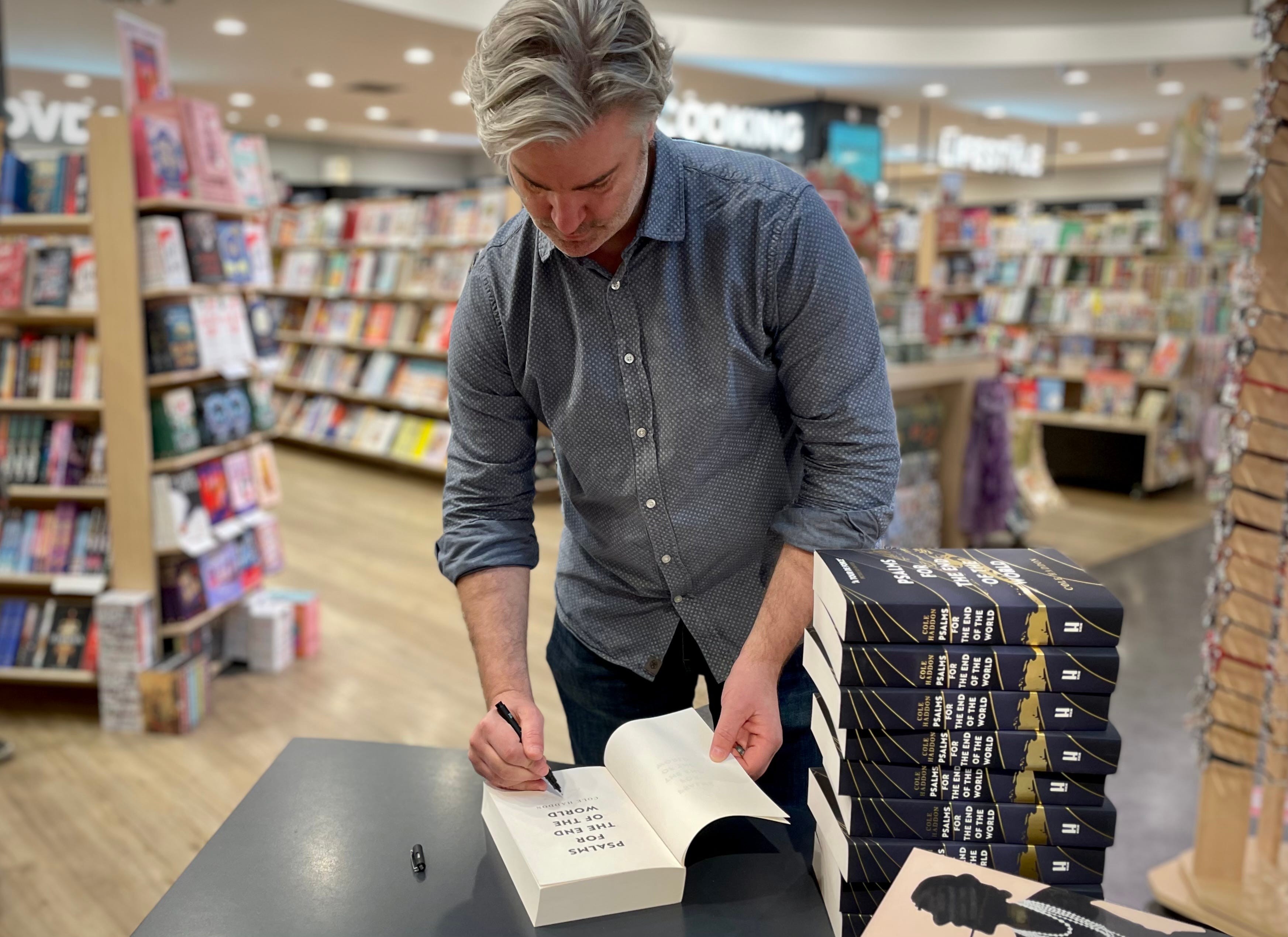
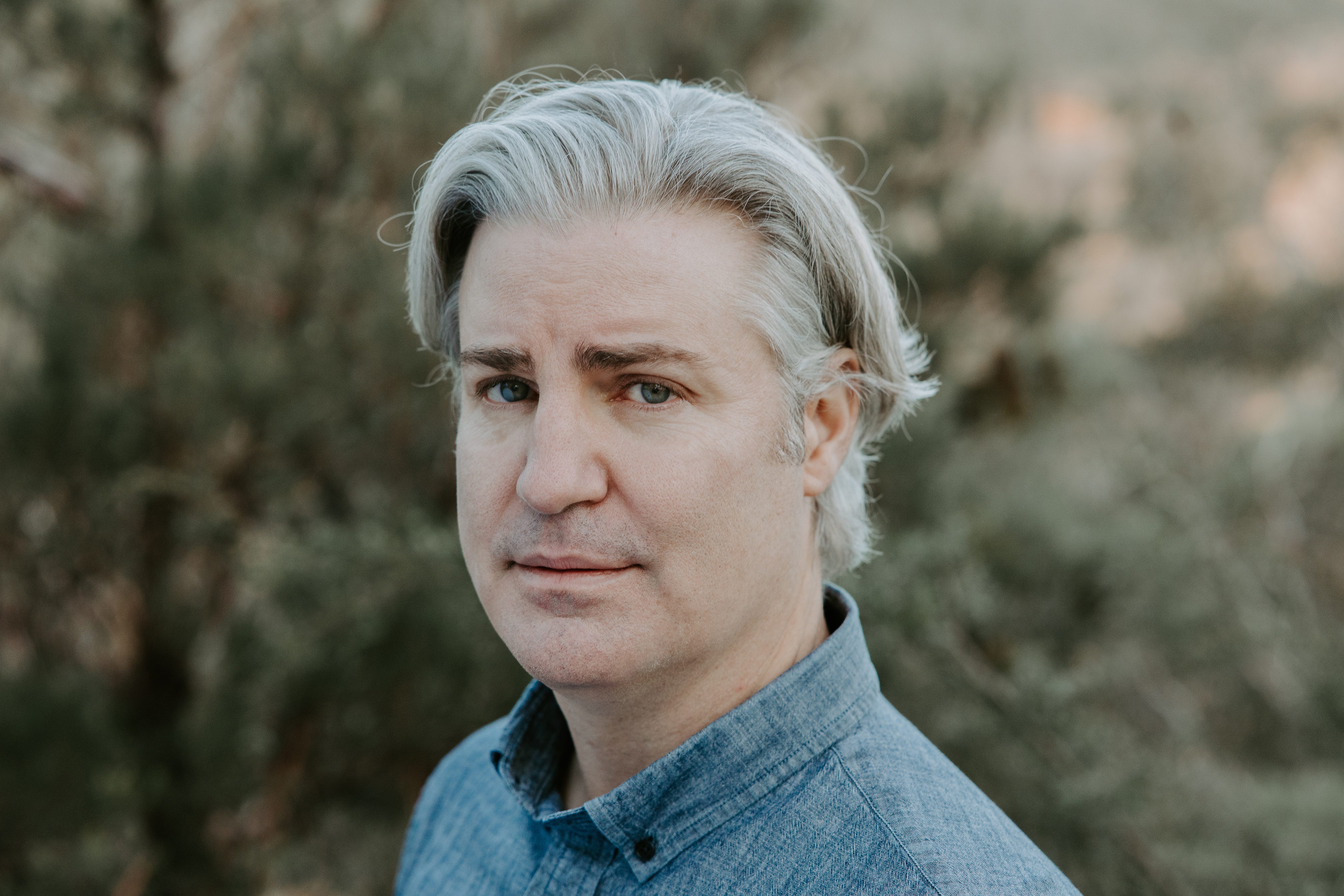
Cole Haddon has been a professional writer for twenty years now. First as an arts journalist for Village Voice Media and other U.S. outlets, then as a produced screenwriter and published graphic novelist, and, most recently, as a novelist. He’s sold more than 30 film and TV projects in five different countries and created “Dracula” (2014) for NBC/Sky (easily the worst professional experience of his life, which you can read about in bloody detail here); also, his debut book Psalms for the End of the World was released in 2022 by Headline Books and other Hachette arms around the globe. Lately, he’s added host of the 5AM StoryTalk Newsletter and 5AM StoryTalk Podcast to his resume.
Cole! What are you working on?
I’ve recently started a new script commission while putting finishing touches on a new novel submission. When I’m not working on these, I’m interviewing guests for and editing episodes of the 5AM StoryTalk Podcast—where I chat with some of the biggest artists and intellectuals in the world to try to make sense of the 21st century—all through the lens of art.
What is something you once thought about yourself that you no longer do?
That I’m American. I left the United States for good after the 2016 election, a kind of self-exiling of myself over political differences—which is a strange way of describing the fact that I no longer wanted to live that way, afraid all the time, and I couldn’t even imagine the possibility that the country could ever become one I wanted my kids to grow up in. Until the 2024 election, I still referred to myself as half-American. I no longer do that. I am only an Australian who was born and raised in the U.S.—though the bastards still tax me every year, which means surrendering my U.S. passport is probably going to be the final nail in the coffin of my part in the American dream.
If anyone is interested, they can read about my decision to leave the U.S. here.
When is bedtime?
10:30pm. For a variety of reasons, I fell into the habit of rising around 5:30am. The primary motivator was my children when they were still in the first year of their lives, as I could be “on” them as my wife continued to sleep and recover from feeding interruptions during the night. But very quickly, I learned to love this quiet time of the day. As the world around me woke up outside, I sipped my coffee, read, and sometimes wrote. For a while there, my kids kept me company, albeit still asleep. These days, I continue to do the same. My quiet mornings are now spent writing/working and watching kangaroos get the last of their nocturnal grass-munching in before the mob retreats to a nearby field to rest during the day. It’s not a bad life. (Editor’s note: Check out a video of this at the end of the issue!)
What’s a habit or behavior that feels like taking care of yourself?
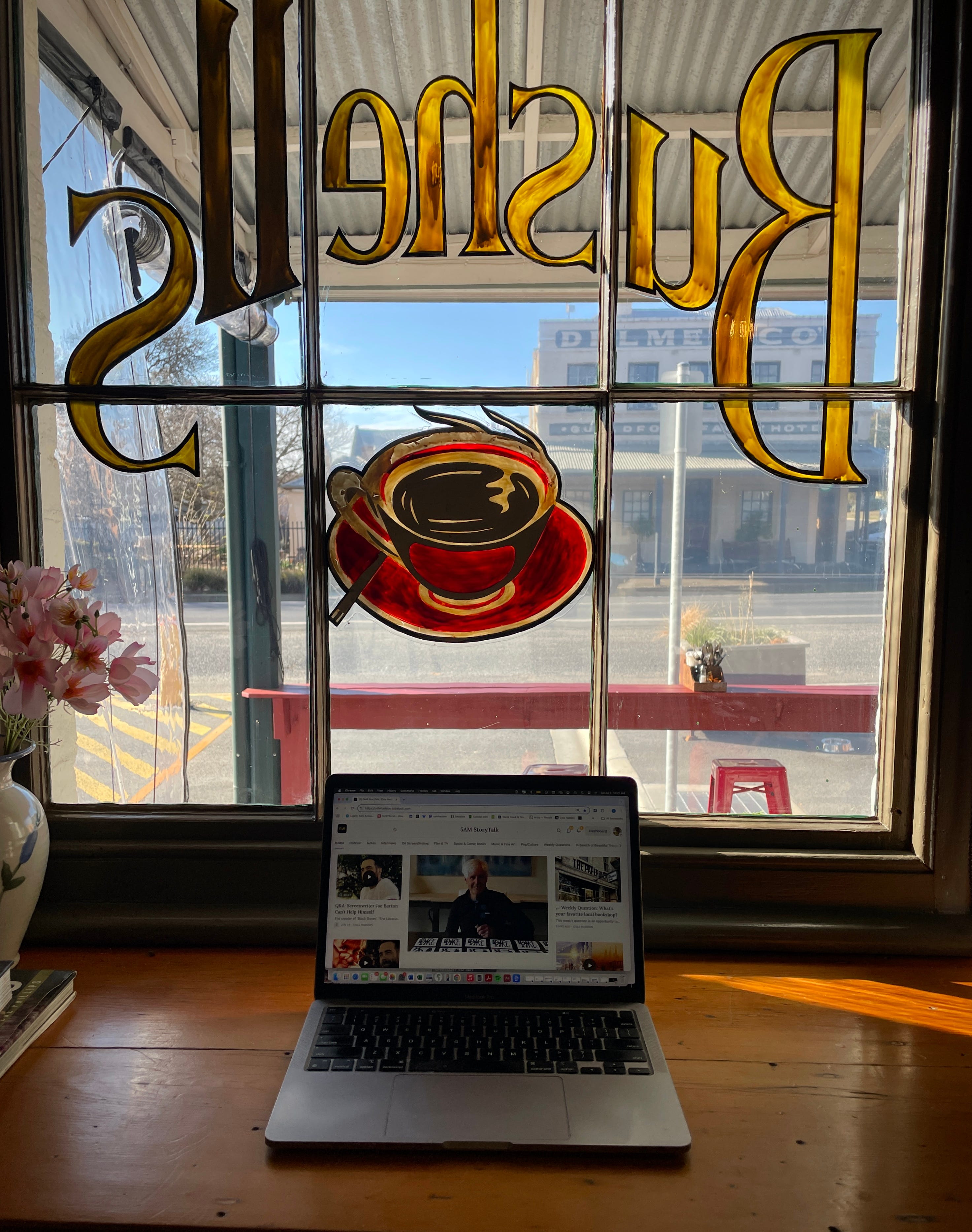
Drinking so much coffee. It’s probably going to kill me early, but I maintain a Google map of cafes near me but also around the globe for when I travel for work or pleasure. The best are flagged as work spaces for me to return to. There’s a popular donation site for artists called buymeacoffee.com. In my case, my readers directly contribute to my coffee addiction.
My passion for coffee is so Pavlovian at this point that seeing someone pour coffee in a film or TV episode instantly makes me say, “Mm, coffee,” which my wife does not find as amusing as I do.
What did taking care of yourself look like in your twenties?
I don’t remember ever pausing to consider whether I needed taking care of in my twenties. If such a thing existed in my mind, it would’ve been the time I spent watching films, hanging out with friends, and trying to correct the deficits in my focus that led to me wasting the first five years of my life after I graduated high school. Don’t get me wrong. I traveled a lot and I experienced a lot, but it was nothing more than frittering when I always expected more from myself. In some ways, maybe this time was better considering the workaholic I’ve become, to such a degree that even the art I consume can feel more like labor than joy at times.
How do you prepare yourself to write about particularly difficult subjects and/or work on particularly difficult projects?
The question, as framed, is challenging to answer because I don’t emotionally prepare for anything I write or otherwise create. Maybe I did once upon a time, but I don’t think so. Instead, I exercise a kind of emotional patience with subjects and ideas. When I am ready, I know it and I start to write. Sometimes, that means waiting years. In a few cases, more than a decade. I’m about to start one that’s probably twenty years in the making. I could’ve attempted the story when it first occurred to me, but I wasn’t ready—as a person, not just as an artist—to leave myself open to the emotional danger of it. I am now. This shouldn’t suggest that I am ever comfortable with these “difficult” projects when I finally get around to working on them, but at that point, the discomfort is something I genuinely look forward to. For me, discomfort tends to mean honesty and honesty tends to mean long-delayed catharsis.
How do you recover after doing intense creative work?
I’m not sure I have the luxury to recover from creative work. The arts are an erratic and dangerous way to make a living and provide for your family. I can’t imagine responding to a traumatic writing session by doing more than taking a quick walk in the woods or making myself a cocktail. These days, there’s too much on my professional to-do list to risk anything more self-indulgent than that. This is probably why I caution people against pursuing a life in the arts without first understanding the brutal toll it can take on you and your mental health.
What self-care advice rings false for you?
All of it beyond “fit as much joy into your life as you can.” Some years, it’s easy. Some years, it’s…not. I’m in one of the latter years right now, I think. How we take care of ourselves, as people and as artists, is deeply personal—but it should always stem from joy and all the iterations of that word that exist. Love, passion, friendship, discovery, whatever. My youngest son is playing Lego upstairs right now. As I’ve answered these questions, he’s called out twice to tell me how much he loves me. I’m going to go play Lego with him now. It’s probably going to be the best part of my day.
How do you manage the way ambition feels?
Okay, I’m back. Lego tower built. My son said he hated it and me, so there you go. How do I manage how ambition feels? Gah, great question. I think it’s changed for me over the years, which is probably how I should answer you. I used to want to be Steven Spielberg. I pursued that ambition with everything I had. I made terrible decisions because of it, too, being more focused on an idea of what a great filmmaker/storyteller was than the process that might’ve produced truly great work. These days, I try not to think about success as much as the process. More importantly, I try—and mostly do—think more about my ambitions as a person than as an artist. The art is an expression of me. I am the point.

How can you tell when you’re coming up on burnout?
I’ve been in burnout for about five years now. I’m long past pretending that’s not the case, though I haven’t really thought to discuss it publicly—which I probably should, since others might benefit from what I have to say on the subject. It’s taken a terrible physical and emotional toll. I wish I’d even known what burnout was before it crept up on me. (Editor’s note: It’s been a few months since Cole answered these questions. During final edits, he added a link to a recent episode of his podcast and said, “I’ve finally started to publicly address this subject.”)
What’s the playlist of late?
I take a longish-to-long bush walk every day. I used to spend that time talking with friends on the phone or listening to podcasts, trying not to “waste a minute of my day.” Multi-tasking is a killer in so many ways. For the past few months, I’ve either walked in silence or listened to music as a way to give my brain a chance to wander wherever it wants to. The soundtrack of most of these walks lately is comprised of Nick Cave and the Bad Seeds, David Bowie, Jon Batiste, Aretha Franklin, Bruce Springsteen, Al Green, Bob Dylan, Kate Bush, Leon Bridges, John Denver, and Joni Mitchell.
How does money, and your relationship to it, provide care or support?
There has never been a point in history where money has not been a daily concern of artists—or should I say, artists who didn’t come from privilege? The rest of us have to live in constant fear of it going away. Every good year offsets bad years. Every bad year is accompanied by the terror there will be no more good years. I think about my income when I wake up, I think about it when I go to bed. I have to focus through thoughts of it to create from a place of purity rather than commerce—which I’ve gotten so good at in the past half-decade that I’ve never been less commercial (which makes me think/worry about money even more).
What are some forms of care that you’re discovering, or want to try?
After ankle reconstruction surgery and a torn rotator cuff—middle-age sucks, kids—I’m anxious to start regularly playing tennis with my wife as a way to get out of my head (read: relax). If I’m short-winded when it comes to this answer, it’s only because I barely have time to do the things I love right now. I don’t even have time to fantasize about more.
What’s your relationship to night and day?
My family lives in semi-regional Australia where everything shuts by 8pm, including the local pub. Nighttime is increasingly useless to me except as a way to enjoy the stars, sit around the firepit with my kids, and squeeze in a film or TV episode or two if I’m lucky. The daytime is where it’s at.
What is comforting to you?
Friends. Well, before politics and wars made it so impossible for many of us to speak freely without arguments ensuing.
The promise of a film I haven’t seen, right before the projector starts clicking or I hit play.
Bookshops.
A blank page.
Typing “The End.”
Lying in thick English grass on a summer’s day.
The birdsong in Australia.
My sons telling me about something they love.
A cocktail on the porch with my wife.
RELATED READING
We are multifaceted and curious. Let’s be many things together. Share SOON with your favorite people.
Comments
Nothing yet. Say the first thing.
Sign in to join the conversation.