
Welcome to Something Out of Nothing, a newsletter about meaning—making it, finding it, offering it. I talk about the writing life, teaching, thrifting, books, travel, obsessions and idle interests, and much more.
UPCOMING CLASS
Richmond Writers: Join me on Tuesday, January 13, 6:30-7:30pm at Quarry on Cary Street! I’m teaching a ‘fast craft’ class about characterization in fiction and creative nonfiction. $15! Register here.
‘Fast craft’ classes are about gaining (new or renewed) exposure to the intentional mechanics behind creative writing. I do a brief lecture with examples, followed by instructive prompts. We write on the spot. No workshopping.
In that end-of-year week after the major holidays but before the calendar fully turns over, I put aside six consecutive days for heavy revisions on a story from my in-process collection. I spent much of my recent writer-in-residence gig expanding this particular story, only to feel the expansion was more like a transition draft. It was an informative but incomplete experiment—revealing, for example, a need for much deeper characterization and letting go of a structure idea I’d been holding onto like a life raft. Instead of continuing to work and rework the same pages, which felt stretched thin and over-wrought, it was time for a major rewrite.
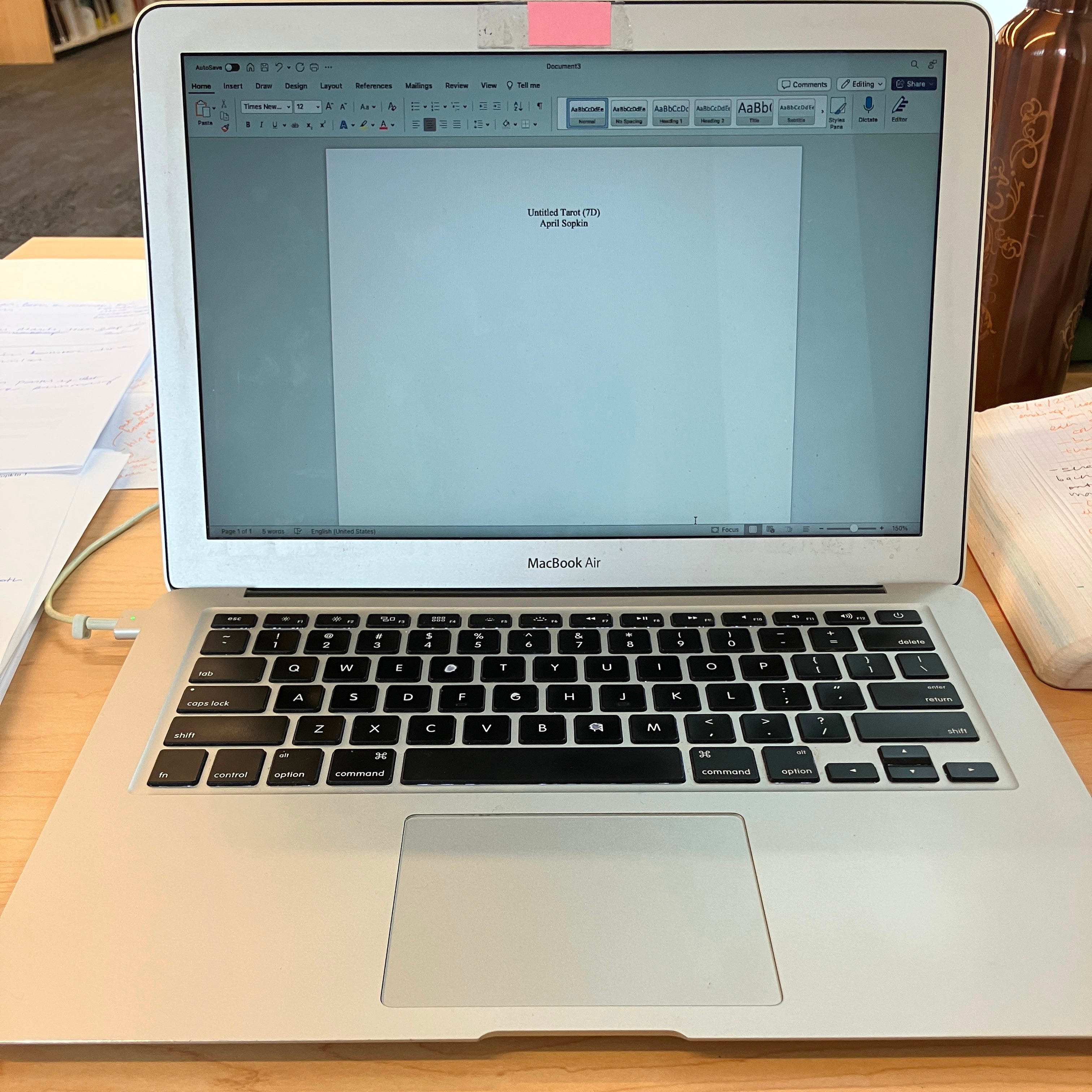
Found a spot in the library and spent the initial forty-five minutes reviewing my notes and finishing the reverse-outline I’d started a few weeks prior. I try a reverse-outline when I’m sensing heavy rewrites are needed and I need to prepare myself for the big leap of essentially starting over with fresh language.
Doing an outline backward is about reverse-engineering the way your plot currently moves—asking yourself, over and over again: in order for this scene to make sense, what needs to happen in the previous one? Sounds like basic storytelling knowledge, but after several revisions on a story, you’d be surprised at how blind you can get to the missing pieces.
Often, for me, a reverse-outline reveals the weak points in story-building, including repetitive scene structure and inauthentic character reactions or behavior. It’s a way of zooming out and being direct about what the story is or isn’t doing and either deepening current ideas or generating new ones. Thus, why it’s a preliminary move for me before starting a heavy rewrite.
I turned on my internet blocker and wrote for four-ish hours and something like 1500 words. It was a day of positive forward momentum, with only minor pangs of self-doubt.
Some lines, out of context:
Unilateral mastectomy of the right breast came three months before the pandemic, then Shelby’s grown children—Abigail and Benny, fraternal twins, early thirties and lost in their own ways—moved home during lockdown. Except it wasn’t home. Rather, it was the narrow, two-story townhouse she’d purchased after the divorce and liquidation of three shared decades. Benny slept on the pull-out in the middle of the television room. Abigail took the guest room across the hall from Shelby. None of them could cook well. None of them cared about cleanliness. But with the cancer and the pandemic, it was two years of hunkering down and becoming different people, of one grown child grocery shopping at dawn or midnight to avoid the possible contagion of crowds and the other suddenly finicky about housekeeping, and Shelby let them do it all for her. In a perverse, chemo-fogged way, she relished the attention and couldn’t believe her luck—many of her friends complained of their own adult children with words like thoughtless, distant, inconsiderate.
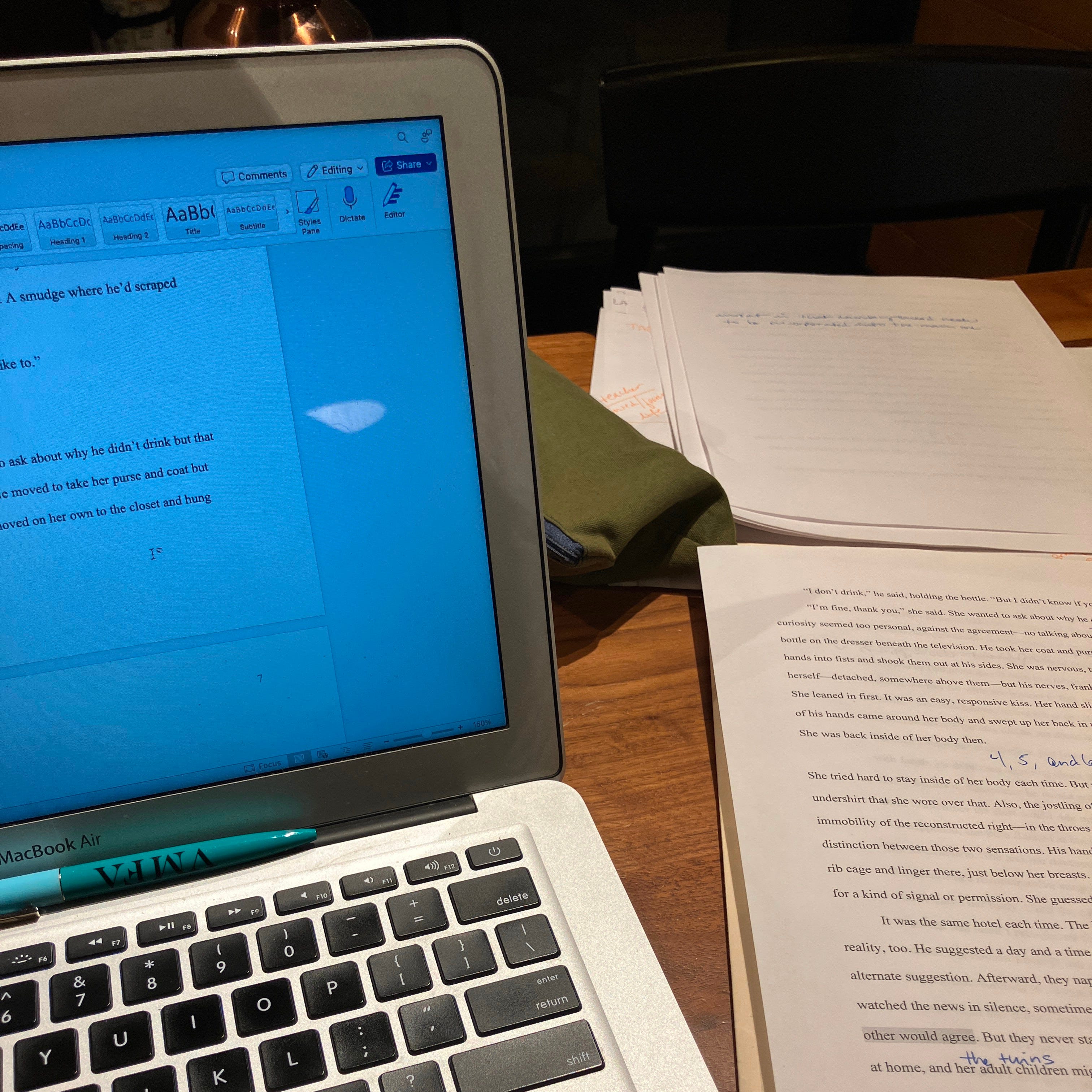
Stayed up way too late the night previous binging a show that is currently obsessing everyone (you know the one), and woke up unfocused and unmotivated. I drifted through the day until therapy, then found a coffee shop around the corner and showed up for myself and my work even though I didn’t feel like it.
For a couple of hours and another 800 words, I reimagined a significant scene that happens early in the story. Previous drafts of this scene leaned heavily on summary and subtext but I leaned the other way this time.
At the end of the session, at the bottom of the page, I made a note for myself for when I sat down to continue the next day: GO WHERE YOU WANT. Meaning, write the scenes and parts of the story that you want to write when you want to write them. Even if the story is ultimately going to follow a linear path, you can write it out of order. I’m always coming back to the reminder that the ‘rules’ are made up.
Some lines, out of context:
How much of what she imagined about this situation came from the ether of the universe, or from society and some kind of messaging she’d ingested countless times and built her desire upon? Something watched on a huge screen in a dark theater or read in those ragged Harlequins her babysitter had once passed along secretly? Had she ever had an original instinct in her life? Had anyone?
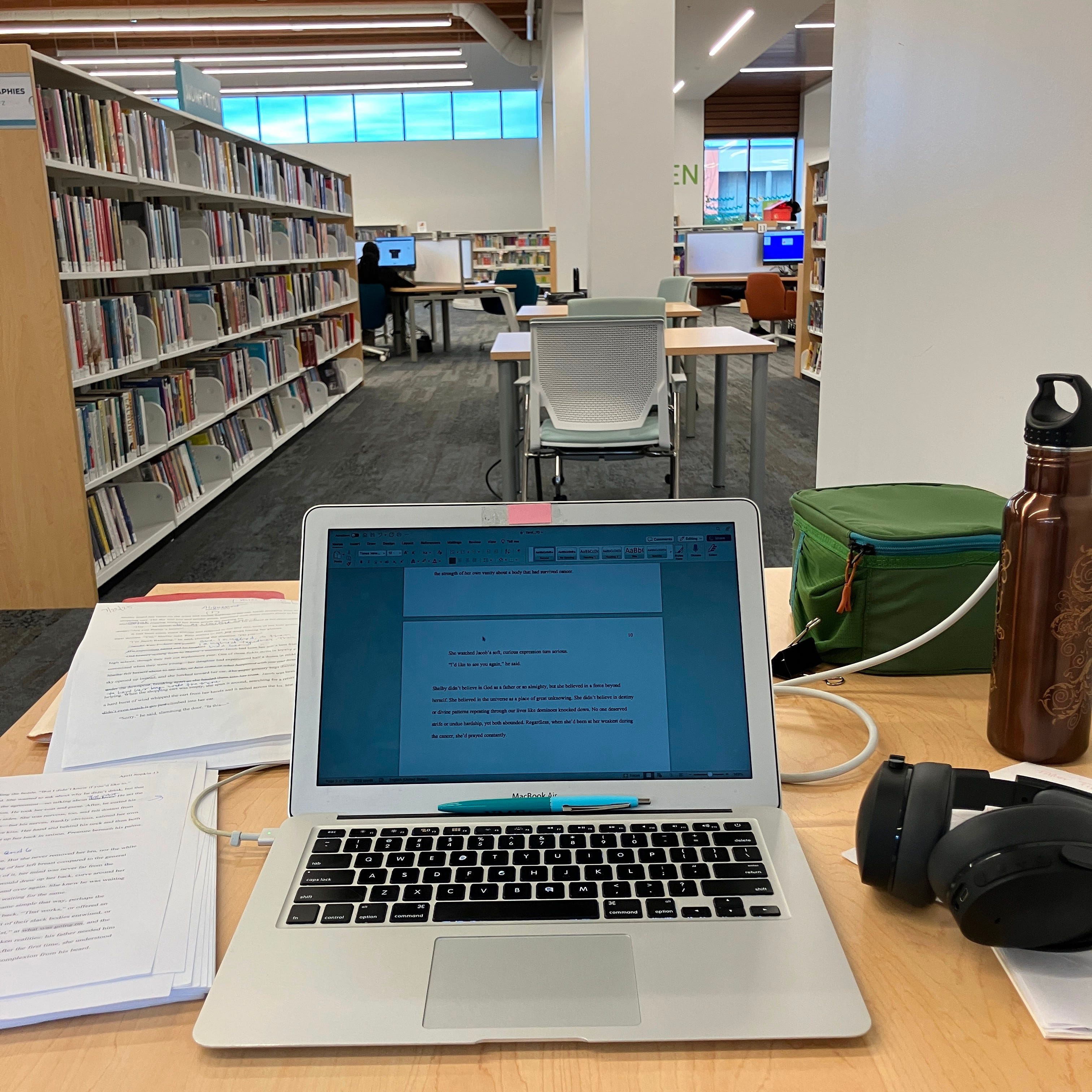
Back at my little table in the library with my packed lunch. Internet blocker on. Another few hours and 900 words. Also, a lot of paging through the hard copy of the previous draft, and staring at the annotated timeline for the story’s events, and reviewing the reverse-outline. I’m starting to sense that I only half-know where I’m going, even with the outline.
I cut the session off before I could get past an uncertain spot on the page, which doesn’t usually bode well for getting back into it the next day.
Some lines, out of context:
Shelby sat up at the same moment a friend dove into the water. The friend’s heel collided with Shelby’s face and her tooth stabbed into her bottom lip and her mouth filled with blood. She bent over the edge of the raft and spat again and again. In the background, her friends were saying her name and asking if she was okay, their voices faint to her. When she got home, she leaned close to the bathroom mirror and eyed the depth of the gash—all the way down to a blue-black inner layer of flesh. It made her woozy to look at it for too long but she couldn’t stop looking. Periodically pulling the gash apart to see if the depth she’d glimpsed was really there.
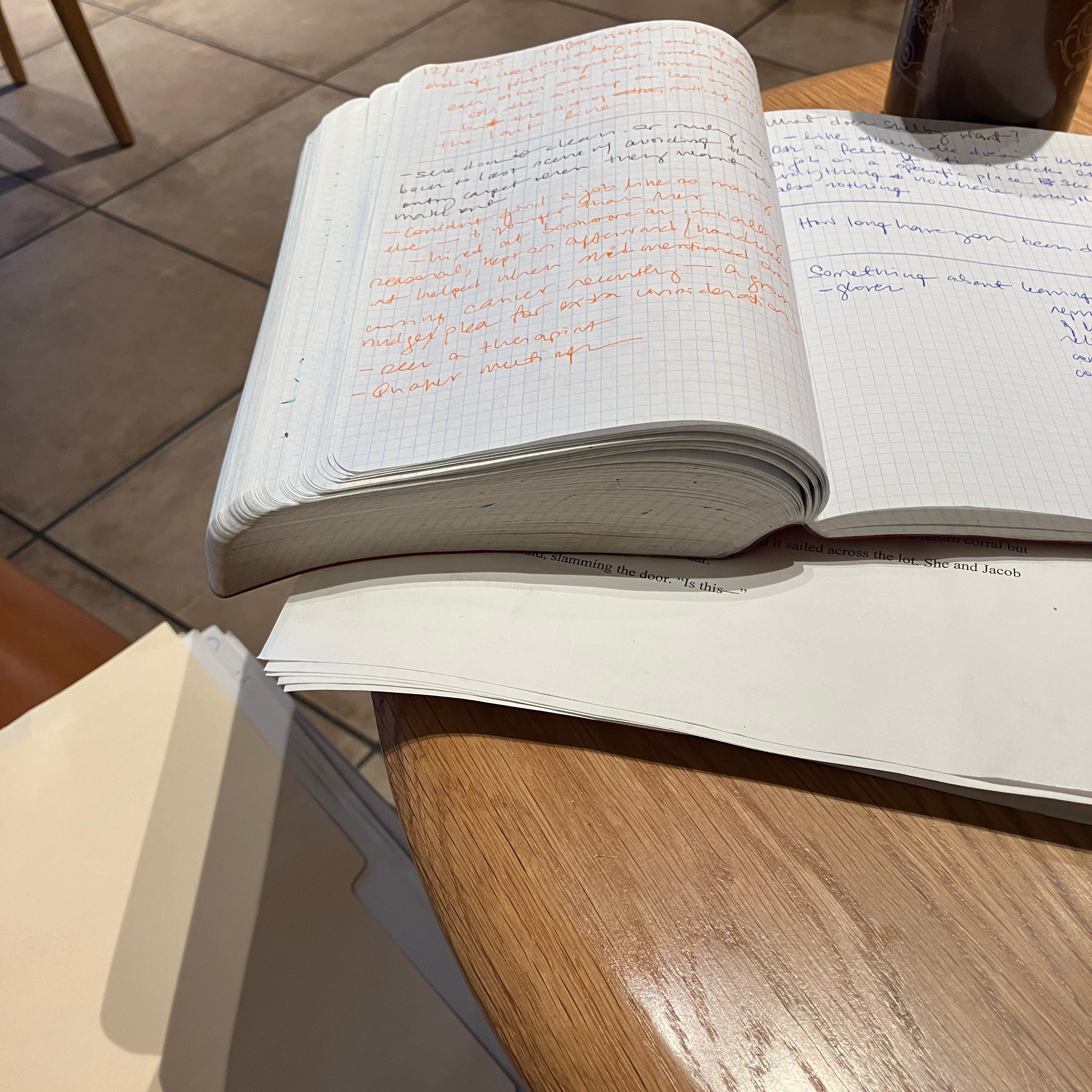
As predicted, a sluggish start. I sat through the discomfort and circling ideas, the wobbly focus, and just let myself think what next what next what next. I couldn’t turn on my internet blocker because I needed to stream music to drown out some loud talkers nearby, but I got to the other side of the discomfort—another 900ish words and a surprising reconsideration of what the story needs at the opening.
But a lot of those 900 words will likely be cut down, reimagined, or not included. Still, writing them felt necessary/best I could do. At this point, I know this six-day stretch of rewriting isn’t going to result in a finished draft, but I try to mentally stay in the day-by-day feeling of the work itself. Time and words are accumulative.
Some lines, out of context:
It was the same hotel each time. The logistics remained simple that way, perhaps the reality, too. He suggested a day and a time, and Shelby texted back, “That works,” or offered an alternate suggestion. Afterward, they lay wrapped in the rough, bleach-stiffened sheets and watched the news and talked idly about the issues of the world over the past several years, using a mostly broad summary with over-emphasis on words like chaos and insane to convey the depth of their feelings without having to truly articulate anything. A good distance that felt perfunctory but necessary. Who could live through it without mentioning they had lived through it? Without pretending they were not caught up in it with the rest of the world?
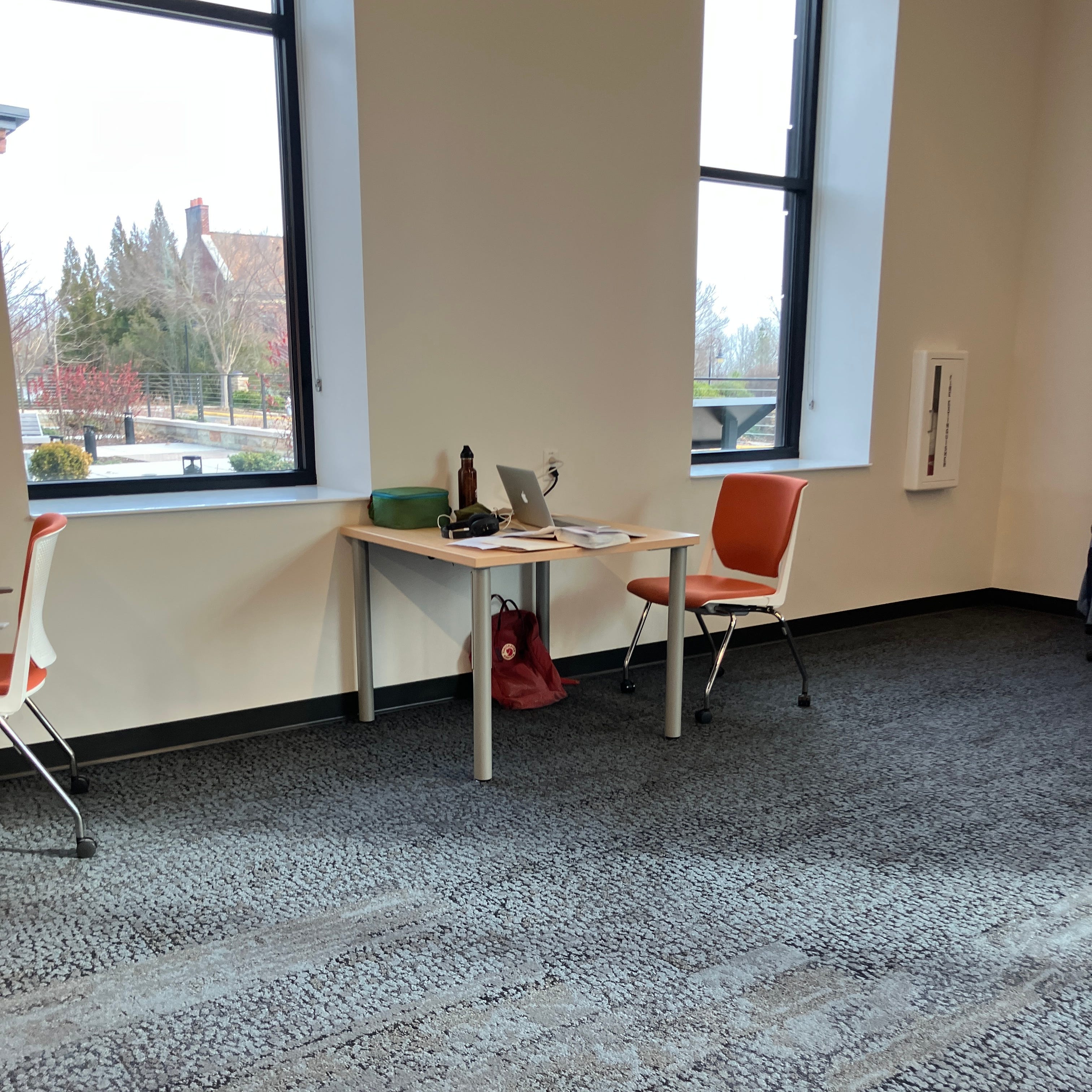
Back to the library, where I reread a lot of what I’d spent the week writing. After that, I came up against a sense of fog and self-doubt. I stared off for a long time, kind of waiting out my own resistance.
At some point, I started retyping a section from the previous draft that I didn’t think I was going to reuse, but it had an interesting associative tension with the scene I’d just rewritten. It read different, more poignant, in this new placement. I started thinking about structure again. Only a few hundred new words by the time I packed up my stuff for the day but my thoughts were calm around what I didn’t know. I felt firmly in the middle of the work.
Some lines, out of context:
On the drive home, Shelby felt an explicit awareness of her fingers curved over the wheel, doing the work of steering, turning hand over hand before letting the wheel routinely slide through her grip to catch it at the right moment. Her thoughts drifted above, beyond, in reverse, and it wasn’t until she pulled her car into the garage that she realized she’d forgotten to retrieve her gloves from the shelf in the hotel room closet. She could see the gloves in her mind’s eye, still sitting there.
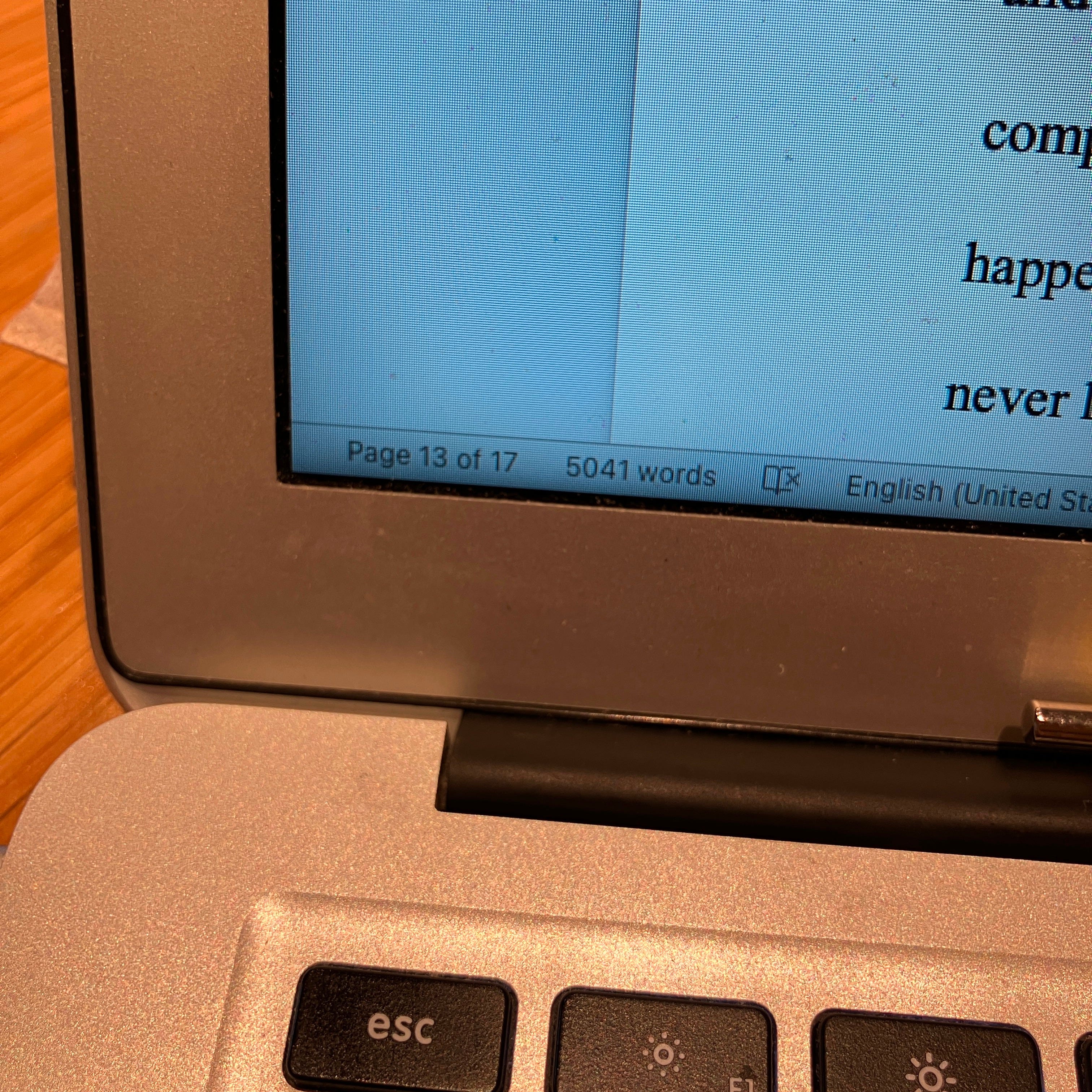
About 600 words for the final day of my six-day stretch, making it just over 5,000 total. It’s interesting but annoying—I took months away from this story in order to see it more clearly, felt certain that I did, then I returned to the page in earnest and kept getting stuck in a fog. And you just have to make little move after little move. Stay in your seat. Stay with the page and the line. Trust that you are getting somewhere.
Some lines, out of context:
When Shelby sat with her eyes closed in that first Quaker meeting, she found that the silence in the room canceled the need for prayer within her, and she was overcome with the beauty of communing in such a point-blank way. No one held each other in expectation. They were only themselves, quiet and among strangers, waiting for the inarticulate to become articulate.
I’ve had to pivot to class prep, as the new semester starts in just a couple of days for me. But I have another several days put aside toward the end of the month for deep revision work. In the meantime, I’m going to find a couple of hours a few days a week to keep moving forward with it. Even opening the document, or paging through my notes, helps to keep the story and ideas close.
I’ve just finished Weather by Jenny Offill, a 2020 novel about climate change, marriage, and survival, in order to study its modular structure. The way the brief sections riff off of each other, indirectly or directly, the callbacks that stretch across pages and pages to touch—I don’t think I’m doing as much of this in my short story, but it’s a provocative way of containing a story that is as much about ideas as it is about character and plot.
Today I started a memoir from 2012 called Swimming Studies by Leanne Shapton, which also seems to use a modular structure. I’m looking at how much of the story gets left out in order to shape the scope of the storytelling. I think my own work can get bogged down in too much logistical matter, as if a reader must always know what a protagonist’s parents did for a living or something, and I’m trying to lean away from that habit of answering unnecessary questions.
More revision talk coming up soon. Write forward, friends.
RELATED READING
We are multifaceted and curious. Forward this issue of SOON to your favorite people <3
Comments
Nothing yet. Say the first thing.
Sign in to join the conversation.