
Welcome to Something Out of Nothing, a newsletter about meaning—making it, finding it, offering it. I talk about the writing life, teaching, thrifting, books, travel, obsessions and idle interests, and much more.
‘Taking Care’ is a questionnaire about how we manage our inner and outer lives as creative people. In the way that cold-emailing someone is only sort-of a real connection made, I “met” Ahsan Butt in 2021 when he graciously agreed to read his work at my pandemic-era online reading series, The Sunday Interruption. Since then, I’ve checked on his career a couple of times a year, watching from afar. Know this: his work has an unsteadying vision to it, the voice point-blank but layered in suggestion and heart, and I find myself unnerved, haunted, and in awe of the skill. (I’ve linked just a couple of wonderful pieces in his bio, below.) As I told Ahsan after reading through his answers, so much of this interview resonates in neon lights for me. I hope it reads as brightly to you.
Ahsan Butt was born in Toronto, is of Pakistani descent, and currently lives in Evanston, Illinois. His short fiction and essays have appeared in Pleiades, West Branch, Split Lip Magazine, Barrelhouse, The Massachusetts Review, The Normal School, SmokeLong Quarterly, The Rumpus, and elsewhere. He is currently a Senior Editor at South Asian Avant Garde: A Dissident Literary Anthology (SAAG).
Ahsan! What are you working on?
Nothing, but for good reason: a few weeks ago, I finished the short story collection I’ve been working on since 2015. Also, my wife and I are expecting our second baby very soon. Until then, I’m querying agents.
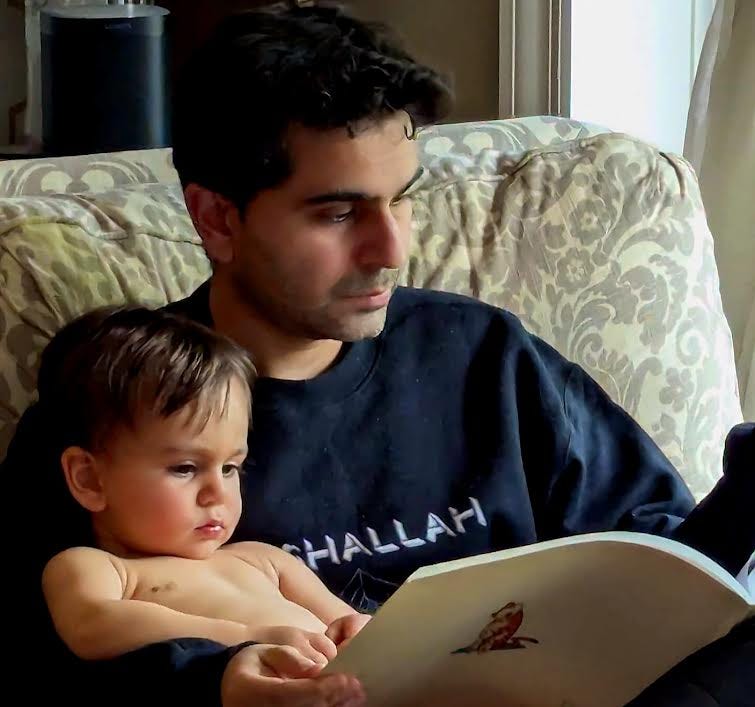
What is something you once thought about yourself that you no longer do?
I used to be a night owl because staying up late felt like stretching out time. The night didn’t end until you wanted it to. This led me to believe, unconsciously, that there will always be more time, as much as I need to do the things I want to, which is a deep delusion. It’s a denial of one’s mortality. If you had asked me whether I was ever going to die—I would have, of course, said ‘yes’, but I wasn’t living with any reckoning of that fact, which as a Muslim, is a pretty fundamental thing with which to reckon.
When is bedtime?
It’s changed since having a child. He’s going to wake around 6am regardless of my plans, so now I usually head up at 10:30pm, unless I haven’t had a chance to write and I’m close to finishing a piece or stuck on something vexing, then I might push it.
What’s a habit or behavior that feels like taking care of yourself?
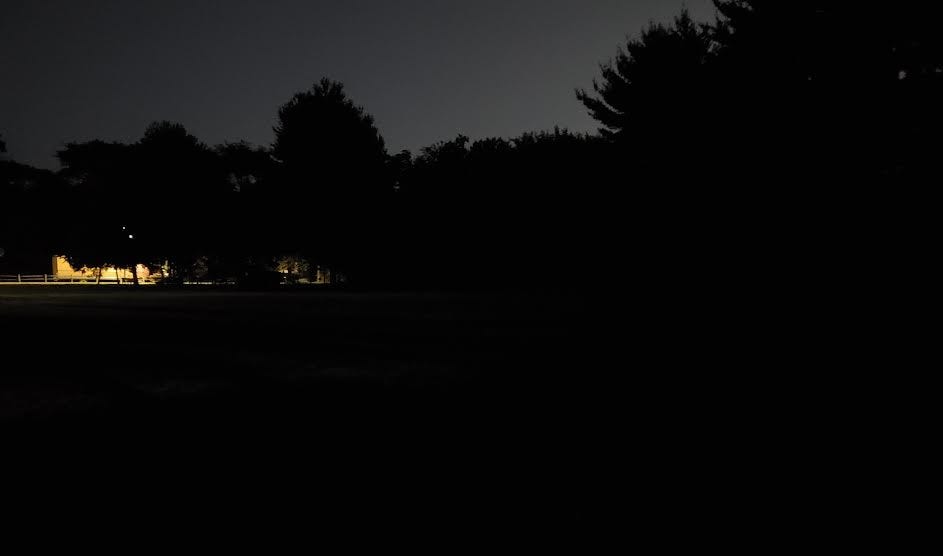
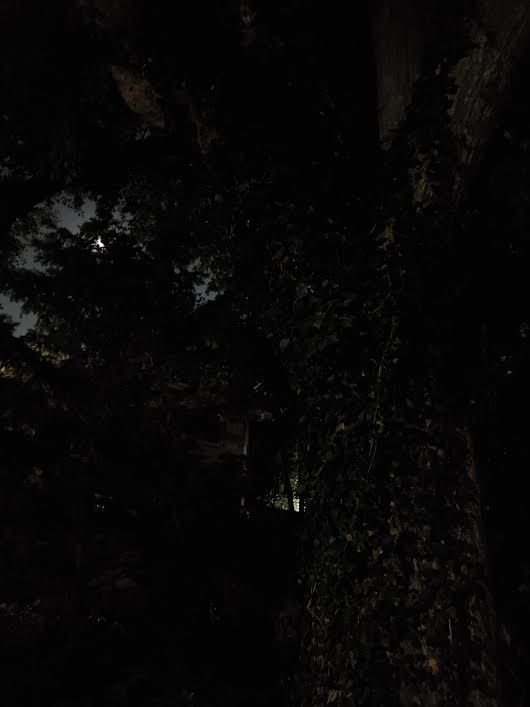
The evergreen answer is reading. The phone goes away. Time slows. I feel present and engaged in something larger than myself, which is creatively rejuvenating. Another answer is nighttime walks with my wife. It’s often a time for us to process something deeper than logistics or day-to-day concerns. It’s a return to our best selves. It’s a chance to notice how beautiful trees look in the dark.
But what’s presently beating me down on a daily basis is the balancing act of parenting a two-year-old and trying to get one or two things done a day, while consistently seeing the worst images I’ve ever seen in my life, 630 days into a genocide. There are brilliant people around me organizing, and joining them is a form of care, albeit a sometimes stressful one, but the alternative is to vacillate between states of dissociation and a lonely shameful kind of despair.
What did taking care of yourself look like in your twenties?
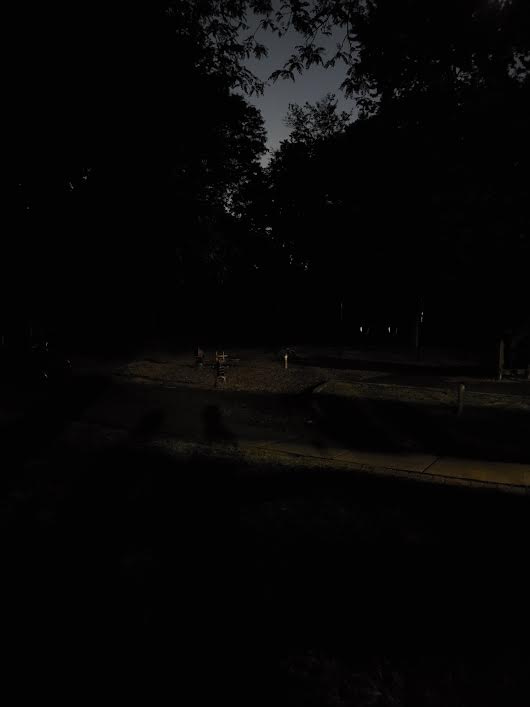
I felt such a sense of flux back then. Not in the sense that I was wild, not at all. I don’t even drink. But I felt there was so much to figure out and discover about life and art, in particular – such creative possibility. I used to live in the same building as my closest friends and also down the street from the theater I was a part of, and in both places, I would find myself in these late night conversations with people I love and admire and I wouldn’t want it to end. Again, the night had a feeling of infinity, that was in some ways unhealthy, but it was also so stimulating and life-affirming.
How do you prepare yourself to write about particularly difficult subjects?
My impulse to write arises from a creatively excited place, so I’m never writing about something that shuts me down. That said, my fiction does traverse dark territory related to terrible things and experiences in the real world. I guess, writing about that material isn’t upsetting for me in the same way that learning about it or experiencing it in the first place is. Approaching it creatively, I’m driven by some fascination with the human experience. It’s as if my creative self is a parallel structure to the one that is quite sensitive; they’ve been shaped by the same material, have the same information, but while the latter has wounds, the former has obsessions.
How do you recover after doing intense creative work?
After intense work, I feel depleted, so I need to fill up again. I try to watch a film or documentary, read a book, learn something. I sometimes fixate on an artist and watch all their interviews. For instance, I’m yet again listening to conversations with the filmmaker, Joshua Oppenheimer, who made a pair of astonishing documentaries, The Act of Killing (which I wrote about here) and The Look of Silence, as well as the recent film, The End, an apocalyptic musical with Tilda Swinton. I also fall back on my favorite episodes of David Naimon’s incredible literary podcast, Between the Covers; in particular, the ones with Teju Cole—in which he coins the term, ‘market totalitarianism’, Solmaz Sharif (#1, #2), and Mariana Enriquez. Artists, historians, scholars, journalists make me curious again.
What self-care advice rings false for you?
Advice that assumes a certain level of wealth. Also, self-care advice is just very particular because people struggle with different things. Self-care, I think, comes out of introspection and moral inventory.
How do you manage the way ambition feels?
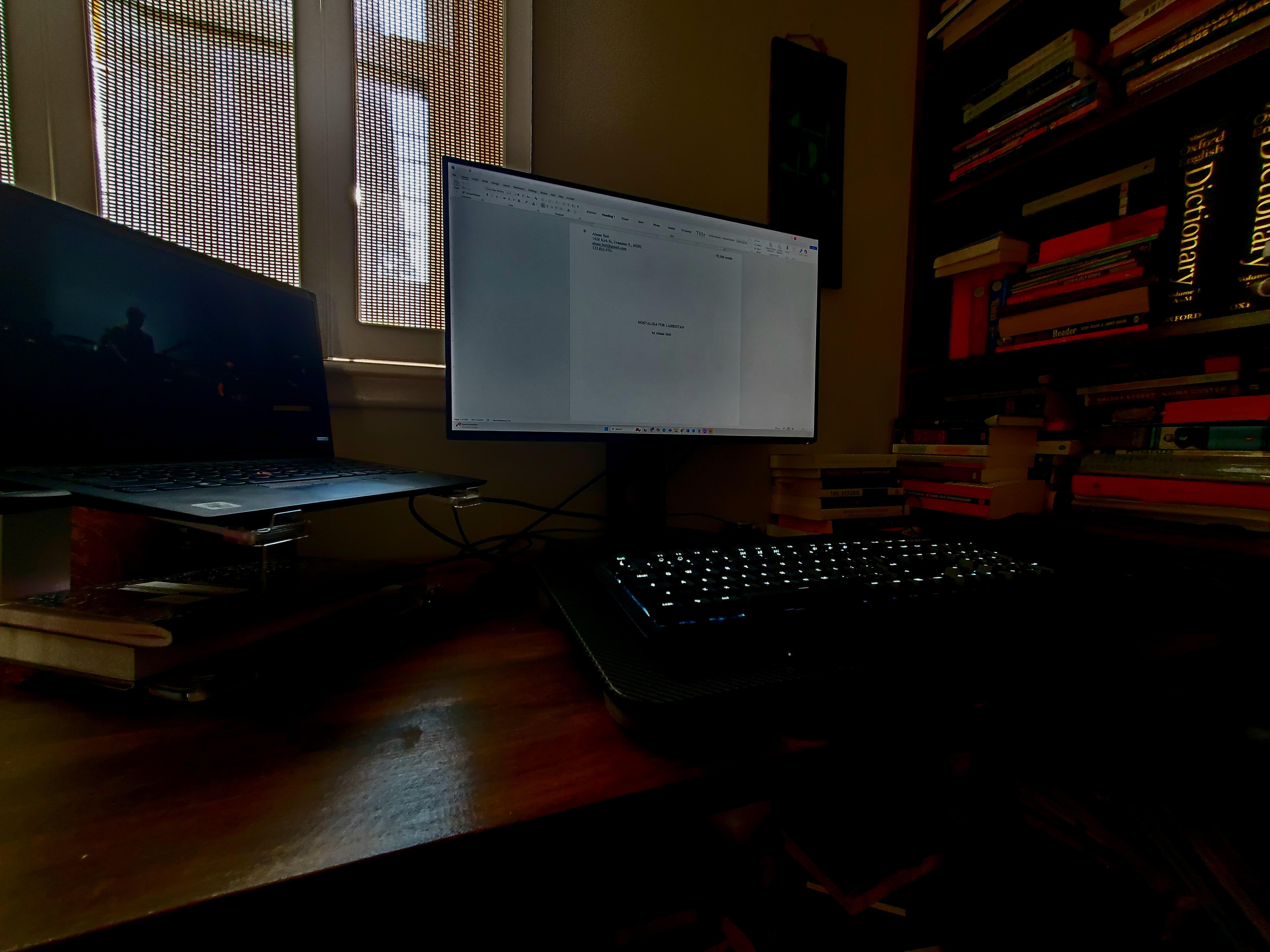
By acknowledging that it took 10 years for me to write my first book and now I’m 41. Any delusions of grandeur I had in my twenties have been significantly downsized. As I’ve matured as a writer, I’ve also redefined the terms of my ambition; it’s to write the best book I can, to be truthful and rigorous, to not cave artistically. These are matters of effort and integrity, things reasonably in my control, rather than say, the market.
How can you tell when you’re coming up on burnout?
The burnout that I experience is a very specific set of feelings: it’s wanting to be done, a sense of flailing at the micro (often sentence) level, and losing my gauge on whether the writing is “good” or in the right direction. Recognizing the latter feeling—that loss of judgment—usually tips me off that it’s best for me to take a step back. I haven’t thought deeply enough about the story, or at least, this part. I don’t know what it’s supposed to do. So it’s probably best to look at something else for a while, something related in some way or just something I know to be good.
What level of “seize the day” are you?
If “seize the day” means being present rather than looking ahead, then I did that. There was no other way to finish this story collection. When I was able to work on it, I picked it up from the last line and tried to write the next one, or started from the beginning, if that was needed. I didn't look ahead to agents and publishers or professional stuff. Perhaps I should have, but in keeping with my notion of ambition, the book had to be the best that I could make it, and in that regard, my ambition was always refining my craft.
What’s the playlist of late?
I got to see Godspeed You! Black Emperor in Chicago back in November last year and their albums have been in rotation ever since. Portishead is a constant. At different phases in my life, I decide a different one of their three albums is the best. Currently, it’s Third. I also love watching their Roseland NYC Live performance from 1997.
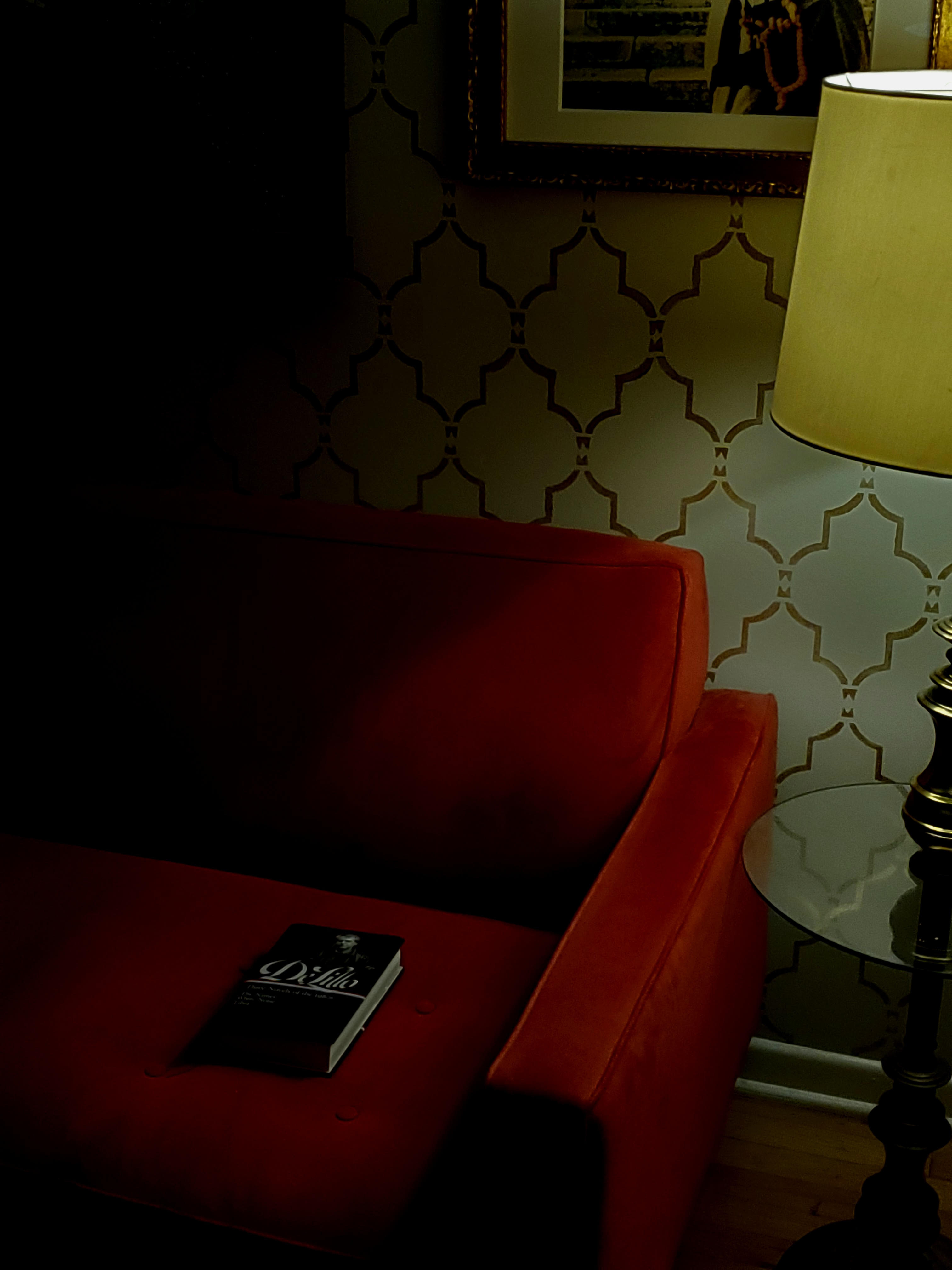
I have a handful of podcasts on heavy rotation as well. Makdisi Street is hosted by three Lebanese-Palestinian brothers who are brilliant scholars of the middle-east and nephews of the late Edward Said. They have fantastic guests who provide historical background and actual analysis. As I mentioned before, Between the Covers with David Naimon is an all-time favorite and constant presence. No one gets deeper into a writer's work than David. I just discovered Don DeLillo Should Win the Nobel Prize, which has been a thoughtful and erudite companion for my journey through DeLillo's work (a journey begun because of Christian Lorentzen's essay). It's startling to realize how prescient he was. Finally, I've been revisiting Twin Peaks, partly due to Lynch's death, but also because its 2017 finale remains the most haunting cinematic experience I've ever had. I've been re-listening to the podcast, Diane, which had the most charming hosts, who could and would spout off about cinema, folklore, magic, hauntology, and so much else. Also, The Lodgers’ final episode featuring Lynch expert, Dennis Lim, and writer, Tom McCarthy, is remarkable for its chilling synthesis of an unsynthesizable work.
How does money, and your relationship to it, provide care or support?
We have some, which is helpful. My wife has lived paycheck-to-paycheck on what she made as an artist, but I never have. I have been lucky to not have my mind consumed with making rent or weighing whether I could afford to see a doctor. These are matters of necessity and dignity. And money, too, is corrosive. It eats away one's principles and moral courage. The more invested or entrenched one is in a system of exploitation, the more one identifies with it.
What are some forms of care that you’re discovering, or want to try?
I have a tendency to isolate myself from friends. Moving to a new city and having a child has definitely been an additional challenge in that regard. I now need to be more intentional and schedule this time in, and I need to meet more people here. I think I want to take a class, something in-person. I also want to start a short-story club.
What’s your relationship to night and day?
As I’ve said above, night has always held the magic potential, the excitement, but honestly, as far as writing goes, the results were erratic. I never built a sustainable practice, because too much depended on how the day had treated me. Now I mostly reserve the night for input and inspiration. The day now holds the potential for focus and sharpness, but I need some kind of barrier from stimuli to write, some uninterrupted runway. My wife and I coordinate to give each other blocks of time where we can lock ourselves away and get somewhere.
What do you want to give a shout-out?
I wrote a piece on rendering evil in fiction, but through the lens of two documentaries, The Jinx and The Act of Killing. I was also recently on an episode of the podcast, Hybridia, hosted by Saki Sato and Kirby Chen Mages, in which I discuss horror movies and grief, the feeling of always being watched, among other things.
As a fan, I am obsessed with Solvej Balle’s Calculation of Volume books as well as Karl Ove Knausgaard’s Morningstar cycle. These books cannot be written and translated fast enough.
What is comforting to you?
Love. Art that is rigorous. People being brave. People telling the truth regardless of the consequences. God.
*All photos courtesy of Ahsan.*
It’s a lovely boost if you heart, restack, or forward this issue of SOON along to the people in your life who might connect with it. Share button below xo.
We are multifaceted and curious. Let’s be many things together. Share SOON with your favorite people.
Comments
Nothing yet. Say the first thing.
Sign in to join the conversation.