
Welcome to Something Out of Nothing, a newsletter about meaning—making it, finding it, offering it. I talk about the writing life, teaching, thrifting, books, travel, obsessions and idle interests, and much more.
It would have been cheaper to fly to Montana, where a chunk of my family lives these days, but my mom turned seventy this past January and I’m in my early forties now and we were simply overdue for an adventure. Plus, the very idea of thrifting and antiquing our way across the country was a fantasy we had to make real.
We departed Richmond a few days after a heat bubble had descended on the region. All along the trip, as we moved westward, people told us we’d just missed the heatwave in their area and we’d assure them that we knew all about it, because we’d left it behind in Virginia.
Every couple of days, I’d calculate our upcoming destinations, based on an average 6-8 hours per day behind the wheel. Then I’d tell my husband the name of the chosen town or small city and ask him to book a hotel in the area with two beds and a continental breakfast and I’d point the car toward it.
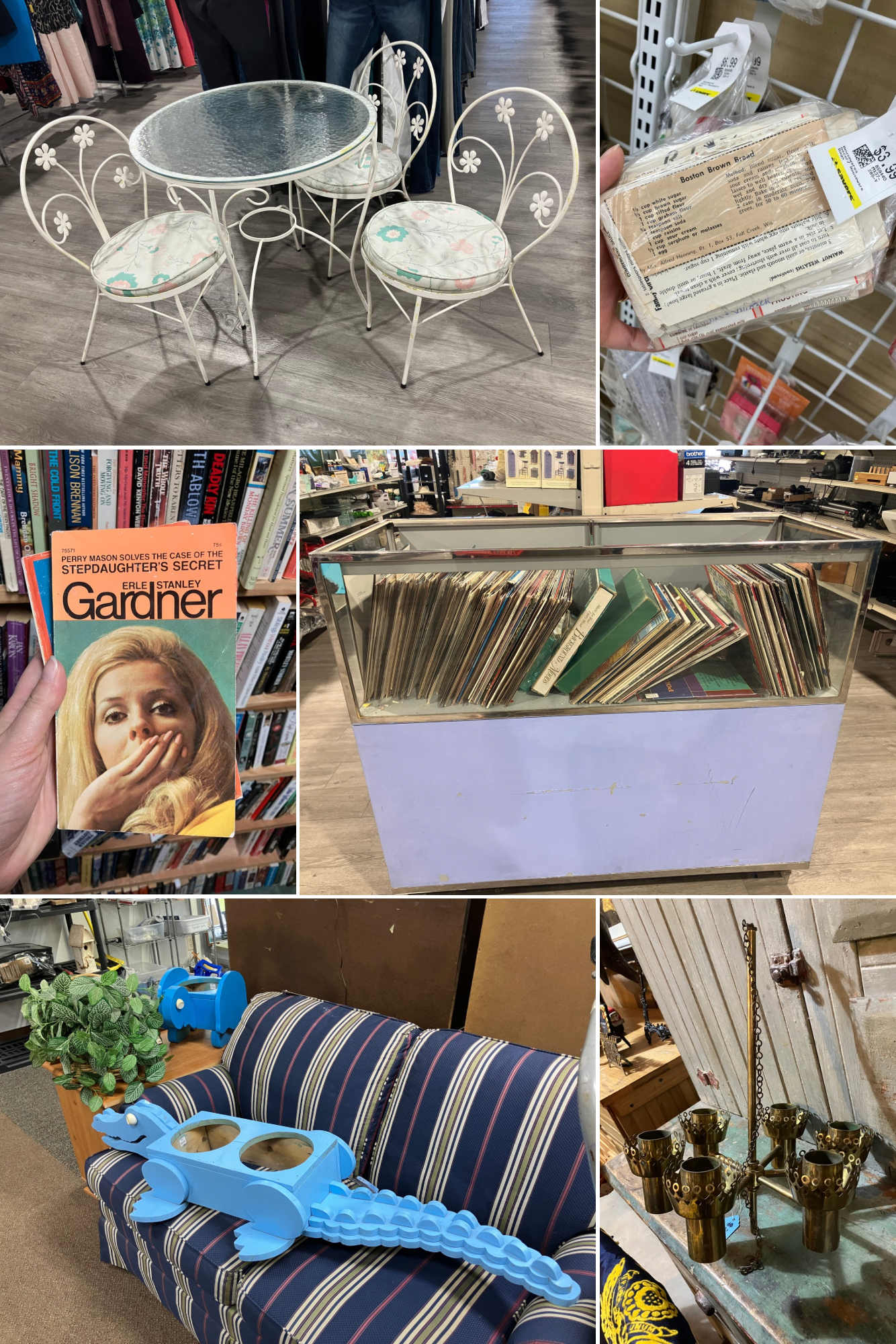
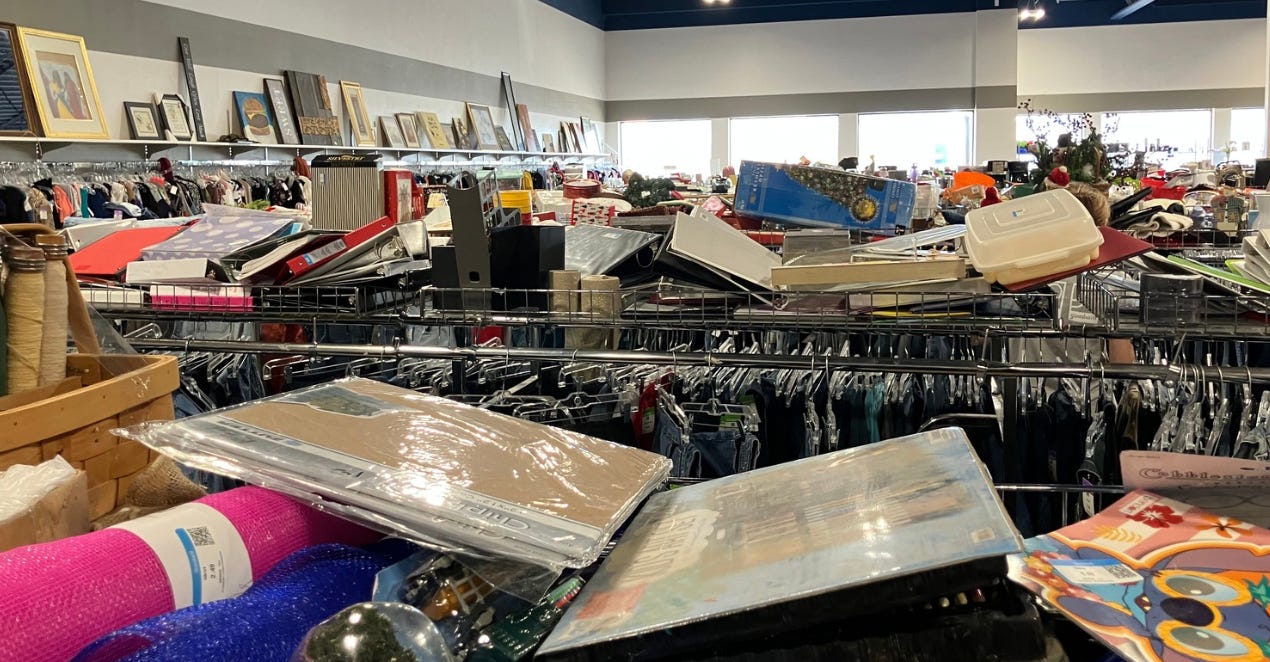
To keep our stamina up, we’d drive for a couple of hours then do a quick search for nearby thrift stores or antique malls. Sometimes I’d set a 20-minute timer on my phone, then we’d get back on the road with our fast purchases—revived by the thrill of a swift treasure hunt. If the store was particularly well-stocked, though, we’d gladly lose all sense of time and end up having to drive until nearly ten o’clock at night. (This became the norm on the return trip.) But we didn’t care. Our pursuit of secondhand, vintage, or antique treasures is one of our favorite ways to spend time together (even as we head in opposite directions when exploring a store).
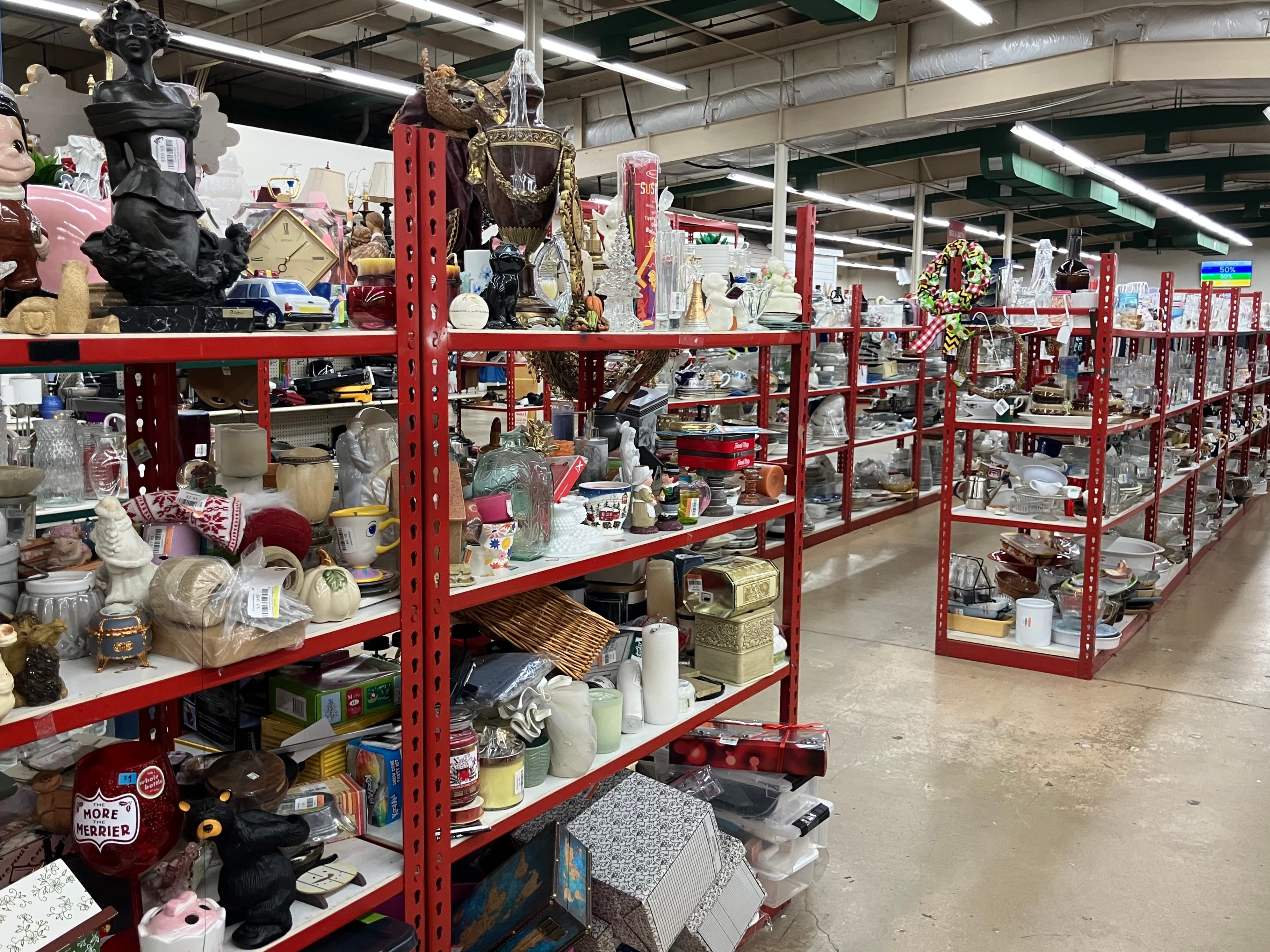
On our way through Minnesota, where I grew up, we stopped at the Buffalo Nickel, an antique store in a converted barn, and a common destination from my childhood, as it was one of my mother’s favorite stop-in spots.
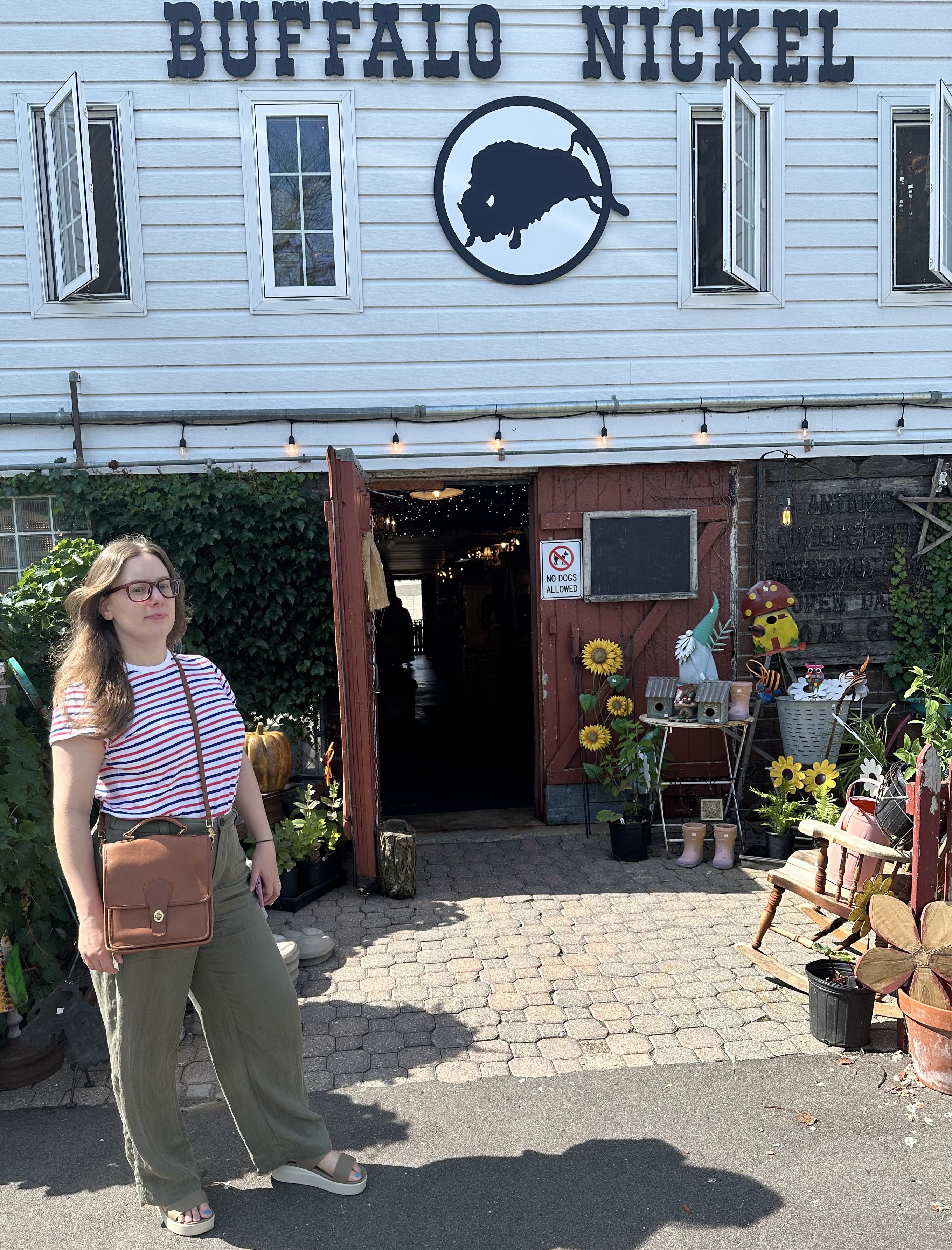
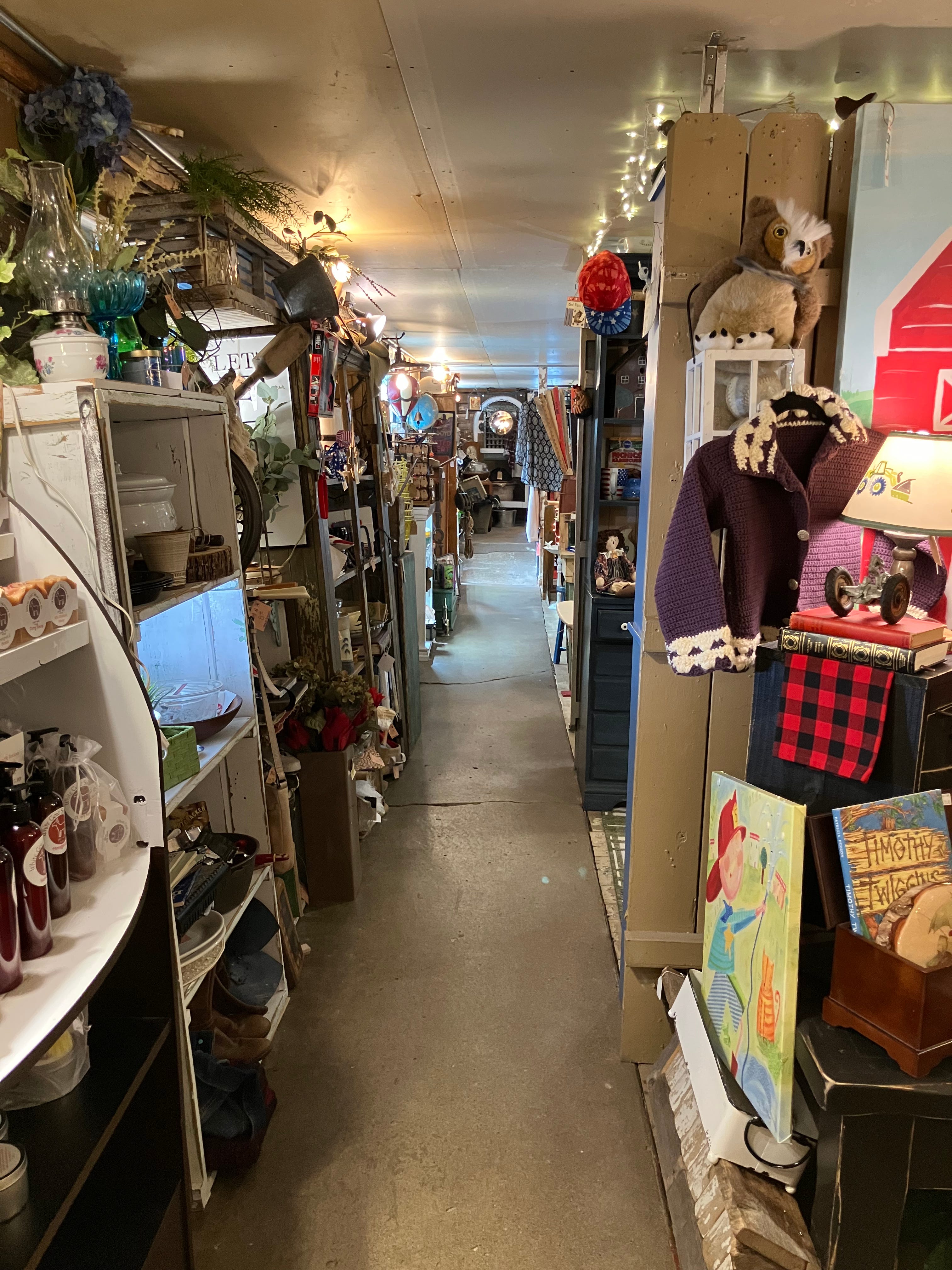
Walking into the store decades later, the same sensory details hit me—the woodsy smell, the cramped maze of uneven cement floors and low ceilings, the little ‘kid’s area’ table by a low window, where I can remember scrawling with crayons until I’d get bored and seek my mother out in some faraway corner of the building. Everything was the same, except me. Now I loved the store in the same way my mother had always loved it. We left with an abundance of old treasures between us. (I’ll share some of our finds from the whole trip in a future issue.)
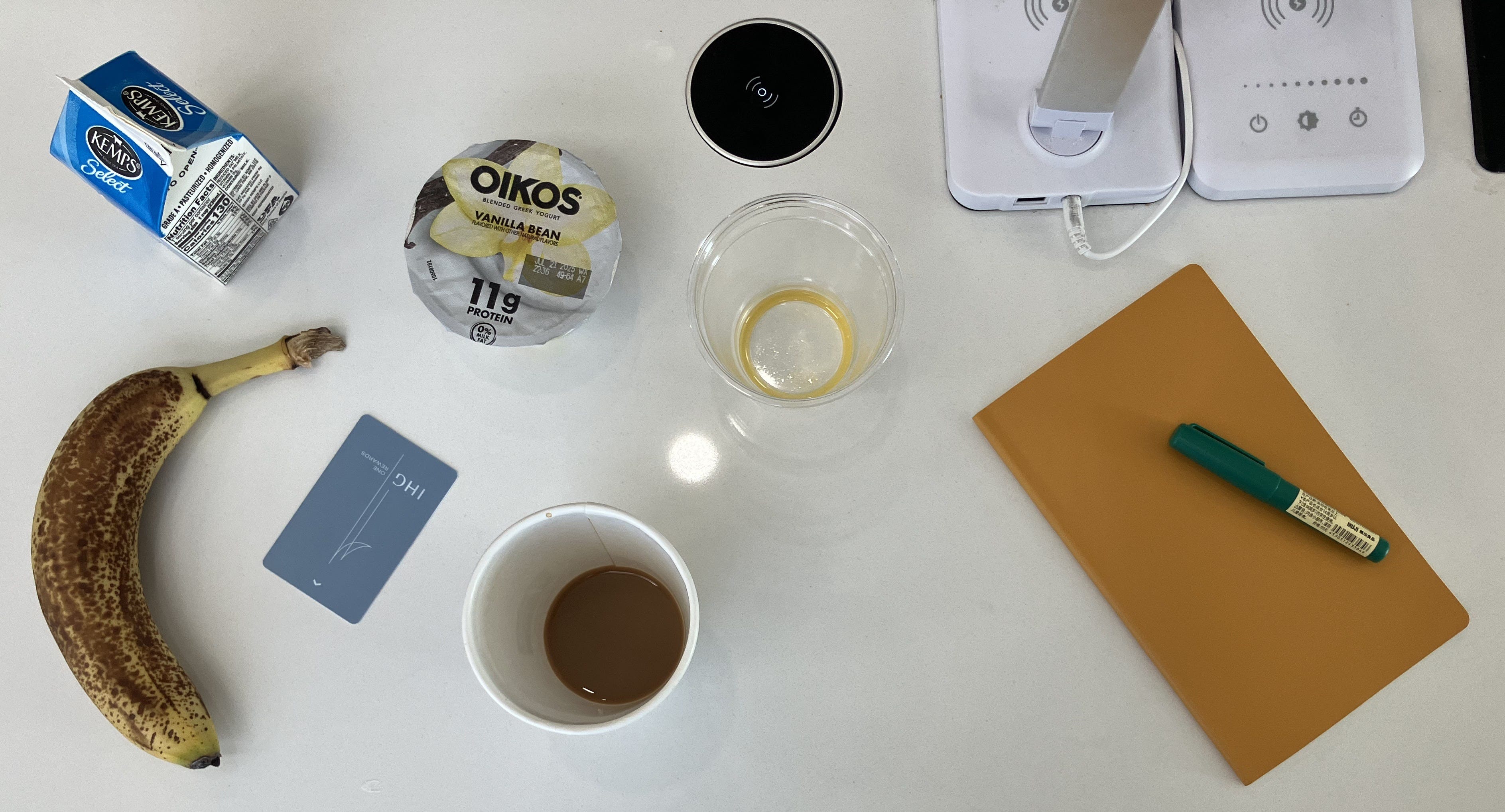
Our mornings had zero obligations. I’d go downstairs for the hotel’s continental breakfast and write my morning pages (I’ve been working through The Artist’s Way with a class). Then I’d stuff a yogurt in my pocket for my mom, grab some fruit, and bring coffee for both of us back to the room, where we’d laze until late checkout.
Forward momentum but always the arrival was eventual. An itinerary that was more like sketched possibilities. The fact is, I’ve road-tripped longer and farther than this before, and I’ve also taken 3-day train trips from east coast to west—watching the landscape change before my eyes is forever a favorite way to drain my anxiety, bringing me back to the slow drip of contemplation.
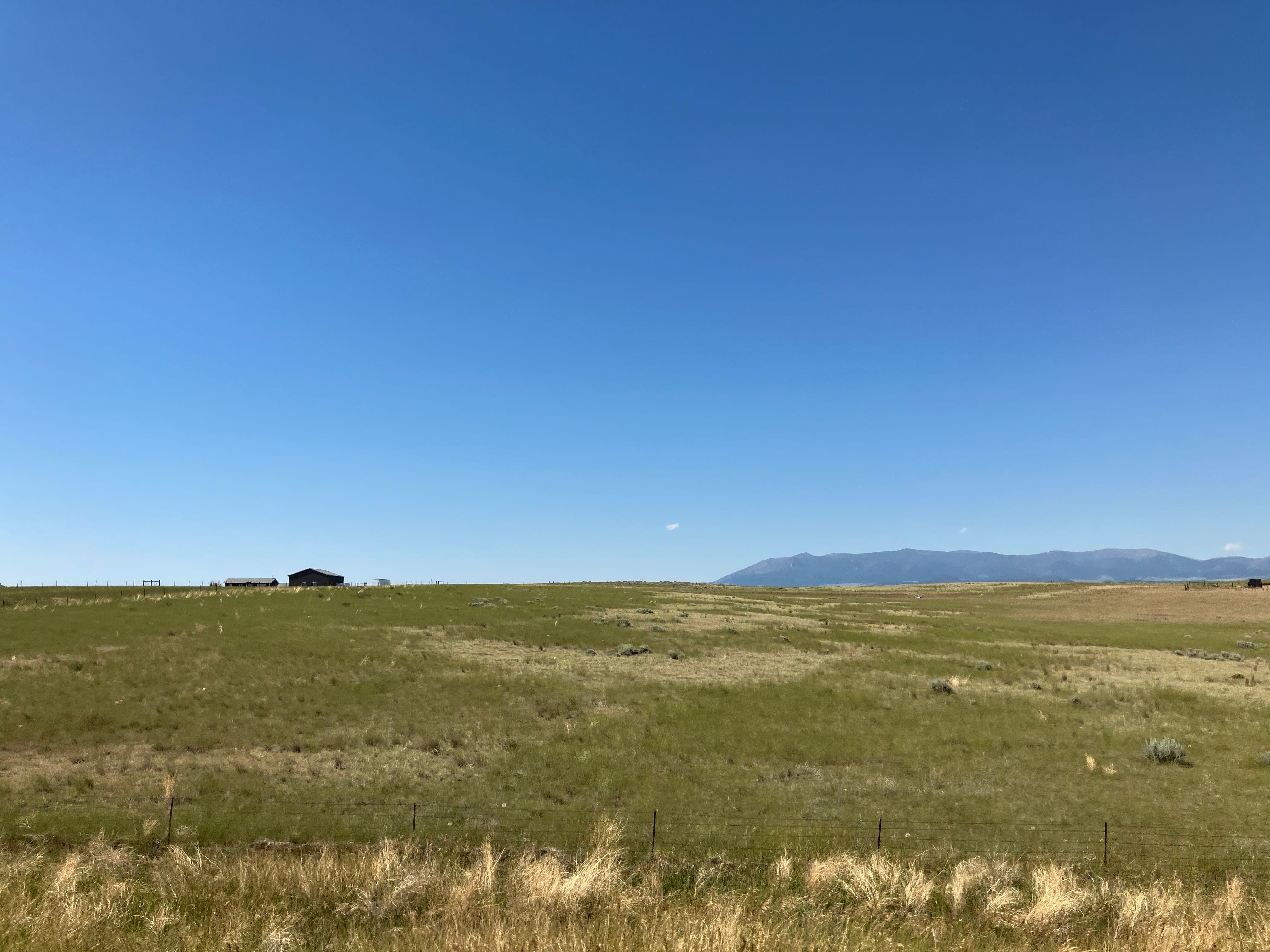
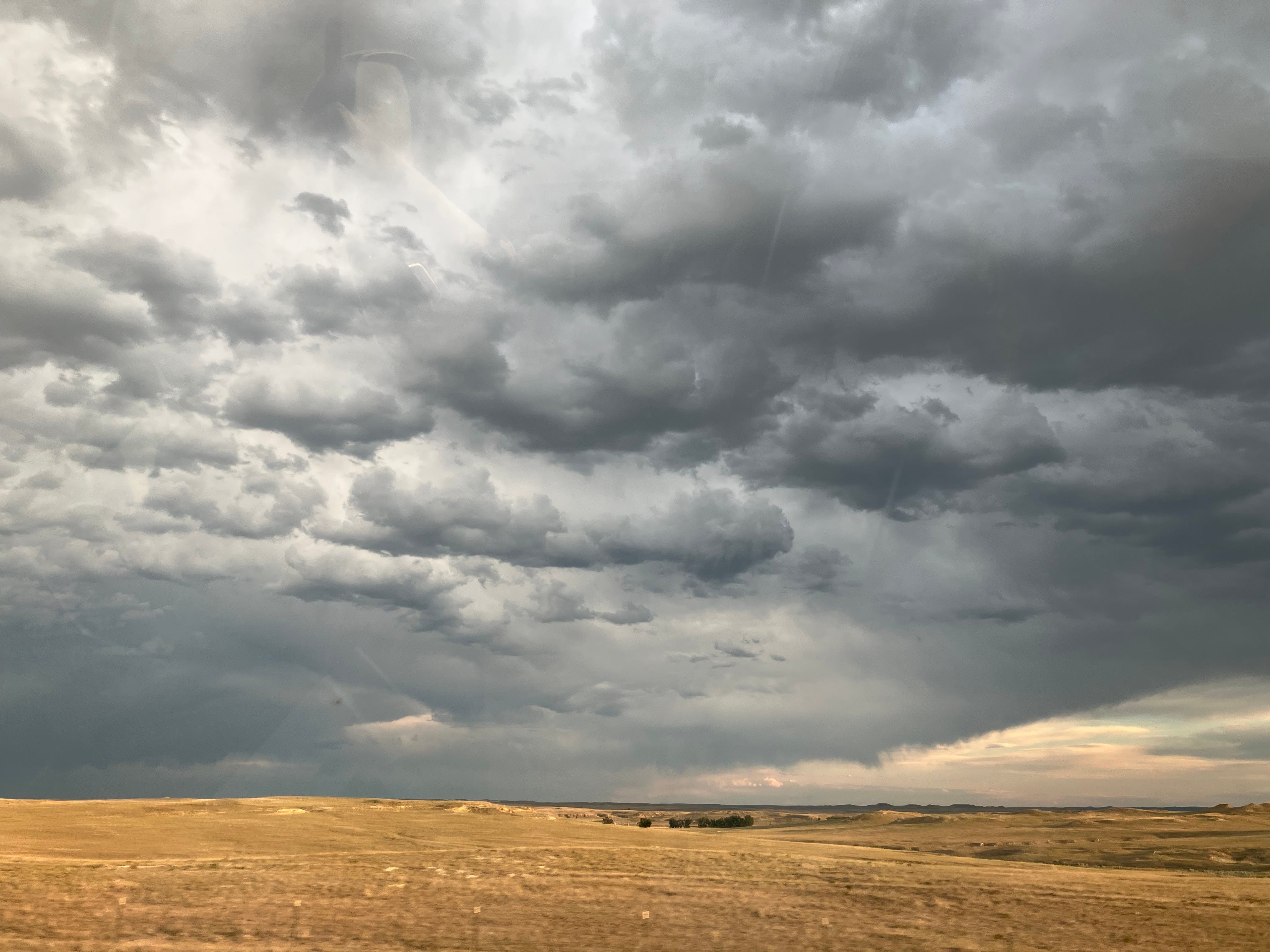
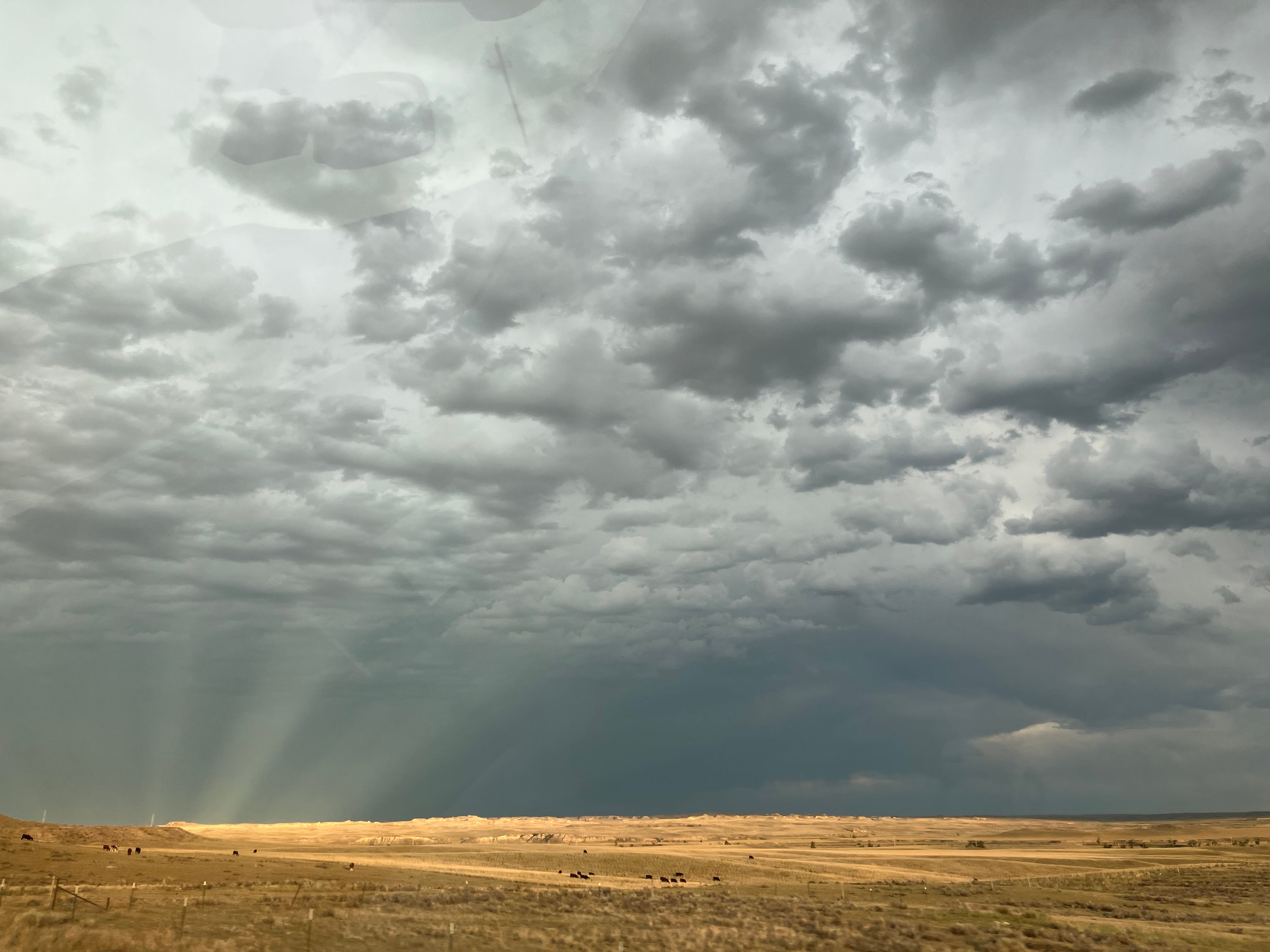
The way clouds can linger so low, casting shadows on the ground, and the way those differing shades can be like looking at a watercolor image.
The way the enormity of the sky never stops pulling me into it.
I’ve always loved the feeling of being in transit. Between places. I even enjoy the airport—the anticipation of arrival isn’t an anxious feeling, but a kind of freedom to let go of everything else and belong to the moment. The wait.
Mile by mile, minute by minute.
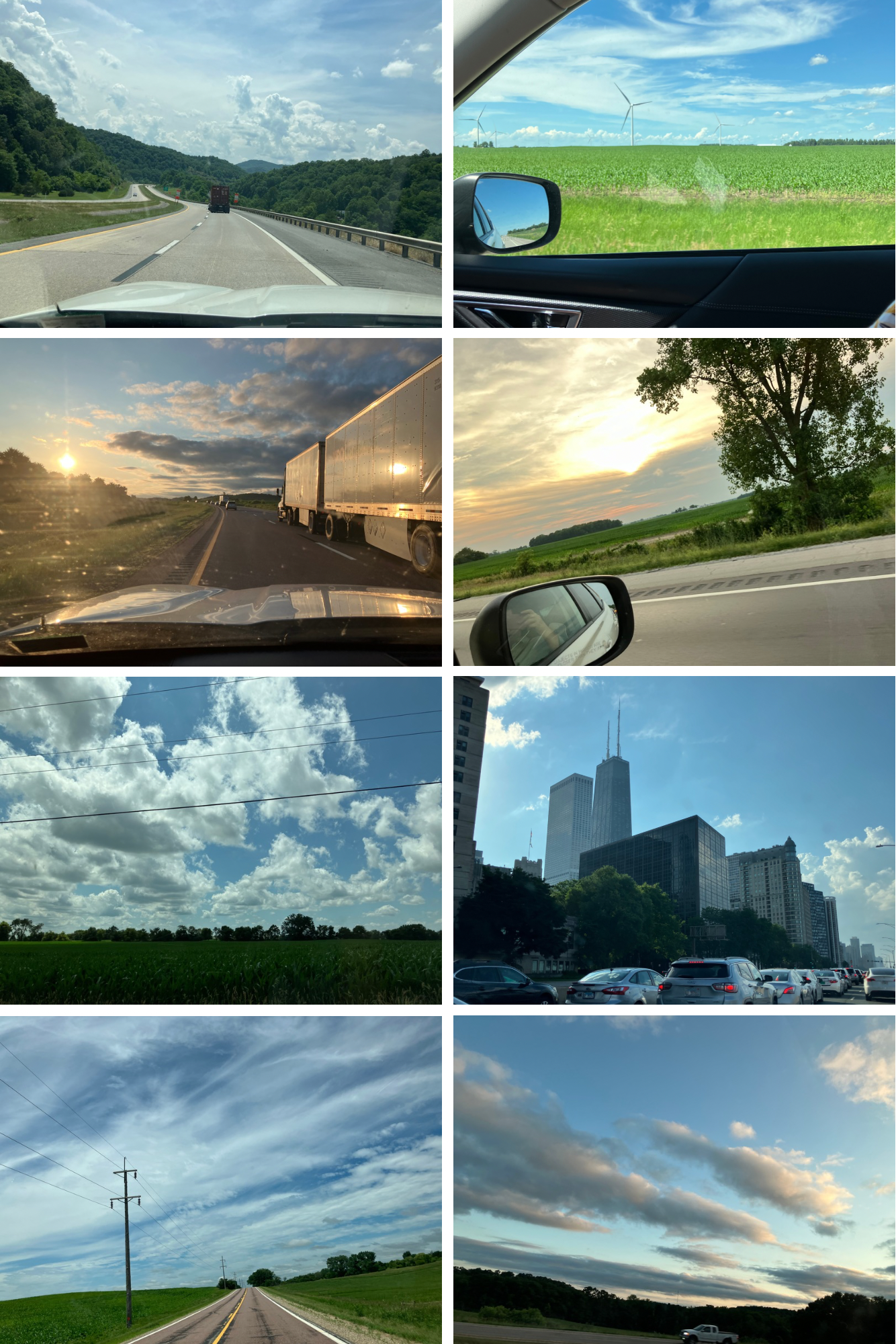
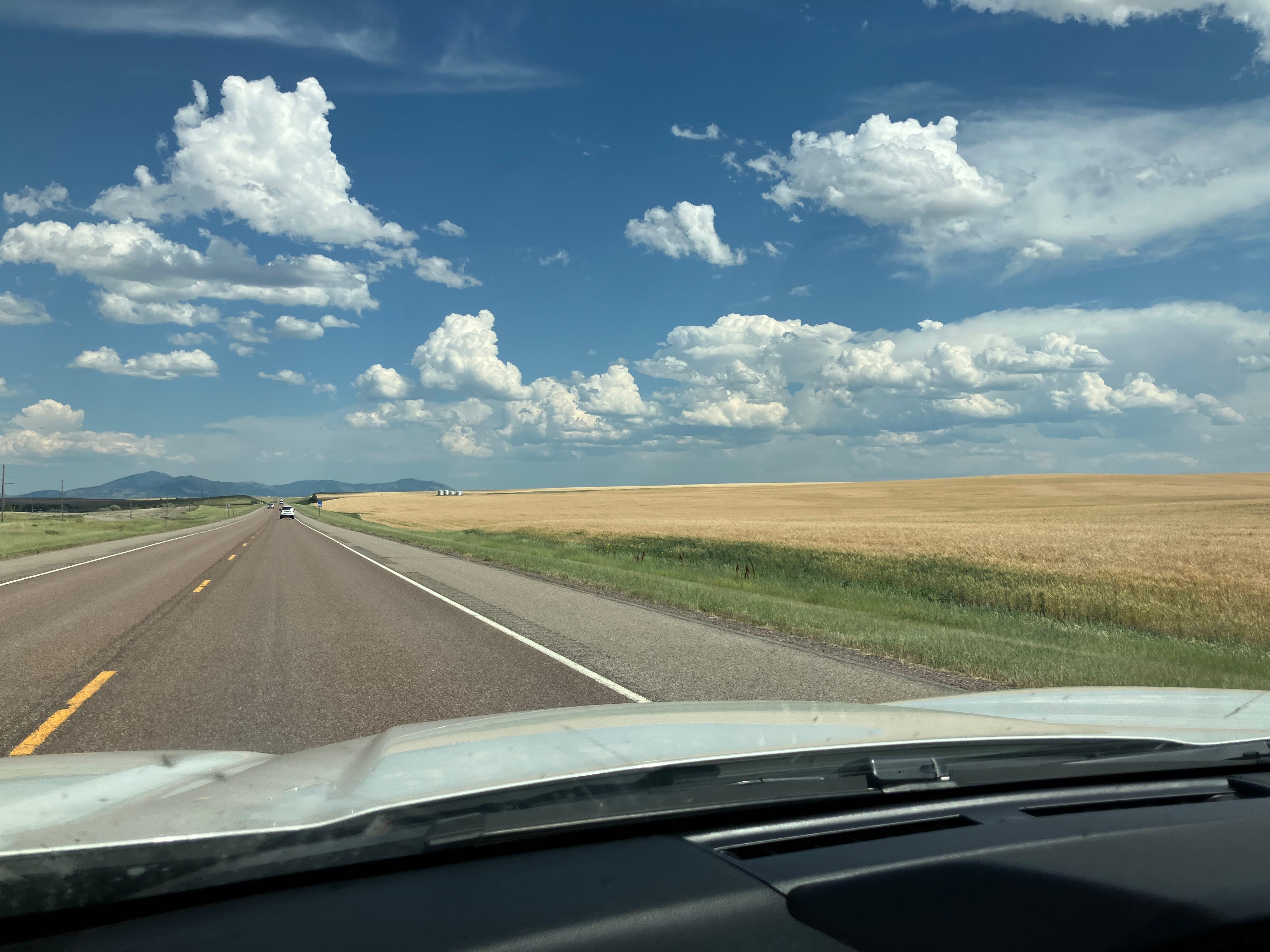
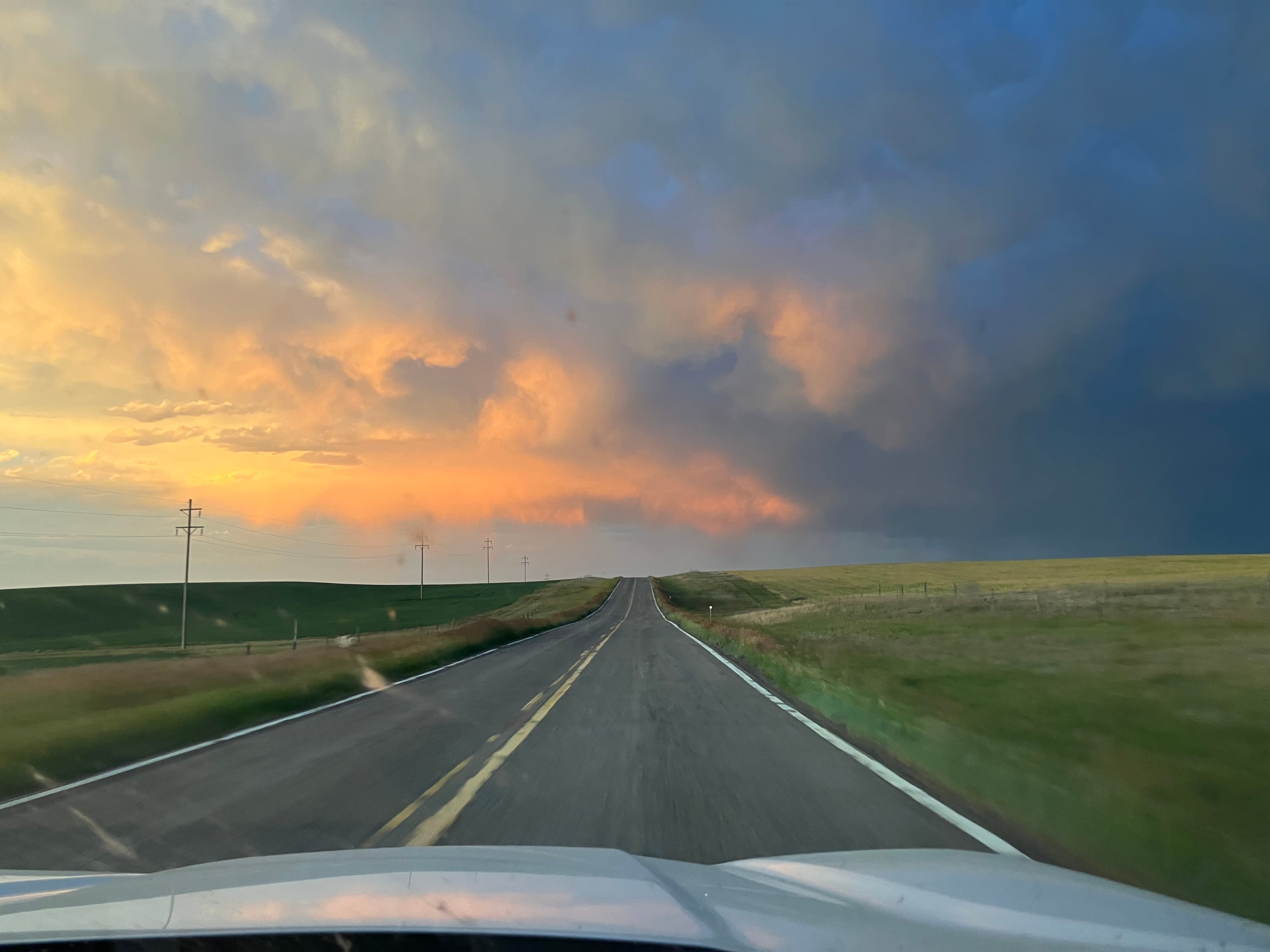
From climbing the mountains in West Virginia, to the generic industrial stretches in the lower Midwest, to the steaming concrete metropolis of Chicago at the edge of Lake Michigan, to the vibrant lake country in wooded and winding Wisconsin and Minnesota, both states utterly lush with obedient farmland, to the flattened stretch of 80-mph highways in South Dakota, transforming into high desert and rocky canyons, to the highways in Montana stretching extravagantly toward a cinematic horizon, guiding us in ascent before sloping back down into valleys in order to climb out again.
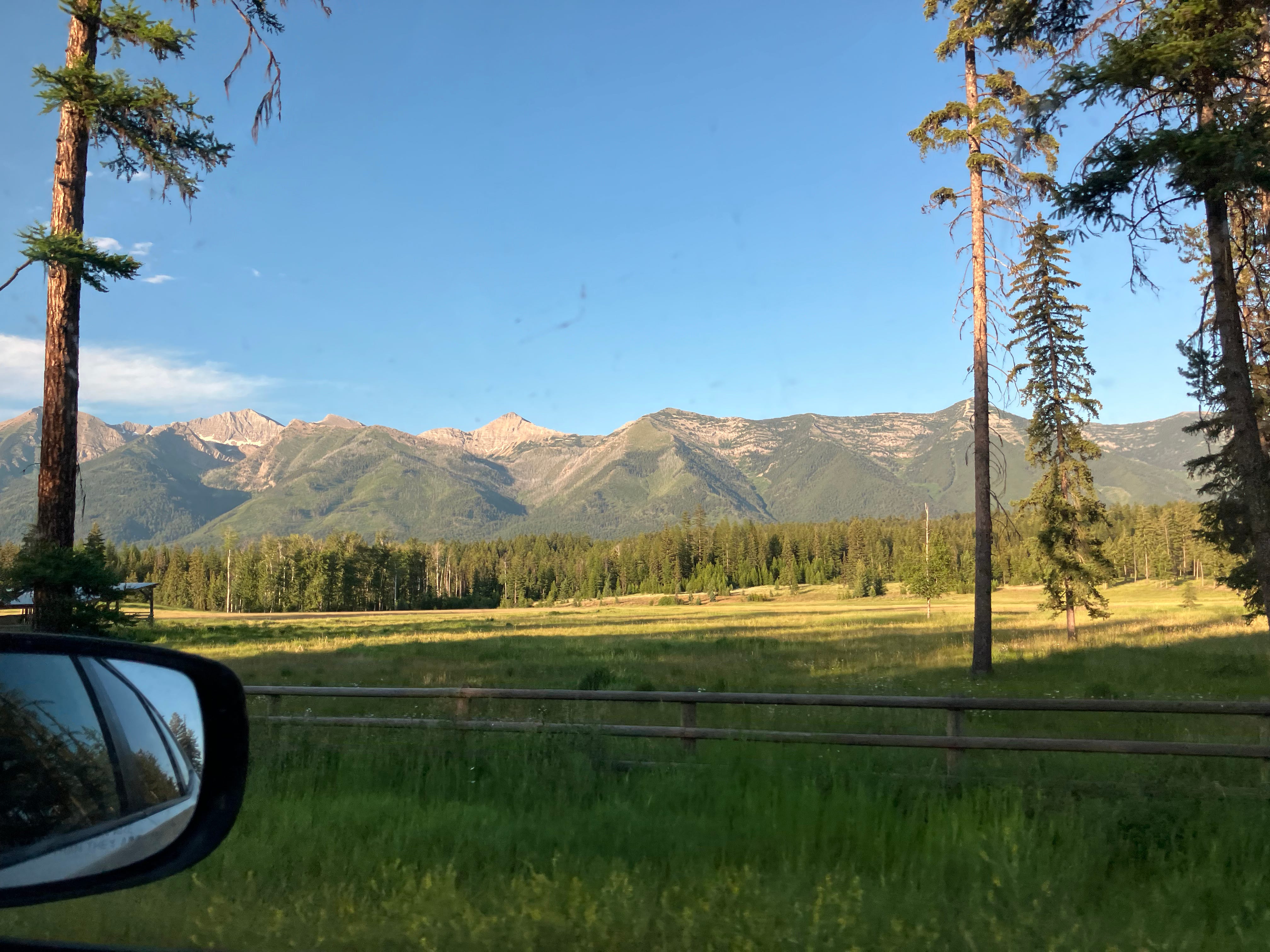
It’s hard to talk about how beautiful our country is—it’s hard to even write it with a straight face—because there is something intensely disorienting about admiring the abundance while the ship is sinking beneath our feet. We did not often turn the radio to NPR.
We mostly stayed within the time and space of our journey’s intentions—adventuring together, reuniting with family, following the whim of our thrifting delights.
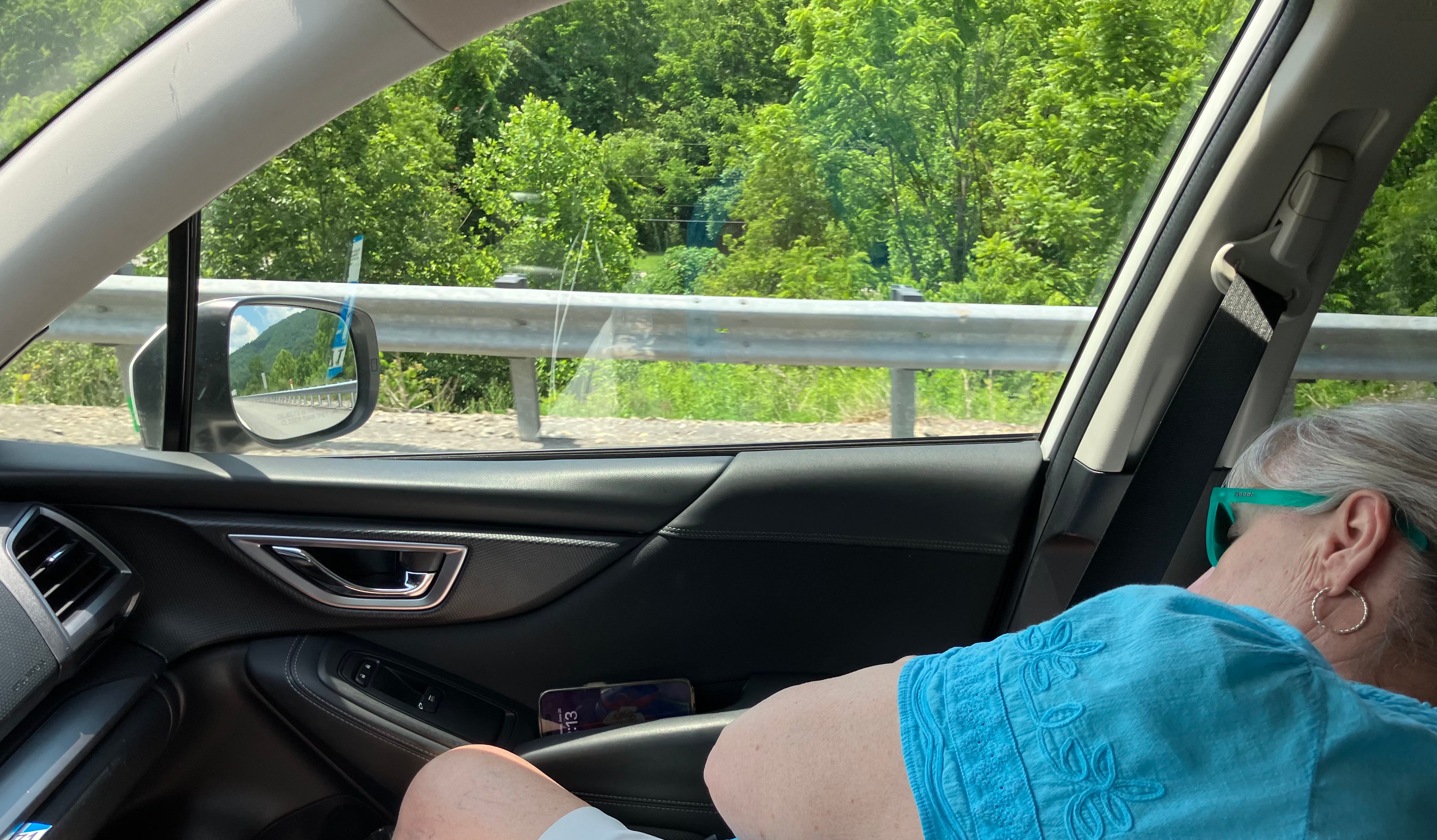
We laughed at each other’s moods. We argued then moved on. I drank coffee late into the day. My mom napped. She read aloud headlines from social media and I asked her to stop. She described the videos she was watching on social media and I asked her to stop. She told me to watch my tone. I tried to watch my tone. We talked about the past. We talked about our next adventure (Prince Edward Island?). We asked the kind of random questions you ask on a road trip—as the world rolls by outside the window, your attention shifts inward, traveling its own route, unconcerned and fluid.
What misconceptions do you think people have about you?
What are some places you want to see, or see again?
Do you remember that time we turned onto a hill and the moon was sitting right at the top? (Yes.)
What do you love about the people you love?
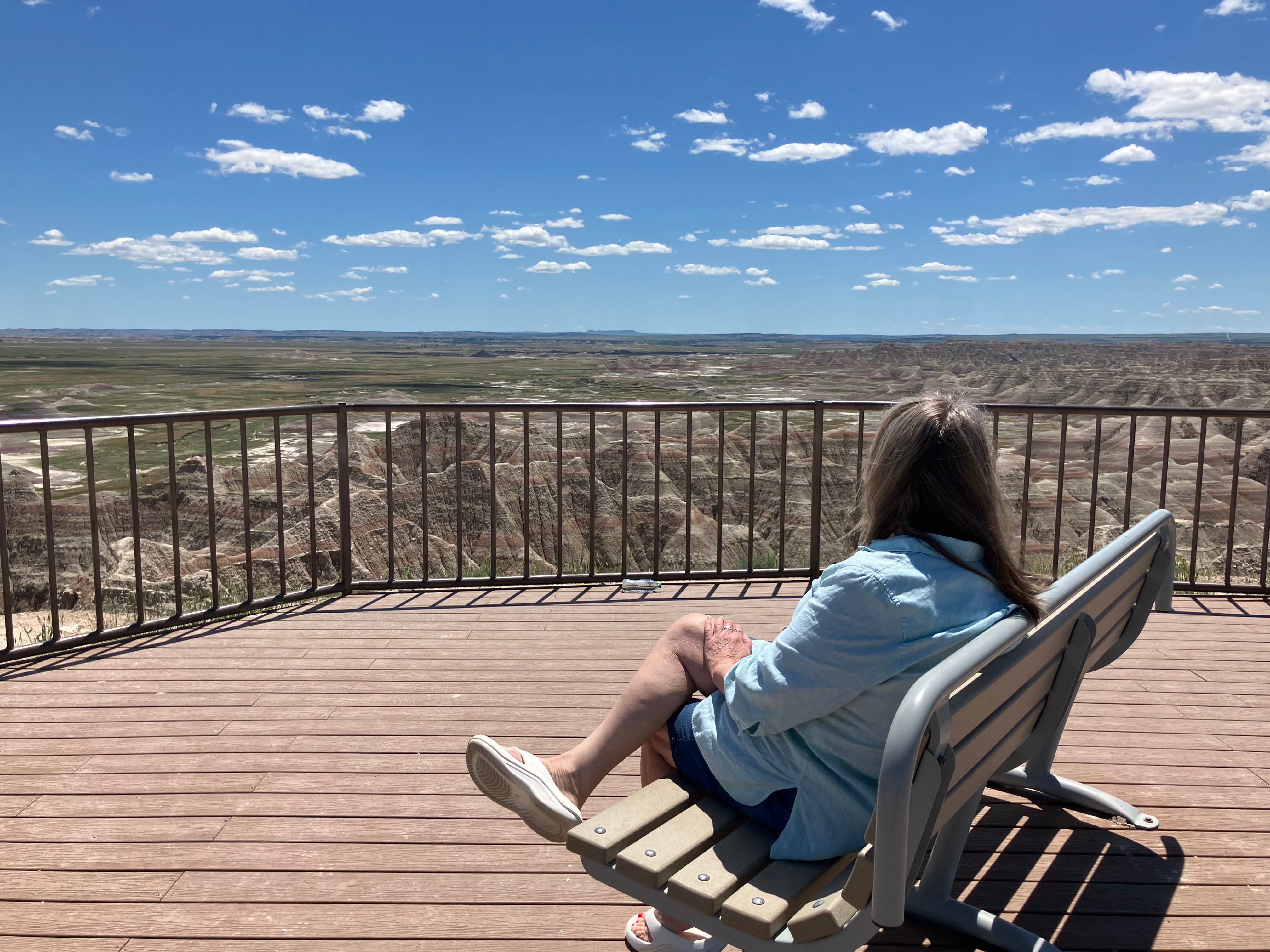
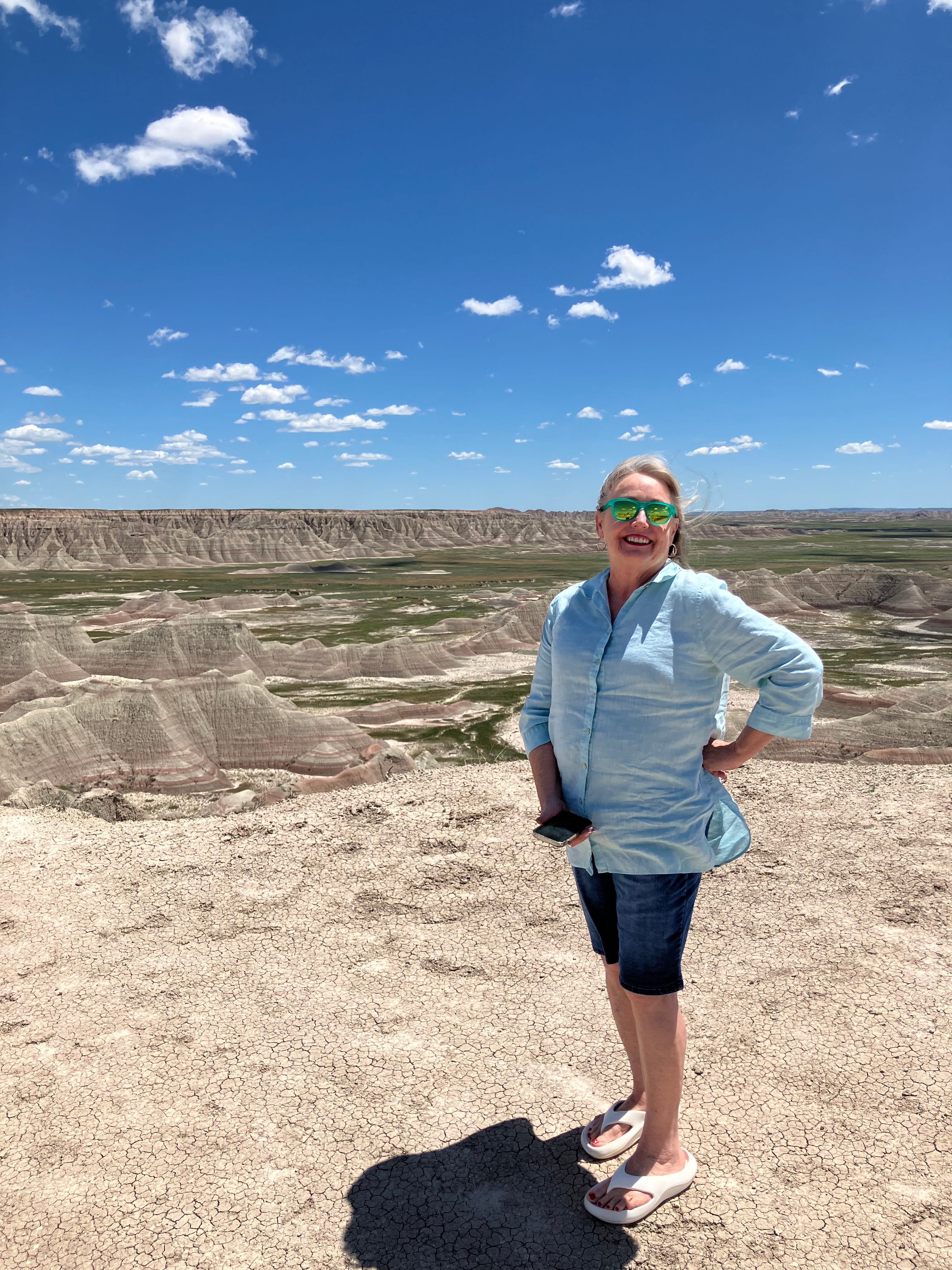
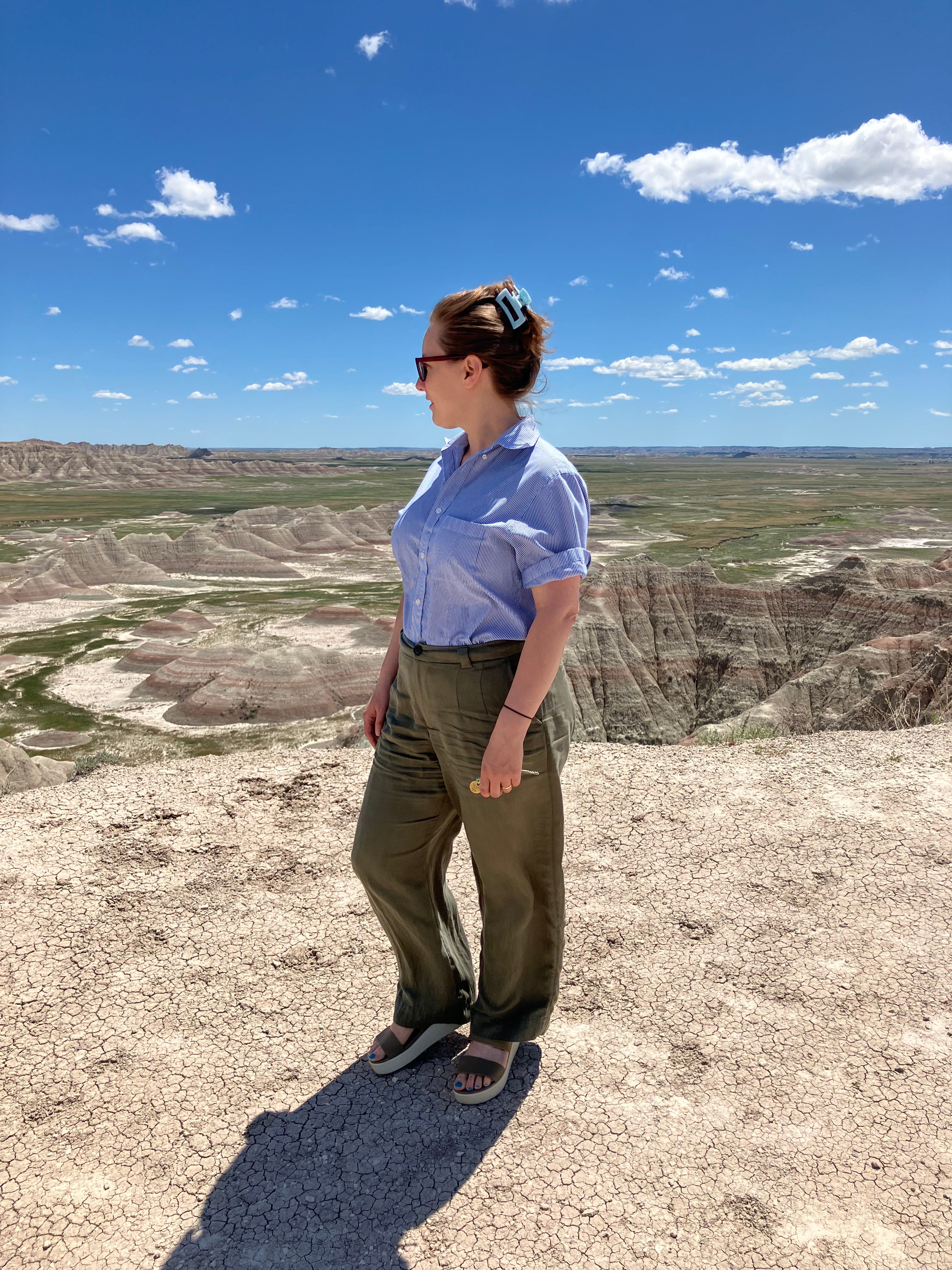
In South Dakota, we were proper tourists, stopping at Badlands National Park.
We held hands as we ventured off the path to a wide-open spot overlooking the dizzying vista. “This is how people die,” my mom said, bumping my hip as she huddled close to me and kept her steps tiny and shuffling. “We’re fine,” I told her. And we were.
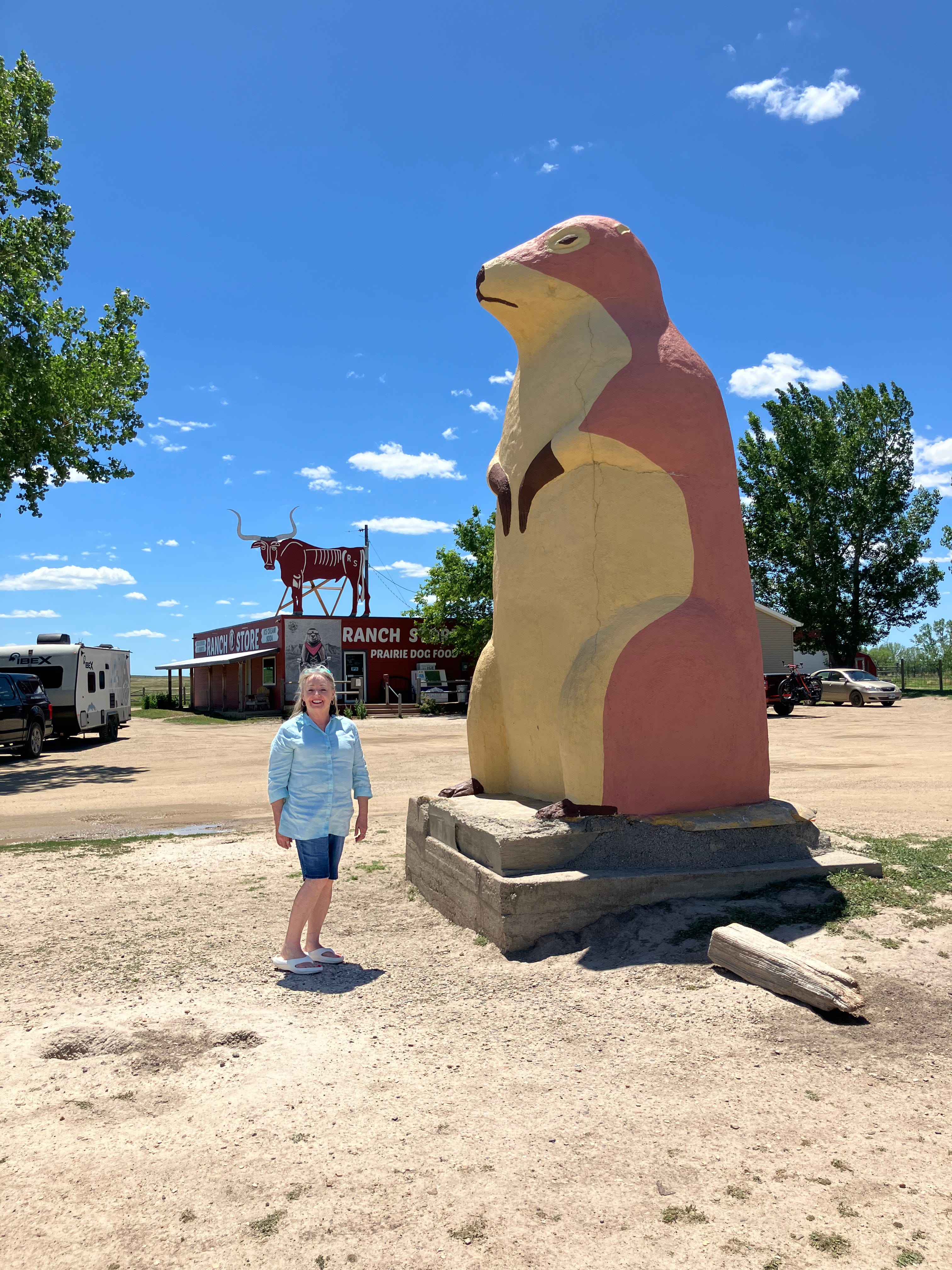
Wall Drug was next. If you’ve not been, it’s an absolute masterpiece of tourist trap Americana. The destination is a huge block of buildings with “old western” facades, each one filled with little shops, restaurants, collectibles, arcades, and local history. Jackalopes abound!
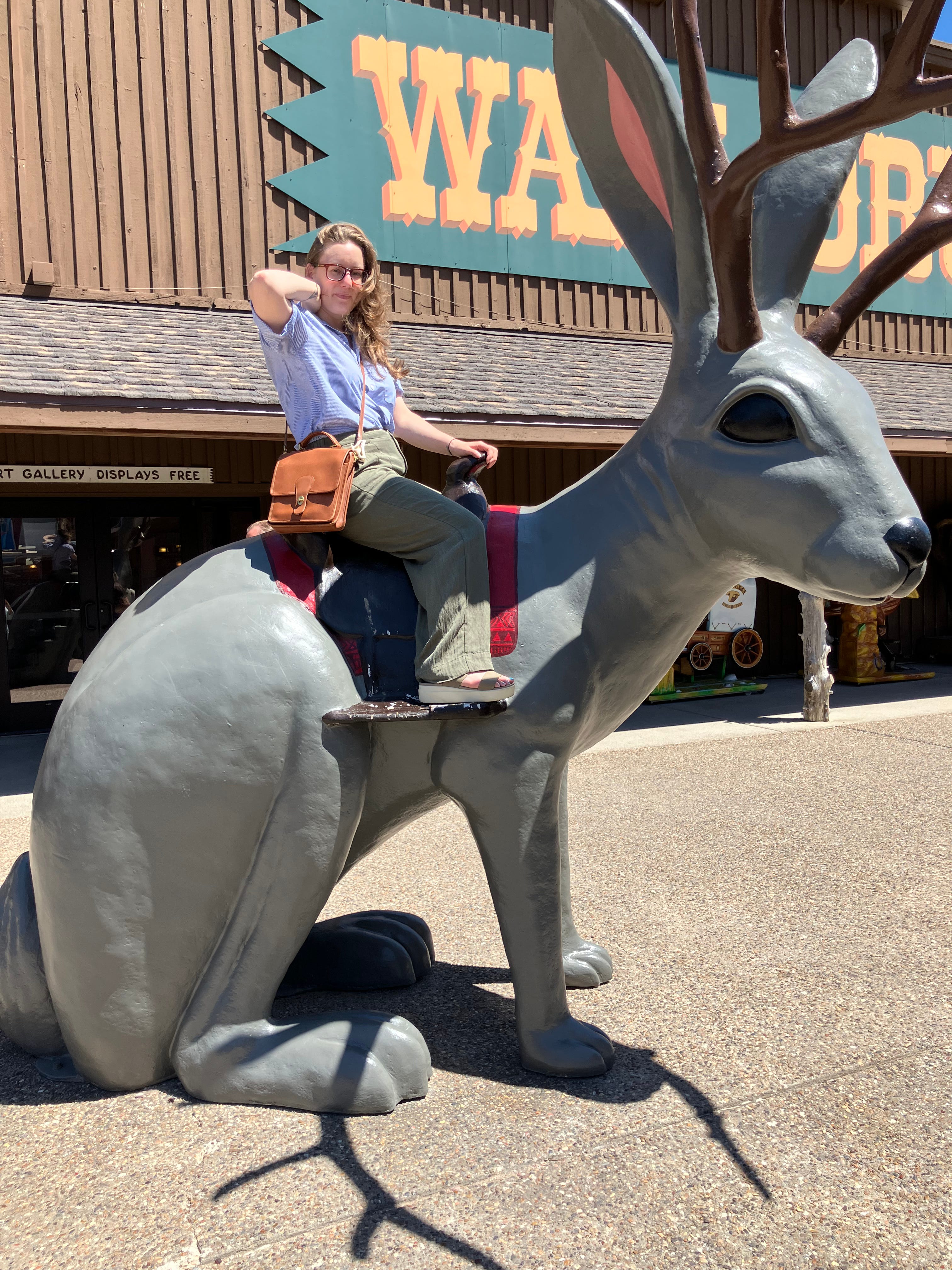
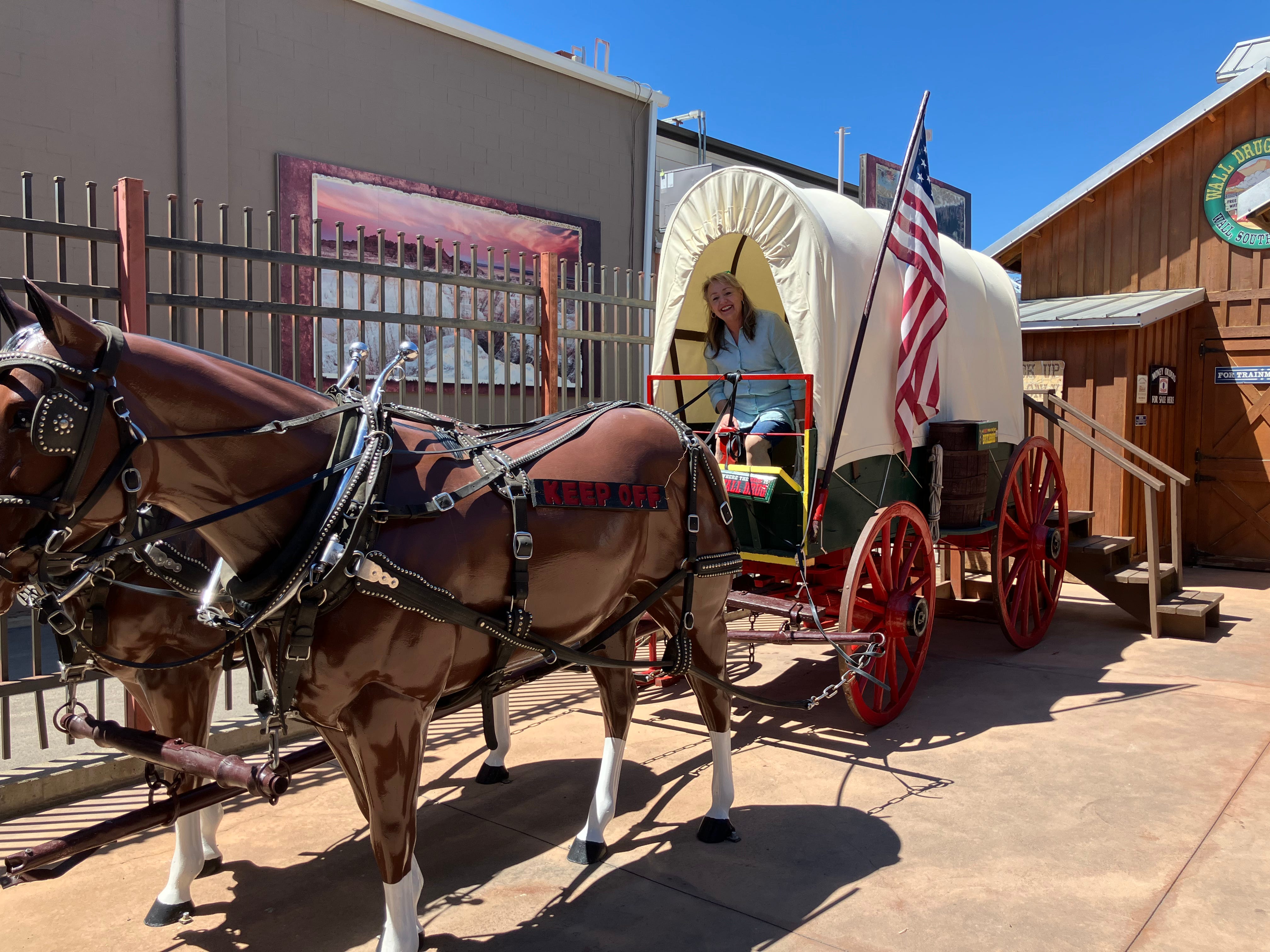
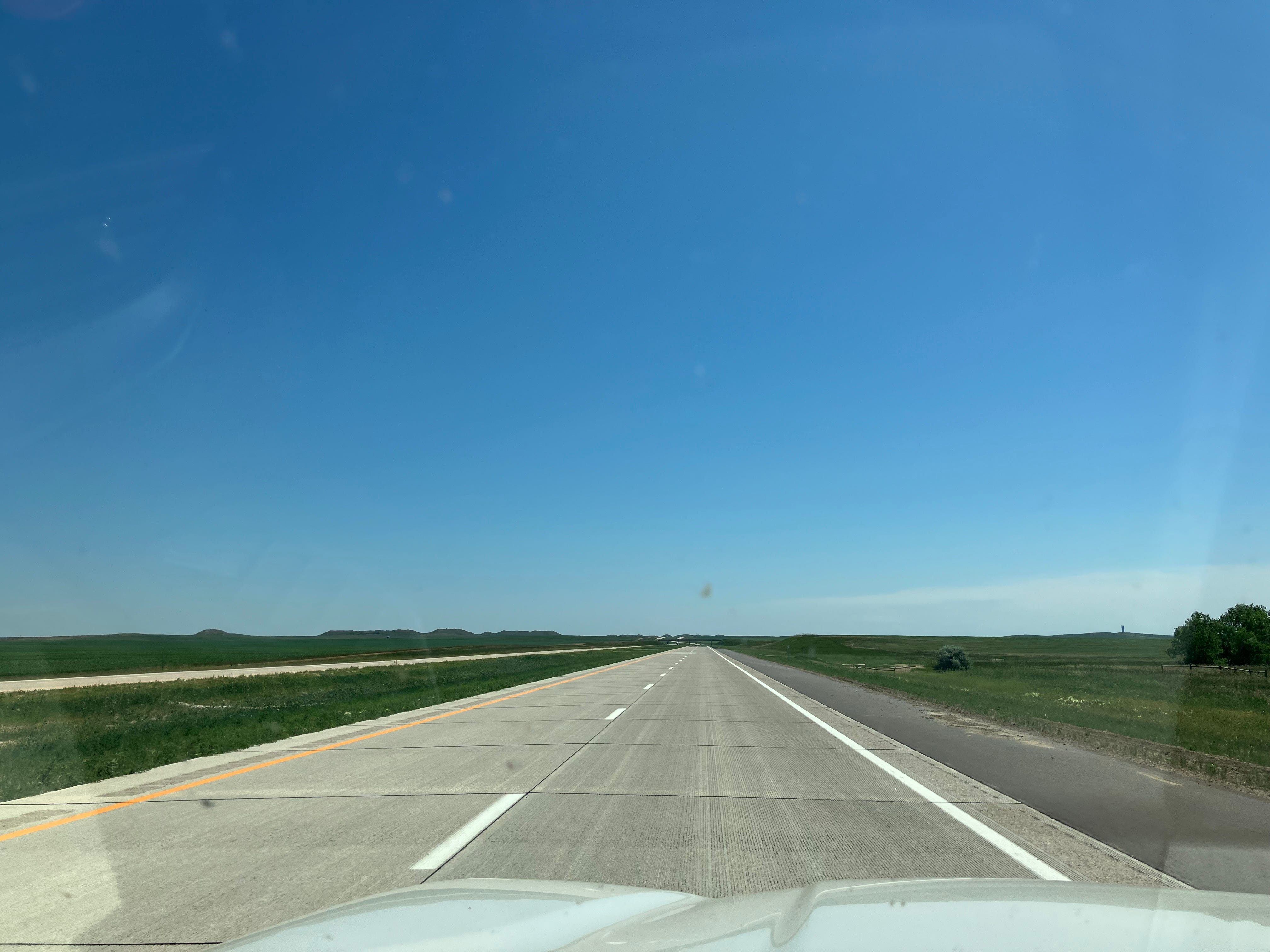
Wall Drug was raucous, full of families with young children. The antithesis of so much of our drive, where this was the norm:
On the return trip, we sped alone on severely flat highways through North Dakota. As I drove, my mom would page through fat decorating books recently thrifted, and I’d glance over regularly to help make snap judgments on color, pattern, lamp, chair, rug, art.
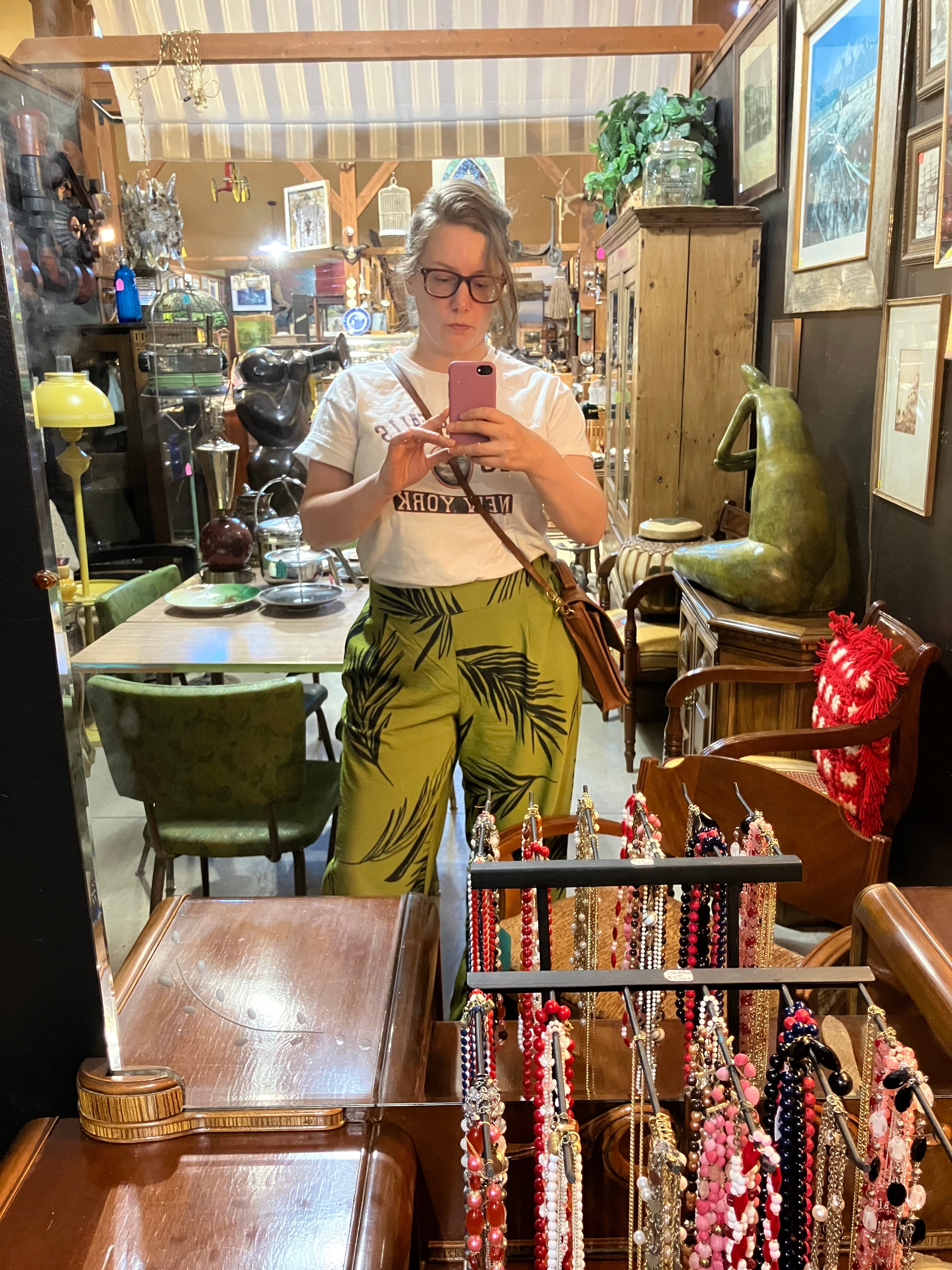
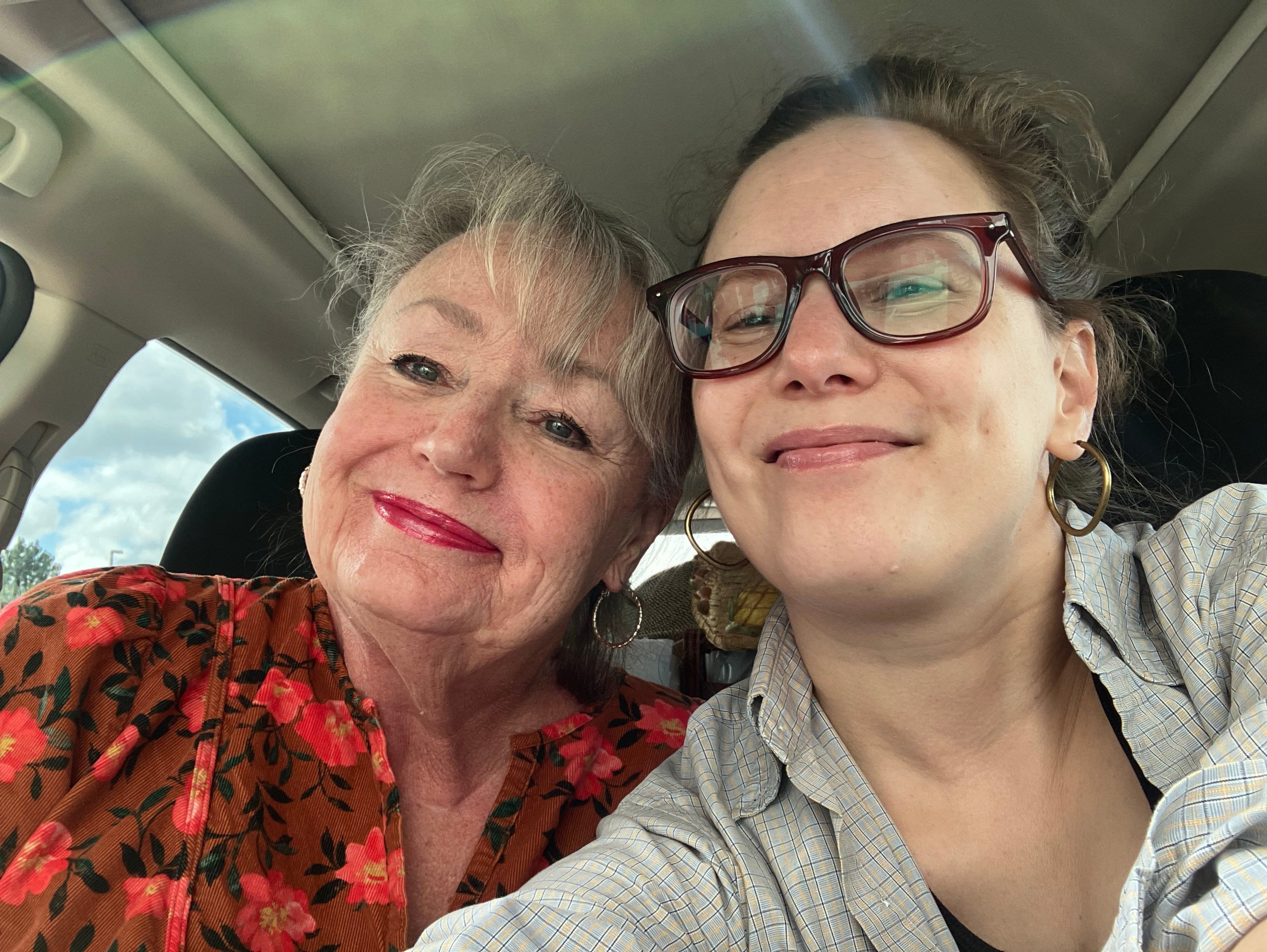
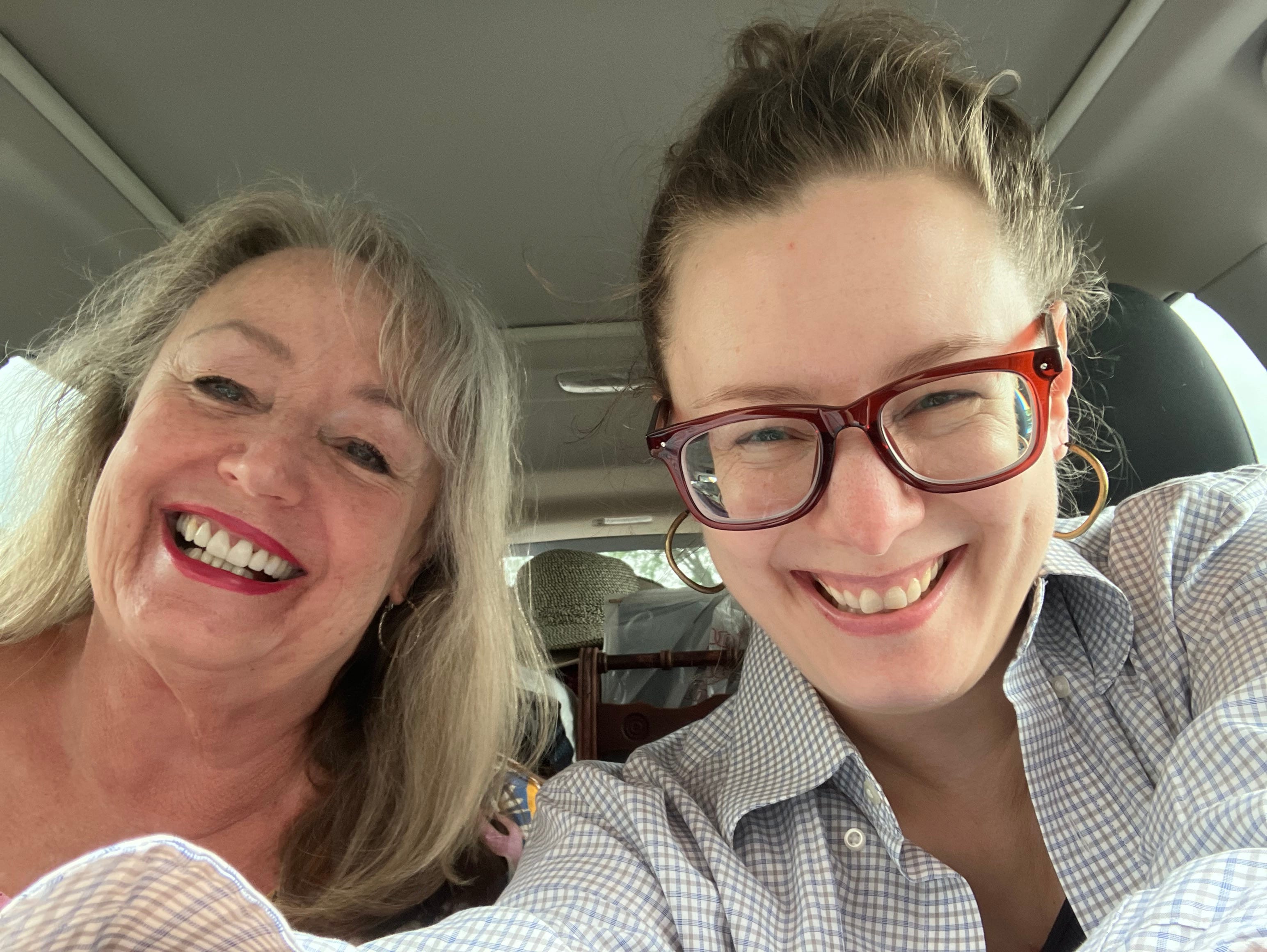
Every day we took a selfie in the car first-thing and my mom posted an update on social media. It brought her joy to let friends follow along.
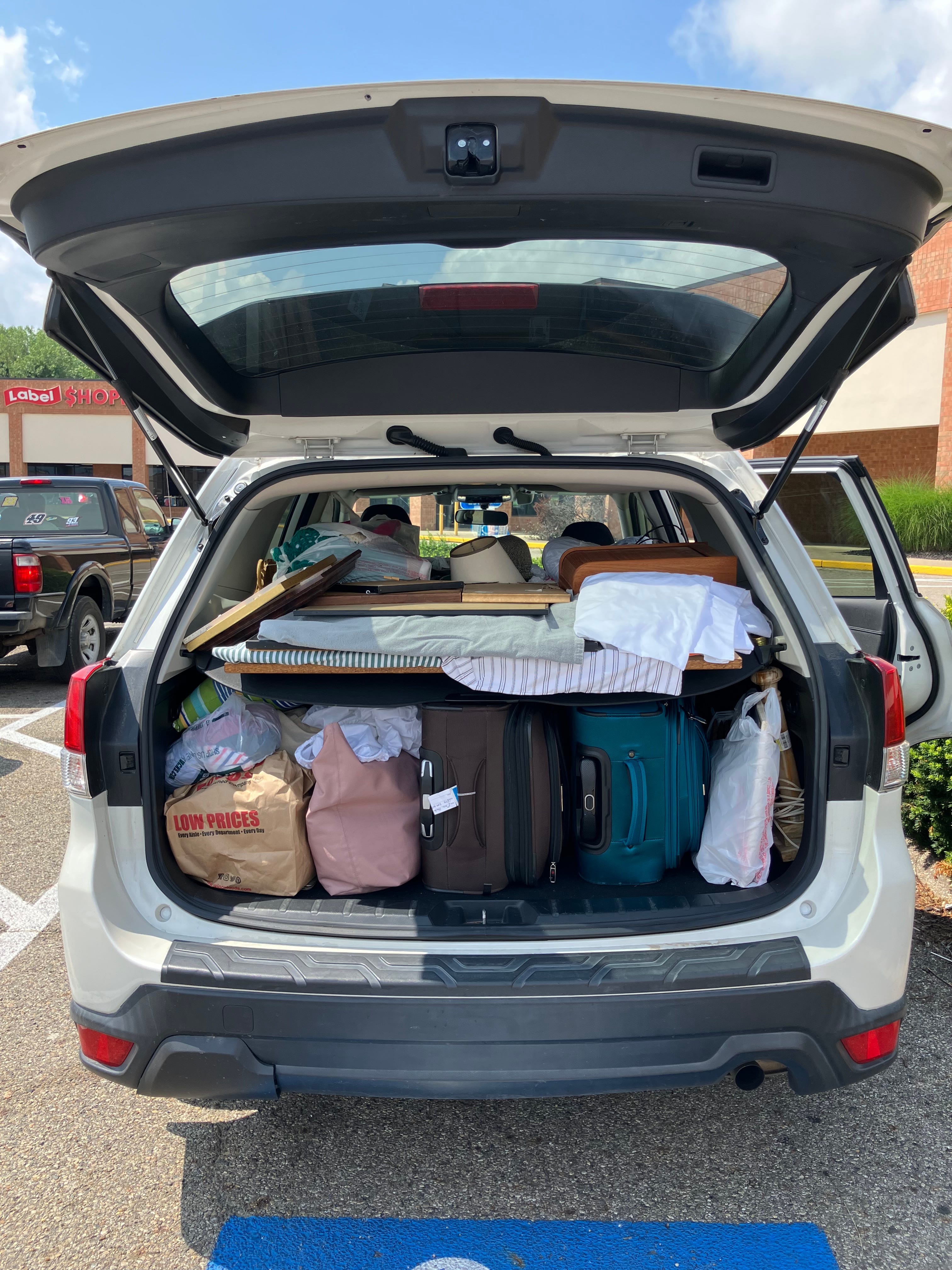
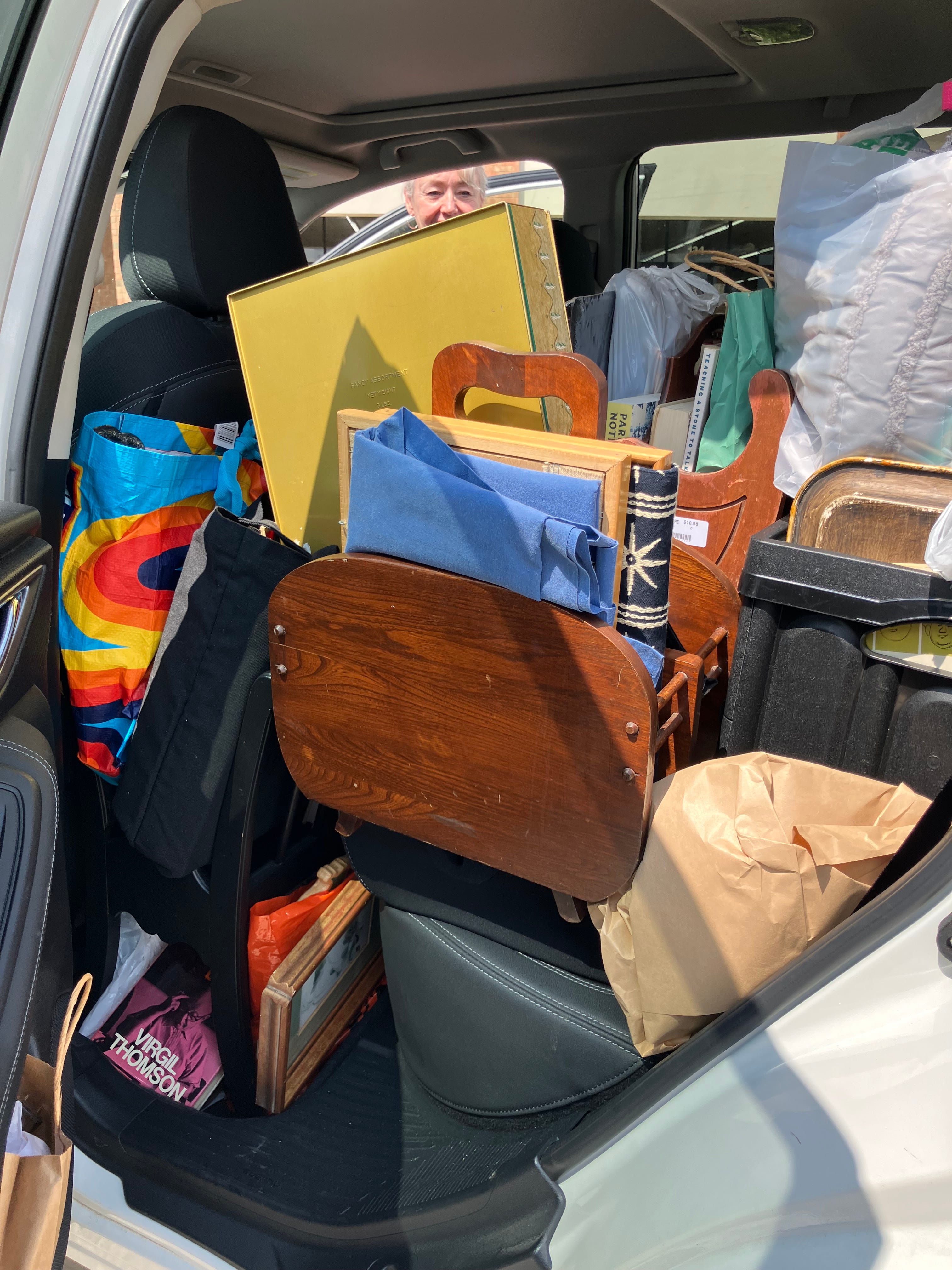
On the last day of the return trip, I had to brake hard once in the West Virginia mountains, and everything in the car—stacked and packed with extreme care and creativity—shifted forward and lost structural integrity. Large pieces of artwork slid from the top of the shade screen pulled over the trunk and teetered haphazardly across the bounty in the backseat. Everything felt like it was leaning in, pressed right at our elbows on the console, encroaching on our space in the front seat.
Every day, all along our path, we never stopped trying to describe the different shades and quality of green blanketing the landscape:
verdant fertile chartreuse Kelly olive florid lush radiant flowing emerald sage moss shining
The entire trip was nineteen days. Of eleven nights on the road round-trip, we slept in hotels six of them. The remaining nights we crashed in Chicago with one of my oldest friends and stayed at my brother’s house as we passed through Minnesota both ways. Between gas, hotels, food, and thrifting, the road trip cost about $2800 (this does not include the week we spent in Montana with family). I mention the cost because I don’t think we mention cost enough when we share the beautiful experiences we’ve chosen to have; the luxury of making time like this has a real price.
Maybe this trip was about going slow, or slowing down. Maybe it was about escaping our disturbing reality by creating an alternate timeline for a bit. Maybe it was about how my mom and I are each entering a different stage of life, one that makes space for togetherness. All of these things seem true. All of these things seem necessary.
…but everyone has the same access regardless. SOON is entirely free—but if you’ve enjoyed it thus far, please consider a voluntary paid subscription of $5/month, $50/year, or $200/year as a Founding Reader. If a paid subscription just isn’t in the cards, it’s also a wonderful boost if you consider forwarding SOON along to the people in your life who might connect with it. Share button below xo.
We are multifaceted and curious. Forward this issue of SOON to your favorite people <3
Comments
Nothing yet. Say the first thing.
Sign in to join the conversation.