
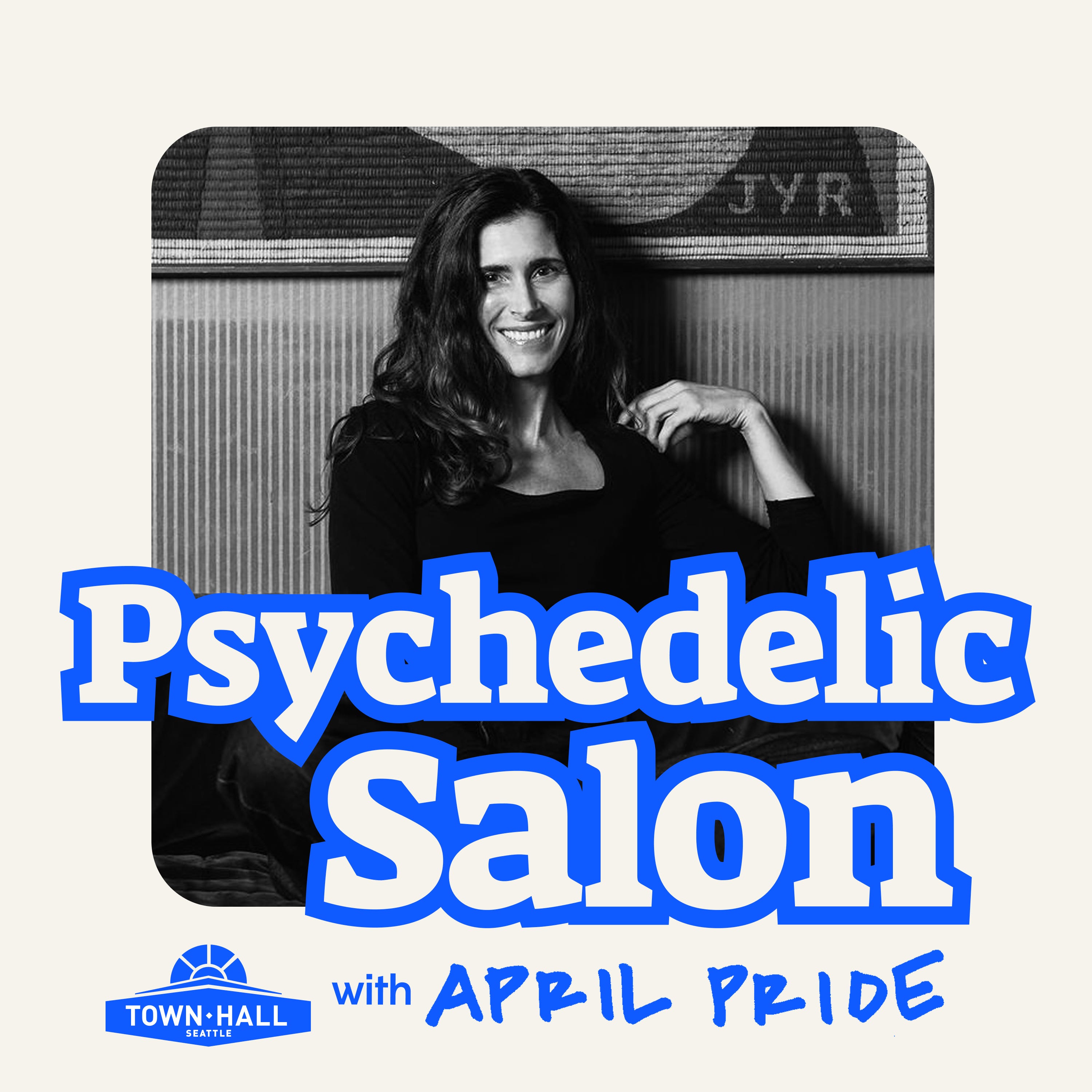
This podcast episode is a Psychedelic Salon recorded live on February 5, 2026, at Town Hall Seattle. Psychedelics & Seniors was such an incredible panel! Author Abbie Rosner, filmmaker Scott Paul Wright, and Dr. Emily Whinkin led a lively discussion before an audience of over 330 guests, and I'm so grateful to share their wisdom about aging with enthusiasm, wonder, and a focus on how they’ve contributed to their community.
On September 13th, Abbie and I will join Scott for a live screening of his film The Next Chapter, followed by a panel discussion. Stay tuned for more details, and watch the official trailer here. The full documentary can be found here, and enter the discount code tfrq40gioc for $1 off.
You’ll notice that today’s episode is half the length of the other Salon episodes - less than 30 minutes. The audience Q&A will be released as a separate Substack just before our screening next month, and for future Salon episodes, you can expect the same. Often, the Salons have more [really well-considered!] audience questions than we can answer in our allotted time, so it allows me to answer them thoroughly on my Ask April column. (If you have questions, email me!)
This weekend, I’m dropping my son off for his second year of college. For those who’ve been reading for a while, you’ll recall my Midlife Microdosing series throughout last summer as I prepared to drop him for his first year. He’s thriving, as is the rest of our family, and I’m wishing the same for you and yours as summer closes out.
Take care,
April
🔵 Episode Summary
The psychedelic renaissance gets covered like a young person's story: executives microdosing before board meetings, twenty-somethings on retreats. But the fastest-growing population interested in this medicine right now is confronting retirement, widowhood, the death of parents, the question of legacy. This episode is a live Salon recording built around psychedelics for seniors, with filmmaker Scott Paul Wright, writer Abbie Rosner, and naturopathic physician Dr. Emily Whinkin. We get into set and setting, medication contraindications, ketamine versus psilocybin, and what integration actually looks like once the journey is over. Abbie's research on 36 older adults turns up something worth sitting with: most of them called later life the happiest, most meaningful stretch they've had.
October 8 - The History of LSD in Seattle: From Outlaw to FDA-Approved
Nov 12 - End-of-Life Psychedelic Care
February 11 - Moving Through Middle Age with Psychedelics
March 11 - Psychedelics in Recovery
April 8 - Modern Men: Psychedelics, Vulnerability, and the Masculine Self
May 13 - Making Meaning: Story, Integration, and the Psychedelic Experience
🔵 What You’ll Learn in This Episode
Set and setting, not age, is the biggest predictor of a safe psychedelic experience. Older adults often prepare better than younger users because they’re less inclined to wing it.
If you’re on an SSRI or SNRI, expect a blunted psychedelic experience. The evidence on whether that blunting reduces therapeutic benefit is still mixed.
Ketamine and psilocybin are distinct molecules with different legal statuses and safety histories. Neither is automatically the safer choice for an older nervous system.
Integration circles are becoming clinical infrastructure, not a nice extra. Isolation among older adults carries measurable health costs, including a documented rise in dementia risk.
The questions shift with age. Younger clients tend to ask what can I fix. Older clients tend to ask what my legacy is and how I give back.
🔵 Featured Guest
Abbie Rosner is a writer and cultural observer exploring how the modern psychedelic renaissance is reshaping our understanding of aging—individually and collectively. Psychedelics and the Counter Culture of Aging | website ELDEREVOLUTION on Substack
Dr. Emily Whinkin (she/they) is a naturopathic physician and integrative mental health specialist blending psychedelic and entheogenic medicine with mental, reproductive, and generative health. Dr. Whinkin is licensed in Oregon and Washington, provides global consultation, and is dedicated to research, education, and individualized integrative mental health. emilywhinkin.com
Scott Paul Wright is a filmmaker and screenwriter based in Paris and New Orleans. He took his first psychedelic journey at age 68 – resulting in his new documentary – The Next Chapter, which is now in post-production and scheduled for release in June 2026. The Next Chapter documentary
🔵 Episode FAQs
Is psilocybin a legal treatment for anorexia? No. Psilocybin remains a Schedule I substance under federal law, and there is no FDA-approved psilocybin treatment for anorexia or any other eating disorder. It is being studied only in sanctioned clinical trials, such as the one at UCSF. Decriminalization in cities like San Francisco and Seattle does not change that status for clinical research or personal use.
Why does the UCSF trial enroll caregivers? Because young people are unlikely to stay well if they return to the same family system where the eating disorder developed. The trial requires at least one caregiver to enroll and prepare, so the family can recognize old patterns and support new ones, including big emotions like rage or grief that may surface after a session.
What did the first psilocybin anorexia trial find? The first published clinical trial from UC San Diego was a small Phase 1 study. Four of ten participants showed clinically significant reductions in eating disorder psychopathology, 70 percent reported quality-of-life improvements, and 90 percent ranked the psilocybin session among the most meaningful experiences of their lives. It also flagged high rates of hypoglycemia as a serious safety concern.
Is psilocybin better than ketamine for eating disorders? It is too soon to say, and the researchers will not claim it. The current thinking is that the two play different roles. Ketamine’s effects tend to require repeated dosing and fade between sessions, while psilocybin’s benefits in other conditions have shown more durability at six, nine, and twelve months. That durability is the hope, not yet the evidence.
Can parents safely try psilocybin for a child with an eating disorder at home? Dr. Downey is clear that she cannot recommend it, legally or ethically. Psilocybin amplifies bodily sensation, which can be destabilizing for someone already disconnected from their body, and an unsupported session can compound harm. The safest paths are a clinical trial or a legal supervised program in Oregon or Colorado with a licensed facilitator.
🔵 Additional Resources
Psychedelic Salon at Town Hall Seattle - 2026-27 Schedule
🔵 Timestamps
[00:00] Welcome and introductions at Town Hall Seattle
[00:01] Scott Wright on his first journey at 68 and how the documentary began
[00:02] Why older adults report fewer bad trips: preparation and set and setting
[00:04] Contraindications, health history, and working with SSRIs and SNRIs
[00:06] Ketamine versus psilocybin: different molecules, different legal paths
[00:08] Meaning-making in later life and what psychedelics surface
[00:10] What integration actually is, and why the work starts after the journey
[00:13] Integration circles as community and clinical infrastructure
[00:17] The questions older adults ask that younger clients don't
[00:18] Aging, elderhood, and the Buddhist "three messengers"
[00:20] Intergenerational journeys and psychedelics within families
🔵 Transcript
April Pride, host: Hey, this is April, and this show discusses psychedelics. It’s intended for audiences 21 and over. Also, I am not a medical expert. If you are looking to engage with psychedelic substances, please consult your physician before doing so
Welcome back to the show. This is your host, April Pride. Tonight’s episode comes from a live psychedelic salon at Town Hall Seattle last spring, and the panel is one I’ve wanted to bring to the show since I started the series. We talk a lot on this show about midlife. Tonight, we go further out into what psychedelic medicine looks like for people in their 60s, 70s, and beyond. On the panel, Dr. Emily Whinkin, a naturopathic physician and integrative mental health specialist
Licensed in Oregon and Washington, who blends psychedelic and entheogenic medicine with reproductive and generative health, and hosts a monthly integration circle built specifically for older [00:01:00] adults.
Abbie Rosner,
A writer whose book, Psychedelics and the Counterculture of Aging, was published in July. She also reports on older adults and psychedelics on her Substack, Elder Evolution. And Scott Paul Wright, a filmmaker and screenwriter who spent previous careers as a radio personality, a record executive, and an award-winning winemaker before any of this.
He took his first psychedelic journey at 68. That retreat became his documentary, The Next Chapter, which he’s been premiering at film festivals throughout North America this summer. And stay tuned because we’re gonna have a special virtual screening and panel on Sunday, September 13th. I’m in the movie.
Here’s what I’d like for you to sit with going into today’s episode. The psychedelic renaissance gets covered like it’s a young person’s story, executives microdosing before board meetings, 20-somethings on retreats in Costa Rica, [00:02:00] but the fastest-growing population interested in this medicine right now is not young.
It’s people confronting retirement, widowhood, the death of parents, the question of legacy, people asking honestly, “What do I do with the years I have left?” This conversation gets into contradictions, medication interactions, and what it actually means to prepare an old nervous system for an altered state.
None of this conversation is a substitute for talking to your own doctor, so please consult your physician before engaging with psychedelic medicine. And remember, check the show notes for a link to this season’s Psychedelic Salon here in Seattle.
You can join us live, or live stream. I hope to see you at our first salon on October 8th, the History of LSD in Seattle.
All right, let’s get into the show starting with Scott, our filmmaker, and how he [00:03:00] found himself documenting several seniors
at a psilocybin retreat in Mexico .
Film Trailer & Reactions
Scott Wright: I did a journey when I was 68 years old. Three years ago, and it’s so profoundly, wonderfully changed my life. that in the, integration sessions afterwards with Maria, the facilitator I worked with in Mexico.
She said that she’d had a download during my journey that I needed to be working in this space somehow. And I thought, wow, I’d never thought about that. She said, maybe there’s a movie or something. And she didn’t know that I was a filmmaker.
So we hatched the idea to put together a retreat and we could see if we could find people who were willing to come and be filmed going through all of this and just bearing their souls and laying it all out there. And eight people from the us, Canada, UK all came and, we put together this retreat over the course of, four days in, in San Miguel
and filmed it all. Maria’s clientele, working with her were naturally all 55, 60 plus that.
These [00:04:00] were the people who were seeking this medicine out, seeking this therapy out.
Preparing for a Safe Journey
April Pride: What did you tell me about the preparation of older adults and how that really contributes to there not being as many bad trips?
Abbie Rosner: when I talk to a lot of older people about their interest in psychedelics and the topic of bad trips always comes up, I’m really happy to assure them that just like they’ve grown and matured and gained all this experience and knowledge and wisdom over the course of the many years since their bad trip, the psychedelic, field has also grown and matured, and we now have through hundreds of clinical trials, really tried and true methodology for how to work with these very powerful, what I call sacred medicines, so that if you pay attention to the, the issues of set and setting, to have a conducive and safe mindset and safe setting.[00:05:00]
Which also involves working with the facilitator to prepare and to be accompanied through the journey and then to integrate the experiences at the end, the chances are that there’s going to be a bad trip are minimized. And so that’s really what I feel like is one of the more important pieces of information that older adults can understand that really that concern is.
Based on a past experience where we just were maybe reckless, just, let’s just drop acid and go to a concert, whatever. And I think as older adults, when we come to these experiences, we’re much more intentional. So we really approach it by, first doing our due diligence and understanding and learning about, maybe we have health issues that we need to be concerned about, but certainly preparing properly so that we are able to have to really reap the benefits of what these very unique experiences [00:06:00] offer.
April Pride, host: Abbie just used a phrase you’ll hear a lot in this space, set and setting. It’s not a vibe word. Set is your mindset going into an experience, a psychedelic experience, your expectations, your emotional state, your health history.
Setting is the physical and relational environment, who’s in the room, how safe it feels, whether you’re accompanied by someone trained to hold it. This is the operating framework behind every modern clinical protocol, including the ones running through Johns Hopkins and NYU. The data backs it up too.
Adverse outcomes cluster around uncontrolled variables, unknown dose, unscreened health conditions, no trained support present, not around the substance alone. Older adults, it turns out, often do this part better than younger users. More life experience, more patience for preparation, less appetite for winging it
April Pride: The one thing that came up between all of this conversation, people are most concerned [00:07:00] about contraindications and health history if they choose to engage with psychedelic medicine.
Dr. Emily Whinkin: And so it’s really, we’re lucky to have Dr. Whinkin
and so what are you seeing in your clinic? For some context I’ll share that by the time people.
Find me, and this is probably similar for other naturopathic physicians. They’re typically having had tried pretty much all the standard of care, first line, second line, lots of, more experimental things as well. And so they come to me most often, pretty open-minded about what my ideas are, what, my recommendations might be.
But the discussion about, trip expectations is really important. that material may arise that we can’t predict, that we can’t necessarily control, but that I’m there to keep them, as psychologically and medically safe as I possibly can. And so that’s part of the preparation, is preparing that mindset that,
Transformative experience if [00:08:00] they can come into it, being open to that. but yeah, typically the folks that I see for integrative mental health have tried numerous medications, SSRIs and SNRIs, and then, moving down the list. and some folks are still on those medications and so then the discussion becomes more personalized about, how do we reduce your risk and optimize your benefit individually given your health history, what is going on for your cardiovascular system and your liver and your kidneys.
So we take a good look at all of that, to make the best informed decision that we can going forward about dose, about the trip in general, and then what we need to make sure that we’re, managing from more of a medical standpoint before and after as well. I just wanna be really clear. Dr.
Whinkin was trained in Oregon. She practices in Washington, and she does not sit with her patients while. In an altered state, she helps them prepare for it and then does integration after and being able to talk openly with them falls under harm reduction. [00:09:00] That’s right. And we hear a lot about psilocybin because it’s so much gentler on the system on the body. But where do ketamine is legal. So when would someone opt for ketamine versus psilocybin? That’s a great question. I’m not sure if others also have opinions on this, but, I get that question quite a bit from people who do have access to both.
And, sometimes it’s a conversation about, of course, the legal avenues. So if they really wanna use psilocybin, I refer ‘em down to Oregon for facilitation. and part of that decision is that they’re very different molecules and substances. Ketamine is a synthetic substance, and the way that Oregon practices right now is using whole mushroom, so it contains psilocybin as well as everything else, all the other compounds that are in that mushroom, and they have different durations.
what I do share with folks is that ketamine has been used as an anesthetic agent since the 1970s. So we just have a lot [00:10:00] of literature and, comfort with it. In the medical community, we know a lot about its safety profile in combination with other, medications and for all age groups.
April Pride, host: I wanna add a harm reduction note here because Dr. Whinkin moved past it quickly. If you’re on an SSRI or an SNRI and considering psilocybin, the honest science says two things at once. First, most people on these medications report a blunted experience, less intensity, sometimes less color to the whole thing, Because chronic use of these pharmaceuticals down regulates the same serotonin receptor psilocybin binds to.
Second, newer trial data is mixed on whether that blunting actually reduces the therapeutic benefit. Some studies show people improve just as much on reduced antidepressant symptoms even with the quieter trip.
Whereas ketamine’s history is thoroughly documented for decades. It’s been an FDA-approved [00:11:00] anesthetic since 1970, used safely across age groups for over 50 years. Yet its depression-specific use, the nasal spray version called Sprivado, only got FDA approval in 2019. Different molecule, different legal status, different risk profile.
Neither is safer by default. It depends on your medication list, and that conversation belongs with your prescriber
April Pride: Meaning making that is a big topic for Abbie and why. In your book, you interview 36 individuals and about their experience with all types of psychedelics.
Integration & Meaning-Making
Abbie Rosner: later in life it’s about like, why am what have I done? Why did I do it? Who am I? So meaning making, talk to us a little bit about that. I’ve been giving this a lot of thought lately about. The, there’s a, it seems like there’s an organic transition as we enter in our sixties and our seventies where we’re moving from [00:12:00] being concerned about our careers and all the, the achievements to really doing, more of a deeper dive to think about the, themes in our lives where we found meaning.
And also, have asking have we lived our authentic lives and asking these questions, certain people are finding their way to, to psychedelics to have that kind of expansive experience, to find answers. And what happens in, in many cases is that when you create this open space and you in, you have experiences with these medicines, things come up that are, things that we might have repressed for, Most of our lives having to do with, the responsibilities of raising a family or having our career. We haven’t been able to give expression to, to, certain desires and parts of ourselves. And so in older life, we find that we really want to be able [00:13:00] to , give expression to those things.
In my interviews with all these people, there were as many motivations as there are people. , Everyone had their own individual take on this, but there were themes that arose and I think that a lot of people felt that they wanted to, To do healing, to heal the issues that they’d been carrying around with for maybe for decades, for most of their lives.
And they were like, if not now, when I really wanted to, to finally have peace in my older years. So these are some of the things that, that arose as I interviewed with these various individuals.
April Pride, host: Scott at age 68, what was your motivation? Why did you say yes to this?
Scott Wright: like probably everybody up here and most of you out in the room.
I read the Michael Pollan book and said, okay, I gotta check this out. that was my motivation. I knew there was something there interesting to explore, [00:14:00] and I knew I wasn’t living my best and fullest life. And I’d been repressing a lot of stuff. I wouldn’t be able to be sitting here in front of you if I hadn’t gone through what I’d gone through.
I was unbelievably shy, introverted, less than, outwardly successful, had all these glamorous careers and stuff, but I was pretty dead inside. so I was. Willing to finally, okay, open myself up. Let’s crack this open and see what’s going on in there. That was my motivation. The retreat.
Was all people looking for what’s next. These were all people going into the final third of their lives. And interestingly enough, four of them are now working in the psychedelic space as a result of this experience.
And then the other four quit their jobs and have gone onto something else, artistic or something that, they had been dreaming of and were spurred onto to, to make that move.
April Pride, host: Okay, so it’s been three years, Scott, since that experience and integration, who would like to explain what integration is on the [00:15:00] panel? It’s processing this fire hose of stuff that’s impossible to articulate and the language that we’re forced to try and explain things, and sift through that and figure out how this all fits and how the, all the puzzles, puzzle pieces fit together within you from what you learned and what you were exposed to during your journey.
No two journeys are the same. Everybody gets the journey. They need at that time, and you need time, and you need help from an experienced facilitator or therapist to help you sort through that and integrate that. And how do you take what you’ve learned, what you’ve seen, and move forward. In your life from there, that’s the baseline.
April Pride: A lot of times people will say that your work with psychedelics actually begins after the journey. And I just, I’m, I have a sub stack so that people have more access to integration support
I’ve been working in this space for five years, so I’ve been intentionally using psychedelics for [00:16:00] five years and I’ll be 50 next month.
And it’s a year for every decade I feel is what the integration has been like to unwind stuff. So this is not okay. I had the experience, I’m gonna meet with my therapist and then I’m gonna be integrated. It just, it’s not like that. How are you going to start to make changes? Small ways that then lead.
It’s like the butterfly effect in your life. Okay, great. Then what happens once you change? I talk to so many people, like I don’t hang out with the same people. I don’t connect with them in the same way. I’m starting over again. I didn’t expect that to happen. So integration can be fraught.
Abbie Rosner: I’ve talked to facilitators that work with older adults and they, one of the questions they use when they’re screening them is, do you have a support system? When you come home after you’ve had this experience, do you have people that you can talk to? Sometimes people will go home and their, their [00:17:00] spouse or their family or just think, what, are you crazy?
So you really need to have someone that can understand and help you as you integrate, as you process this experience. And one of the more exciting and more promising things I think for older adults is what are called integration circles. And this is where people come together and they talk about their experiences.
And for older adults particularly, it’s a beautiful, organic way to have to create community. So these are, places where people can come together and know that if, if they wanna talk about that, that really, meaningful but bizarre thing that they experienced in a welcoming community of people that will understand.
Dr. Emily Whinkin: an integration circle can be a beautiful thing for them.
April Pride, host: And you host an integration circle for older adults? Can you tell us a little bit about what that looks like?
Dr. Emily Whinkin: It is virtual. It’s once monthly. About 90 minutes. And, what we emphasize [00:18:00] is, the community building coming together, the act of being witnessed and being heard as an important feature.
and then there’s usually like a little prompt I have or a way of organizing maybe some of what we’re thinking about together. What I’d like to share is the diversity of ways that, that people do find to integrate meaningful experiences in their life, honestly, psychedelic or otherwise.
they’ll share art writing, photography, taking a walk in a more mindful way, noticing what they notice, sharing things outwardly or exploring a new kind of internal way of knowing themselves more deeply and gaining some self understanding. There’s tons of different ways that people describe noticing that something has shifted and leaning into it.
So I think that’s a really important feature of integration. And it can pop up anytime. Sometimes people sit down, they’re like, I’m gonna integrate it now, like you were talking about, but the majority of the time people share, that it kinda lands upon them and they have a new perspective and they [00:19:00] realize, oh, this is about.
Do you see that because your integration group is for older adults, is there a theme of what pe, the meaning that they’re trying to make or what they’re looking for in the next decade or two of their life?
I think that the majority of older adults I work with are wondering about, how can I. transmute some of what I’ve been carrying around for a long time. Maybe recognize it a little bit more clearly because I haven’t had the time or the opportunity to do that and realize, okay, I actually want that to, I wanna shed that, or I wanna move it around somewhere so it’s not as front and center in my life.
And they’re opening up towards, show up in my more authentic self. What can I do to be a little bit more, me and a lot of people are wondering, what does that look like for my, activity and community and giving back [00:20:00] and, resisting the isolation.
April Pride: So what can I do to connect and make sure that connection is a really primary part of my life now?
April Pride, host: Before we move into the next part of the conversation. Integration circles exist because isolation among older adults is not a soft concern. It’s a measured public health one. The Surgeon General’s 2023 advisory put social isolation among older adults at roughly $6.7 billion a year in excess Medicare spending.
And chronic loneliness raises dementia risk by close to 50%. That’s the backdrop against which a monthly virtual circle, people showing up to be witnessed starts to look less like a nice add-on and more like clinical infrastructure.
April Pride: I asked a question when we were preparing, what’s a question that you get from older adults that you don’t necessarily get from younger adults?
Dr. Emily Whinkin: And I love Dr. Whinkin’s answer. She was very [00:21:00] diplomatic. Do you remember what you said? I said it was easier for me to describe by comparison. The younger adults that I work with, sometimes are wondering what about me can I fix?
They’re very focused on, a problem that they have and finding a solution to that, you said it was age appropriate. Developmentally appropriate.
and so that’s what helps to cast an acknowledgement of the difference of working with folks who just have more life experience and are thinking about different things and, coming towards a big experience with, different questions.
April Pride, host: Yeah. What I took from it was, younger people are, my job me and older folks are like, okay, how am I giving back? What’s my role been in my community? What’s my legacy here with others that I care about?
The shift Dr. Whinkin is describing, younger clients asking, “What can I fix?” Older clients asking, “What’s my legacy?” tracks almost exactly with something psychologist [00:22:00] Erik Erikson named decades ago, generativity versus stagnation in midlife, giving way to integrity versus despair in later life.
Psychedelics didn’t invent this developmental turn. They appear to be accelerating access to it
Aging, Elderhood & Psychedelics
Abbie Rosner: But I think that as we’re entering older life now, we are encountering a society that really doesn’t make space for the experience of aging. We’re basically told Don’t get old, stay young, anti-aging and we’re the generation that revolutionized youth.
So we’re really very comfortable in our youthfulness. But we are experiencing this dissonance because, for all our youthful, attributes, we’re getting old and our bodies are getting old. In Buddhism, they talk about the three messengers, aging, illness, and death.
And so we’re struggling with this, [00:23:00] like, how do we make sense of this aging process? And I think that as people look to psychedelics or to expanded states, they find that the questions
I call it the psychospiritual challenges of embracing your elderhood, can really be supported with intentional psychedelic work. These experiences invite us to go in deeply to work on our own biographies, our own, stories in life, but also our existences as, life writ large.
And as I interviewed these 36 older adults, they were telling me over and over again that. because of these experiences, they’re finding that older, their older life was actually the most wonderful, happy, joyous time meaningful time of their lives.
And I thought, what a powerful and positive message to bring to, my fellow [00:24:00] older adults that actually, the story that we’ve been fed older age is a time of decline and of irrelevance and all that. It’s bullshit. And that actually this is a really fabulous and amazing time and certainly can be.
These joyous people that are just telling me, I’ve never been so happy and they’re finding community and they’re finding meaning and healing and experiencing love and forgiveness and, all these beautiful, powerful things it’s just, I feel like it’s really important and positive tidings to bring to, the world or certainly to our western society.
April Pride, host: What about intergenerational journeys? I really think my family could use it. Do you work with parents? Have you seen that in your work too, Abbie?
Abbie Rosner: I’ve been to group experiences that are multi-generational and it’s, interesting because the [00:25:00] older adults tend to, I find I’m a, I am like a grandmother, so they’ll, there’ll be younger women there and they’ll be crying and they’re, all their grief is coming up and, they’ll come to me a woman will put her head down on my lap.
And I’m so honored to fill that place. We talked about giving back. It’s my way to give the love and the wisdom and the care that I have from being a mother and being a grandmother. And, there’s beautiful opportunities in these intergenerational experiences.
April Pride, host: The three messengers Abby’s referencing come from an early Buddhist text. The sight of an old person, a sick person, and a corpse are what’s said to have pushed the young Siddhartha out of the palace and toward the questions that became Buddhism. It’s a two-and-a-half thousand year old way of naming something we’re still bad at as a culture, looking directly at aging instead of marketing our way around it.
What’s notable about this panel is [00:26:00] the generational irony sitting underneath it. This is the generation that built the anti-aging industry, and now some of its own members are the ones naming the dissonance out loud and reaching for psychedelic medicine, not to reverse the aging, but to actually inhabit it.
That’s a different use case than most of what gets covered in this space, and it’s worth sitting with on its own terms
April Pride: Scott, were there any, was there anyone in the film that had worked with their family?
Scott Wright: No. There’s a married couple in the film. Which is interesting. They journeyed together. Yeah.
April Pride: With the rest of you, with the rest of the group. Yeah.
Had they journeyed together before?
Scott Wright: No they had, he had journeyed separately and she had never done it before and then they did it together and now they’ve done it, several more times since about different generations, the interesting thing that comes up when I speak to people about psychedelics and what this film is about, when I’m talking to younger people, twenties, thirties, forties, they all say, oh, could you tell my [00:27:00] parents about that?
April Pride, host: Are you in your 20s, 30s, or 40s and thinking about asking your parents if psychedelics may be a good idea in their future?
If so, remember, nothing about aging or integration wraps up cleanly, and this panel didn’t pretend otherwise
A few things worth carrying with you. Psychedelic medicine is not a shortcut around grief, isolation, or the fact of getting older.
What Scott Abbie and Dr. Winkin described is closer to what I’ve seen across five years of doing this work myself. Preparation, screened health history, an experienced facilitator, and real integration afterward are what separate a difficult but useful experience from a genuinely harmful one. That’s true at 30, and it’s true at 68.
Age doesn’t exempt anyone from the basics, and it doesn’t disqualify anyone either. What struck me most is the reframe Abbie brought into the room. We’ve been sold a story that older age is [00:28:00] decline, and every person she interviewed for her book told her the opposite. I’m not gonna pretend that’s universal, and neither did she, but it’s a data point worth holding against the cultural default, especially for those of us watching our own parents or our own future selves approach this stretch of life with dread instead of curiosity.
If tonight’s conversation raised questions about your own health history, medications, or whether this kind of work makes sense for you, that conversation belongs with a licensed provider. Abbie’s book, Psychedelics and the Counterculture of Aging, is now out, and you can follow her work at Elder Evolution on Substack.
Scott’s documentary, The Next Chapter, is released, and again, September 14th, we are going to have a live screening, so stay tuned for more information on that.
And I’ll be sure to include Dr. Emily Winkin’s website in the show notes, as well as links to the movie and the book
the [00:29:00] audience Q&A at salons is my absolute favorite part, and I’m not including those anymore on these recordings. Instead, the Q&A will always be on my Substack, so I can go into answers for some of the questions that we couldn’t get to at the salon or that I felt we could provide more information that would help you to navigate this emerging field.
This is April. Thanks for joining me. Until next time, take care
Comments
Nothing yet. Say the first thing.
Sign in to join the conversation.