
Ongoing conflict or war has not been part of my life story. Every time I turn off the television or remove my earbuds, I recognize the privilege of not hearing words like aftermath or shocking, or the horrific events that follow.
Yet for so many, they cannot turn off the air-raid sirens or ignore the military presence in their backyard. The closest I have come to experiencing ongoing conflict was in the Holy Land. The frequent international border crossings between Israel and Jordan, and between Israel and the West Bank, began to normalize the military presence in this region.
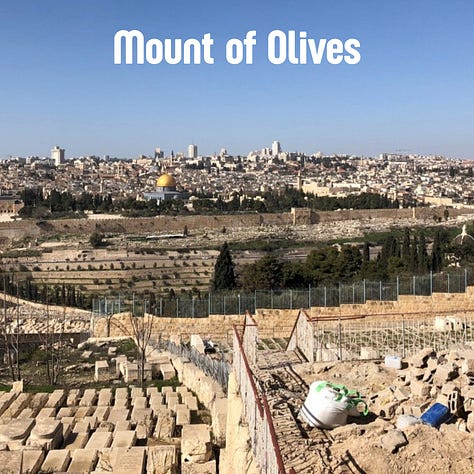
The uneasy feelings lingered as our tour bus passed through checkpoints and our group encountered armed guards while strolling the streets of Jerusalem’s Old City. The visible military presence brought a new understanding of the present-day political conflicts and those Jesus encountered during his lifetime.
Although I felt safe the entire time, the holy tension left me unsettled throughout the trip. Looking back, I realize this may have been exactly what God intended: to bring greater understanding to my daily Scripture readings and to deepen my prayers for peace in this land.
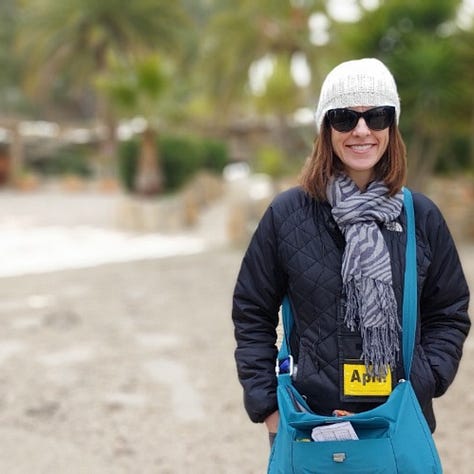
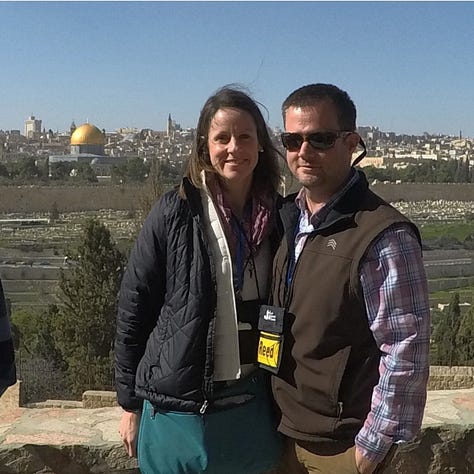
In January 2019, my husband, Reed, and I attended a Holy Land trip for pastors and their spouses. In five jam-packed days, we visited the Sea of Galilee, the Mount of Beatitudes, Capernaum, the Jordan River, Jericho, the Dead Sea, Bethlehem, Nazareth, and the numerous holy sites in and around Jerusalem. The Holy Land trip was not, per se, a mission trip. We did not perform a good deed or an act of service, but we did become aware of the constant tension present throughout the region. This awareness drew out attention beyond the historical sites and helped us see real people, God’s beloved children, suffering all around us.
That awareness came, in large part, through our Palestinian tour guides. They helped us see not only the holy sites, but also the injustices taking place right before our eyes. We learned about the daily inconveniences that residents in Palestine experience when their water or electricity is randomly cut off for hours or days at a time. We heard of Palestinian homes and lands being occupied by force or slowly pushed out by increased costs and internal pressures.
In line with modern-day inconveniences, we witnessed how the daily life of a Palestinian differs from that of others. At the West Bank-Jerusalem checkpoint, our tour bus, filled with U.S. citizens, waited in line among the cars, while Palestinians had to cross on foot. This required extra time in their day and additional funds to pay for taxis in the city rather than using their own vehicles.
Just beyond this checkpoint, a stone’s throw from Bethlehem, lies the city of Jerusalem. As a visitor, you can feel the tension and conflict in these sacred places, which are separated by a massive wall constructed in 2002.
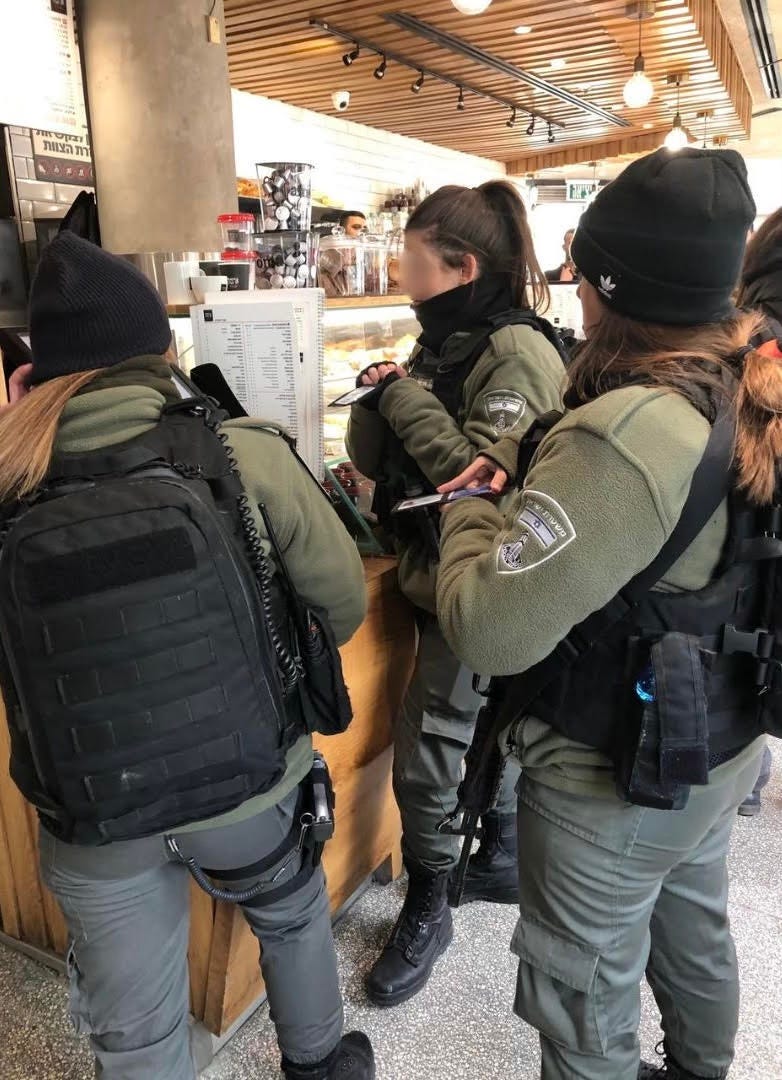
Later that day, in a Jerusalem coffee shop, I waited in line for a latte behind three young women in Israeli military green uniforms. As I stood there, I recalled all the lines I had waited in for a cup of coffee. If young people were in front of me, they were often dressed in the latest fashion trends or comfortable sweats. When they retrieved their drinks, they would lounge in chairs, chat with friends, or open their laptops for an intense study session. But here, in Jerusalem, these three young women had a different routine. They had the same carefree spirit as young people; however, once their coffees were ready, they grabbed their to-go cups and returned to the cobblestone streets for duty in the holy city.
As they walked out the front door, I noticed the tall tables with barstools near the windows. I grabbed my grey porcelain cup and sat near the windows to watch people come and go. Many were clearly tourists, holding shopping bags and taking pictures of buildings. I didn’t realize until that moment how much we stood out among the crowd.
Then, I glanced in the direction of two male Israeli soldiers who stopped a man dressed in ordinary attire, nothing fancy but nothing shabby either. They asked for his identification, and he handed them a card from his wallet. They examined it for some time, spoke quietly to each other, and finally handed it back to him with visible disgust.
Suddenly, I realized the man was Palestinian; the encounter reminded me once again of the everyday difficulties they face. I can only imagine how these daily hardships for Palestinians in 2019 have been intensified since the start of the Gaza War in October 2023. The loss of life, destruction of towns, and hunger crises fill the news and shape our prayers.
In Jerusalem, an underlying tension was present throughout the city’s four quarters. Since the 19th century, the Old City has been divided into four quarters representing the different faiths and communities that have lived there: Armenian, Jewish, Muslim, and Christian.
In the Armenian Quarter, there seems to be more of an inner struggle with attempts to decipher this ancient Christian faith. The differences between Armenians and Protestants were most visible in their ancient liturgies, seven sacraments, and histories of shared suffering. In this part of Jerusalem, the most visited historic site is St. James Cathedral with its massive doors and numerous oil lamps hanging from the ceiling.
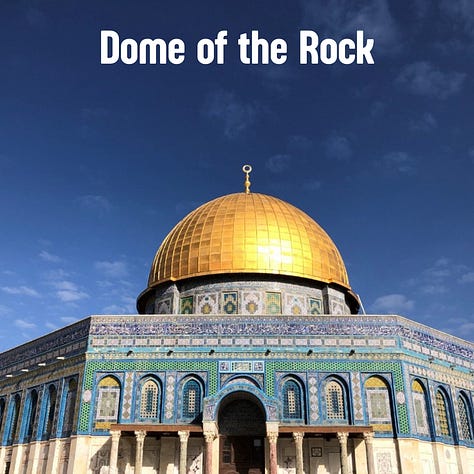
In the Muslim Quarter stands the Dome of the Rock, an important site for three faiths. Muslims hold this place sacred because they believe it is where the Prophet Muhammad ascended into heaven during his Night Journey. Jews and Christians recognize it as the traditional site of the First and Second Temples. These three faiths also trace their heritage to Father Abraham, and all believe this is the place where Abraham prepared to sacrifice Isaac, or Ishmael in Islamic tradition.
After passing security checks, Jewish and Christian visitors face additional restrictions. If a Jewish person wants to step onto the platform near the Dome of the Rock, they must be escorted by police. Christians are not permitted to wear a cross, bring a Bible, or carry any device that might contain one.
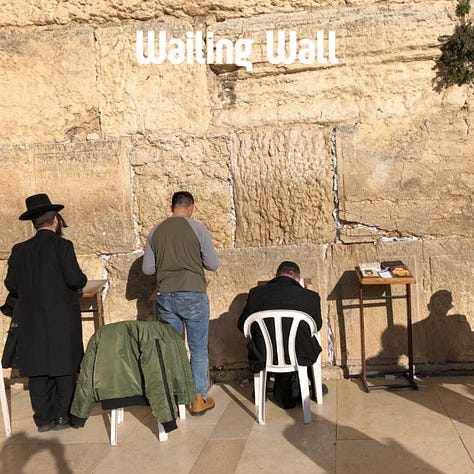
In the Jewish Quarter, division was evident as well. At the Western Wall, men entered through a large area where they were given significantly more space to touch the wall, pray near it, and place written prayers within it, along with access to an enclosed sacred space reserved just for them. Women entered through a separate, much smaller area to pray and place their prayers in the wall.
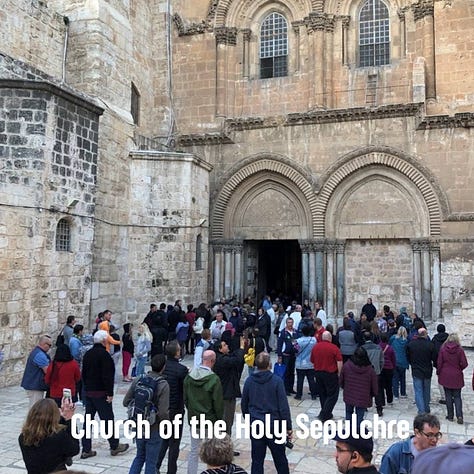
Finally, the crowded Christian Quarter has many holy sites, markets, and thousands of private residences. At times, visitors find themselves pressed among others in the narrow streets, feeling like fish swimming upstream. The Via Dolorosa, the path marking the Stations of the Cross, and the Church of the Holy Sepulchre, the traditional site of Jesus’s crucifixion, are two of the most visited sites.
Often, after you have visited the Holy Land, people ask if you experienced a holy moment while walking in the footsteps of Jesus. We visited many sites and toured many churches that led us through the pages of Scripture. Although the buildings were impressive, the moments in creation spoke louder, from watching the snow fall in Bethlehem to floating in a boat near Tiberias.
We spent our first night by the Sea of Galilee and woke to a day full of adventures along the water. Throughout the day, we stood at the water’s edge and listened to stories of Jesus feeding the five thousand and preaching his first sermon. We rolled up the bottoms of our pants and stepped onto the rocks and into the cool water as we imagined the miraculous catch of 153 fish and the breakfast with Jesus and his friends.
By mid-afternoon, our tour group stepped onto a boat and floated across the lowest freshwater lake on earth, just as Jesus did with his twelve disciples. In the middle of the sea, we celebrated communion, and our tour guide invited us into a moment of silence. One by one, our conversations faded as the boat captain reached over and turned off the engine. The steady hum disappeared, replaced by the soft lapping of water against the wooden boat. I closed my eyes, felt my body rise and fall with the waves, and heard the calls of birds that fill the air. In that brief moment, I felt the Lord’s stillness and imagined him calming the stormy seas.
No one told me how quickly the moment would pass, or how difficult it would be to return to it once it was gone. The tension that surrounds this land not only makes life difficult for its residents but also shapes the expectations of visitors who come hoping to encounter our Lord where he lived, died, and rose again.
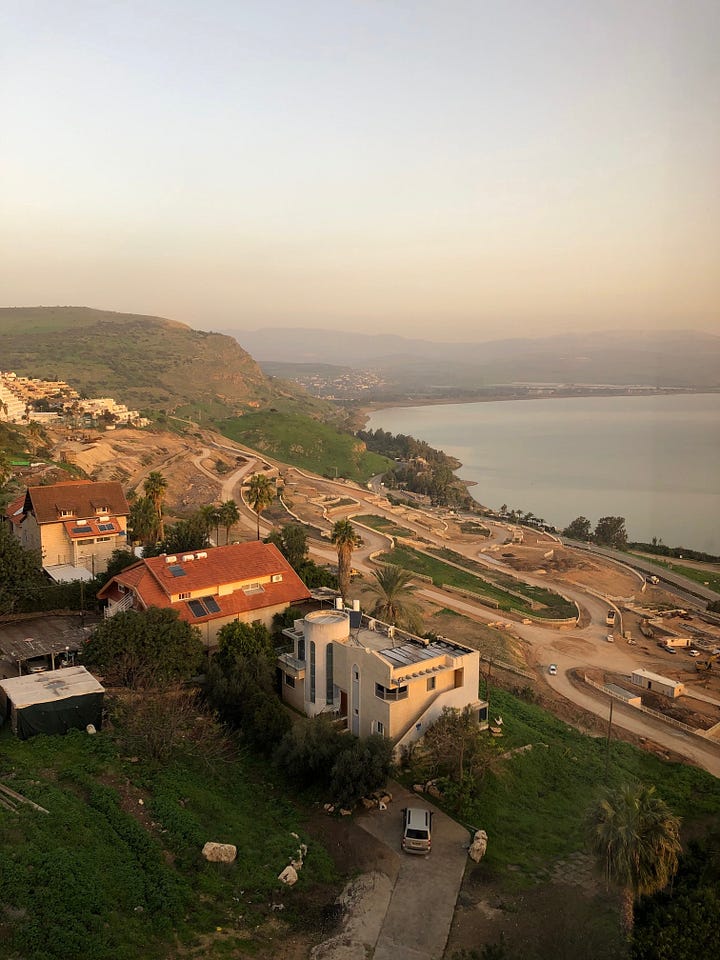
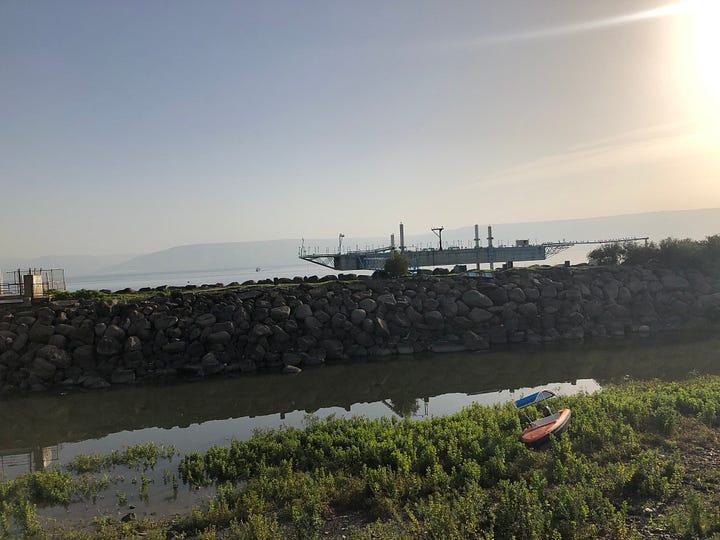
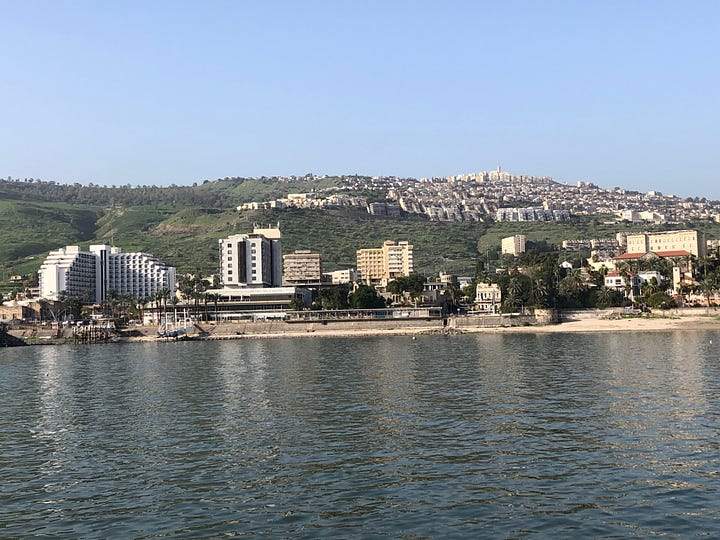
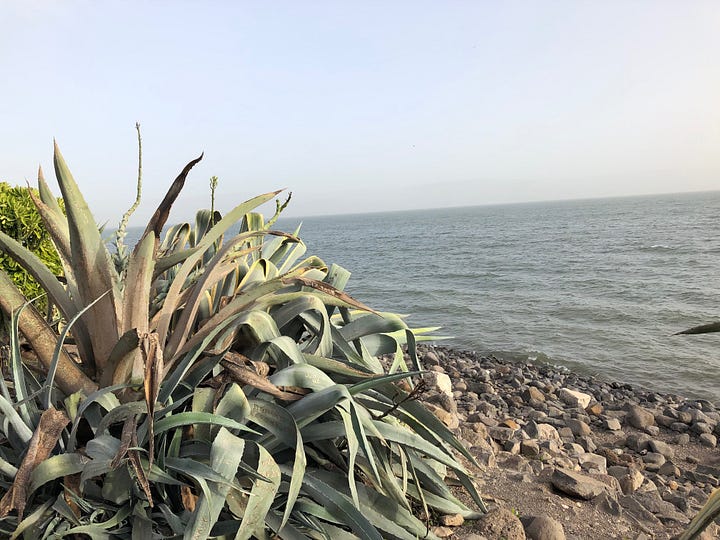
Soon, the captain started the engine again; human voices came over the speakers; and the sounds of the water and birds faded as we reengaged with the stories of this holy and troubled land.
Now, whenever I open the pages of Scripture, especially in the New Testament, I hear the rumblings of unrest, particularly on holy days like Palm Sunday, Easter, and Christmas Eve. I can no longer silence the tension our Lord felt riding into Jerusalem on a donkey, or the fear the Holy Family carried as they fled to Egypt for safety. I stand amazed that during unsettled times, Jesus spoke up for the voiceless and acted in the face of injustice on behalf of the oppressed.
In the same way, we are called not to turn away from the news but to stand in the chaos and suffering with those whose voices are being silenced. We are called to listen to their stories, to understand their realities, and to find creative ways to meet them where they are.
In doing so, we experience the tension and catch a glimpse of the holy on earth, and one day, when our Lord returns, all people will experience the peaceable kingdom we long for, fully realized, with everlasting joy shared among all God’s beloved children.
Reflection
When was the last time you felt holy tension? Were you able to continue your day, speak truth, and act with justice? If given the chance, how would you relive those moments in a way that points to Christ and offers hope in a hurting world?
Blessings to you as you carry the holy tension through this week. See you on the other side of the empty tomb.
Serve and Love Well,
Rev. April H. Cranford
Comments
Nothing yet. Say the first thing.
Sign in to join the conversation.