
how shall we dress in the future we want to live in? if this question sounds superficial, secondary, say, to how we might eat, get around, house ourselves, produce energy or invest money, perhaps it is simply because the impacts of decisions about clothing are invisible to us. if we are concerned with social justice, with toxins, with waste, with water use, with plastics, never mind with craft, with an economy that fosters regenerative agriculture and small local business, then it really matters what we choose to wear.
here on the farm, the project of making a minimal, utilitarian wardrobe falls to long winter evenings. stormy weather gives us a little more time to practice our skills, working on an ambitious project of making, mending, reconstructing more and more of our clothes.
i’m trying to make just the clothes i would use in my daily life, cosy in the farmhouse, active on the mat, working in the gardens, tending to the animals, weathering on the bicycle, snug in bed. and on increasing occasions, as the patterns of my life alter, more smartly turned out in the village and the city.
i hope these clothes will be sturdy enough to stand by me for decades, so their style must be timeless, their fibres strong and natural, their uses multiple. layering dungarees and sweater vests, cardigans or aprons over woollen under-layers that cover the distance from my bed to the mat to chore-time and back, this is functional ware to clothe a day of many characters. traditional responses to living intimately with the weather, the land, the plants, the animals, the harvests, the work and play of the seasons, they inform my choices. i begin to look how i live.
to greatly simplify, i restrict my colourway to monochrome save for indigo, often old indigo denim. everything layers in an endless remixing of a modest number of garments. my adult-children and i all share clothing and all of us swap each other and friends regularly. we share an aesthetic, so the variations multiply. thrifting is a collective project, and sewing skills are the language we must learn.
our early projects focused almost entirely on reworking what we already own. mending, visible and otherwise, taking things in or out or entirely redesigning, these are all fine, useful skills. alterations. it’s slow work, but satisfying.
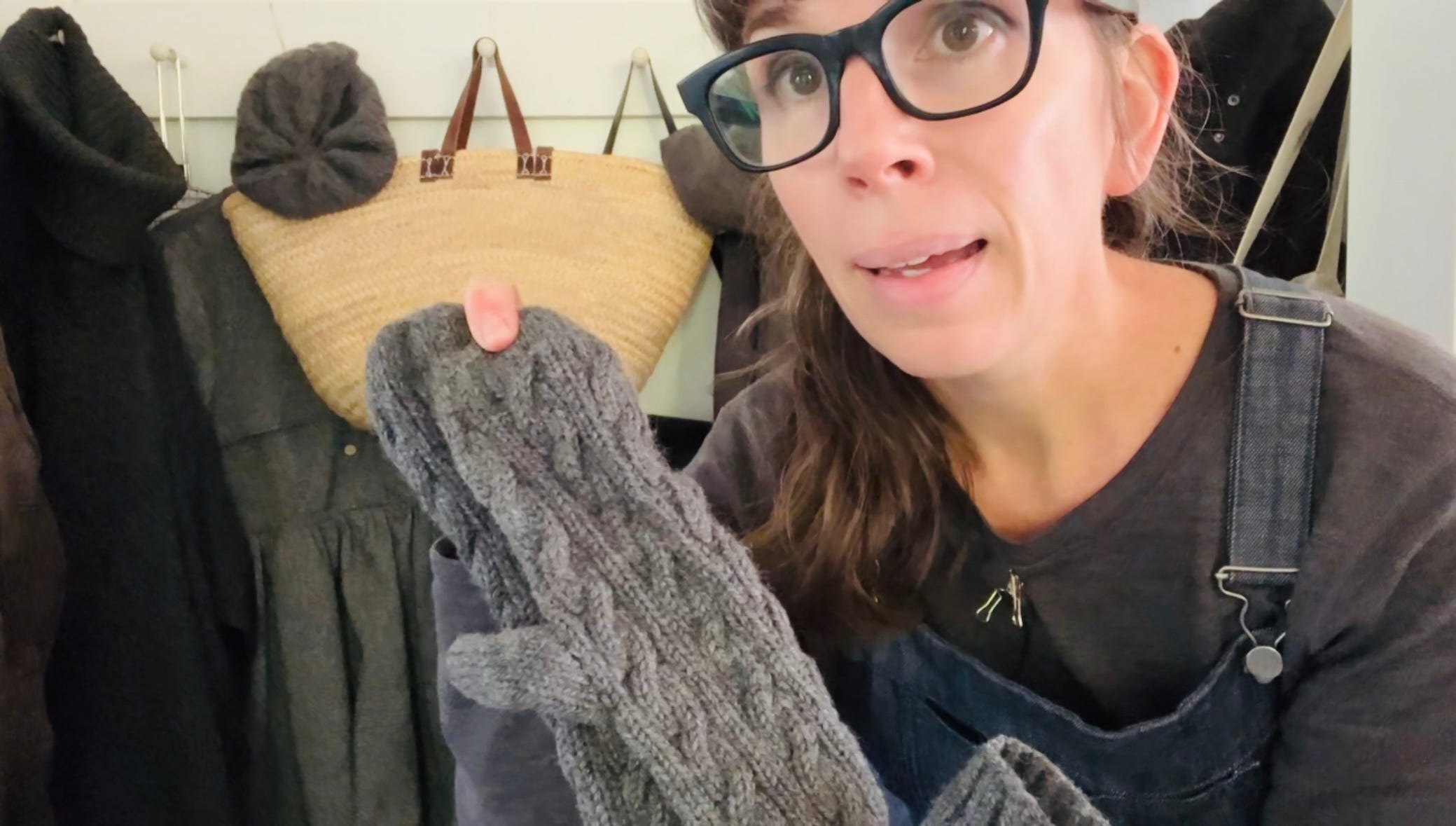
when we do sew or knit from scratch, we try to source local materials without toxic dyes, unnatural fibres, or fabrics with questionable labour practices. this is challenging, but it seems to be growing more common if no less expensive.
some basic garments we purchase new if we cannot find used after a long search, for now, but it’s not easy nor cheap to find ones that fit the bill. i have, for example, never yet found a pair of socks without plastic fibres. i do actually want my clothes to be capable of returning to the soil by way of a plain home compost eventually. so i knit more of our socks, slowly, and test the possibilities of finely-knitted undergarments, an escape from the synthetic.
a dear friend brought silver roving and a charcoal fleece that are not only from local animals, but we even know the names of the sheep! (edie and coley, if you’d like to know.) how’s that for cultivating a connection to one’s fibreshed? i long to knit homespun yarn, but first i must learn to ply what i’ve spun. perhaps this is the winter for it.
next, patterns, mastering hand-stitched seams and the treadle machine. the younger ones hoped to grow dye plants for their own colourful clothing, i experiment with greys, and indigos, but we may have grown distracted. this sort of work could take a great deal of our time, but mostly we fit it into those quiet edges of the day, stitching away while we visit or watch a film, picking up a project and putting it down as needed.
last weekend, our local transition-town society organised its annual clothing swap, and we found a number of excellent pieces, letting go of some of our fibre standards in a bid to keep these items from the waste stream. in a moment when income is extremely tight, this kind of free exchange is especially a blessing to us. the event was deceptively simple, and at once activism and a gorgeous act of community sharing. we know there are too many clothes in the world, and a swap at this scale was a great way to make that fact into a harvesting of abundance instead of a waste. in a moment when the price of living ethically can be a loss of joy in something as human as dressing ourselves according to pleasure in beauty, in self-expression, in creativity, finding these ways through feels like a liberation.
the combination of using what we’ve got and reclaiming the skills to make, mend, and reinvent, this is the future of clothing that i want to live in. it is a revival of sorts, as i pick up the thread from my grandmothers and my mother before me and pass it on to my children. it revives more than economies, ecologies, to turn toward local, thrifted, reconstructed, handmade clothes of natural fibres and dyes. it revives joyful imagination, so we might imagine another future.
thanks for reading, sharing, commenting. i love to hear how these small works look in your life.
one of the favourites amoungst the farm tour films is the october tour of my wardrobe-in-process, and how i’ve adapted it to a simple life on the land, particularly in the cool seasons. you can get them all here, and more besides, with a paid subscription:
the farm + farmhouse tours
·
November 29, 2024
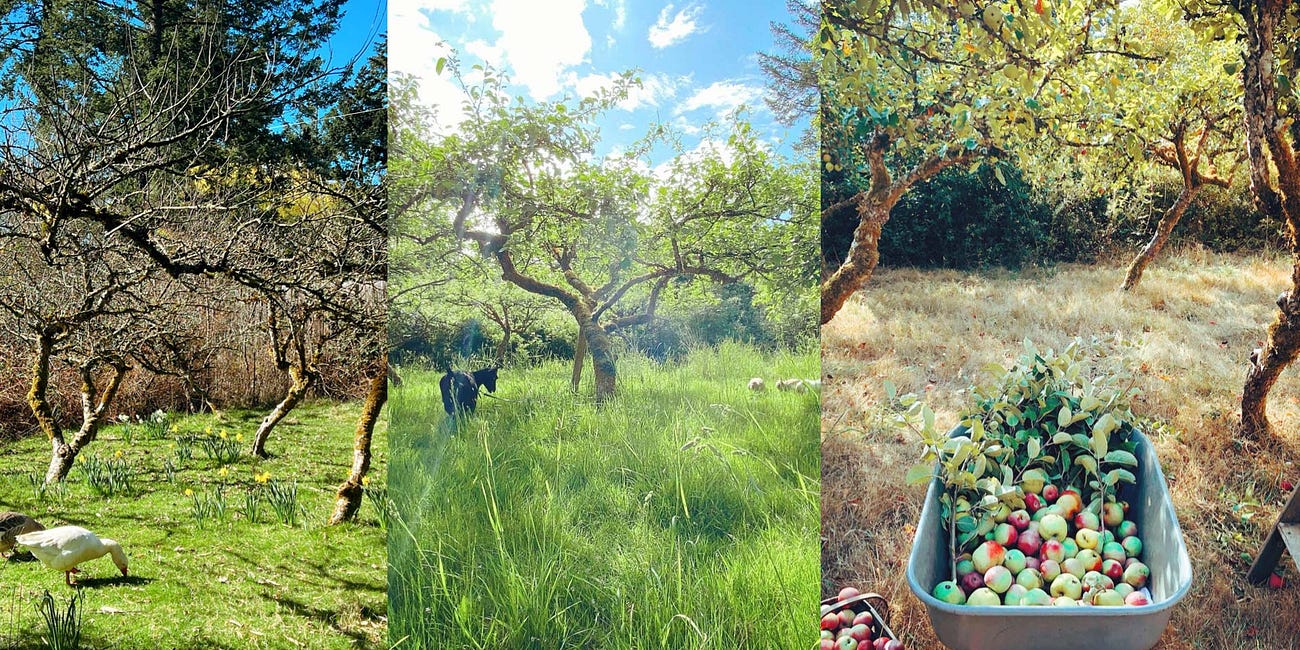
with gratitude for your kind support, please find the full year of farm tours, filmed monthly by elisa from april 2023 through to march 2024, below:
one to make for sweater-weather.
No posts
Comments
Nothing yet. Say the first thing.
Sign in to join the conversation.