Jared Bernstein: “I don't like what I'm seeing here.”
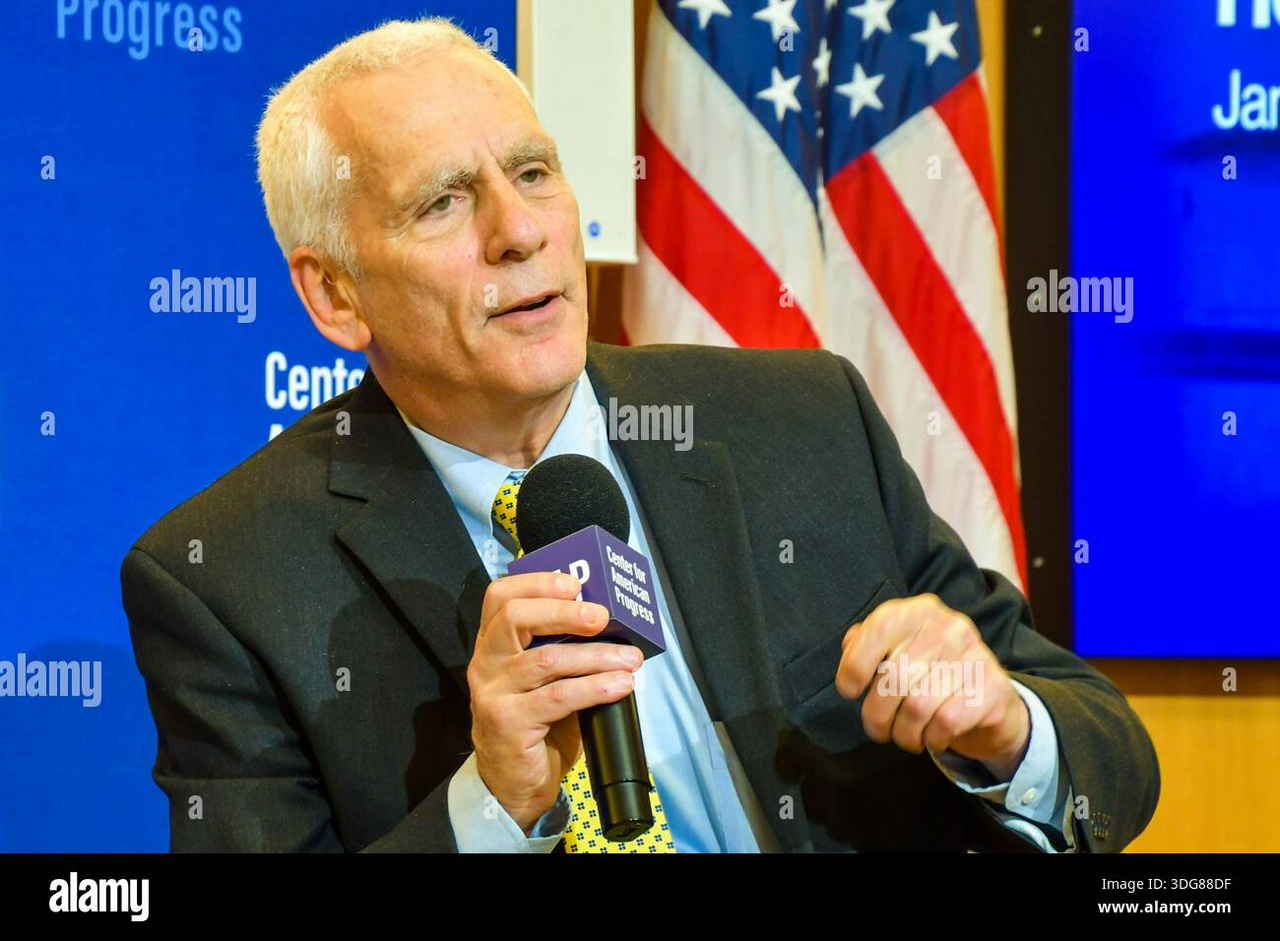
Jared Bernstein at the Center for American Progress in Washington, D.C. 15 Jan. 2026 (A. Kotok)
Today’s employment report from the Bureau of Labor Statistics shows the U.S. job market declined by 92,000 in February 2026, with the unemployment rate rising 0.1 points to 4.4 percent. And Jared Bernstein, who chaired the president Joe Biden’s Council of Economic Advisors, is worried.
As a good economist, Bernstein cautions readers not to put too much stock into findings from a single month, but in his Substack, Bernstein notes, “the trend is no longer our friend and, as a long-time data-watcher, I don't like what I'm seeing here.”
Bernstein says those data show …
The U.S. economy is in a fragile place. The job market is stuck in an unwelcoming, low-hire state, with too few opportunities for job seekers and new entrants. As best we can tell, this isn’t a function of collapsing economic growth, which looks pretty good. And at 4.4%, the jobless rate is a point above its low point from a few years ago, but still on the low side. Wage growth, at 3.8% over the past year, is handily beating inflation.
So, what do you get when you’ve got decent GDP growth with weak job growth? You get faster productivity growth, which is also a positive development in a macro sense. But growth without jobs is recipe for weakening living standards and even greater affordability concerns. Add to that last point the fact that this AM’s national average gas price was $3.32, up $0.42 from a month ago, and you begin to get the picture. It’s a weird version of stagflation, with weak job (vs. GDP) growth and rising prices.
From the new data, Bernstein also notes overall labor force participation and employment rates ticked down in February, while Black American unemployment rose from a year ago. While these data can jump around from one month to the next, says Bernstein, they add to the disturbing economic trends.
Plus, manufacturing jobs declined by 12,000 in February 2026 after rising a bit in January. Manufacturing employment is down by 300,000 since peaking at 12.9 million in early 2023 — when Joe Biden, Bernstein’s boss, was president.
“Over the decades,” concludes Bernstein, “one develops a feel for such things, and I don’t like where I fear we could be headed. I don’t like it one bit.”
Since leaving the Biden White House, Bernstein became a senior fellow at the Center on Budget and Policy Priorities. He also writes a column for The American Prospect and op-eds for the New York Times and Washington Post, and contributes to the CNBC business network.
We photographed Bernstein leading a panel of economists and housing experts at Center for American Progress in Jan. 2026. Our exclusive photos from that day are available in our media and business leaders collection and the overall TechNewsLit portfolio at the Alamy agency.
Copyright © Technology News and Literature. All rights reserved.