ClawHub scaled from 0 to 1M visitors a week in just over a month. Here's how to the vibe-code went from "good enough for PMF" to "viral scale" by using good engineering practices.Read full article →

We're changing our guidance for LLMs on Returns Validators.

Every GPU task I've run from a backend has the same problem: you fire off the job, then poll for results or wire up webhooks to know when it's done. This walkthrough shows a different approach. Convex triggers a GPU job on RunPod, and the RunPod worker calls mutations directly on Convex using the Python client. The frontend stays in sync through live queries. No polling, no webhook infrastructure. I'll walk through the full implementation using video background removal as the example, but the pattern works for any GPU workload — compression, transcription, object detection, whatever you need.

Hamza, shares a year-long build from 10 tables to 70+ Convex modules serving web, mobile, and REST APIs through a single deployment with one backend handling everything.

Marketing Monday
The Convex Marketing Journey 2022-2026.
So how did our marketing messaging get to where it is today? Let's go over all of the different things that we tried and the main lessons we took away from each iteration of Convex's messaging and design.


05:02
Convex can now declare and validate environment variables in code, giving backend functions a typed env object and catching missing or invalid deployment variables before runtime.
ClawHub scaled from 0 to 1M visitors a week in just over a month. Here's how to the vibe-code went from "good enough for PMF" to "viral scale" by using good engineering practices.

How to think about and implement authorization in your app. Think through each layers: clients, middleware, RBAC, RLS, and more. All with the power of code and abstractions.

A few more advanced techniques & helpers to further reduce duplication and accelerate your Convex workflow.

With this new backend component, augment Agents to automatically save and search message history per-thread, providing realtime results across multiple tabs and users. Use it with the Workflow component to run reliably with retries and durability across server restarts.
New convex-helpers are available now for fetching streams of documents, merging them together, filtering them them out, and paginating the results. With these helpers, you can replicate patterns you may know from SQL: UNION ALL, JOIN, DISTINCT, GROUP BY, and WHERE clauses where index fields are skipped.

Here’s a cheatsheet with examples of conversions between SQL queries and Convex queries. This article is geared towards developers (and LLMs) who have familiarity with SQL and want to translate those familiar patterns into Convex queries. You'll learn how to `UNION`, `JOIN`, `DISTINCT`, do `WHERE` clauses, and `SELECT` fields.
It can be tough to wrangle types to behave how you want them to. Thankfully, Convex was designed to make the experience with types perfect. Learn why that's the case here.
Explore techniques to improve transaction throughput and concurrency in ACID databases by reducing conflicts and optimizing database reads. This guide covers patterns like Queue, Hot and Cold Tables, and Predicate Locking with clear examples using Convex, providing developers with tools to handle high-throughput workflows effectively.
Or how I learned to love BlockNote, Tiptap and ProseMirror OT sync.

Learn about Automerge CRDTs for collaborative editing, syncing changes using Convex.


Object sync engines manage a rich object graph across multiple clients and a centralized server and are a great fit for building local-first apps.

27:42
When you react to app state the Convex way, multi-tab sync comes free. Here's how one developer built a Windows XP desktop in the browser, complete with an AI agent, using just four database tables.

1:19:02
SEV levels, triage, and stopping the bleeding before you debug. A practical guide to incident response from engineers who've led SEV 0s at Dropbox and Convex.


09:40
Learn how to give AI agents a stateful bash terminal and virtual file system using Convex, without requiring containers or VMs.
31:30
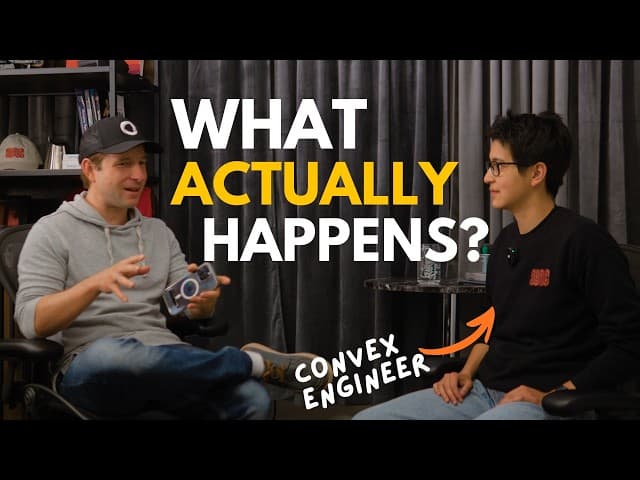
A Convex infrastructure engineer walks through the full push pipeline, from type-checking in V8 to atomic schema cutover, and traces a request through FunRun, the committer, and optimistic concurrency control.

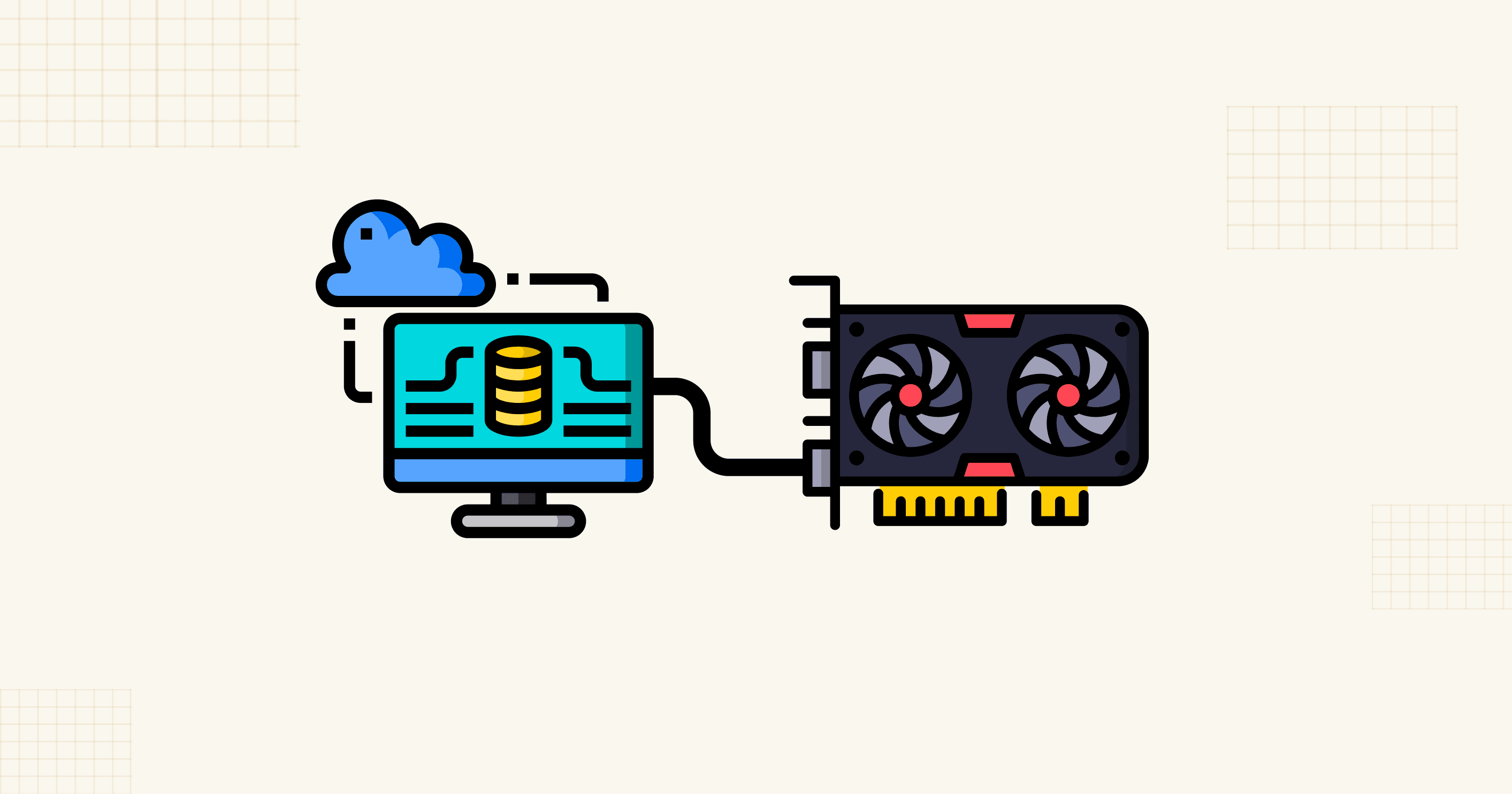
Every GPU task I've run from a backend has the same problem: you fire off the job, then poll for results or wire up webhooks to know when it's done. This walkthrough shows a different approach. Convex triggers a GPU job on RunPod, and the RunPod worker calls mutations directly on Convex using the Python client. The frontend stays in sync through live queries. No polling, no webhook infrastructure. I'll walk through the full implementation using video background removal as the example, but the pattern works for any GPU workload — compression, transcription, object detection, whatever you need.

Hamza, shares a year-long build from 10 tables to 70+ Convex modules serving web, mobile, and REST APIs through a single deployment with one backend handling everything.

Learn how Convex Components simplify building ChatGPT-style streaming chat by eliminating WebSocket complexity through plug-and-play, reusable backend modules and React hooks.

The video walks through an experiment in “de-lock-in-ifying” a small Convex app: starting with the basic TanStack Start template, the author recreates Convex queries, mutations and actions as TanStack Start server functions; swaps Convex’s reactive data layer for React Query (with manual cache invalidation); and replaces Convex’s built-in cloud database with a self-hosted Postgres instance accessed via Drizzle ORM—eventually wrapping Drizzle in a Convex-style API so most original code can be copy-pasted. They also bolt on transactions, discuss substitutes for other Convex features (file storage, realtime, auth, scheduling, search, etc.), and note that exporting Convex data is straightforward. The upshot: you can migrate off Convex without huge code changes, but you trade Convex’s “batteries-included” simplicity for extra infrastructure to manage—so the easiest escape hatch is still running Convex in self-hosted mode.
Consider this our declaration of permanent disengagement from “bar chart wars.” It’s good dev marketing, but it’s a waste of time.


Over the past few months, we have built and grown Chef into the only AI app builder that knows backend. But, this process didn’t start with Chef. It started with building the Convex, the database that Chef is built on top of.

Learn how to write better apps using AI app builders like Chef by Convex with these five expert tips from Jordan Hunt, prompt engineer at Convex. This guide covers how to build simple MVPs, keep prompts under 300 words, provide clear UI and design instructions, use AI tools like ChatGPT to refine your prompts, and recover quickly when things go off track. Includes real app examples like a habit tracker, to-do list, and finance tracker—all built with Chef. Perfect for developers building full-stack apps with AI.

21:46
A six-run benchmark of Claude Code and Codex building the same app on Convex, Supabase, and Firebase, comparing functional correctness, security, code quality, and cost.

09:22
A hands-on look at the Convex Claude Code plugin: building a real-time drawing app without mentioning Convex, migrating a Supabase app over, and what's inside the plugin's MCP server and agent.

04:26
Build and deploy real-time Convex apps directly from Codex using the official Convex plugin. Covers installation, generating a collaborative drawing app from a single prompt, and migrating an existing app to Convex.
Practical conventions for writing TypeScript and React that's easier to read, maintain, and scale with your team.
We built a full app using only Claude Code from the terminal. Here's how it compares to Cursor for agentic development.
See how Convex handles async AI app development, covering durable functions, background jobs, and real-time updates without polling.
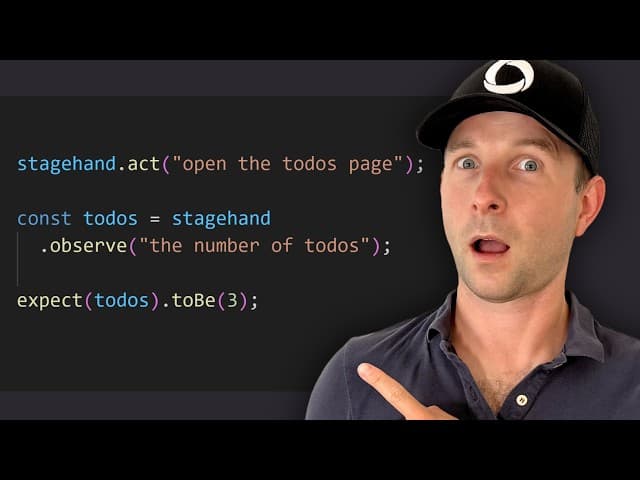
Build resilient AI end-to-end tests for full-stack apps using Stagehand and Convex, with ephemeral backends, test-mode auth, and CI in GitHub Actions.
Convex CTO James Cowling on why letting candidates use AI in interviews can obscure how they actually think.
A Convex infrastructure engineer on why coding fundamentals still matter in the AI era, what he learned building Chef, and why judgment can't be outsourced to a model.