Resurrect an ancient library from the ashes of a volcano.
Win Prizes. Make History.
Vesuvius Challenge is a machine learning, computer vision, and geometry competition that is reading the carbonized Herculaneum scrolls without opening them.
Open prizes
Currently open$2,140,000 prize pool
$1,000,0002027 Grand PrizeFully unroll and make readable one of 13 sealed scrolls.1st $800,0002nd $100,0003rd $50,0004th $50,000Deadline June 25th, 2027$500,000First Letters$50,000 per scroll across the 2027 Grand Prize volumes: uncover 10 letters within a single 4 cm² area.Max 10 scrolls · Deadline June 25th, 2027$50,000PHerc. Paris 4's TitleDiscover the title of PHerc. Paris 4 (Scroll 1) — any scan, including the 2.4 µm volumes.Deadline June 25th, 2027$590,000per yearProgress PrizesOpen-ended awards for open source contributions — including $20,000 every month for the best submission.Best of the month $20,000Gold Aureus $20,000Denarius $10,000Sestertius $2,500Papyrus $1,000Awarded monthly
Our story
79 AD
Mount Vesuvius erupts.
In Herculaneum, twenty meters of hot mud and ash bury an enormous villa once owned by the father-in-law of Julius Caesar. Inside, there is a vast library of papyrus scrolls.
The scrolls are carbonized by the heat of the volcanic debris. But they are also preserved. For centuries, as virtually every ancient text exposed to the air decays and disappears, the library of the Villa of the Papyri waits underground, intact.
1750 AD
A farmer discovers the buried villa.
While digging a well, an Italian farmworker encounters a marble pavement. Excavations unearth beautiful statues and frescoes – and hundreds of scrolls. Carbonized and ashen, they are extremely fragile. But the temptation to open them is great; if read, they would significantly increase the corpus of literature we have from antiquity.
Early attempts to open the scrolls unfortunately destroy many of them. A few are painstakingly unrolled by a monk over several decades, and they are found to contain philosophical texts written in Greek. More than six hundred remain unopened and unreadable.
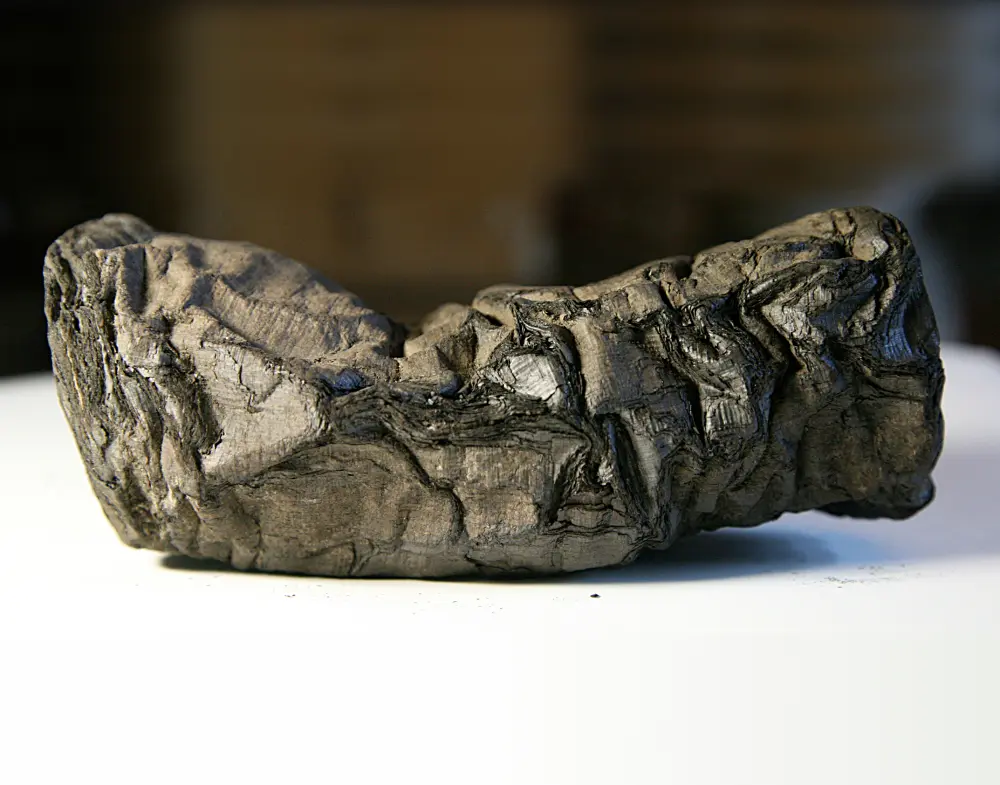
© EduceLab/University of Kentucky.
2015 AD
Dr. Brent Seales pioneers virtual unwrapping.
Using X-ray tomography and computer vision, a team led by Dr. Brent Seales at the University of Kentucky reads the En-Gedi scroll without opening it. Discovered in the Dead Sea region of Israel, the scroll is found to contain text from the book of Leviticus.
Virtual unwrapping has since emerged as a growing field with multiple successes. Their work went on to show the elusive carbon ink of the Herculaneum scrolls can also be detected using X-ray tomography, laying the foundation for Vesuvius Challenge.
Virtual unwrapping of the En-Gedi scroll. © EduceLab/University of Kentucky.
2023 AD
A remarkable breakthrough.
Vesuvius Challenge launched in March 2023 with a Grand Prize for the first team to recover four passages of 140 characters from a Herculaneum scroll. Within a year, the prize was claimed. The quest was just beginning.

2026 AD
The first scroll is read.
In 2026, PHerc. 1667 became the first Herculaneum scroll to be virtually unwrapped and read end to end. The challenge now moves onto its next stage: reading multiple entire scrolls.
$200,000 and above
Caesars
Team
Created by
Nat FriedmanInstigator, Director & Founding Sponsor
Led by
Brent SealesPrincipal Investigator, Professor of Computer Science
Daniel DelattreEmeritus Research Director and Papyrologist, CNRS and IRHT
Gianluca Del MastroProfessor of Papyrology, l'Università della Campania «L. Vanvitelli»
Robert FowlerFellow of the British Academy; Professor Emeritus of Classics, Bristol University
Richard JankoFellow of the American Academy of Arts and Sciences; Professor of Classics, University of Michigan
Tobias ReinhardtCorpus Christi Professor of the Latin Language and Literature, Oxford