The 2024 Southern California Robotics Symposium (SCR) will take place at the University of California, Riverside. This premier symposium gathers roboticists from academia and industry throughout Southern California for a series of interactive workshops, social activities, presentations, networking opportunities, and laboratory tours. This year's theme, 'Robotics and AI for humans: empowerment through innovation,' underscores the role of cutting-edge technologies in empowering human capabilities, fostering inclusivity, and forging new pathways for societal advancement. Join us to explore and share how these innovations can create a better future for all of us. With a high density of academic institutions, research centers, and industry players, the Southern California Robotics Symposium is the premier annual event in Southern California, designed to connect scholars, innovators, and industry leaders at the forefront of robotics and artificial intelligence. Building on the success of previous symposiums—SCR 2016, SCR 2017, SCR 2019, and most recently, SCR 2022 and SCR 2023—this year's event aims to continue the tradition of providing an ideal venue for innovative discussions, state-of-the-art demonstrations, and opportunities for networking and collaboration among the Southern California community. 8:30am – 9:20am Check-in and breakfast 9:20am – 9:30am Welcome! 9:30am – 11:00am Session 1: Robotic Applications 11:00am – 11:15am Coffee Break 11:15am – 12:15pm Keynote: Dennis Hong 12:15pm – 1:15pm Lunch 1:15pm – 2:45pm Session 2: Autonomous Systems and Control 2:45pm – 3:15pm Self-Guided Campus Tour 3:15pm – 4:45pm Poster Session and Coffee 8:30am – 9:30am Check-in and breakfast 9:30am – 11:00am Session 3: AI in Robotics 11:00am – 11:15am Coffee Break 11:15am – 12:15pm Industry Keynote: Mingxing Tan 12:15pm – 1:15pm Lunch 1:15pm – 2:00pm Session 4: Soft Robotics and Materials 2:00pm – 2:45pm Industry Sponsors Talks 2:45pm – 3:00pm Coffee Break 3:00pm – 4:00pm Robot Demonstrations 4:00pm – 4:15pm Closing Remarks Dennis Hong Professor of Mechanical and Aerospace Engineering, Do Robots Need to Look Like Human? Abstract: In Hollywood, robots are often depicted in the humanoid form. Thus when we think of robots we naturally imagine humanoid robots. For robots to move around in a human environment and to do work using tools made for humans, it is natural to have robots that have the shape and size of a human. We have been developing humanoid robots at RoMeLa (Robotics & Mechanisms Laboratory) for more than a decade for fire fighting and disaster relief applications. However, such robots are still too slow, too unstable, too complex, too expensive, and too unsafe which prevent them to be used in real life situations. Do robots really need to look like human? We revisit this question and present some of the new exciting morphologies as solutions, discuss the creative process, and imagine our future with robots. Mingxing Tan Director and Head of Perception Research, Perception Foundation For Scalable Autonomous Driving Abstract: Autonomous driving has achieved remarkable progress in recent years. This talk will share the latest progress of perception research at Waymo, which enables L4+ autonomous driving in four major US cities and beyond. Starting from a scalable 3D perception foundation, Mingxing will discuss sparse Transformer backbones, sensor fusion, temporal fusion, and model scaling. Afterwards, he will talk about the challenges of long-tail events in autonomous driving, and how to leverage multi-modal LLM/VLM to deal with those. Lastly, he will briefly discuss the challenges and potential research directions to further scale up autonomous driving in the future. Hiro Ono, NASA JPL Ethan Hong, Geffen Academy at UCLA Khandaker Nusaiba, UCR Aki Asahara, GITAI Boshen Zhang, USC Qi Heng Ho, CU Boulder Javier Borquez, USC Jiaji Li, UCI Jianpeng Yao, UCR Omey Manyar, USC Mingyu Cai, UCR Bryan Donyanavard, SDSU Bin Tang, CSU DH Jiachen Li, UCR Wenzhong Yan, UCLA Sukjun Kim, UCSD Salvador Rojas, CSU LA Zayn Mashat, Ohmio tbd, Gray Matter Robotics Tuo Liu, UCR Akshita Shivakumar, WHS Robotics Caitlin Callaghan, UCI UCR/Lot 24 Station We recommend you purchase a parking permit before arriving. You can prepay for parking here: Step 1: Click on the link above. Jonathan Realmuto Assistant Professor Department of Mechanical Engineering Hang Qiu Assistant Professor Department of Electrical and Computer Engineering Ioannis Karamouzas Associate Professor Department of Computer Science and Engineering Jiachen Li Assistant Professor Department of Electrical and Computer Engineering Amit K. Roy-Chowdhury Professor and Bourns Family Faculty Fellow Department of Electrical and Computer Engineering Fabio Pasqualetti Professor Department of Mechanical Engineering Kostantinos Karydis Associate Professor Department of Electrical and Computer Engineering Christian Shelton Professor Department of Computer Science and Engineering Philip Brisk Professor Department of Computer Science and Engineering Jun Sheng Assistant Professor Department of Mechanical Engineering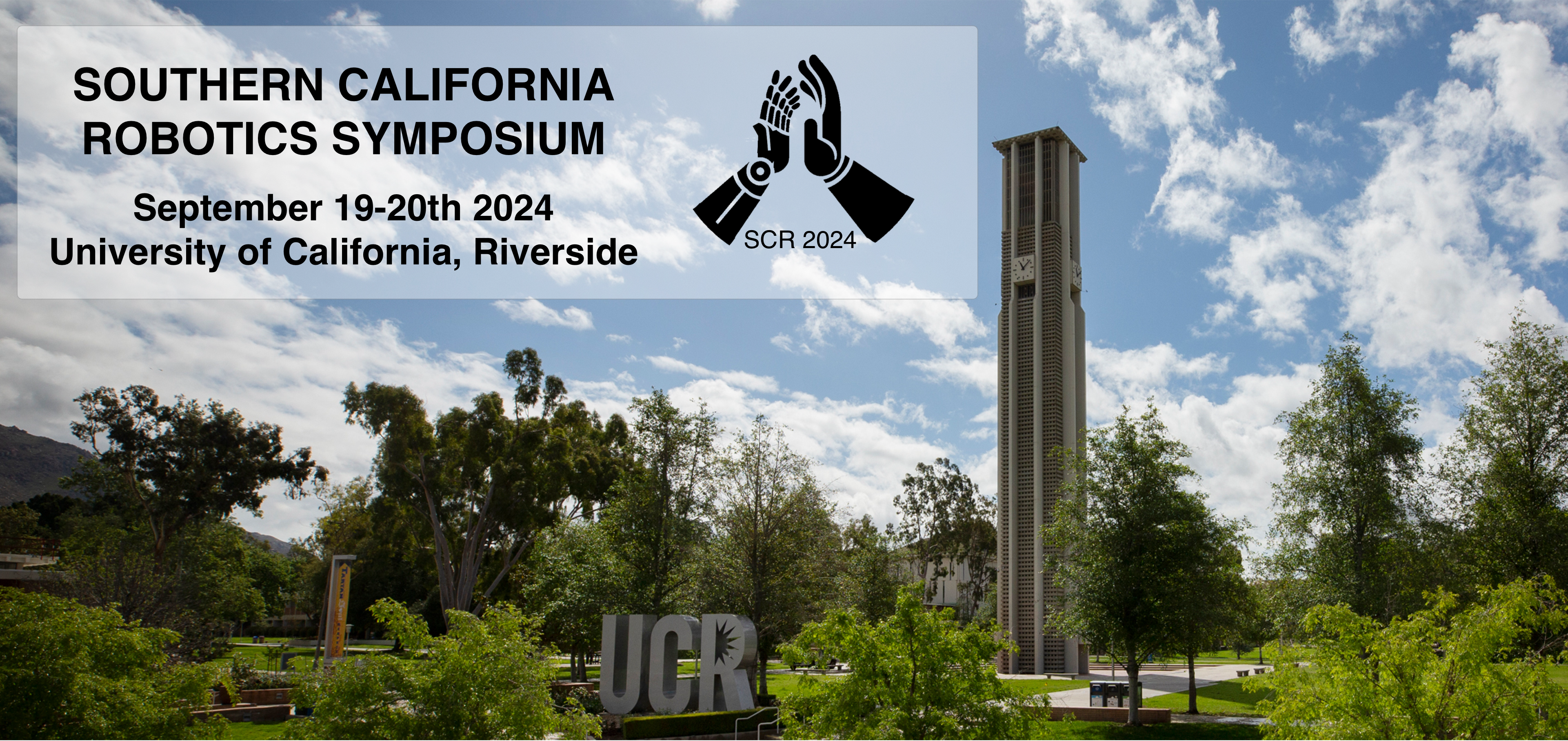
Robotics and AI for humans – empowerment through innovation
About the Southern California Robotics Symposium
Program
Thursday 9/19
(Winston Chung Courtyard)Friday 9/20
Keynote Speakers
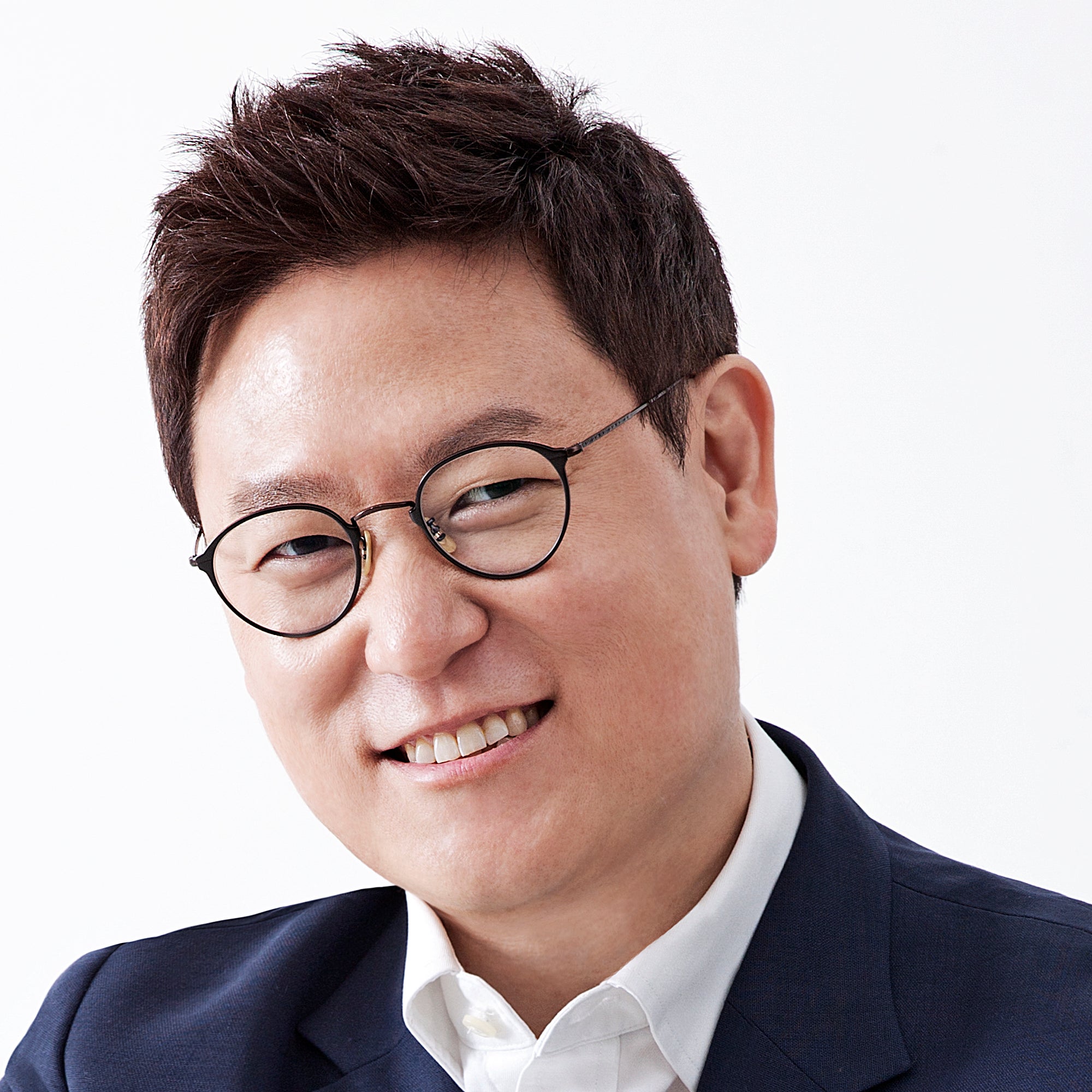
UC Los Angeles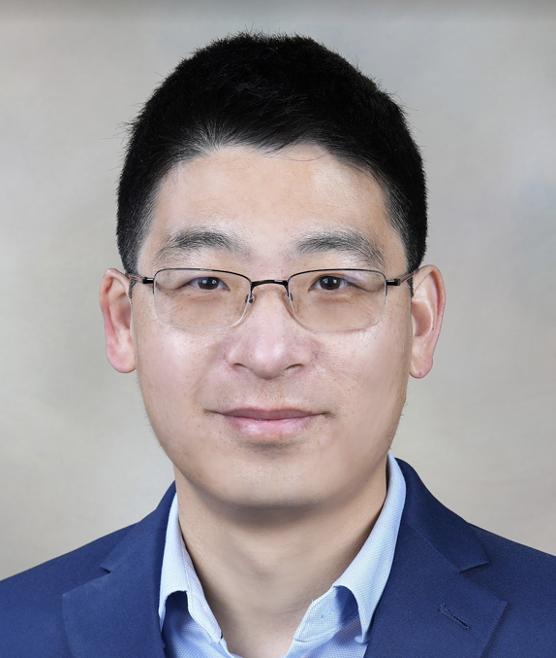
WaymoPodium Sessions
Session 1: Robotic Applications
EELS: An Adaptive and Intelligent Snake Robot for Planetary Exploration
Preliminary Results and Progress on a Food Delivery Robot for the Homeless
Experimental Setup for Investigating Arm Movement Dynamics in Task-Oriented Human-Machine Interaction
Advancing Space Exploration with Autonomous Robotics: On-Orbit Servicing and Lunar Infrastructure Development
Benchmarking Reactive Human-AI Collaboration Powered by Foundation ModelsSession 2: Autonomous Systems and Control
Enhancing Online Planning and Human-in-the-Loop Control with Probabilistic Temporal Logic Shields for Partially Observable Systems
Hamilton-Jacobi Reachability Analysis for Hybrid Systems with Controlled and Forced Transitions
A Multi-Oar Driven Unmanned Surface Vehicle
SoNIC: Safe Social Navigation with Adaptive Conformal Inference and Constrained Reinforcement Learning
Embodied AI for Safe and Efficient Manipulation of Deformable PackagesSession 3: AI in Robotics
Neuro-Symbolic Reasoning and Planning for Human-Robot Interactions
Work Faster Not Smarter: Intelligence at the Edge
A Convergent Multi-Agent Reinforcement Learning Algorithm for Dynamic Data Collection in Robotic Sensor Networks
Toward Trustworthy Embodied IntelligenceSession 4: Soft Robotics
Self-Deployable Mechanical Metamaterials for Soft Robots
LCE-integrated soft skin for millimeter-scale steerable soft growing robots
Multistable Bioinspired Origami with Reprogrammable Architectures for Actuation and Adaptive MaterialIndustry Session
Robot Demonstrations
A Soft Robotic Exosuit For Knee Extension Using Hyper-Bending Actuators
FTC Centerstage Robot
PINKIE: A Robot for Assessing Finger ProprioceptionPresentation Guidelines
General information:
Oral presentations:
Poster presentation guidlines:
Robot demonstrations guidlines:
Venue and Parking
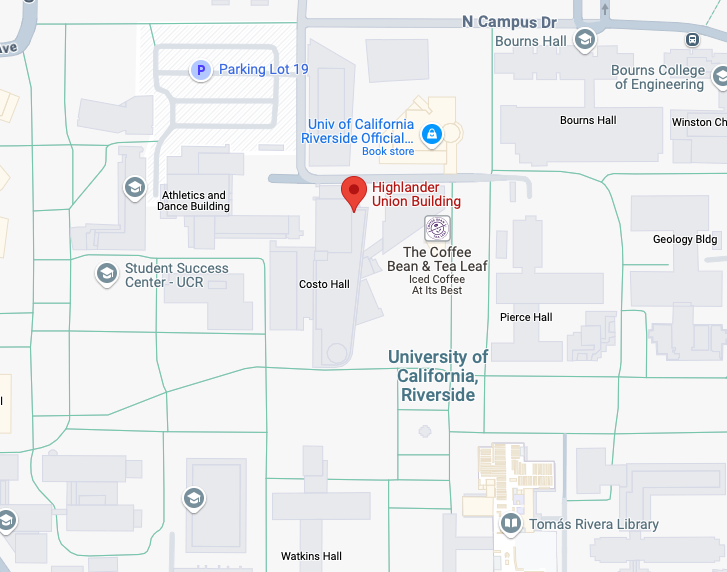
Parking
Directions to parking (Google Maps)
Parking Permits
Day parking is $14.
Step 2: Click the green Reserve button for the assigned parking lot.
Step 3: "Continue as Guest" to check out and enter your information.
Step 4: On the day of the event, go directly to Lot 24 Blue to park.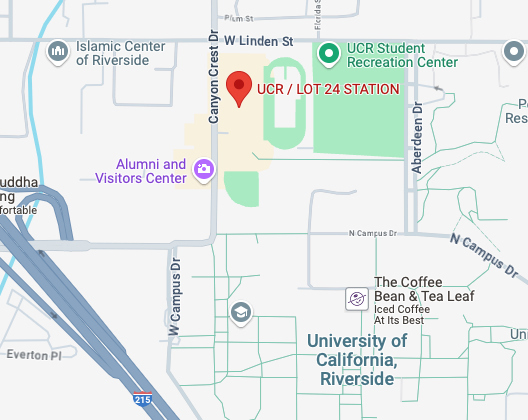
Organizing Committee
Department of Computer Science and Engineering
Department of Computer Science and EngineeringAdvisory Committee
Department of Computer Science and Engineering