Back in 2019, I conducted research on #witchesofinstagram for a graduate school project. Instagram (and the Internet) has changed a lot in that time, the hashtag doesn’t even bring up the same posts, and many of the users I studied are no longer on the platform, but the relevance of the witch—as a symbol of women’s resistance and power and as an identity—has only grown stronger. I pulled some of my favorite snippets from that research into a little post in time for spooky season.
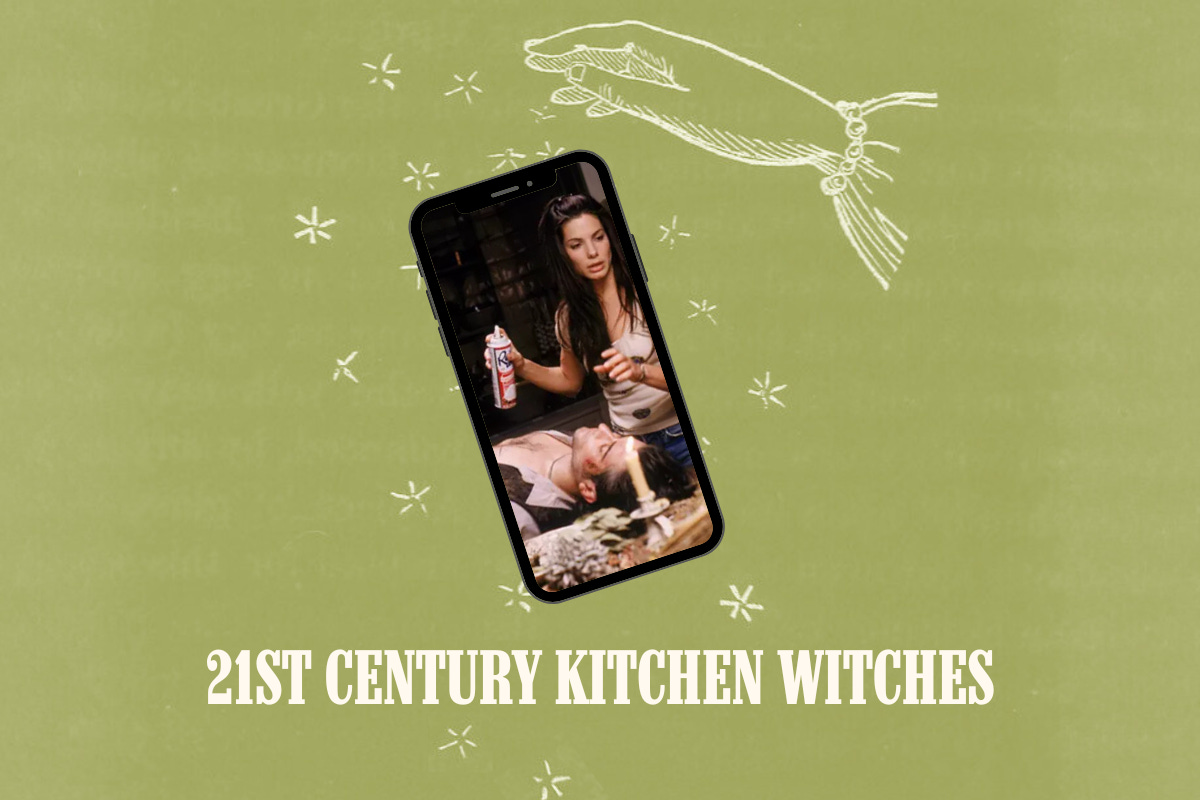
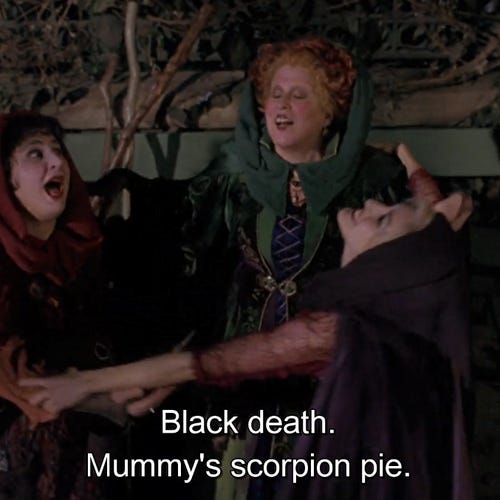
According to my children’s Halloween books, witches eat a rotation of dishes including bat-wing sandwiches, toadstool jam, and green smoothies (not sure if they mean the trendy kale ones or something more sinister…like celery). In film, they eat chocolate frogs, scorpion pie, and—on occasion—authentic Italian-American pasta. Across the internet, similar witchified foods appear on food blogs, fill up Pinterest boards, and are the holiday highlight of many social media feeds. Between the third reading of The Witches’ Supermarket and the nth scroll through pictures of marshmallow-cream ghost cupcakes, I wondered: what do real witches—the women who practice one of the many forms of witchcraft and identify as witches—actually eat?
Twenty-first century witches live in the digital age and (just like us) they share aspects of their lives on social media. So I did what I do when researching any other food trend and checked Instagram. The tag #witch currently has 9.9 million posts (21.7M as of 2025). While the Halloween season explains the recent uptick in the uses of witch-related hashtags, the overall popularity of the tags (#witchesofinstagram has 3.5 million posts; 10.2M as of 2025) speak to a larger cultural identity that utilizes the platform. There are sub-hashtags, too, representing various types of witches and their particular style of witchcraft, including #hedgewitch #greenwitch #motherwitch #moonwitch and #urbanwitch. And while each of these tags could tell me plenty about the foodways of modern-day witches, the specificity of the tag #kitchenwitch touches on a unique intersection of food and witchcraft.
“A Witch is born out of the true hungers of her time” – Ray Bradbury, Long After Midnight
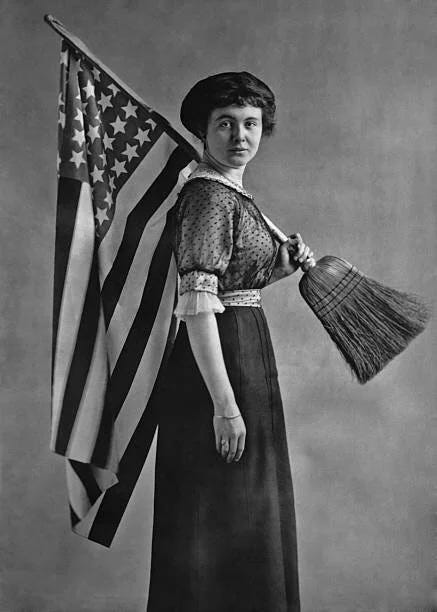
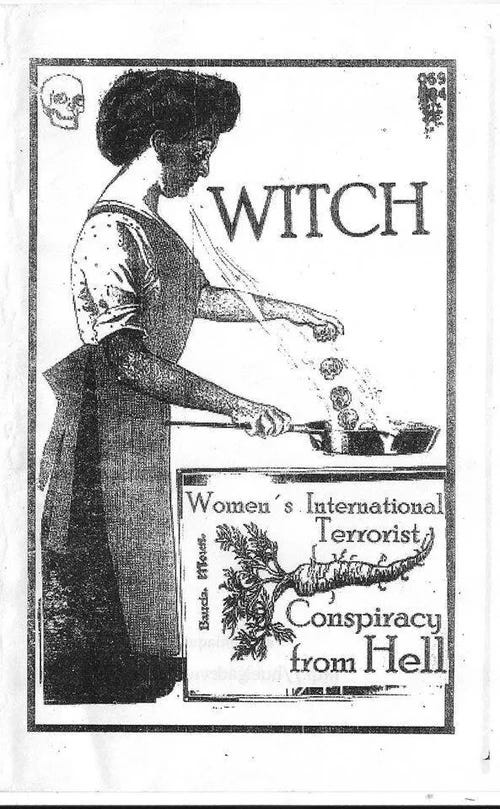
The witch has been a symbol for women’s groups for generations. In the 1960s, the witch became a symbol of the women’s liberation movement in the United States and was the inspiration for the feminist group Women’s International Terrorist Conspiracy from Hell (which neatly shortens to W.I.T.C.H.). The intentional association with the witch symbol consequently identified these women with “everything women were taught not to be: ugly, aggressive, independent, and malicious. Feminists took this symbol and molded it—not into the fairy tale ‘good witch,’ but into a symbol of female power, knowledge, independence, and martyrdom” (Cynthia Eller, Living in the Lap of the Goddess: The Feminist Spirituality Movement in America, 1993).
Kate Futich’s article “Why is Digital Witchcraft so Appealing to Young Women?” examines contemporary feminist culture and the witch identity. Like previous scholarship investigating feminist movements, Futich discusses the problems of the witch identity and its tendency to be labeled as a “consumerist” representation of feminism. The consumerism concern stems from the plethora of paraphernalia and other goods—clothes and accessories, home goods, books, and more—marketed towards those who may or may not identify with the witch as a symbol. These articles, along with newer non-fiction publications like Alex Mar’s Witches of America, provide a detailed look at contemporary witch identities and provide new vocabulary such as “digital shelter” and “marketplace feminism,” and “marketplace witchcraft.” The lasting popularity of the witch symbol reinforces our desire for an empowered female figure in times of distress and helps contemporary feminists understand the second-wave adoption of the symbol in the 1960s. As Futich explains, the witch may have the “trappings of a trend,” but it is a “trend borne out of necessity.”
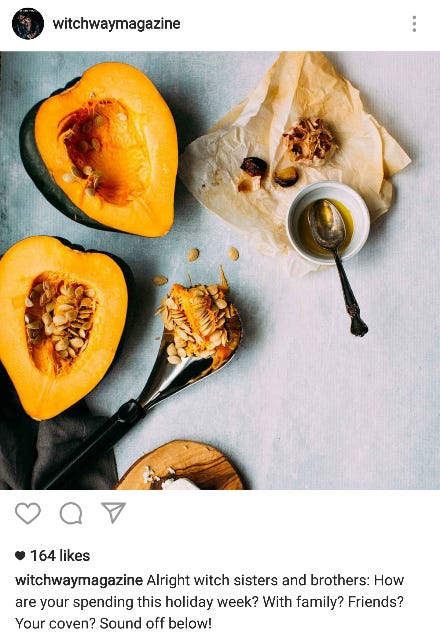
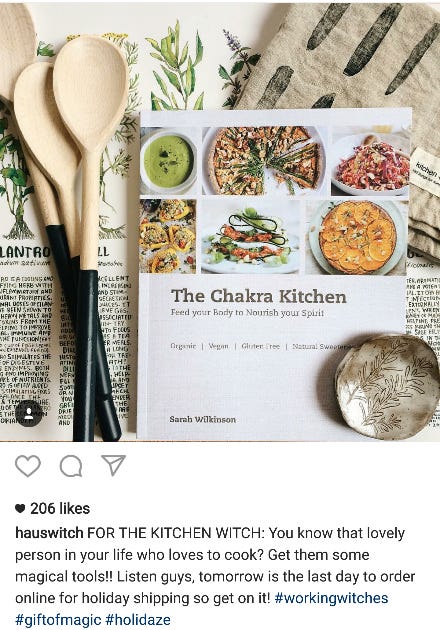
On Instagram, users who include “witch” in their handle, like @schoolofwitchery, fully embrace the witch identity and focus their entire feeds to that end, posting a combination of typical Instagram subject photos (people, products, activities) alongside images of food. Other users, like @witchwaymagazine, utilize the witch identity in conjunction with their websites and digital publications (Witch Way Mag is an “Pagan e-magazine”). These images often link to additional blog posts including recipes for the food in the photos or publish captions that encourage community engagement and follower responses. Under a styled picture of sliced squash, @witchwaymagazine asks “Alright witch sisters and brothers: How are your spending this holiday week? With family? Friends? Your coven? Sound off below!” In an image with the cookbook The Chakra Kitchen and a set of painted wooden cooking spoons, @hauswitch posts about new inventory in her shop (located in Salem, MA) “FOR THE KITCHEN WITCH.” Creator @lauramayritualkitchen lists “Folk Food” in her bio and has a feed full of recipe videos, posts about herbalism and folk remedies, and spell work tips revolving around food. In early 2025, May published The Ritual Kitchen Recipe Tarot Deck intended to “feed your soul.” And just last month, May debuted her first cookbook Kitchen Magic: Over 65 Enchanting Recipes and Rituals for a Cozy, Witchy Kitchen.
Modern day witches—regardless of religious affiliation or Instagram use—utilize food and foodways as a defining characteristic of the witch lifestyle. Food is central to celebrations, like Samhain (pronounced SAH-win), which coincides with Halloween, when food and drink are placed out as offerings for the dead similar to the practices of ofrendas during Día de Muertos in Mexico and across the Mexican diaspora. Individual ingredients—including herbs, spices, salt, fruit, vegetables, and meats—become elements of contemporary spells and charms. While most of the foods associated with the witch identity tend to derive from natural sources (i.e. unprocessed or minimally processed foods), contemporary “neighborhood witches,” as Nina Martyris calls them, often include cultural consumption habits including pizza, Starbucks, and “supermarket comestibles.”
Some users share spells like recipes, listing out the ingredients and instructions. An image of used coffee grounds posted by @blackwitchcoven is informed by the caption “my go-to when starting any potion.” They explain that they use coffee because it “can kickstart any situation, idea, goal or desire” and use “#frenchmarketcoffee for special cases.” A recipe for “Chocolate love spell” shared by @woodlandwitchery shows a silver tray with cardamom pods, a small pot of salt, silver spoons, and a bowl of chocolate pieces waiting to be melted. The user explains “my favorite recipe is also the easiest there is. Just melt some quality chocolate with cream and spice it up with whatever it is you want to charge your spell with, cardamom for sex…”
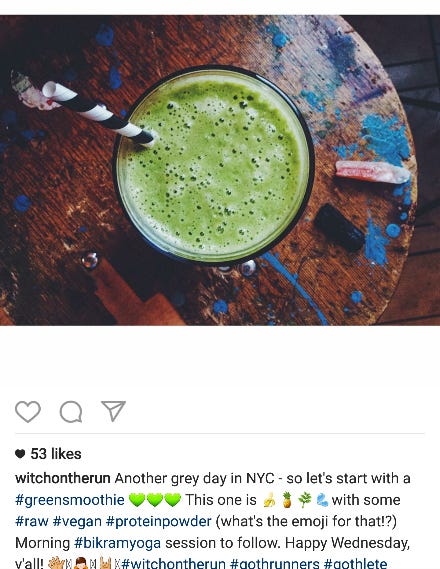
When the #witch identity intersects with other popular Instagram communities, the food takes on new intentionality. User @witchontherun balances their feed between #kitchenwitchery and #fitness, posting images of #healthy foods. They use the popular tag #greensmoothie to describe the image of their go-to morning brew. Another image of their weekly meal preparation with containers of carefully portioned proteins, vegetables, and carbohydrates is tagged with #mealprep #kitchenwitchin. These images contribute to digital conversations on health and fitness and simultaneously connect to the larger community of #witchesofinstagram.
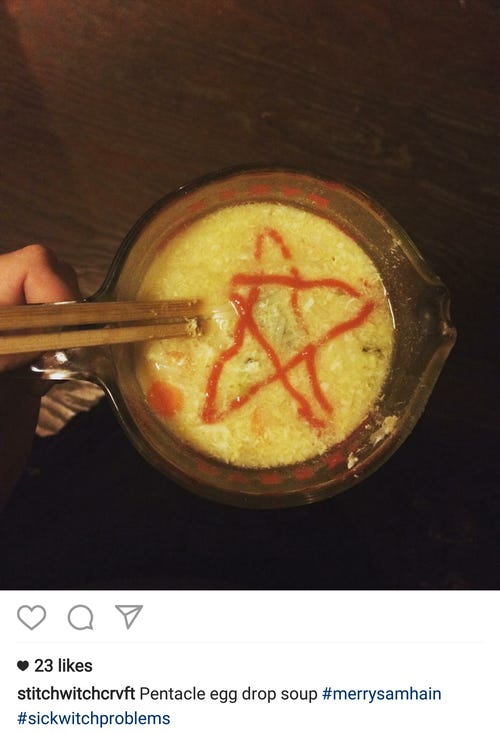
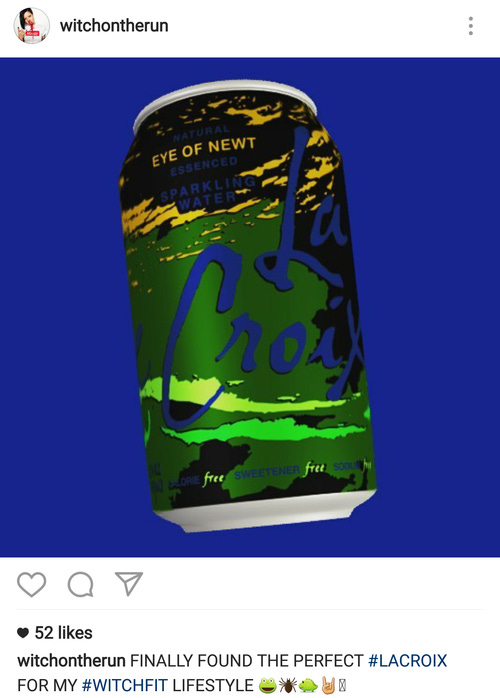
There are other food intersections, too, that speak to the wide range of users who align with the #witch identity: pumpkin pie, egg drop soup (with a hot sauce pentacle), Mason jars filled with oatmeal cookie ingredients, and roasted spices for dukkah. Popular beverages like iced #coffee and #mimosas also make an appearance. User @cosmic_jenn posts an image of halved citrus and an electric juicer with caption “mimosa prep” along with the hashtags #kitchenwitch and #holistic. After meeting up with their friend, @hauswitch tags @witcheryl in a post showing their two hands holding iced coffees with hand-knit cozies embroidered with the word “witch.” Another image posted by @witchontherun exclaims that they have “finally found the perfect #LACROIX” for their “#WITCHFITLIFESTYLE.” The image shows a photoshopped can of the popular seltzer brand with the flavor relabeled to read “Eye of Newt.” Maybe those picture books weren’t entirely wrong after all.
A research update in 2025:
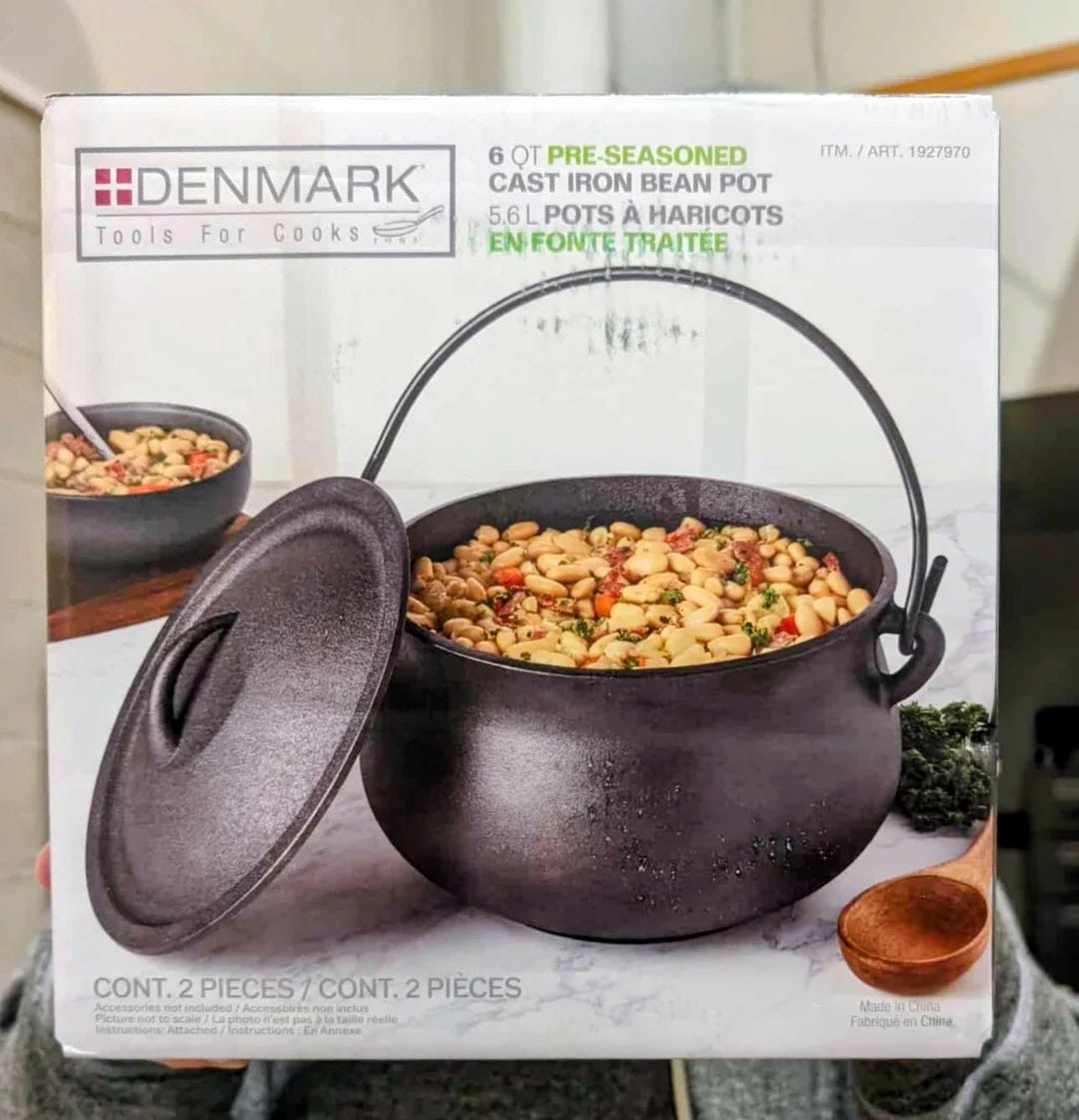
A lot has happened for twenty-first century witches over the past few years. TikTok has allowed for parasocial tarot readings, believers and non-believers alike can pay an Etsy witch for all manner of spellwork, the Internet went feral for a 6-qt cast iron cauldron sold at select Costcos, there was a second Hocus Pocus (with a very feminist and witch-redemptive storyline), and Practical Magic 2 is due out in less than a year. The contemporary kitchen witch has evolved to adopt (or eschew) new technologies all while maintaining a focus on the intentionally analog and historically folksy foodways to which their craft is tied. As American women continue to lose bodily autonomy and political agency and heritage food traditions rapidly get conflated with MAHA rhetoric, I’m eager to see what this new season of kitchen witchery brings.
