As usual I’ve overestimated my ability to communicate casually and consistently, so here I am delayed and with a couple thousand words. I don’t think I’ll always be like this. But whatever mystery churns the butter arrived on a day I was preoccupied with two thoughts, one a few months old and another very new.
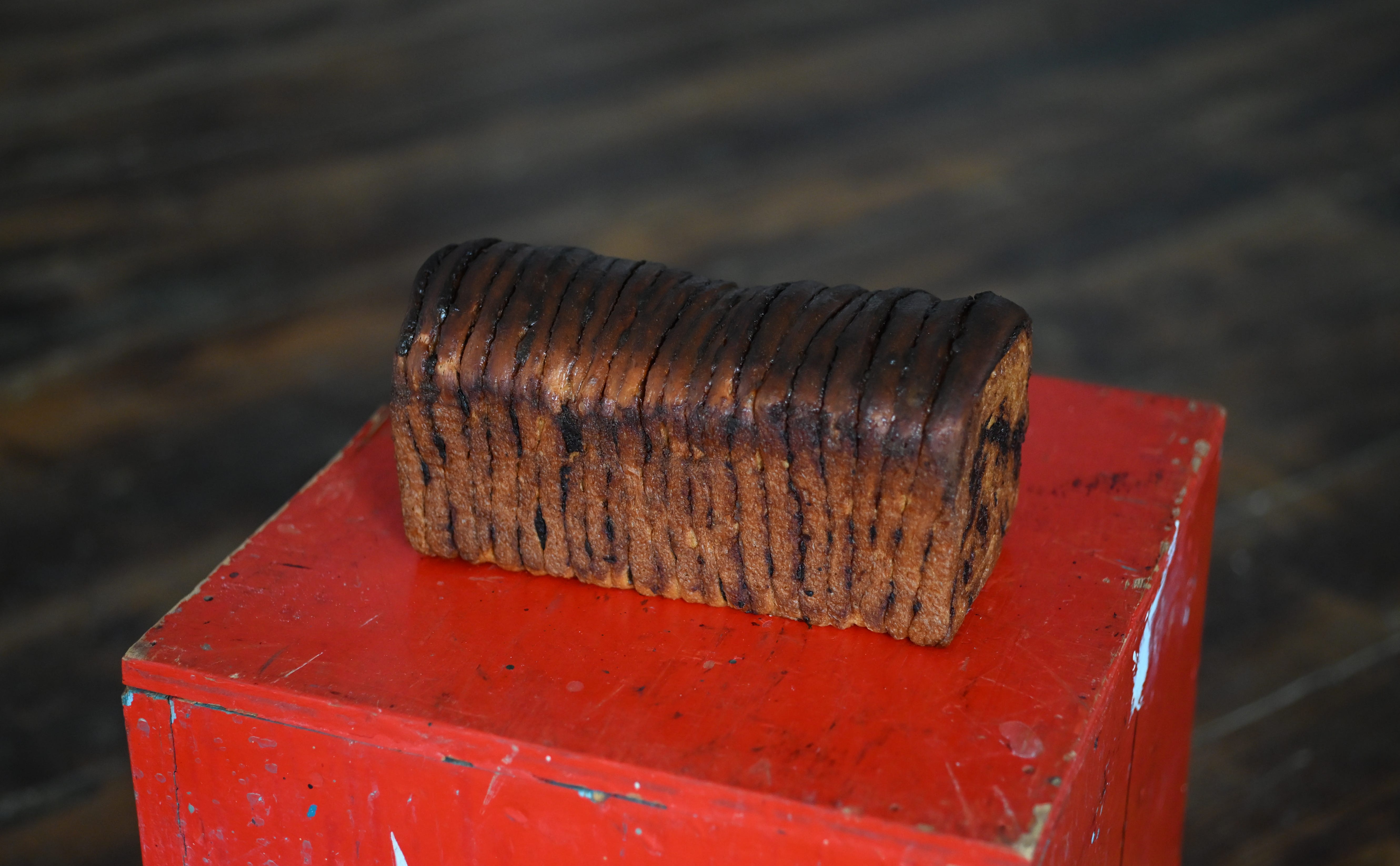
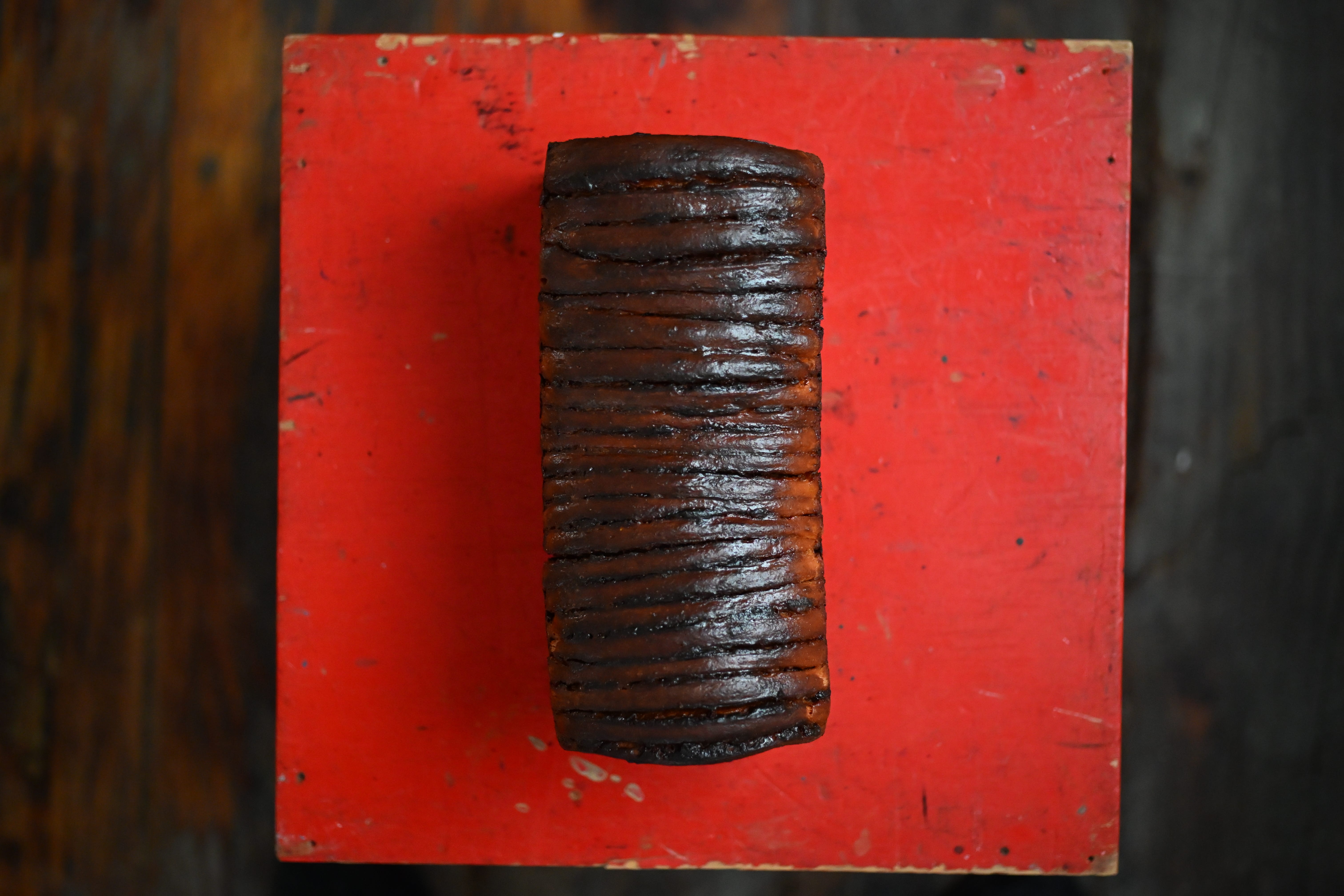
The thing I’ve been thinking about for longer is a sort of babka that’s shaped in a way that resembles porchetta and a tree trunk, should those two things find some middle ground. The visual references weren’t intentional but I like the result. Another is a tabloid-y rabbit hole I fell into (“Her Life Was An Old-Money Dream. It Collapsed In A Moment.”) while trying to get the bare bones on what was happening in Iran from the New York Times app, following a brief refusal of the news.
Should I have just taken the article as a reminder to stop reading the New York Times? Probably. But instead this strange piece of journalism started me down a path of wondering what keeps me from just braiding my fucking babkas like a normal person. The article, which I’ll tell you all about shortly, ended up being sort of about rich people refusing to implicate themselves in their own worlds of wealth, and it reminded me of this battle I’ve been waging on myself in which I consider if there’s some greater subtext to my new affection for sweet, soft, enriched breads…
I’ve been making a lot of babkas (or things like babkas), and have recently created this roulade-type shaping method that makes everything a little more difficult but results in a cute accordion of a loaf. Though I remain mostly committed to lean and slow bread varieties, I’ve recently become consumed by this kind of thing while developing recipes for my book. Does this new interest in lightly sweetened, fluffy, yeast-boosted breads say anything about my character??
It’s a favorite fact of some bread bakers that the word “companion” comes from the Latin roots for “with” and “bread”. Companions were the people you shared meals with, the people who ate the same kind of bread as you. It seems my bread-brain holds some primeval concern that if I change the kind of bread I eat, I could change where I sit in the world.1
I’ve always felt weird about wealth, and by this I mean I’ve always been scared of spending money and suspicious of people who have a lot of it. Now I occasionally stress that some people might assume I have more money than I do and that makes me feel just as weird as a reality wherein I don’t have enough of it. So naturally the idea of being a rich-bread eater-spooks me. The origins of this money anxiety are lost to me but are as old as my thinking brain. They’re definitely also responsible for my interest in the New York Times article.
I found it on my phone screen below the aforementioned update on the situation in Iran. I was surprised to see my thumb migrate over to the anachronistic photograph of three pearl-clad blonde women - taken by Bill Cunningham! in 1999! - that accompanied the headline, and then, remarkably, click on it. There was something about the idea of a woman’s entire life collapsing in a moment that I found perplexing enough to investigate further. Barring war or death or imprisonment, could her whole life actually have collapsed? In a moment? And what is an “old-money dream”? What does it feel like to have one, or live one? Is mine shaped like porchetta?
I read on to learn, by way of a book review, about a memoir written by a woman (Belle Burden) who was raised with immense privilege, married into more privilege, excused herself from all financial and professional autonomy, then was left, suddenly, by her hedge-funder husband. As far as dramatic stories about the dissolution of a marriage go it reads as a kind of extreme version of a familiar plot line (the deserting husband promptly rents an apartment with no room for their three kids, following through on his claim that he was just moving on from the whole family). But as I was reading I sensed, on the part of the reviewer, not a deception exactly…but a sort of uncanny quality. It felt kind of canned and soft and sisterly, like a work-reference written by a family member masquerading as a previous employer.2
After lines like: “When her essay is first published [referring to a NYT essay written by Burden that precipitated the memoir] some friends — by now, I pray, mere acquaintances long in the rearview mirror — suggest that it’s about revenge,” and, “It is as if Burden is offering her children a passport out of this stiff-upper-lip WASP universe and toward a place where people love one another openly, insist on intimacy and are unafraid of being deeply seen,” I scrolled up, found the author’s name (Alex Kuczynski), and started googling.
The break in the case was a click on Kuczynski’s husband’s name, which was conveniently hyperlinked in the auto-generated bio that shows up when you search for basically anyone that has ever been mentioned on the internet. His google results were a mash-up of tabloid coverage of the couple’s divorce proceedings and references to the Bard library that bears his name.
From what’s immediately available online, the two women’s stories have a lot in common. Both the reviewer and the reviewed were well-off, beautiful blonde women who married into even greater privilege than what they’d inherited and were then blindsided by divorce papers. One comment on Kuczynski’s instagram announcement for the piece reads “It’s so great that you got to do this review, Alex. All on the same page…”
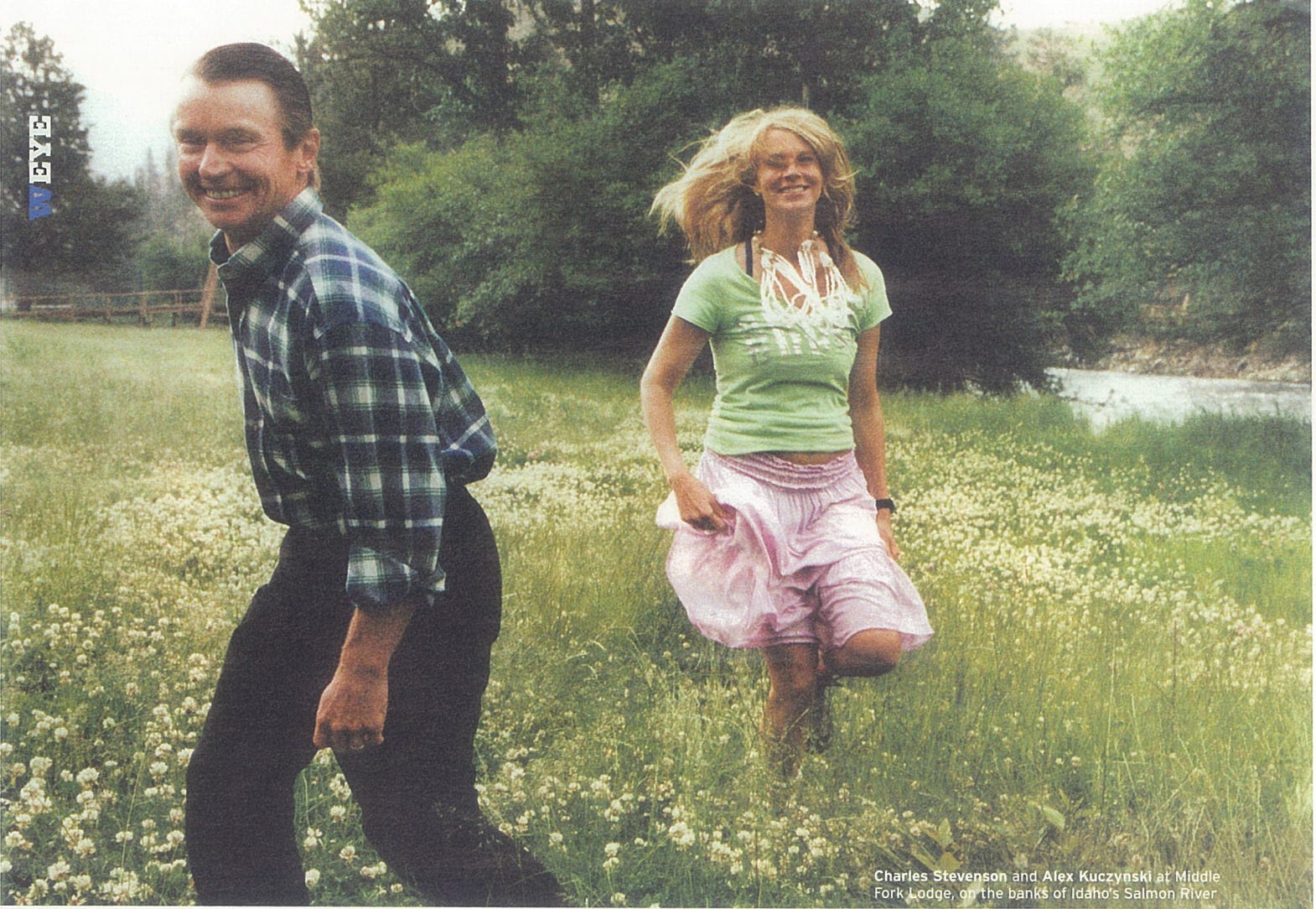
In the review, Kuczynski never acknowledges her own relationship to the memoir’s narrative, speaking instead to a world of extreme wealth that makes itself known only through Burden’s account. Why couldn’t she say outright this was her world, too? I mean…here are some excerpts from a W Magazine article from 2005 that chronicled a weekend of luxury at the Idaho ranch that she shared with her then husband, Charles Porter Stevenson Jr.:

and

and

I’m not sure why the review of Belle Burden’s book had to be couched in a kind of feigned bipartisanship (isn’t it a little bit of journalistic malpractice?) but it made me think that I have to admit I’m a babka person now, if I’m going to talk to you about bread. In this moment of reckoning with my bread-avatar, the annoying urge to differentiate my babka from the canonical babka aesthetic might have been partly in service of some minor functional improvements (I find the traditional shaping can get sloppy and result in a messy slice unless the dough is under-hydrated), but it might also just be an effort to remove myself from a world of gleeful, buoyant, enriched breads, to make it into something else, something harder to categorize, so that I don’t feel as directly associated with an idea that confuses how I know myself.
It’s hard to see what we are, especially when the reflection doesn’t match our expectation. But listen: bread is a good mirror, and I don’t want to Kuczynski you guys. I love this shit. I’m currently shaping all my babka variations (so many) in this striped rolled form, which is new to me but I’m sure someone somewhere has done it before, I just don’t know who. You can pull pieces apart like pages in a book. It satisfies me on multiple levels - as a baker, an eater, and a person obviously at odds with her own desires. Maybe you’ll see yourselves in it too.
I wanted some color and long-lasting moisture and have had a lot of intensely purple, meaty sweet potatoes around. I love the flavor and texture of this date-sweet p combo and its ability to be eaten reasonably for breakfast. This style bread can be made with basically any enriched dough and filling, though. It’s just the shaping method that differentiates it, and different may not be important to you, in which case just use this post as inspo to go make a babka, any babka.
You can use a sourdough or fruit water preferment for the levain. I prefer the latter because it adds even less of a tang than a young sourdough, but both work well.
Regarding shaping - the whole process might strike you as a little overwrought. So be it! I think the end result is worth it.
As always, it’s a good idea to read through the recipe before getting started.
LEVAIN
If you’re using a fruit water preferment: 8-12 hours before you’re ready to bake (the night before is a good bet) mix 60g of all-purpose or whole wheat flour with 60g of fermented fruit water. Put the mixture in a jar with room for it to more than double, mark the top with a rubber band or tape, and cover it loosely with a lid. It’s ready to use when it’s at least doubled, is slightly domed on top, and is speckled throughout with bubbles.
If you’re using a sourdough: 4 hours before you’re ready to bake mix 40g all-purpose or whole wheat flour with 40g warm water and 40g active sourdough starter. Put the mixture in a jar with room for it to more than double, mark the top with a rubber band or tape, and cover it loosely with a lid. It’s ready to use when it’s at least doubled, is slightly domed on top, and is speckled throughout with bubbles.
DOUGH
180g all-purpose flour
180g bread flour (high-protein flour)
55g whole wheat flour
60g milk
70g water
1 large egg (50-55g)
120g purple sweet potato, roasted until soft*
120g levain, above
4.5g instant yeast (1 3/4 tsp)
7g salt
80g unsalted butter, room temperature, cut into chunks
35g coconut oil, soft or melty but not warm**
1 egg mixed with a splash of water, for the egg wash
*Totally acceptable to use a different kind of sweet potato, just account for a little more moisture with an orange-fleshed variety or yam - hold back a bit of the milk/water when mixing, adding it in only if the mixture feels dry. To prepare, poke some holes in your sweet potato of choice, medium-sized is good, and put it on a tray in a 400F oven. Roast about 1 hour, or until very soft. Let cool and remove the skin, which should come off easily.
**Coconut oil is really hard when chilled, which helps the dough firm up enough to easily shape. If you don’t have any, replace it with more butter, not a liquid oil.
METHOD
When your levain has doubled, mix all ingredients except the salt, butter, and oil in the bowl of a stand mixer. I recommend holding back 10-15g of water to begin with - sweet potato can vary in moisture content and this will prevent you from getting a dough that’s too wet. Mix on low until everything is well combined, adding the reserved water slowly until all dry bits are swept up into the mass. Mix for about 2 minutes.
Cover with a towel and let rest for 15-30 minutes. When you return, add the salt and mix on medium-low (around a 4 on a KitchenAid) for 4 minutes, or until the dough is feeling moderately strong. It should be sort of smooth, but imperfect.
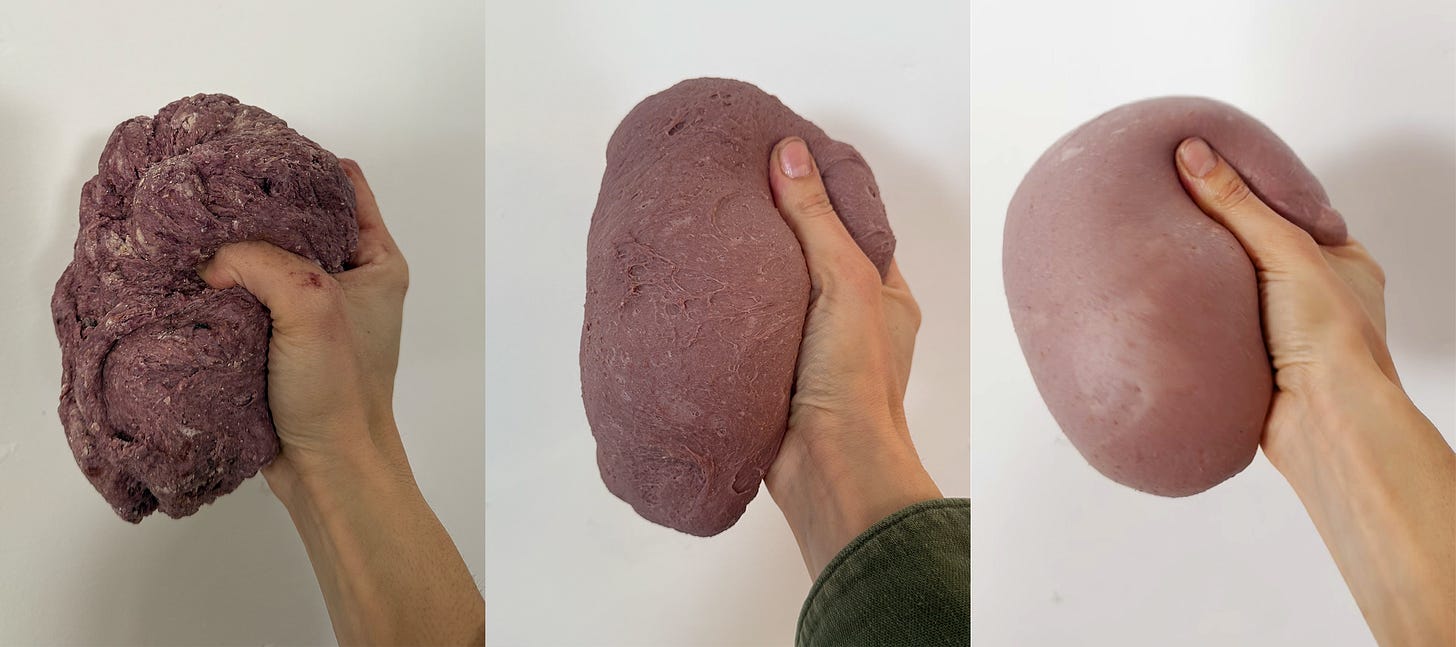
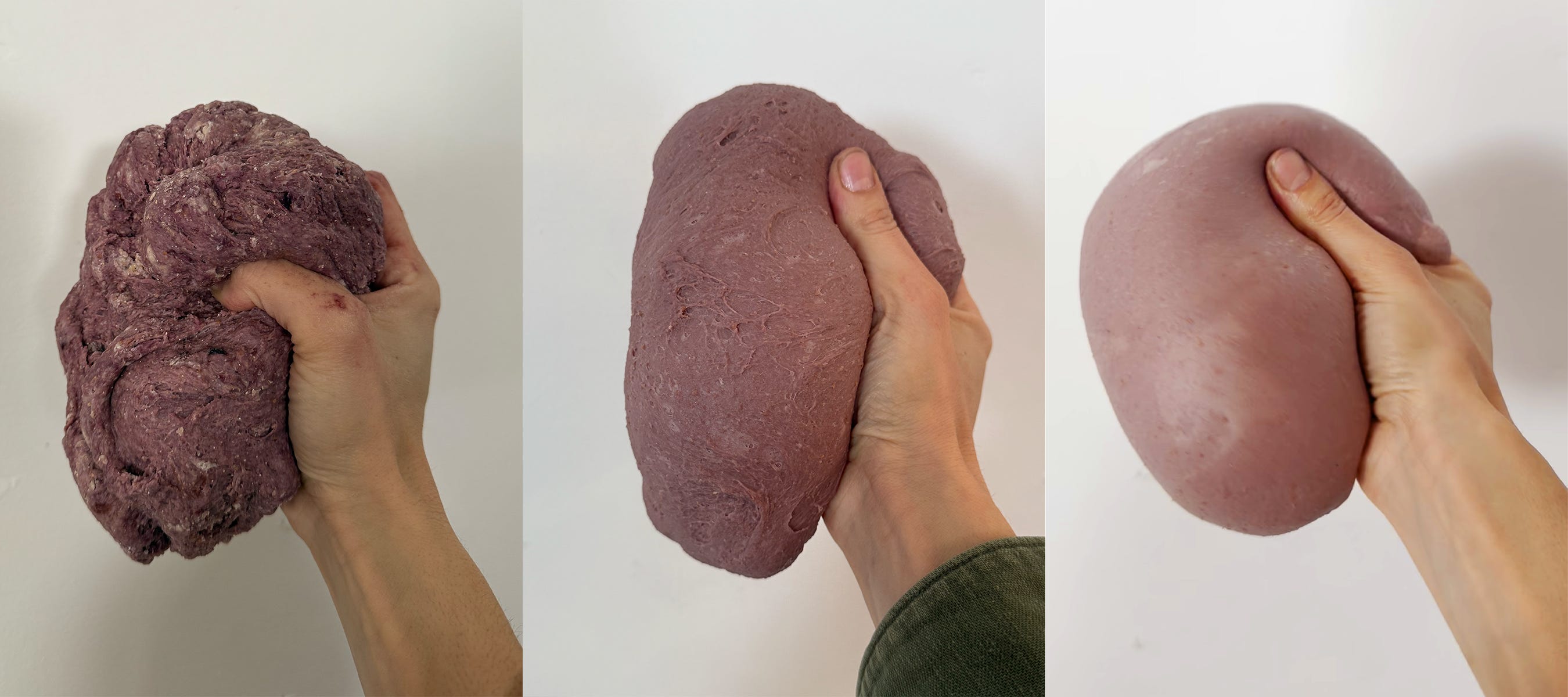
Left to right: after step 1, after step 2, after step 4 Add the fat. I like to do the coconut oil first, in scoops, followed by one piece of butter at a time. Move slowly to let each addition assimilate before the next.
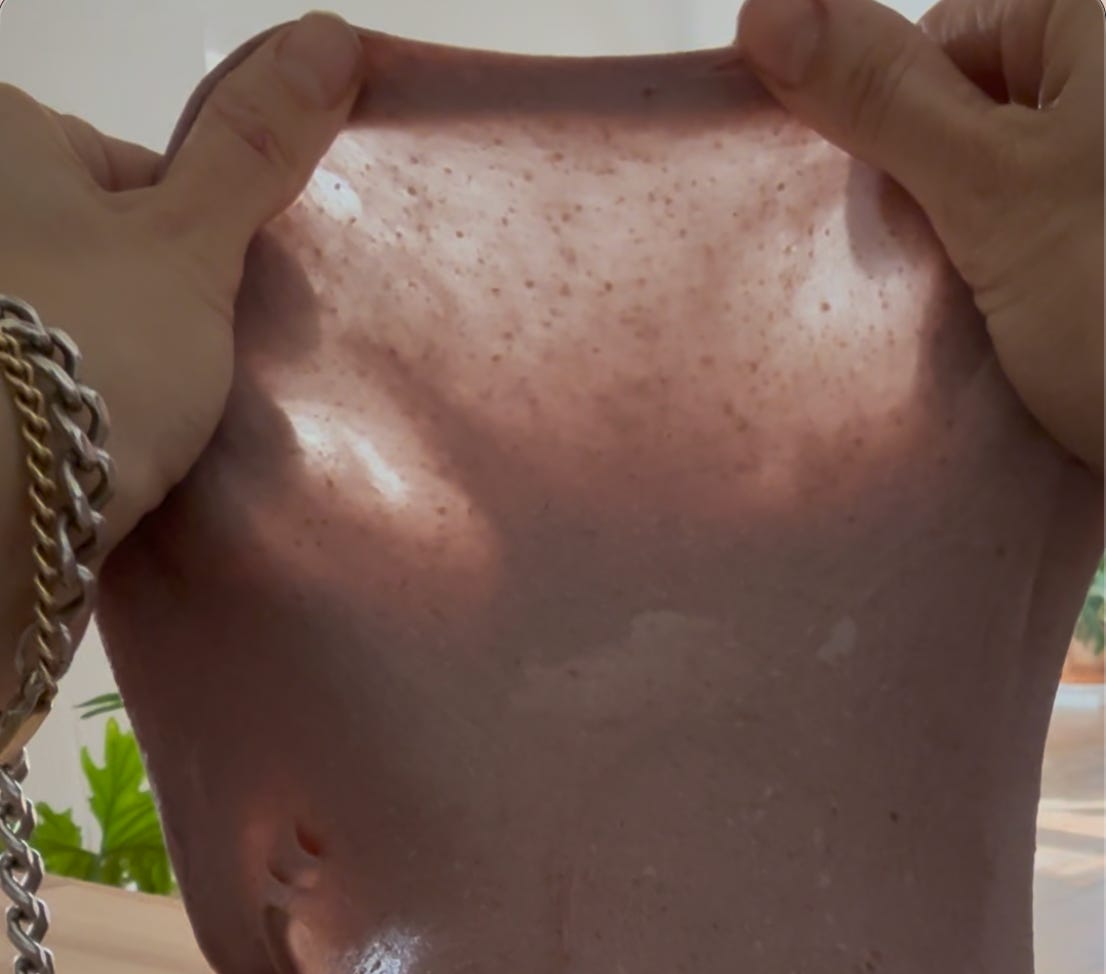
Once all the fat is added continue to mix on medium-low until the dough feels strong, another 3 ish minutes. You want to be able to pull a strong window pane, like this one:

Place the dough on a smooth countertop and give it a fold. I like to kind of aggressively slap the dough over on itself a few times, then use the sides of my palms to tuck it into a round, like in the video below. Put it back in the bowl, cover, and let it rest for 30 minutes.
After the rest, give the dough a bench fold, like this:
Use some oil (not coconut) to grease a bowl or container at least 2 quarts in volume, then put the dough in and let it rest another hour at room temperature, or until it’s grown by about a third. Place it in the fridge overnight.
The next morning, make your filling (method below).
Gather your materials for shaping: a large spatula, two large pieces of parchment paper, a sharp knife, a bench knife, a rolling pin, and a 9”x4” loaf pan (my fave), well-greased and lined with parchment.
(You can move with some urgency from this point on as the dough is a lot easier to use if well-chilled. If it starts to feel sticky at any point, just put it in your freezer for a couple minutes.) Take your dough from the fridge and place it on a clean countertop. Roll the dough to a large rectangle, about 8” x 22”, with the short sides at north/south. Spread the filling across the surface with your spatula or bench knife, avoiding the very edges of the east/west sides of the rectangle (they’ll be trimmed). Cut the dough horizontally across the middle and place one piece on top of the other, creating a new rectangle with four alternating layers. Trim the east/west edges and the bottom edge. Here’s the process compressed into 2 mins, but it will probably take you like 10:
Starting on the left side, use your knife to carefully slice long, narrow strips, about 1/4” wide. As you slice, place the strips on their sides on one of the pieces of parchment paper, so that the layers are exposed. Nestle the strips together as you go, making a new rectangle. Repeat with all the dough, always positioning the strips so that the layers alternate between filling and dough. Place the last strip diagonally across the top of the dough - this will keep all the strips together during the next step.
(Now is a good time to give the dough a 5 minute rest in the freezer if it’s getting soft.) When you’re ready to continue, cover the rectangle with the second piece of parchment and lightly roll out the dough lengthwise, extending it an inch or two. Peel off the top parchment, then press your rolling pin down on the north/south sides to taper them, then trim them with a bench knife.
I like to gently smush the sides with my palms to make sure the layers are well-adhered, then trim the long sides again if it’s become too wide to fit nicely in its pan (if the dough is wider than about 8.5” it will be tough to squeeze in and will proof funny). Roll the dough into a tight tube, starting from the bottom edge and using the parchment below as an aid.3 Once all curled up, gently roll the tube so that the seam is on the bottom, and place the whole thing carefully into your prepared pan. Cover with a shower cap, plastic wrap, or tight towel.
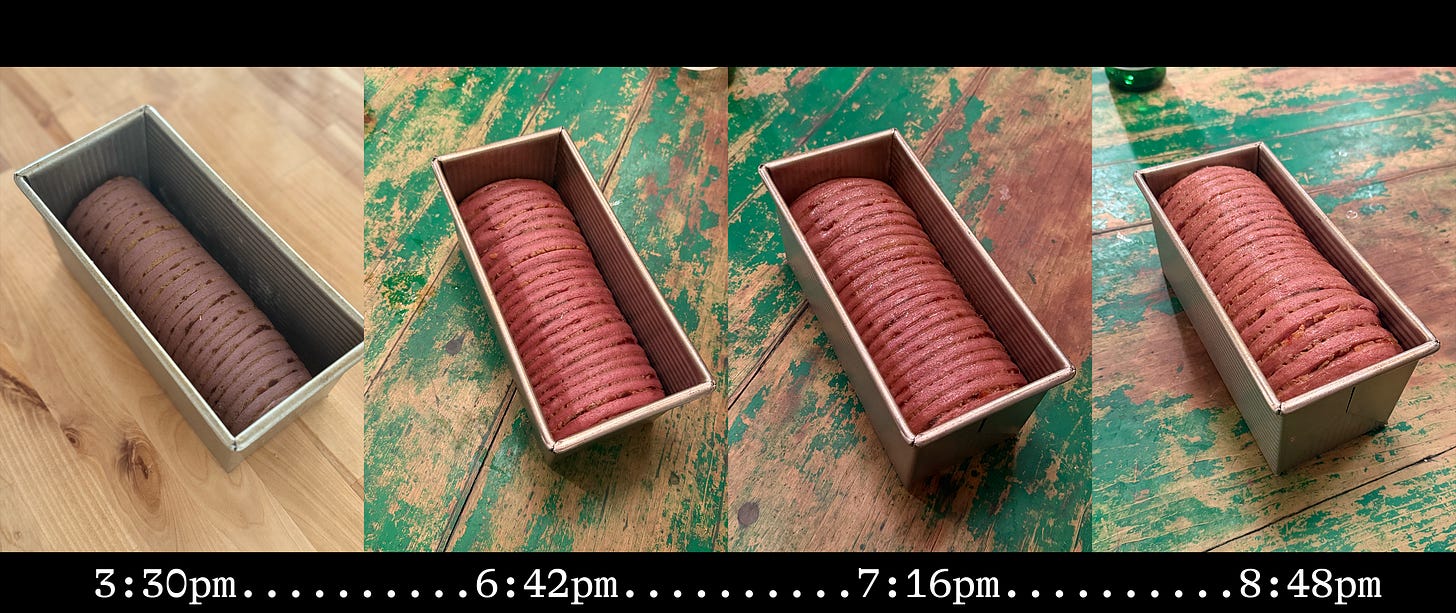
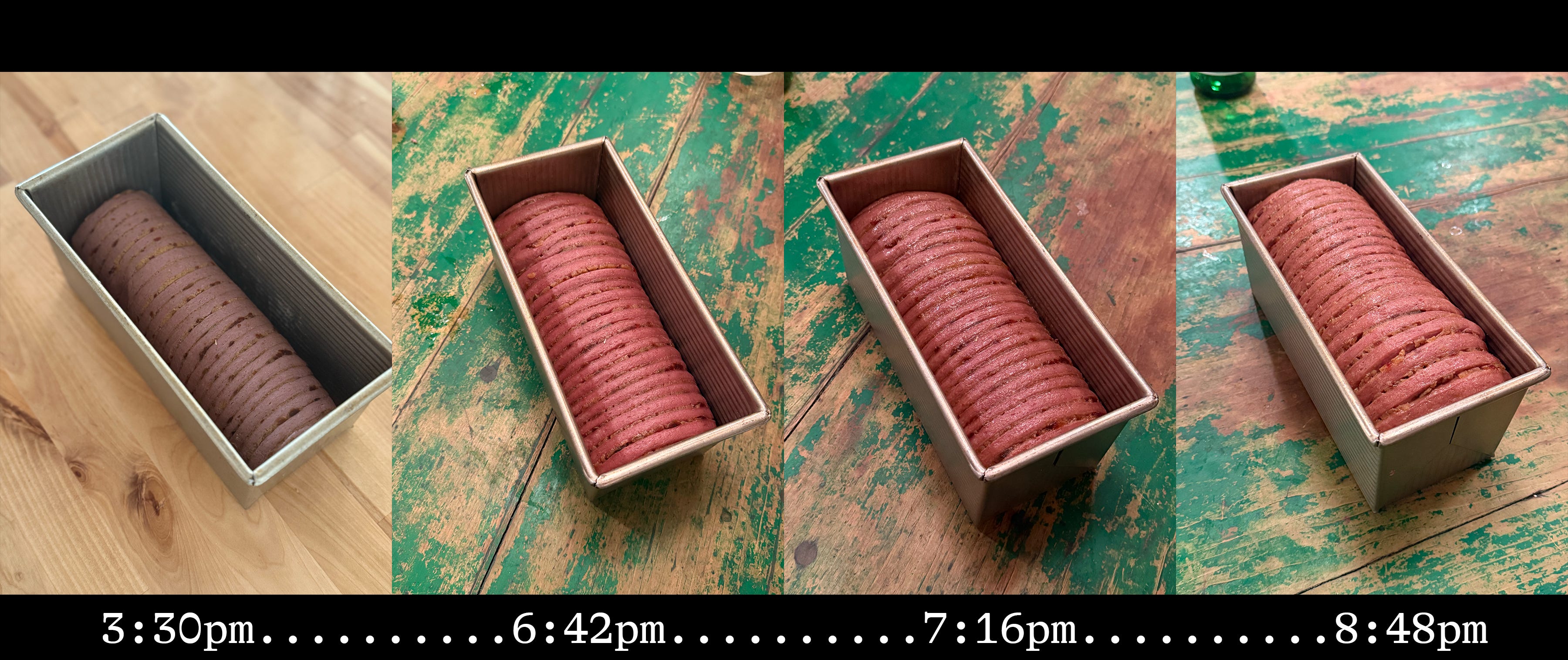
Proof your dough. This timing will vary. If it’s very warm it could take 4-5 hours, if it’s very cold it could take 8, 9! Maybe more! If you have a cool kitchen you could even leave it out overnight (refrigerate the shaped dough until bedtime then leave it on the counter). If you want it to move faster, put it in a cold oven with a bowl of hot water next to it. When fully proofed you should be able to give the dough a light poke and leave a shallow fingerprint in it, but really the clue to readiness is what you see. It should have a soft, lofty look to it, and should just about reach the rim of the pan. The middle of the loaf tends to proof the slowest, so try to wait for it to catch up to the edges before baking. Brush with egg wash after a few hours of proofing, then again right before baking.
Preheat the oven to 375F when you’re reaching the end of your proof. Bake for about 45 minutes, or until quite dark (I like to egg wash it a third time halfway through baking for a really dark crust, but not necessary). If you have a probe thermometer, the inside should be over 200F. Let cool for 5-10 minutes in the pan then carefully loosen and finish cooling on a wire rack.
If the surface tears during baking it just means that the loaf was underproofed, but it will still be delicious and next time you’ll know to push it a little longer.
INGREDIENTS
110g dates, about 6 large ones (I use medjool)
55g brown sugar
110g butter, room temperature
1/2 tsp salt
1 tsp vanilla extract
METHOD
Mix everything together in a food processor and give it a few pulses, until the dates are well-chopped and everything is combined. Use at room temperature.
*I like to add maple syrup sometimes, or a really dark walnut or pecan butter that I make from slightly burnt nuts. Feel free to use what’s written above as a base and adjust it as you like.
xxxxx
Lexie
ps. im going to get a better filming set up…soon….though personally loving this amateur vibe!!
There’s a whole conversation to be had about the reciprocal relationship between health and wealth, and how ancient, slow, lean, handmade breads have slowly evolved into something more coveted and somehow less democratic. They’re often made with expensive, perishable, local, stoneground grain and cost more money to make and to buy, and offer the eater a nutritional boost as compared to their industrially-produced counterparts. They’re the rich breads of the modern age! But the word rich is directly implicated in enriched breads! Those were the breads of the old-world rulers - sifted and silken with milk and fat, long before the huge majority of bread-eating society could afford such things - and they’ll forever, to me at least, carry an air of the elite.
I wanted to use the word “sororal” here, the female equivalent of “fraternal”, but it’s so rarely in play that I skipped it because it felt pedantic. But why?? Aside from its similarity to gargling when you say it, I imagine the word sororal isn’t as popular as its male counterpart because fraternal relationships have always existed outside of domestic and modestly social realms? They’re institutional and political - countrymen and soldiers are fraternal - giving them the heft necessary for a more formal coinage. Sisters and sisterly bonds are generally associated with intimate relationships characterized by affection, not the survival of nationalism, or whatever. No need to say too much about such banalities as birthing and feeding a family or keeping one another safe from predatory men. A derivational suffix will do!
You could gild the lily and spread more filling across the surface before rolling…