

AT&T, renowned for its long history of innovation, has been a cornerstone in technological evolution for over a century. To honor this history, onformative created the "Knowledge Archive", a project celebrating this legacy by transforming AT&T's vast patent portfolio into a living digital experience, situated in the heart of AT&T's Dallas headquarters.

AT&T Knowledge Archive
2025
In AT&T's "Knowledge Archive," the history of innovation unfolds as a digital mosaic in the lobby of its Dallas headquarters. This project transforms over a century of patents into a dynamic brand experience that showcases AT&T's innovation legacy. Through this vibrant fusion of technology and creativity, these technological breakthroughs are not just archived but vividly brought to life, inviting visitors to discover AT&T's role in shaping today's connected world.
A Space to Explore, Not a Screen to Look At
The Knowledge Archive transcends traditional digital signage by transforming the architectural experience of the space itself. Rather than adding another screen to a wall, the installation converts screens into virtual shelves that extend the physical environment, merging digital and physical space so seamlessly that the lobby becomes a living archive visitors can explore intuitively, not just observe.
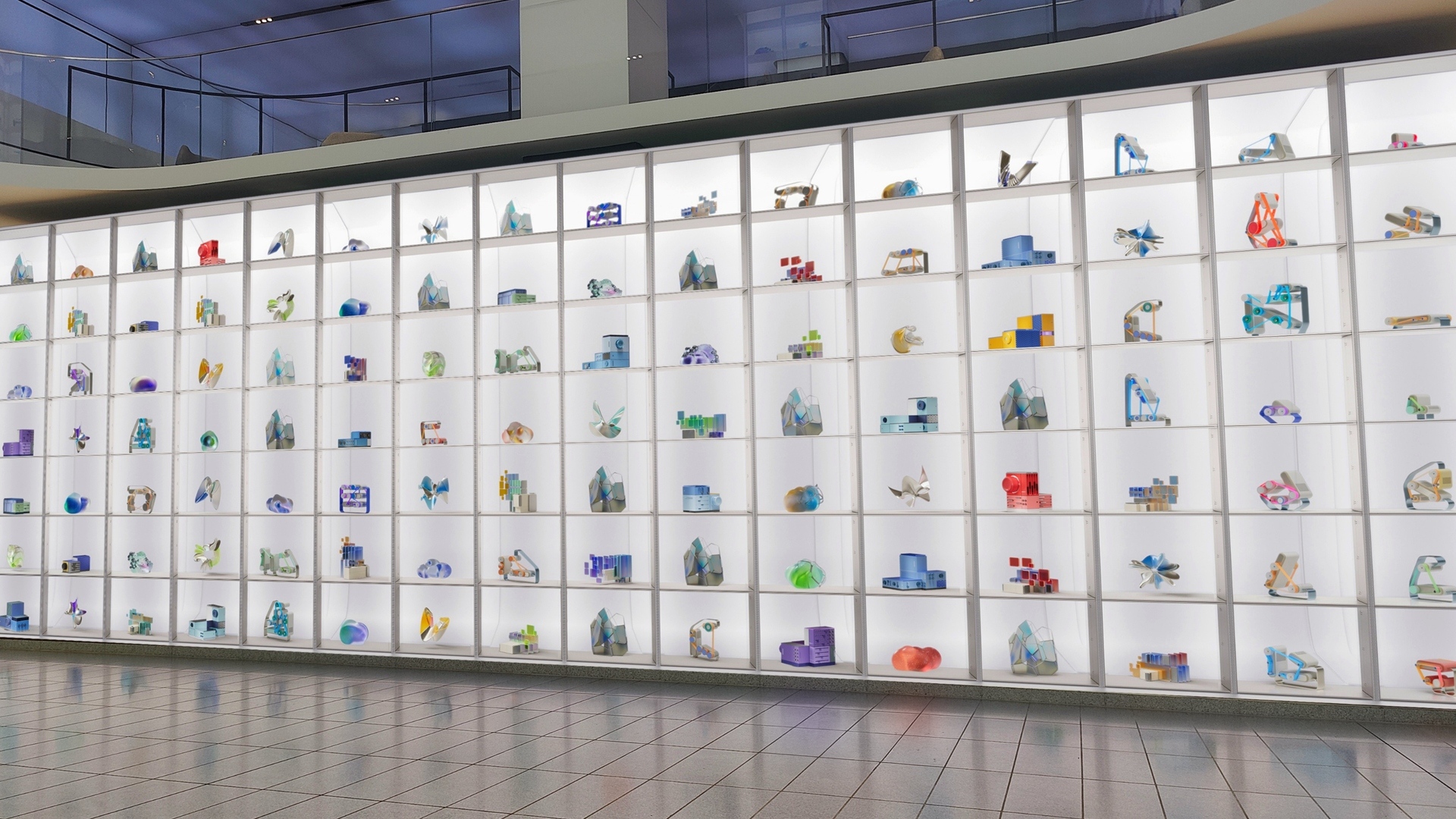
The exhibit features two modes: Discovery and Hero Mode. The Discovery Mode offers an exploratory experience of AT&T's large patents archive, while the Hero Mode highlights selected patents that have significantly impacted the world.

Moving through the space, visitors witness dynamic shelf transformations and consonant rearrangement of objects, guided by animated ambient lighting and information panels that unfold to reveal deeper stories behind individual patents. QR codes extend the experience further, letting visitors pull selected patents onto their own devices to continue exploring AT&T's 150-year journey of innovation, from the invention of the telephone to the transistor or the Telstar satellite.
The result is a new model for brand communication: history made spatial and walkable, where 150 years of innovation can be explored and discovered.
Turning 28,500 Patents Into a Living System
We set out to tell the story hidden inside AT&T's patent archive. In collaboration with AT&T's archivists and patent team, over 28,500 patents, spanning more than 500,000 pages, were compiled into a single structured dataset. Bespoke AI algorithms were used to analyze this archive, identifying key parameters and relationships across the full portfolio and organizing them into six main categories.


Each category represents a distinct facet of AT&T's innovation spectrum, from revolutionary breakthroughs to the technologies shaping connectivity today. The exhibit's Discovery and Hero Modes offer unique perspectives on these categories, offering visitors unique perspectives on the different categories, providing visitors a comprehensive view of AT&T's patent landscape.
From Data to Design: The Procedural System
The patent collection is divided into six distinct categories. To bring them to life, we built multiple unique data-driven generative systems, each guided by its own design logic, to give each category a unique visual language that reflects the underlying technological concepts. These abstract representations transform complex patent data into engaging visual narratives, creating an intuitive way for visitors to explore AT&T's diverse innovation landscape.

The patent categories include various technological domains such as "Communications and Entertainment" patents, inspired by old tape devices and the evolution from traditional to modern media forms, while "Cloud Computing" patents are depicted with soft, cloud-like shapes, symbolizing data storage and fluidity of services.


The design approach for the "Knowledge Archive" is rooted in the use of patent metadata to stylistically influence the creation of procedurally generated, digital objects. These objects are abstract and artistic representations of patents avoiding literal interpretations. The technical process behind this involves mapping patent data to the visual elements, ensuring each patent is uniquely and creatively represented.

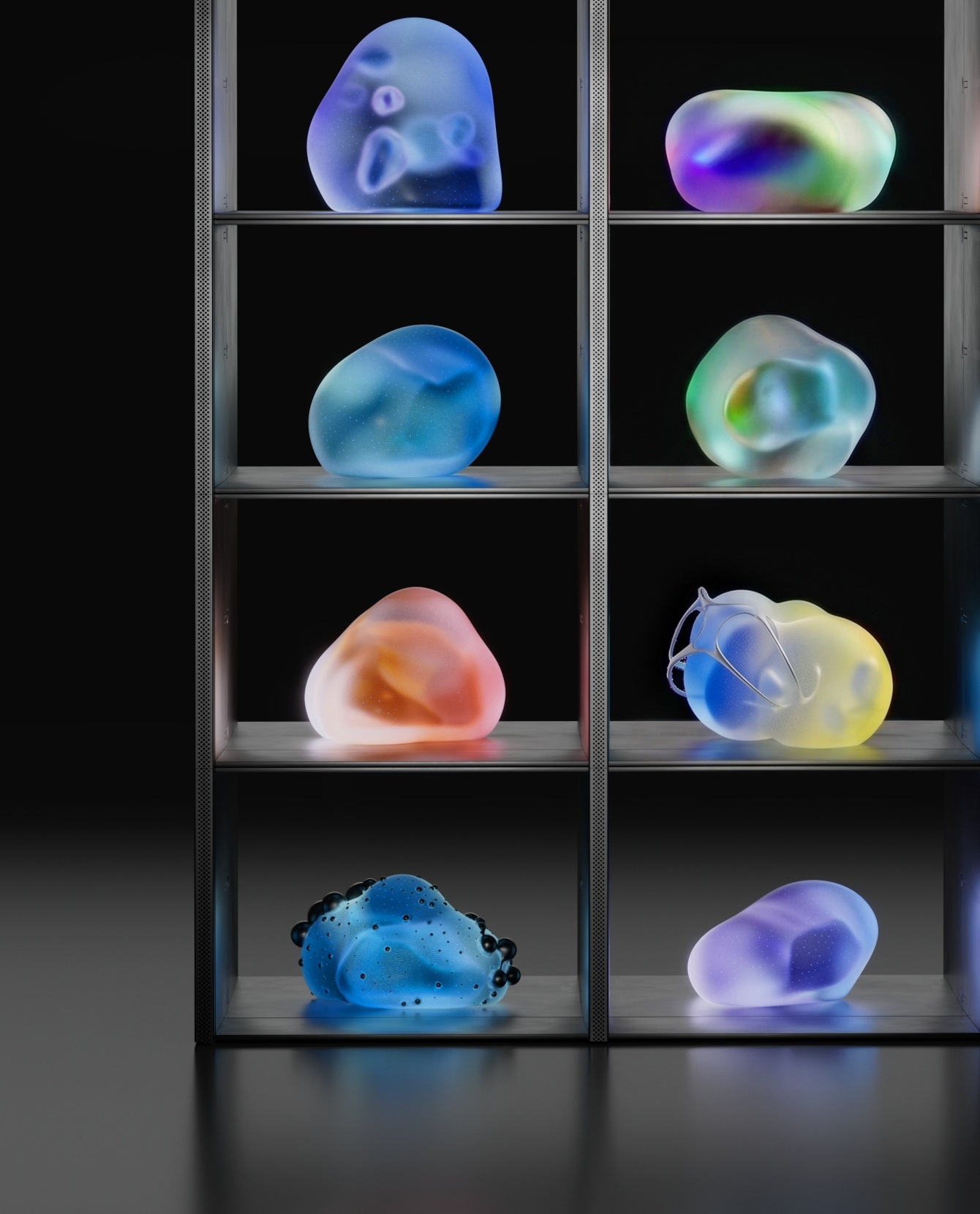


"Mobile Applications and Content Delivery" patents are interpreted as layered structures, abstractly signifying the complexity of digital platforms, physical devices and the different types of media they serve.
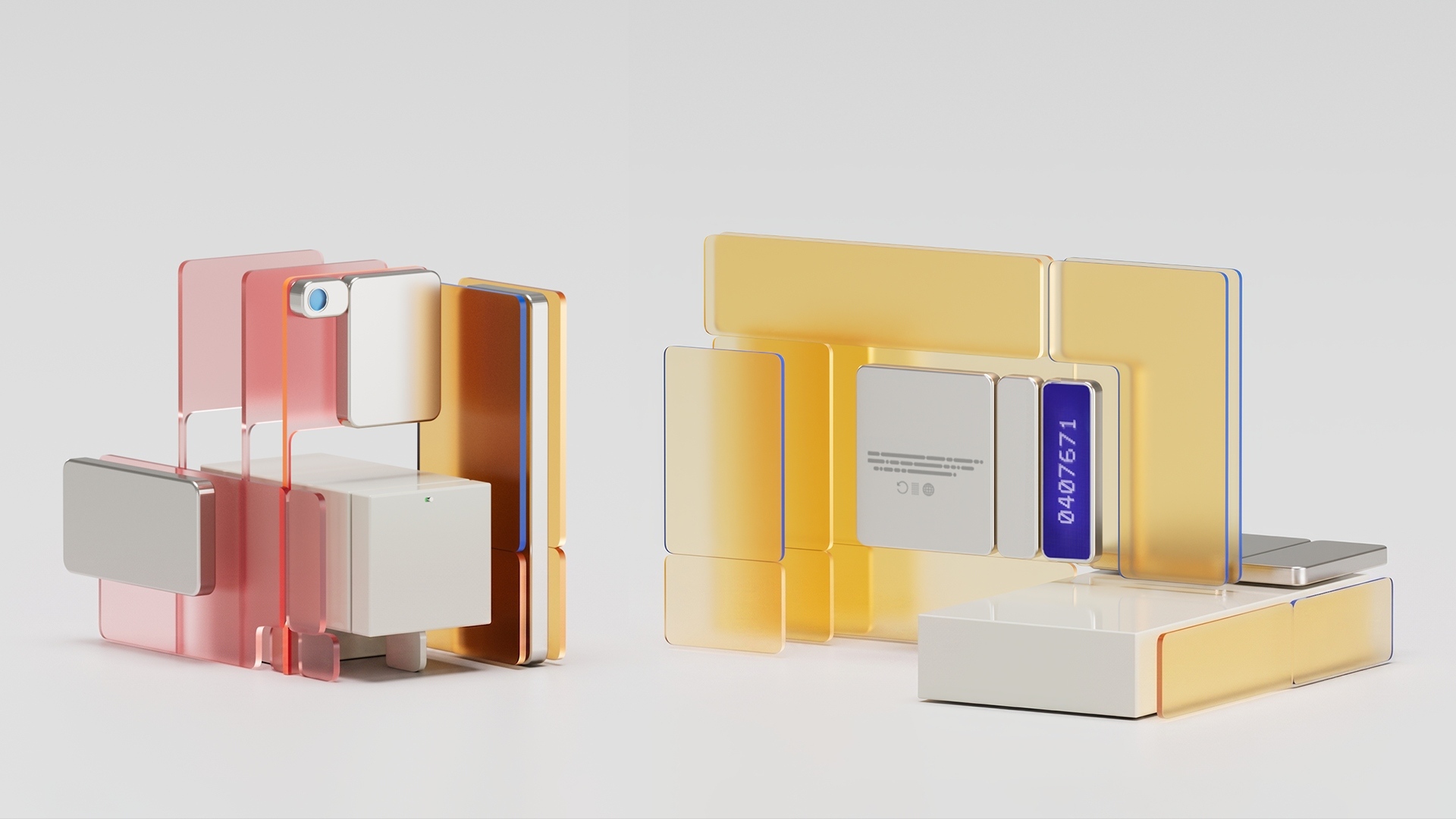


"Customer Experience" category takes inspiration from tactile and modular industrial design, transforms into interactive sculptures, symbolizing the interface between users and technology.

Each category's distinct characteristics are visually interpreted, with design inspiration drawn from the patents' underlying concepts and technological advancements, ensuring that every digital object is not just a representation but a creative expression of AT&T's technological prowess.


'Networking and Data Transmission' patents on the other hand are represented by intricate wireframe designs, reflecting the multi-layered complexity of network architecture and data protocols. Throughout selected objects in various categories, subtle engravings and small digital displays featuring patent numbers provide direct references to the original documentation, creating tangible links between the abstract visualizations and their historical sources.

"Wireless Technologies and Applications" category of AT&T's "Knowledge Archive," patents are artistically represented by designs inspired by the concept of radio wave frequencies. The visualizations incorporate both short and long-band waves, reflecting the diversity and range of wireless communication technologies developed.


Building at Scale: 38 Screens, One Seamless System
The project presented significant technical challenges, requiring the creation of content for a 62-megapixel display system spanning 38 individual screens with one hour of seamless content duration. To address this complexity, our team developed a custom rendering pipeline that fundamentally improved the production workflow.

This bespoke system combines TouchDesigner, Houdini, and Cinema 4D with procedurally generated real-time elements, enabling the composition of over 20,000 unique objects within the dynamic transforming shelf system. The pipeline dramatically reduced render times and provided unprecedented flexibility, allowing for late-stage updates and adjustments without requiring complete re-rendering of the entire sequence.
The "Knowledge Archive" exemplifies a holistic approach to screen art, where digital displays extend and augment physical spaces. This transformative use of screens adds a new dimension to the environment, making it more interactive and engaging.
By artistically representing complex patent information, the project makes technical data accessible and intriguing to a wider audience. It's a step towards demystifying and sharing knowledge, inviting viewers to delve into stories of innovation and progress. This blend of art and information exemplifies a forward-thinking method of storytelling, bridging the gap between historical data and contemporary audience engagement.
Credits
Creative Direction: Cedric Kiefer
Art Direction: Sam Care, Raimi Nikkari, Matei Bacanu, Bernd Marbach, Julian Braun
Production: Tobias Ziegler,
Technical Setup: Martin Backhaus