I spent a long while this past week putting together a party playlist with my wife Jess and I really think the mixtape joy is still there, even on Spotify. Everyone can still be a DJ, and how else are we going to preserve obscure indie hits like “Trains to Brazil” by Guillemots? Today we have culture updates from Vipp hotels to magazine Marxism to the new season of Emily in Paris. Writing by me except where noted by Emily Chang. — Kyle Chayka
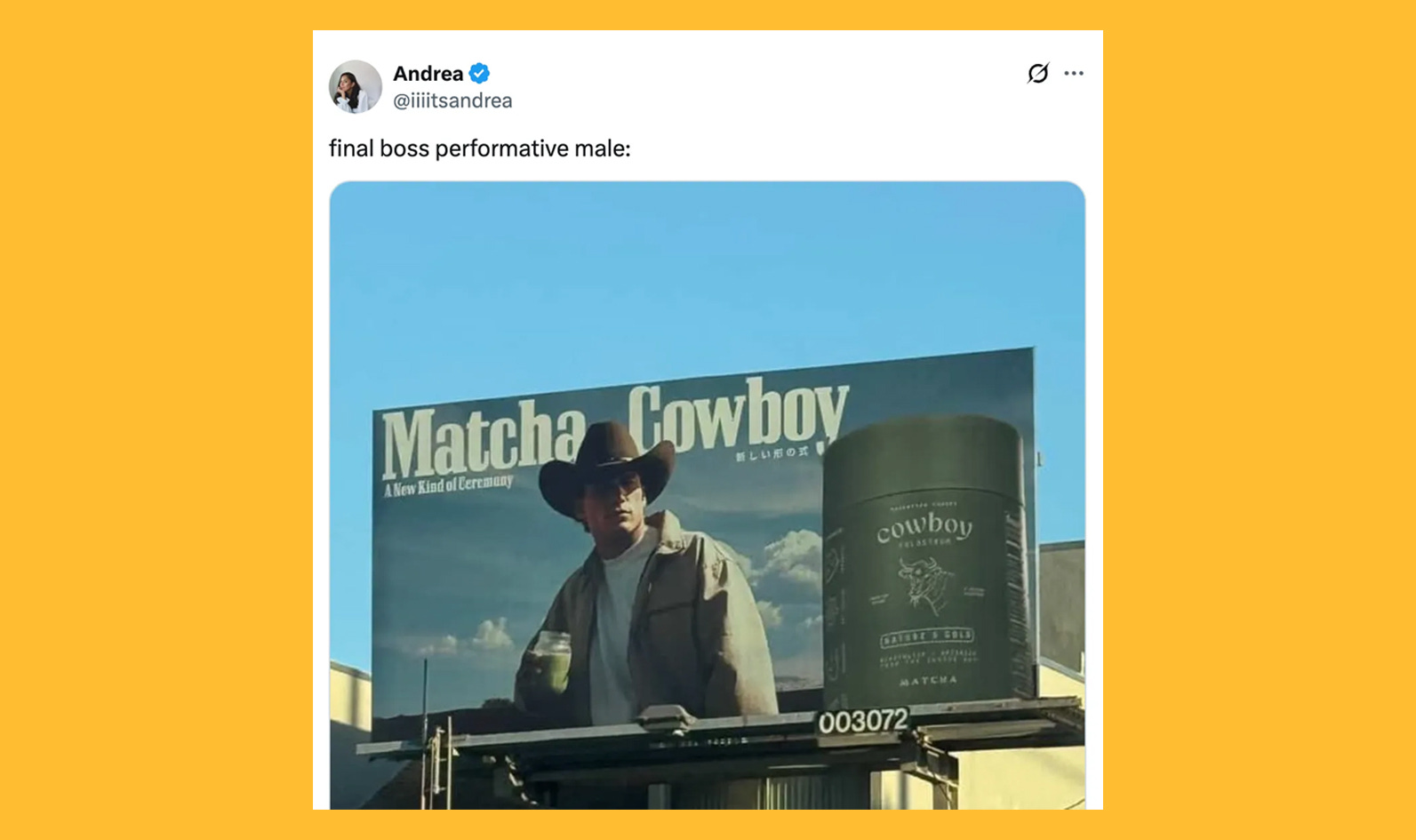
Andrea from Snaxshot posted this surreal billboard, which is not just a Old Westernized green tea powder, but an influencer-y brand of matcha-flavored colostrum powder (that is, the first milk a cow gives after giving birth) that you whisk into your frothed alternative milks. I think this fits in to my Labubu theory that all culture is hybridized and chemical now — just smash together MAHA wellness and Japanese beverages.
Spicy Carhartt collab: The British designer Nicholas Daley launched a collaboration with Carhartt’s higher-fashion Work in Progress line, pulling together Jamaican, Scottish, and workwear influences into attention-grabbing chore coats, T-shirts, and bags. I’ll take the tartan-printed, quilt-lined Modular Jacket ($398).

5Emily 5Paris: Everyone’s favorite ambient television show is back in December for its fifth season, or, as I like to think of it, the first “Emily in Paris” of the second Trump administration. Its first trailer is out, and once again the show looks better in Rome than in Paris. Will its utter brainlessness be able to soothe the chaos of our times? I hope so. Will Gabriel the annoying, inarticulate French chef be able to compete with the suave Roman scion of fake Brunello Cucinelli? I hope not! Mark your calendars for December 18.
Rachel Sennott’s rise to the top: I have to say it — this girl is bringing personality back to Hollywood. It’s been so fun to see Rachel Sennott, or @treaclychild, as she’s known on Instagram, go from NYC stand-up comedy darling to launching her own show with HBO, “I Love L.A.”, debuting this Sunday. Variety’s Alison Herman writes in a review:
It’s a finer piece of sociology about the influencer era than it is a joke- or even character-driven sitcom. Which is to say, watching “I Love L.A.” made this Angeleno of nearly a decade want to stare at a wall for several hours in numbed-out despair — and I suspect that may be the intended effect.
— Emily Chang
Battle of the aural algorithms: I don’t think I’m alone in thinking that Spotify Discover Weekly has completely fallen off. I used to genuinely look forward to it every Monday, queueing it up as I walk towards the subway on my morning commute. But these songs are melody-agnostic and shockingly unlistenable — anyone else? TikTok is delivering better music in the background of its videos. I don’t mean brainrot dance bops, I mean real good music, spanning eras, genres, and incredible atmospheres. I’ve already found a few gems this week. The good thing about the immediacy of the TikTok algorithm is that you can train it pretty quickly to give you what you want. I’ve been swiping that app like I skip songs on Spotify. It works. Below are my latest fav TikTok song finds. — Emily Chang
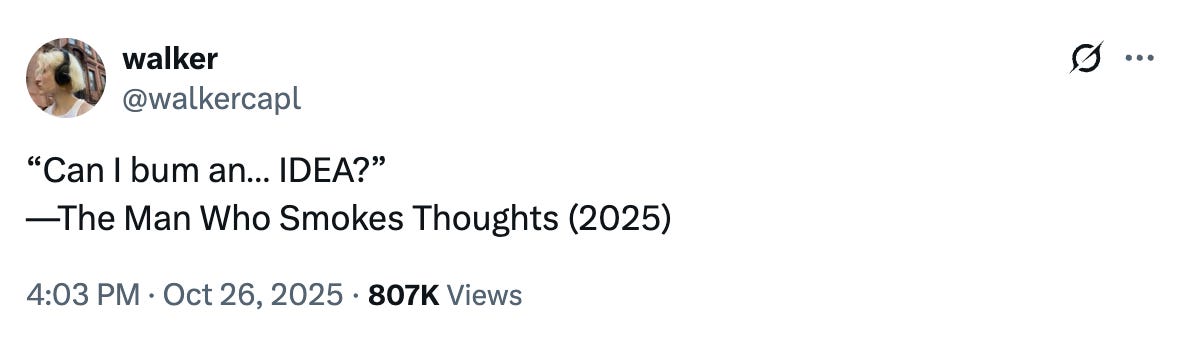
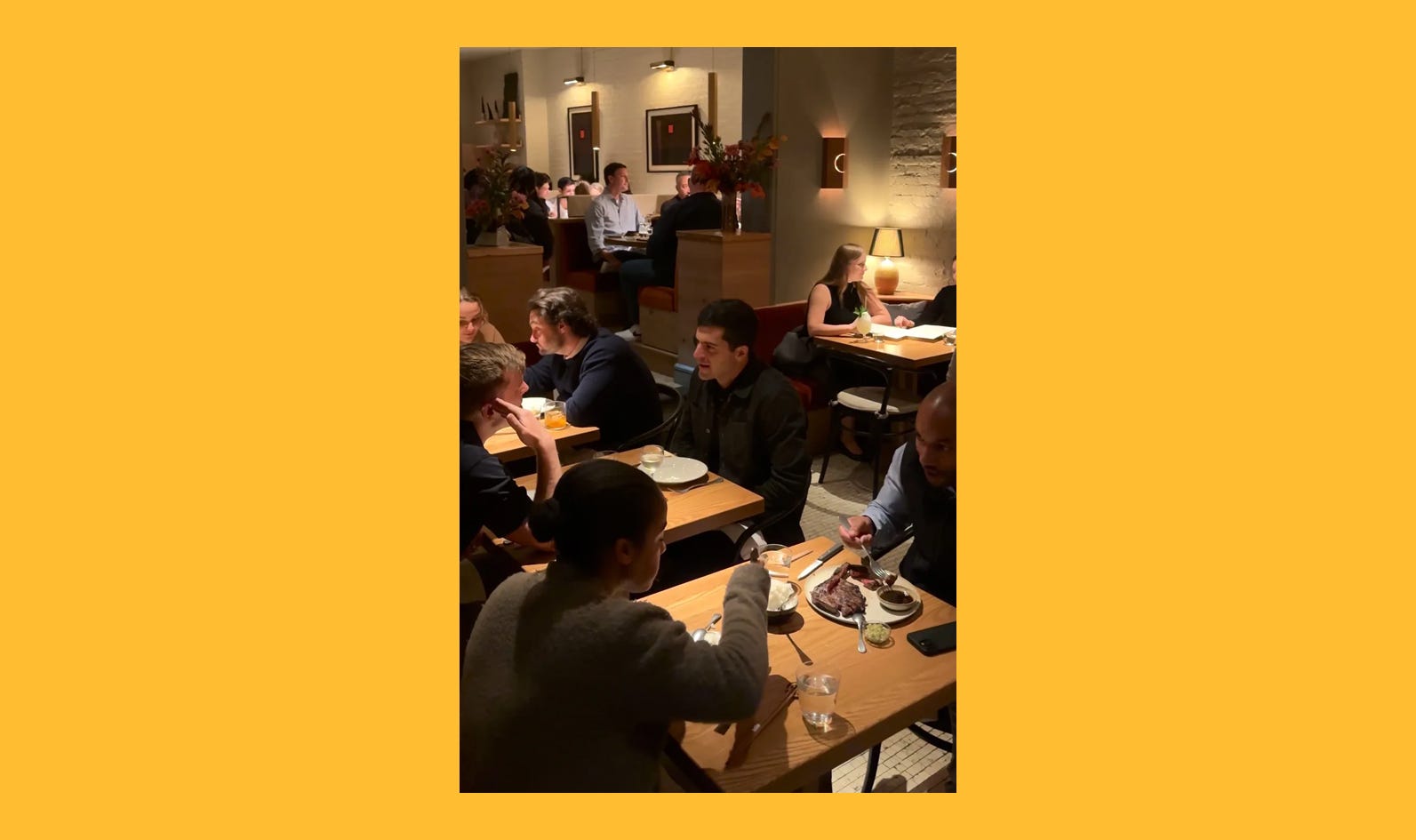
“a bit ryokan-chalet”: NYmag’s review of Kiko, a new Japanese-ish restaurant in Hudson Square, highlights the boundaries of the Japandi aesthetic, which is kind of like wabi-sabi meets hygge.
Maximum Turkish coffee: Over at the Why is This Interesting newsletter, man of the world Colin James Nagy has a nice review of “sand coffee,” which is Turkish coffee made by means of the pot with water and grounds in it being buried in hot sand. I’ve never had this preparation before but I’ve always wanted to:
The coffee isn’t boiled, per se — it’s more accurately cooked, like a very small, very careful soup. The sand heats to a consistent high temperature, and the tiny copper pot, or cezve, can be positioned deeper for more heat or shallower for less.
The resulting brew is simultaneously strong and smooth, with texture from the ultra-fine grounds that remain suspended throughout the drink.
Its flavor profile is earthy and intense, often with nutty or slightly sweet undertones of sugar, if it’s added. (In my case, it was not.)
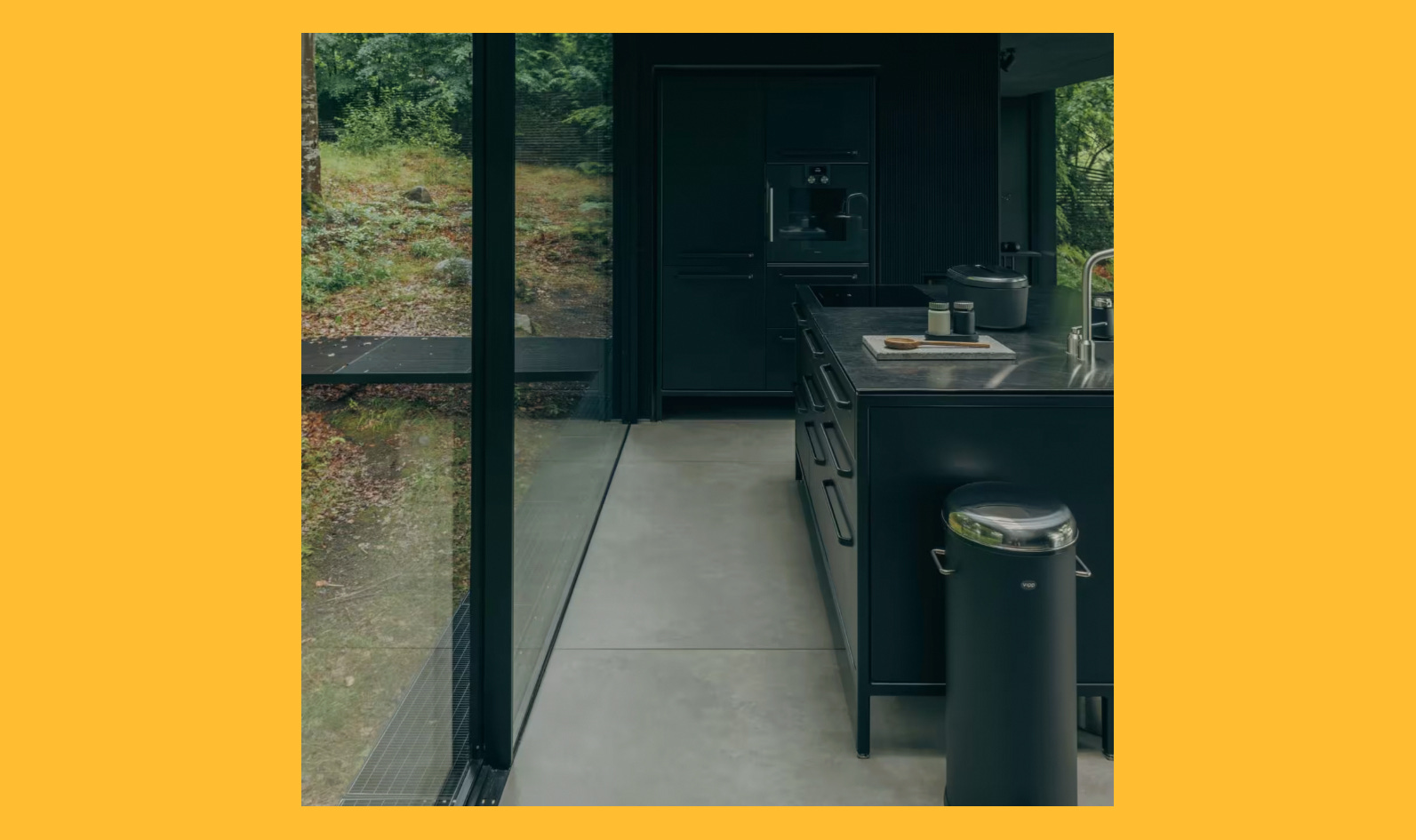
Danish modernist trash can hotels: The Danish brand Vipp began as a line of now-ubiquitous trash bins. As this extremely elegant profile in the FT recounts, under the family business’s second generation it is expanding into rental residences, a series of international guesthouses, showing off the metal, minimalist furnishings:
Though each guesthouse is generously equipped, Vipp’s approach to service is hands-off (the in-room instruction sheets are as minimalist as the interiors). What guests experience is a degree of privacy that still somehow feels personal. “These projects are like children,” says Kasper, who cites Vipp Cold Hawaii, an isolated retreat restored in Thy National Park on Denmark’s north-western coast — a local surfing destination — as a favourite.
Literary discourse building of the week award: goes to Thomas Meaney, editor of the literary journal Granta and devoted Marxist, who gave a serious and polemic interview with the Nation, which is worth reading if you want to think about thinking and the production of book culture:
…Granta is above all a literary magazine, with an ambition to show our readers what we think is most alive in contemporary fiction, poetry, memoir, and reportage. Like any instrument of culture, it operates through an alternating process of attention and neglect. We pay attention to writers whose work displays a sense of control and a mastery with language, to prose that simply gives us pleasure. But at the same time, in order to husband our resources, we avoid what we think has been falsely raised up, what we think has been exhausted, what we think is inert on the page.
How does work on a political journal help with any of this? Because it provides a set of antennae about the nature of the time we’re living in, and about where the fault lines of conflicts and interests lie, as well as what fresh alibis the status quo is wrapped up in. To have a strong idea of these things is to have a better sense of where the art you are seeing is coming from and where it sits in the wider culture. Almost all literary movements and styles have some kind of relation to politics, whether acknowledged or not.
No posts