
Keynes Before He Became a Keynesian
The costs of war are vast and horrific. Most people know this, which raises the question of why the US government seemingly can’t live without it.
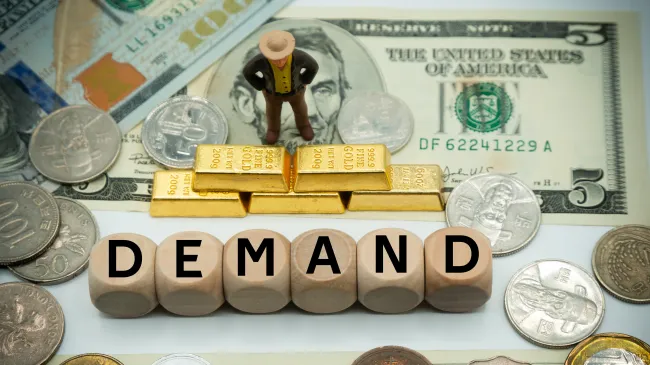
Why the Fed Should Not Accommodate Increases in the Demand for Money
Most economists believe that a growing economy needs a growing supply of money. While sounding like a common-sense idea, it turns out to be dreadfully wrong.
The Innovation Mirage: Why DeepSeek and Kimi 3 Do Not Settle the Question of Chinese Technological Supremacy
There is no doubt that Chinese firms have made many advances in AI technology, but how far they can go in the future still is an open question.
The Pretexts and Motives Behind Government Regulation
Murray Rothbard wrote many years ago that government regulation, ostensibly created to protect consumers, actually protects incumbent producers from competition. Decades later, nothing has changed.
The Liberalization of Holidays and the Ownership of Time
Everyone loves to have time off, but what happens when governments force people not to work against their will?
The Illegal Constitutional Amendment
The Fourteenth Amendment to the US Constitution has been the basis of numerous Supreme Court decisions, yet there is a compelling case for its never having been legally ratified. In this week’s Friday Philosophy, Dr. David Gordon examines those claims.
Ahoy! Ahoy! The Telephone, Entrepreneurship, and Cronyism
Our history books tell us about how Alexander Graham Bell invented the telephone. They don’t tell us that his company then successfully got the government to grant it monopoly powers, thus harming consumers and stifling technological innovation for nearly a century.
The Imaginary World of Fed “Independence”
The rhetoric of independence allows the Treasury and the Fed to cooperate when convenient and deflect blame when something goes wrong.
The Prussians Who Built Prussia
The stereotype of the Prussian as the militaristic, state-loving creature probably needs to be rethought. The history of Prussia and its people is more complicated than contemporary historians wish to admit.
The Alice-in-Wonderland World of the WNBA
As Sophie Cunningham of the Indiana Fever drove toward the basket for a seemingly easy breakaway layup, DiJonai Carrington of the Chicago Sky bore down on her.
Cronyism: Rise of the Corporatist State, 1849–1929
In his new book, Patrick Newman shows how America’s corporatist state was built: not by free markets run amok, but by big business, bankers, and politicians using regulation to cartelize the economy.
Government Intervention and Economic Inequality
Mark Thornton explains how government intervention creates inequality, privileging protected industries and politically connected insiders while pushing costs onto everyone else.
Has Trump Already Lost the War with Iran?
Months ago, the administration said the war's goals were regime change and the removal of all uranium from Iran. We never hear about that anymore because the war has failed to produce either goal.
Scott Bessent: New Prince of the Yen?
Ryan, Tho, and Dr. Jonathan Newman discuss recent economics headlines, including interventions to prop up the yen, a bad jobs report, and troubling signs in bond markets.
Republican Party Displacement
Mark Thornton explains how ideology can break the uniparty, why blocked realignment risks revolution, and why Austrian economics helps young Americans see through the crisis.
Fall 2026 Virtual Mises Book Club
Online
In September 2026, the Mises Institute will hold its next Mises Book Clubs, a program that promotes deep reading in Austrian economics.
Economics for Beginners
What is the Mises Institute?
The Mises Institute is a non-profit organization that exists to promote teaching and research in the Austrian School of economics, individual freedom, honest history, and international peace, in the tradition of Ludwig von Mises and Murray N. Rothbard.
Non-political, non-partisan, and non-PC, we advocate a radical shift in the intellectual climate, away from statism and toward a private property order. We believe that our foundational ideas are of permanent value, and oppose all efforts at compromise, sellout, and amalgamation of these ideas with fashionable political, cultural, and social doctrines inimical to their spirit.