DnA · maggieappleton.com

In 20197ya I took a course called Building a Second Brain by Tiago Forte. Throughout the course I illustrated summaries of the main concepts which you can find below.

Much like it sounds, building a “second brain” is about creating a system – outside your physical skin-and-bone bodily boundaries – for storing, organising, and eventually transforming information.

This idea is not especially new; commonplace books for storing personal knowledge have been around for centuries. Although digital mediums have made it easier and faster to capture, browse, search, and retrieve the information in these systems.
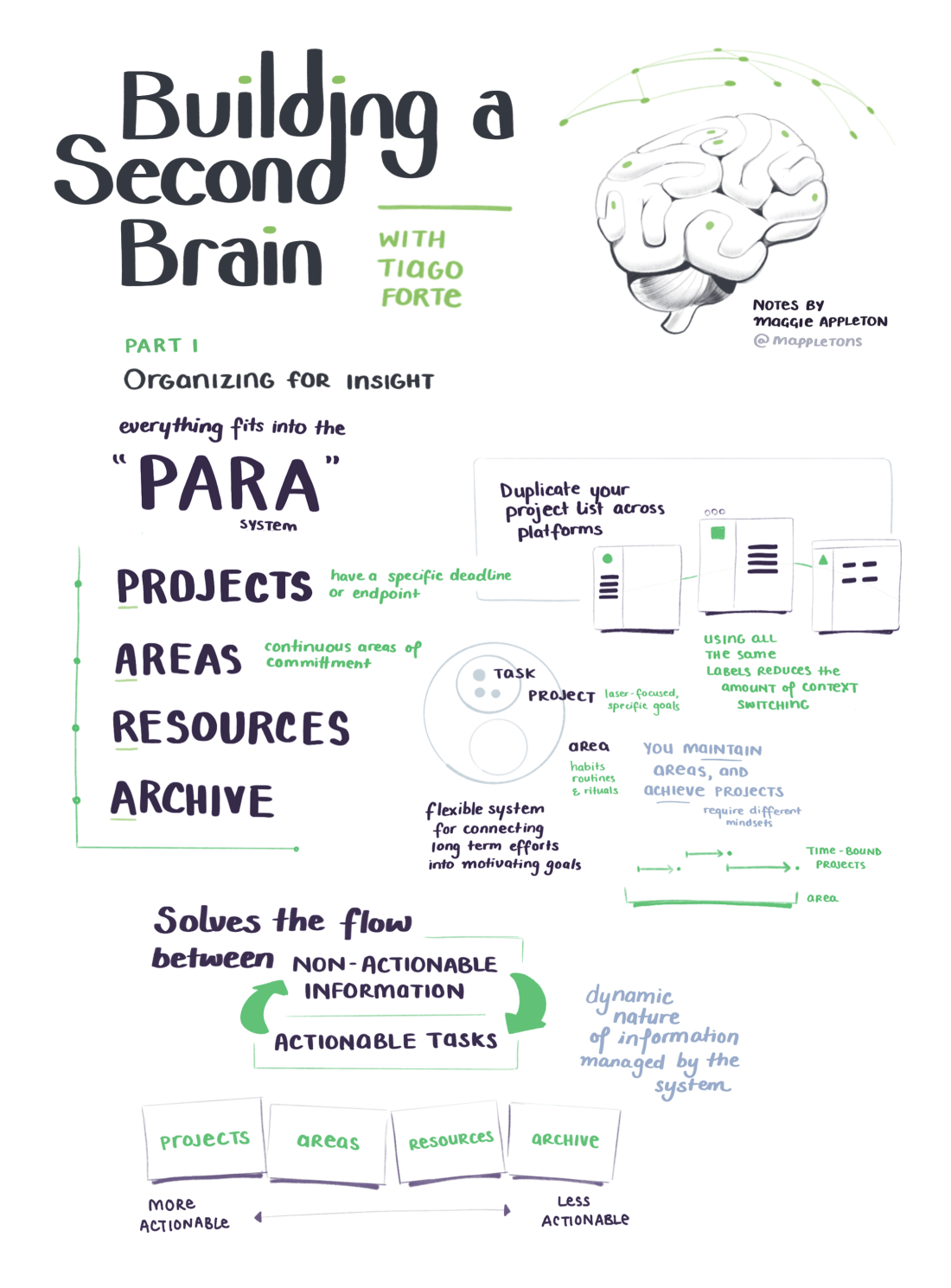
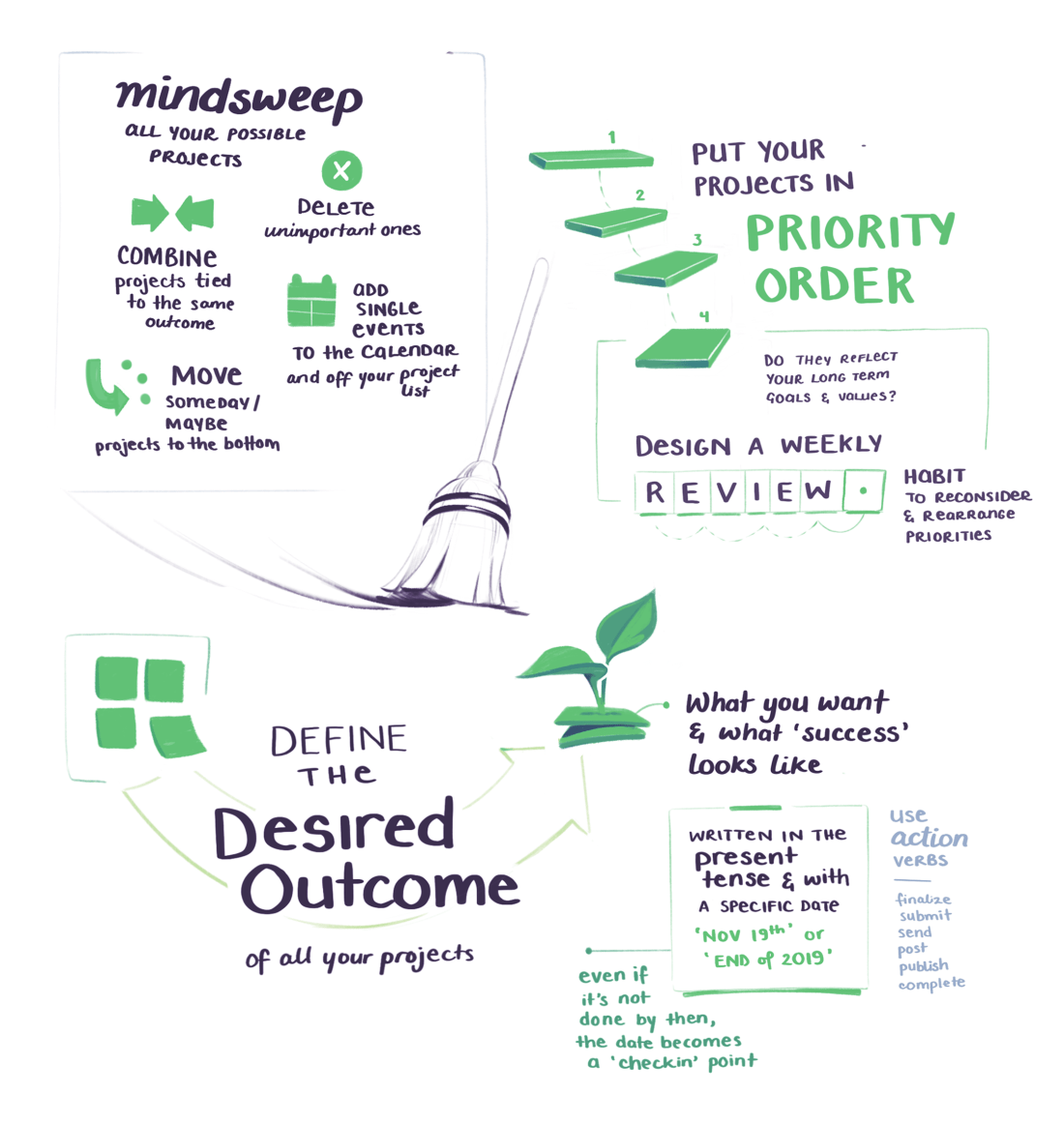
Building a second brain (BASB) illustrated notes on the PARA system of organising content projects, areas, resources, and archives

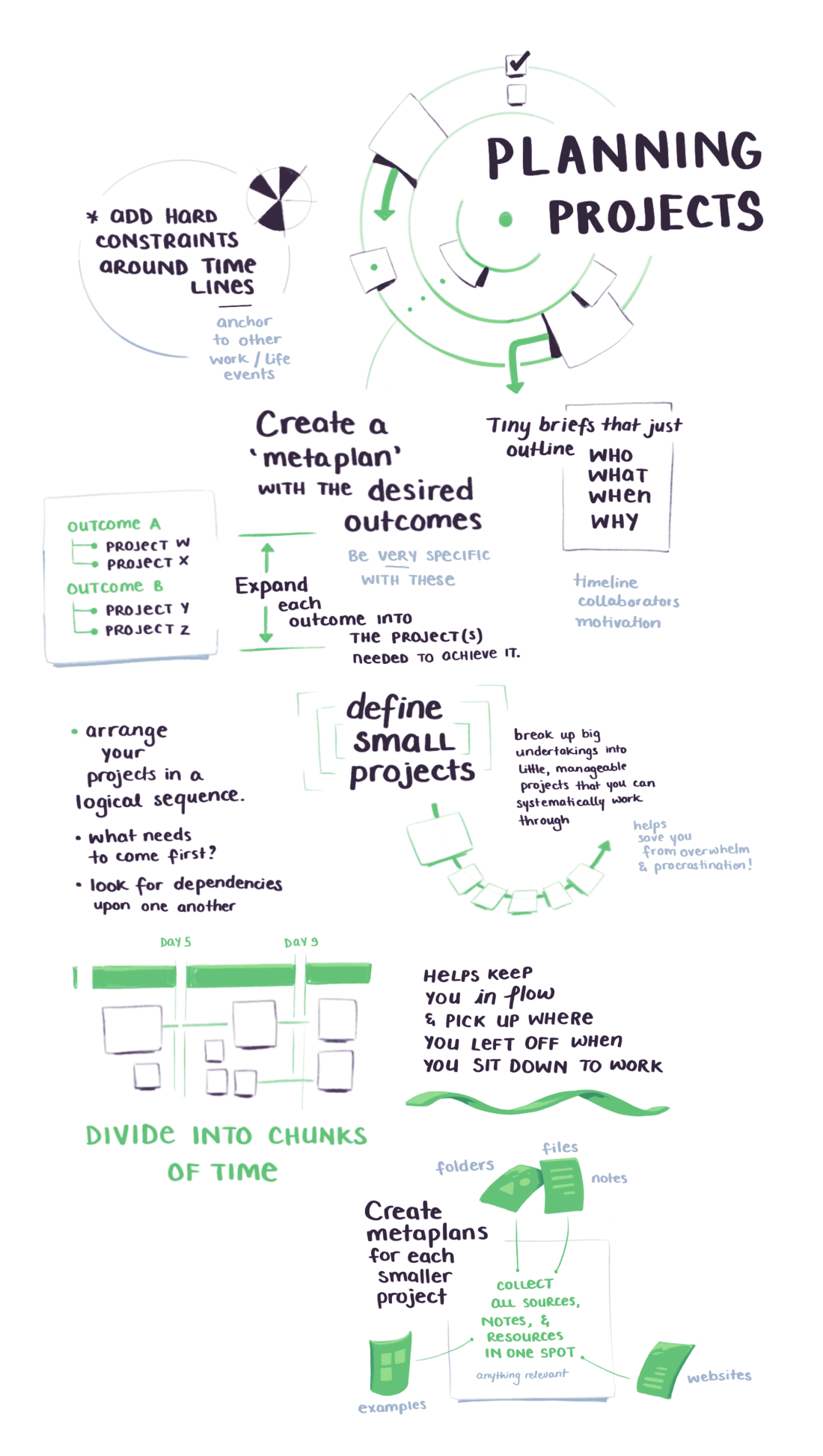
BASB sketchnotes on putting projects in priority order and defining the desired outcome

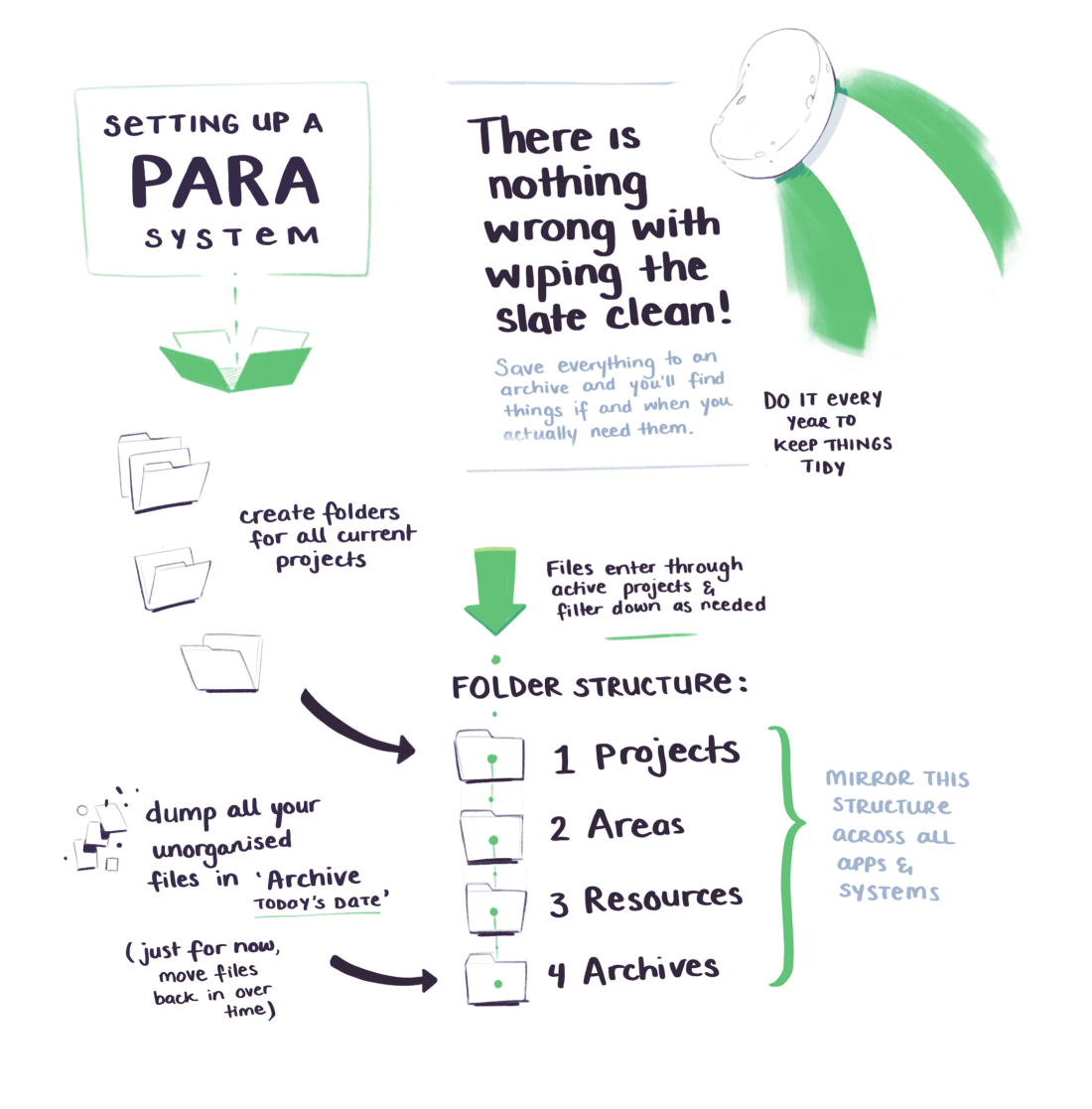
BASB sketchnotes on wiping the slate clean and setting up PARA as a folder structure

BASB sketchnotes on creating metaplans before you start your project

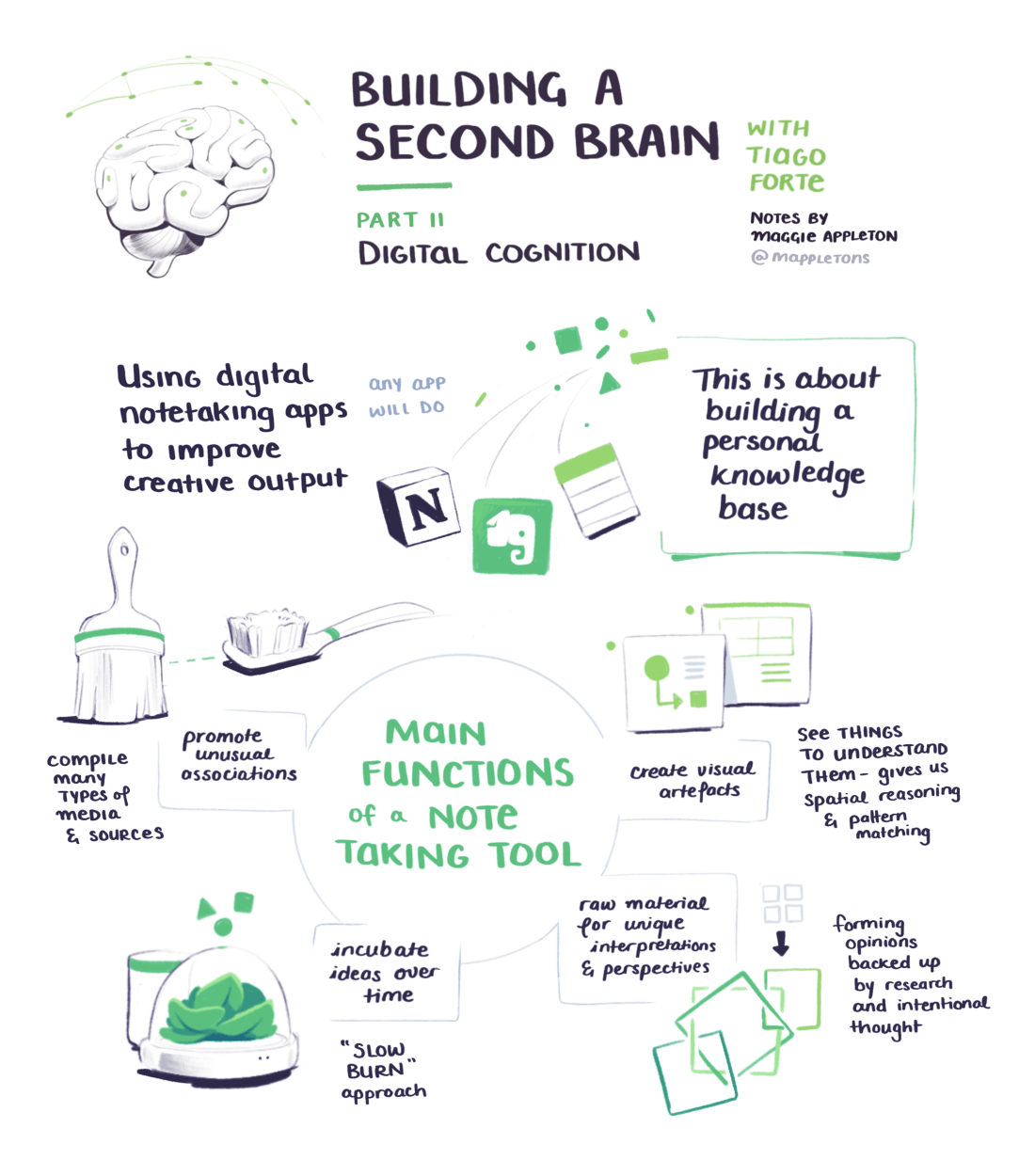
BASB sketchnotes on digital cognition and building a personal knowledge base

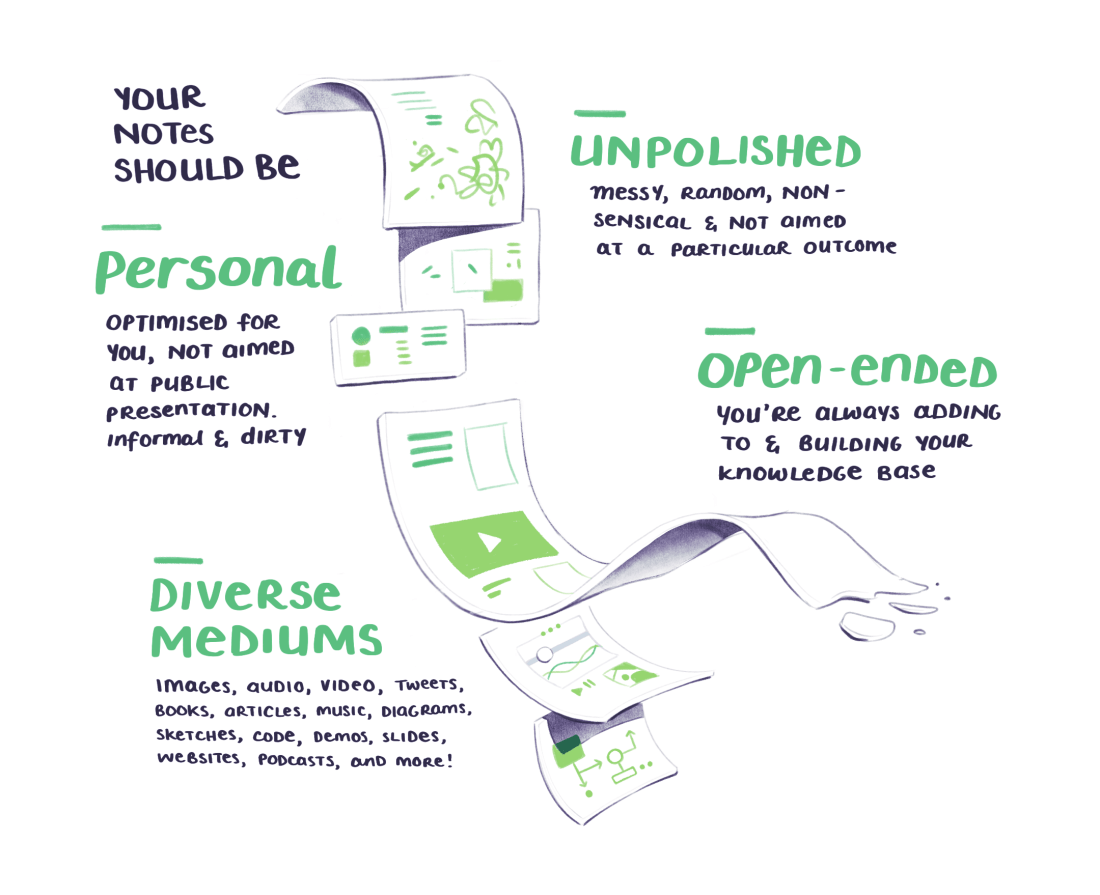
BASB sketchnotes on your notes being unpolished, personal, open-ended, and diverse

BASB sketchnotes on considering 12 favourite problems to focus on

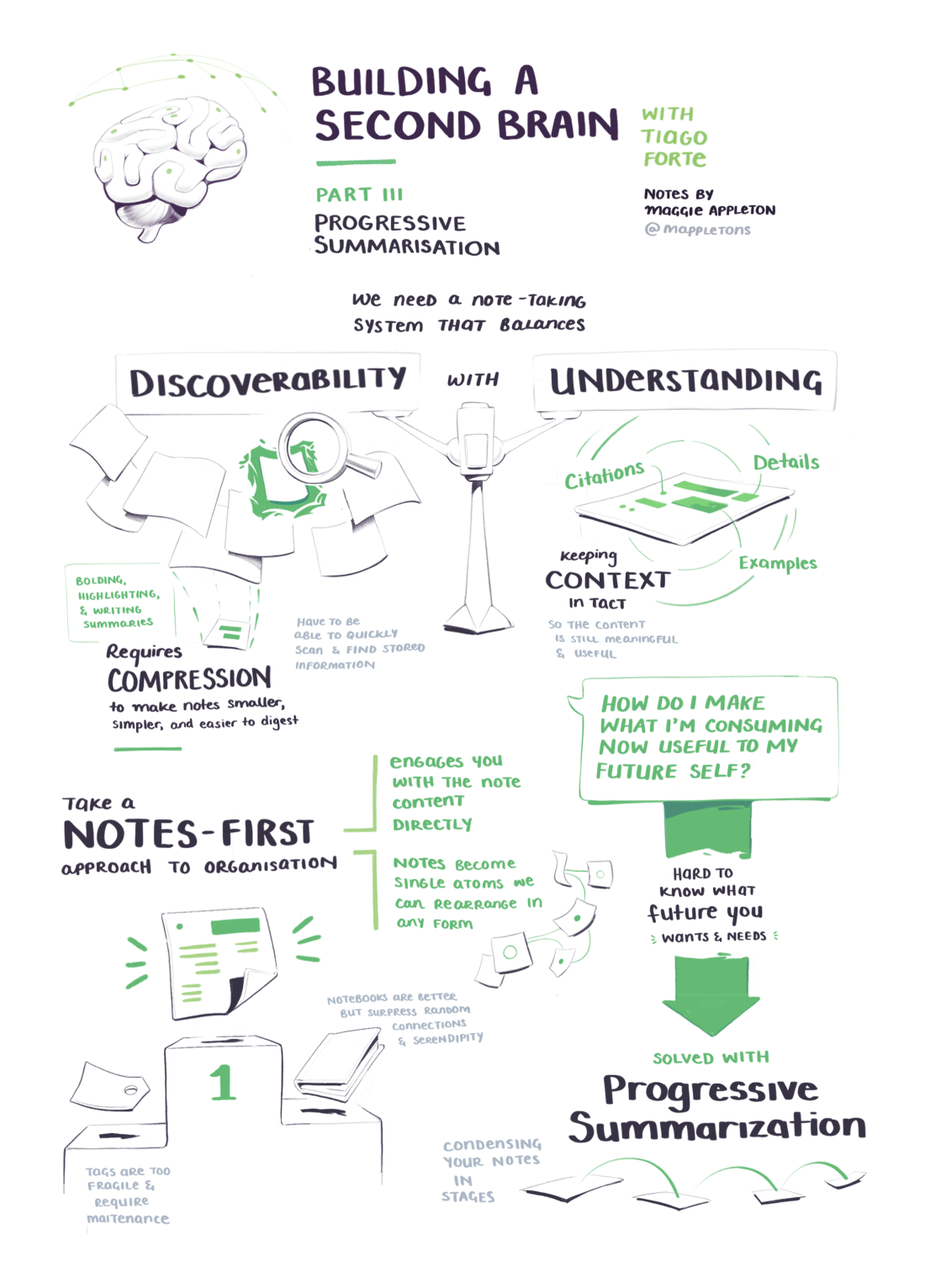
BASB sketchnotes on balancing discoverability with understanding in your notes

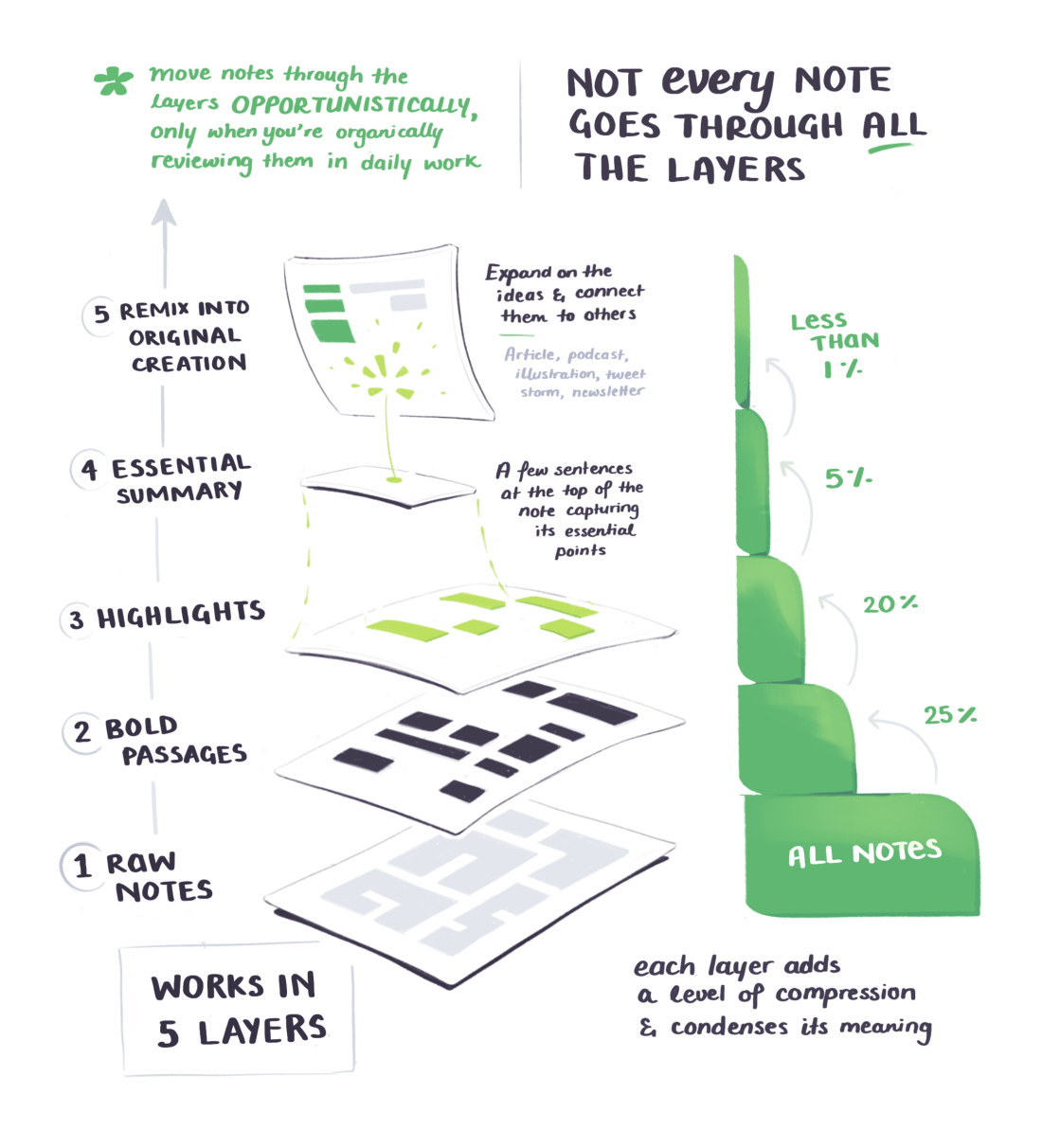
BASB sketchnotes on putting your notes through 5 layers of progressive summarisation

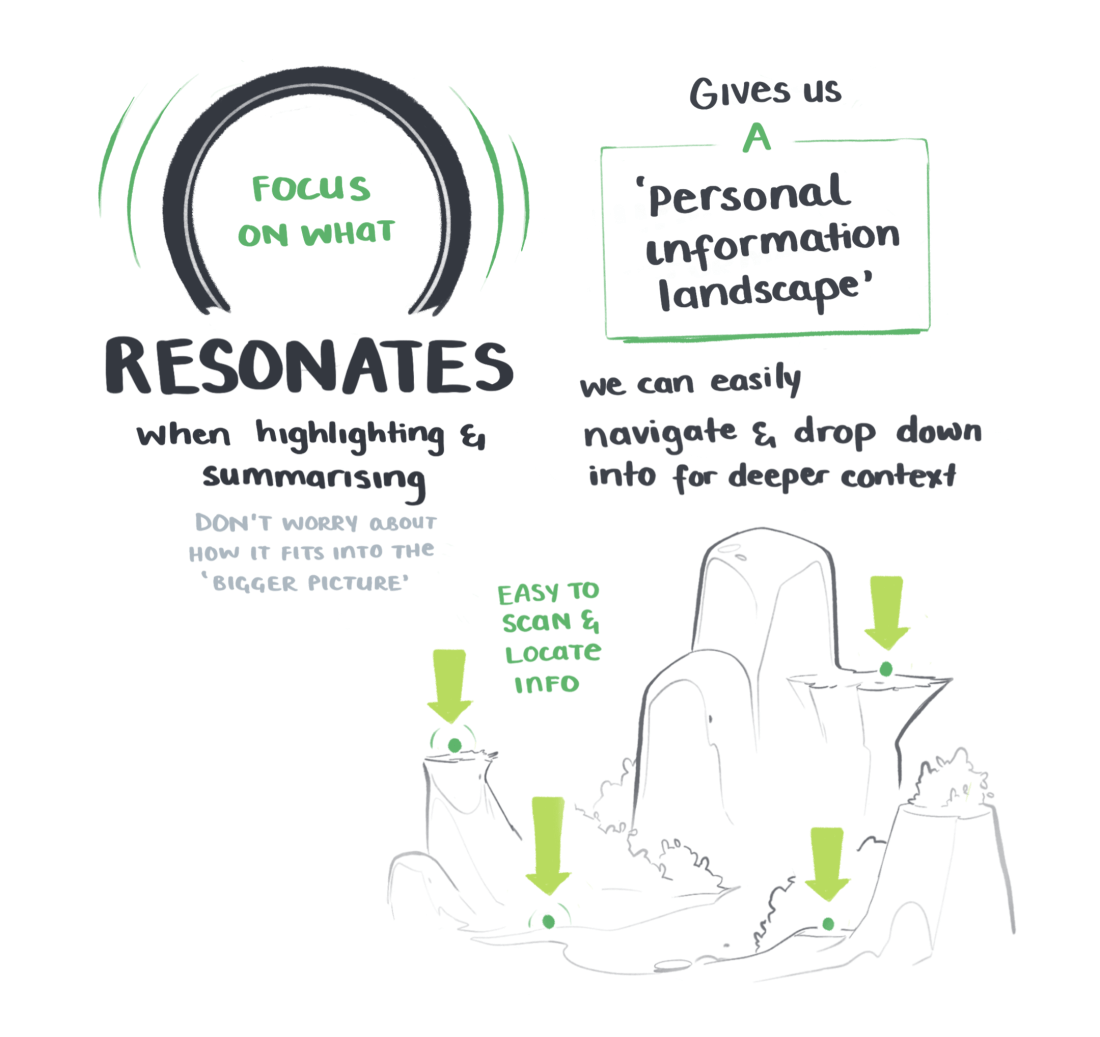
BASB sketchnotes on focusing on what resonates when summarising your notes

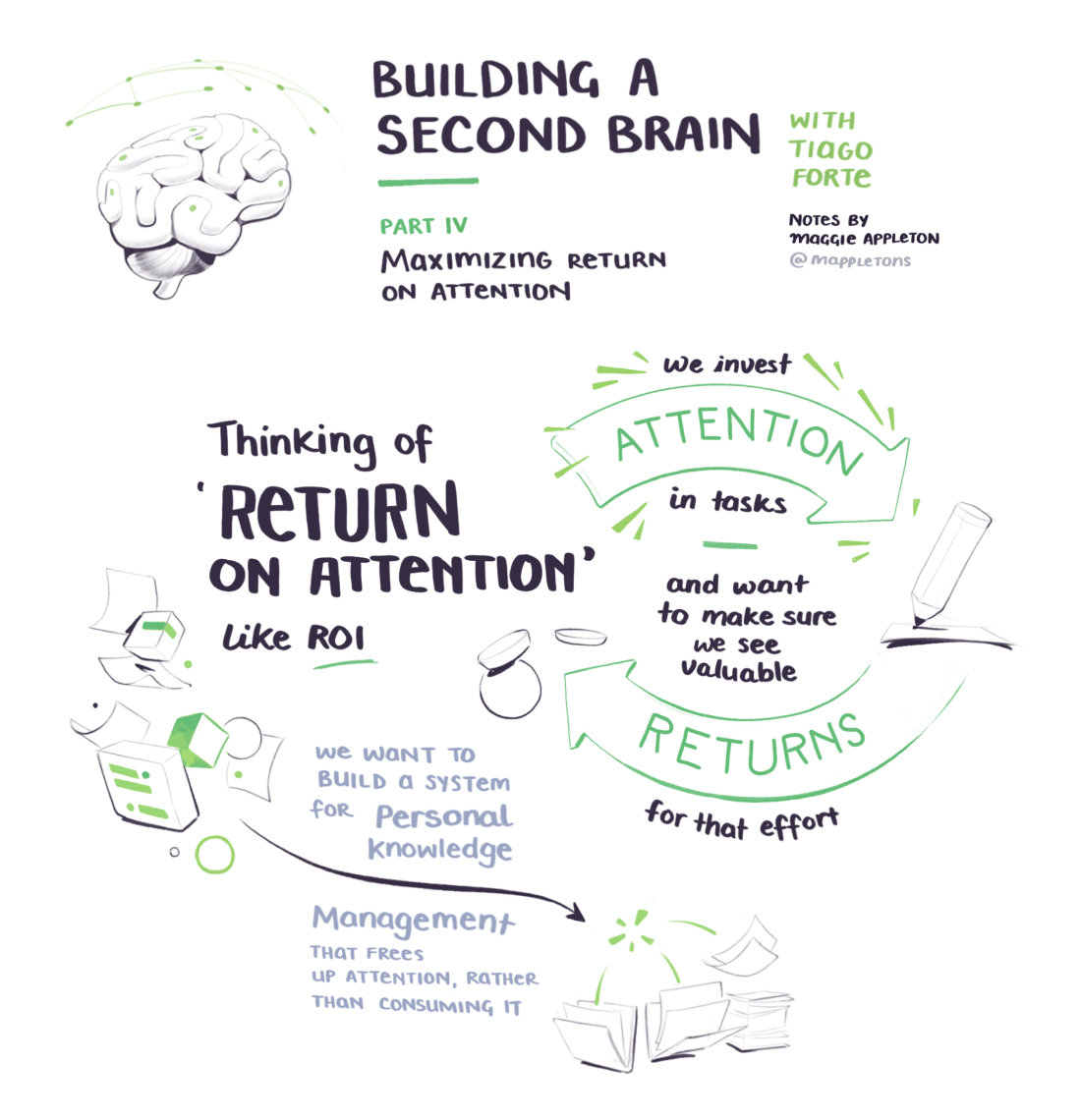
BASB sketchnotes on thinking of return on attention like ROI

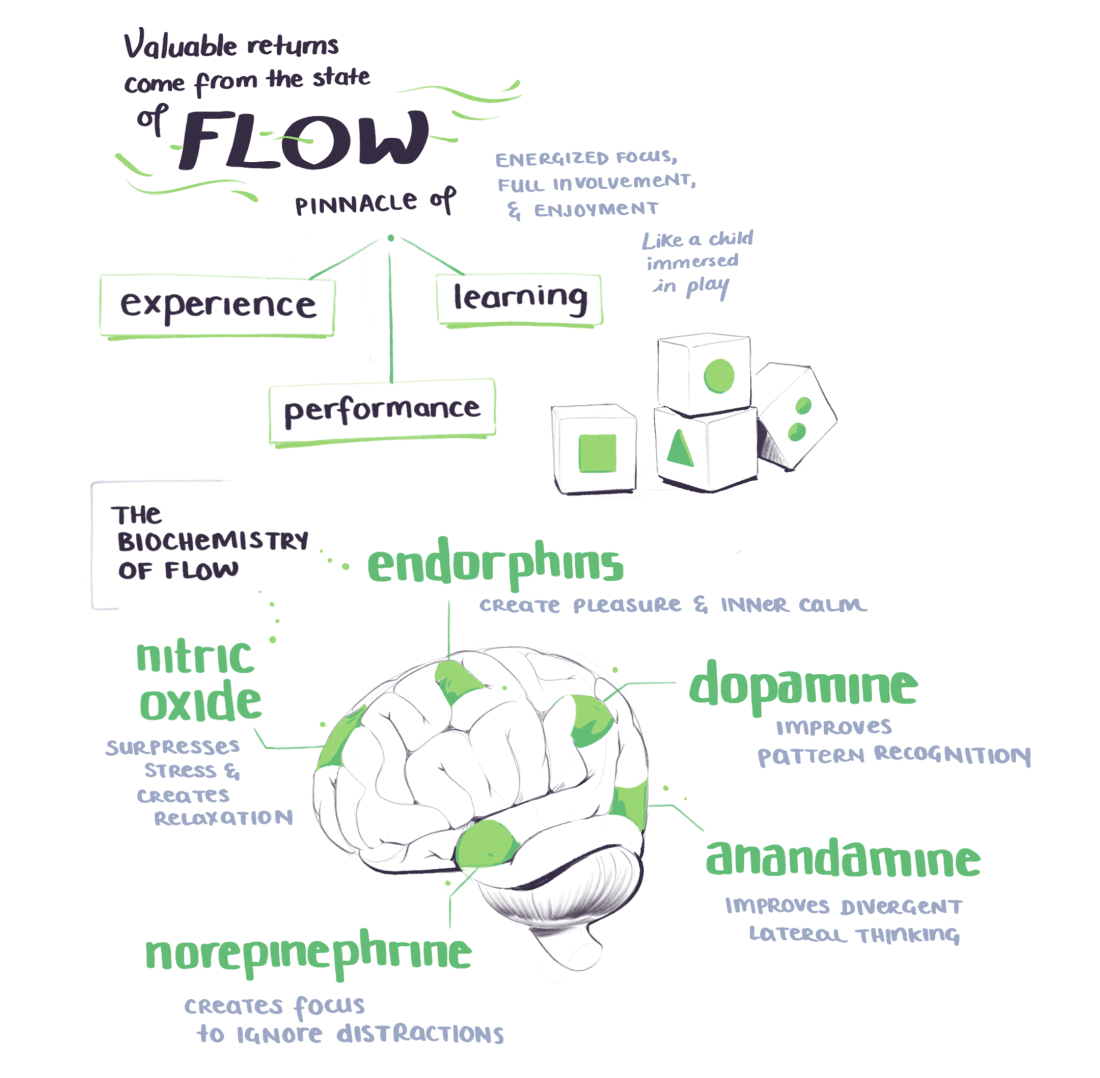
BASB sketchnotes on flow state as the pinnacle of experience, learning, and performance. As well as the biochemistry of flow state.

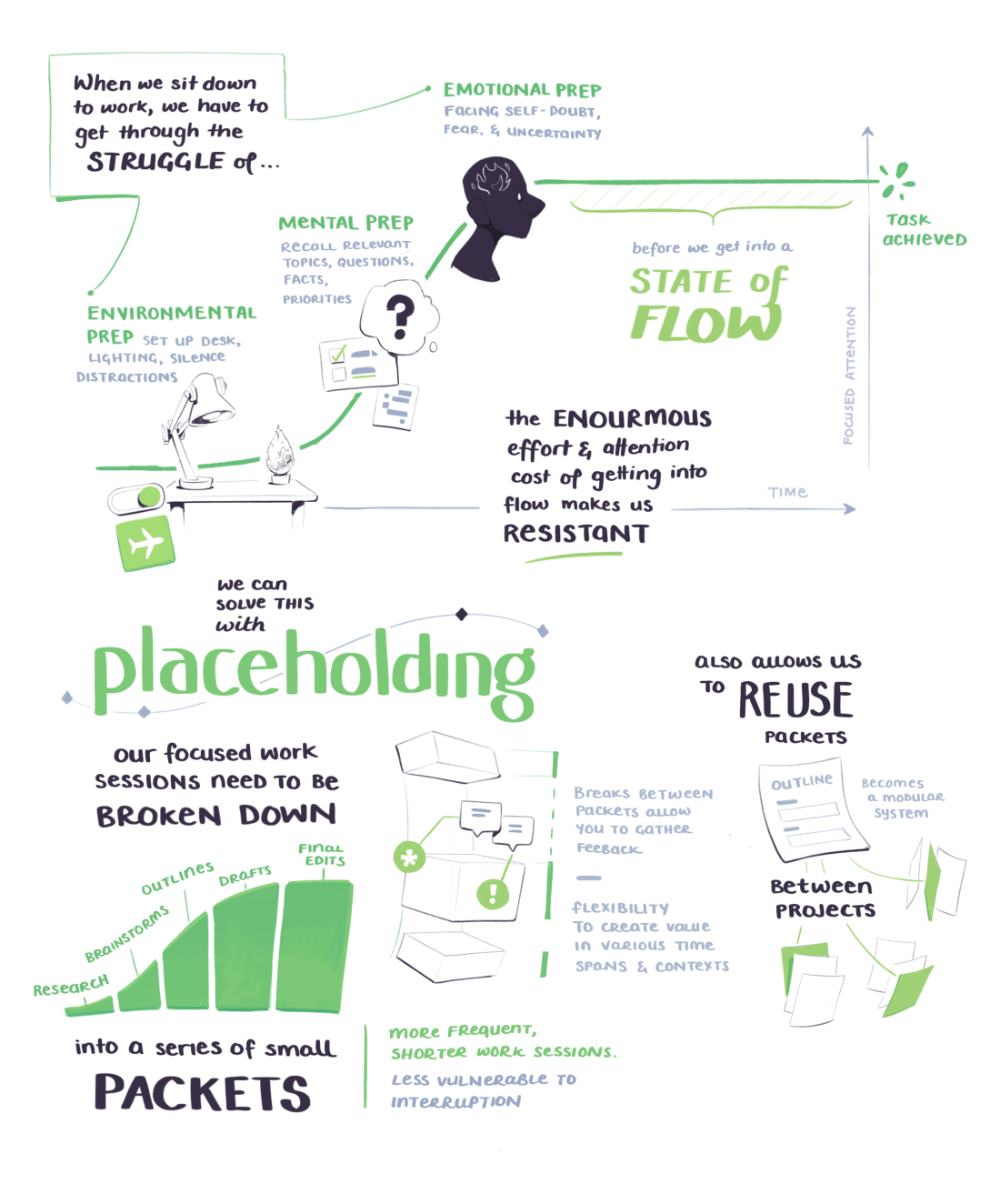
BASB sketchnotes on solving the interruptability of flow with placeholding and breaking work down into smaller packets

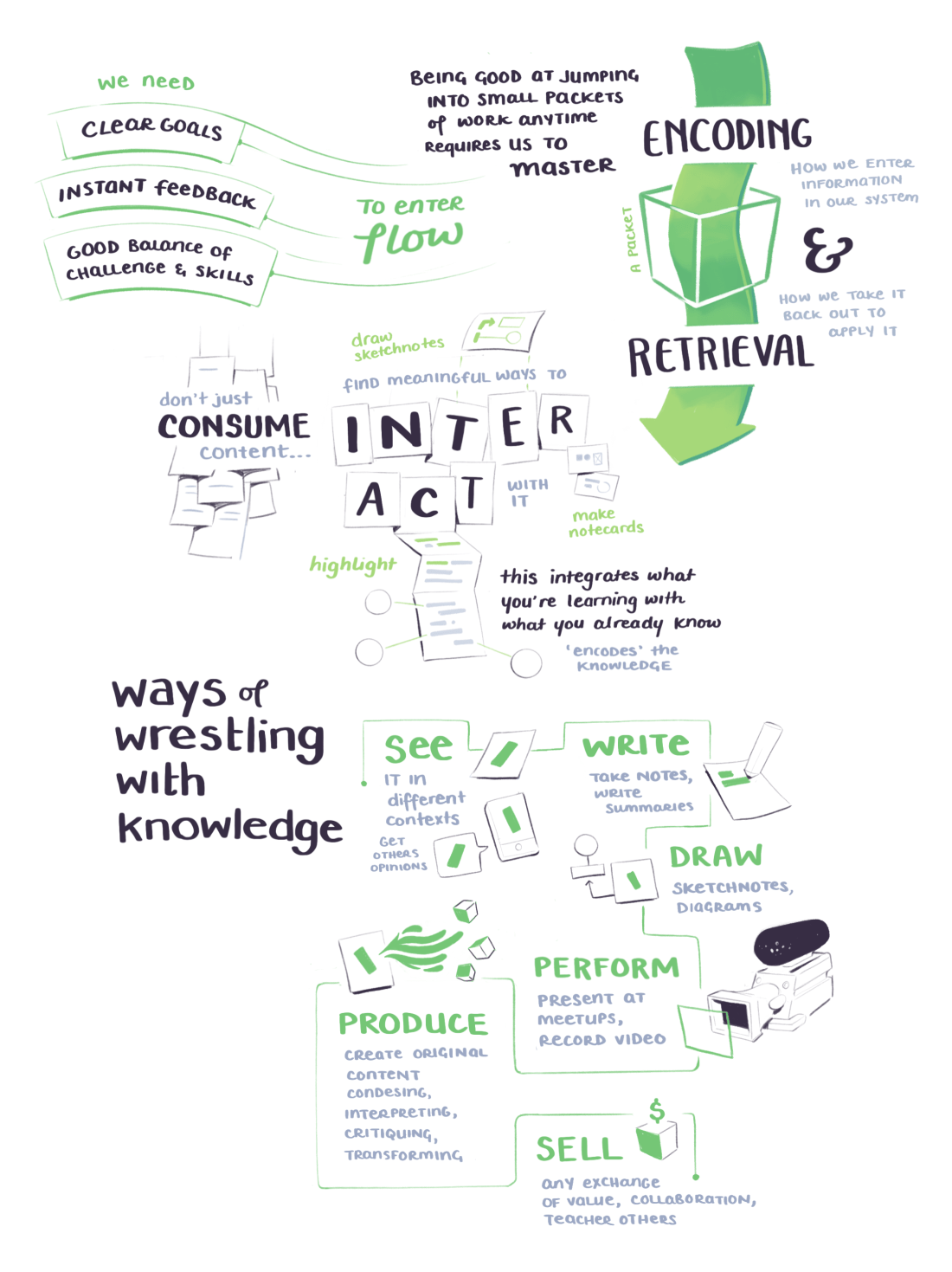
BASB sketchnotes on wrestling with knowledge by interacting with it in meanginful ways

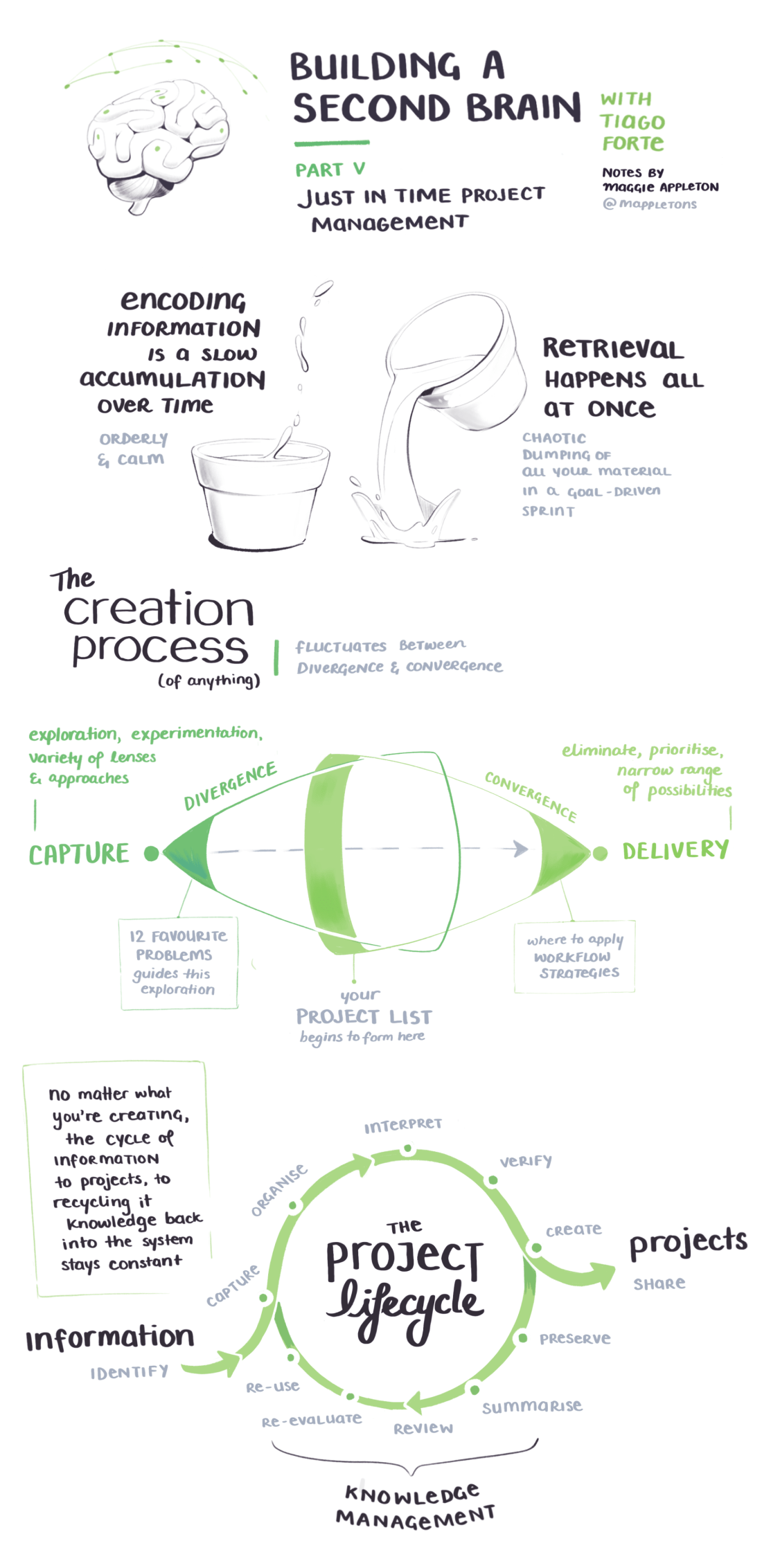
Just in time project management helps us balance our workflow between capture and delivery.

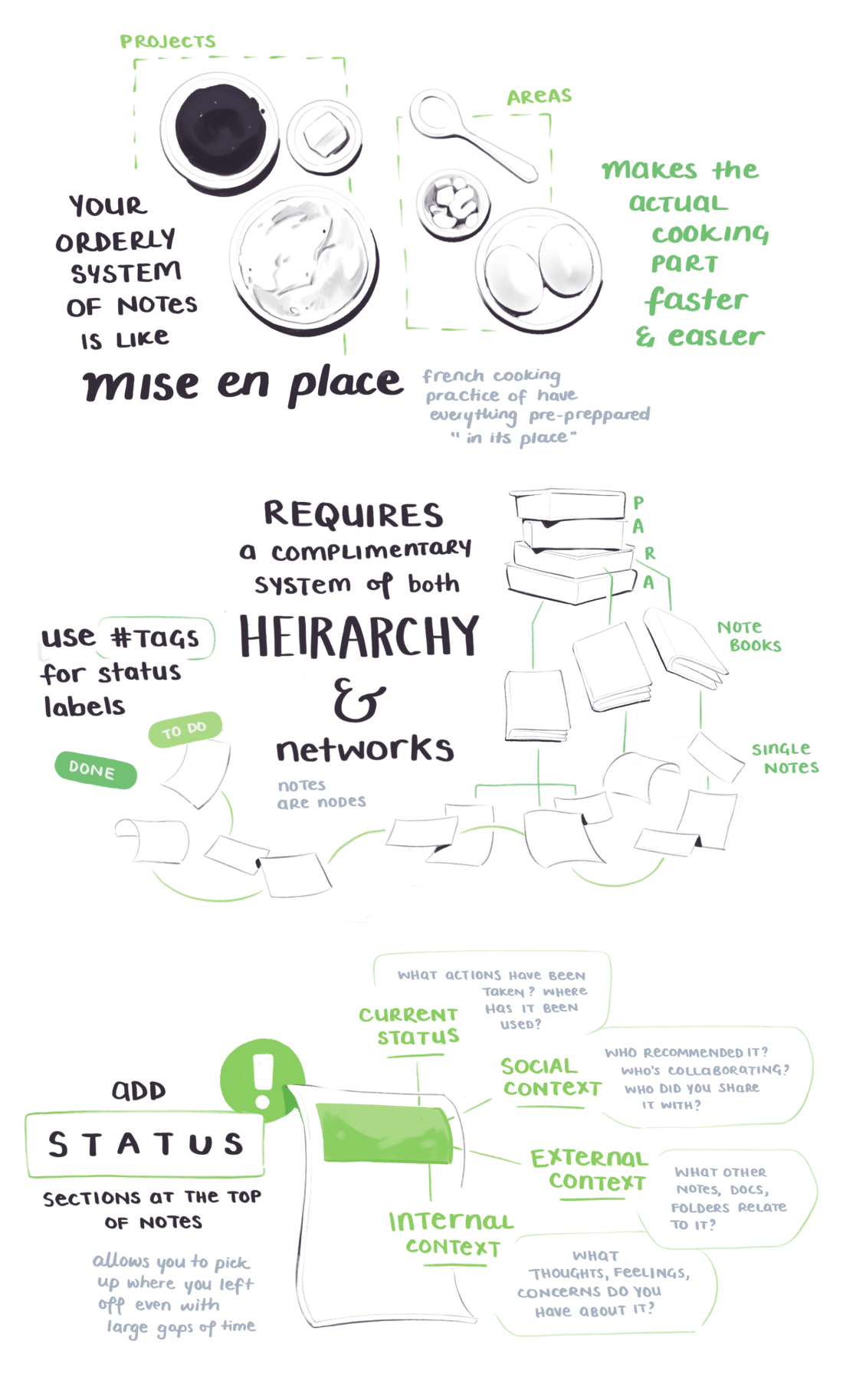
Your orderly system of notes is like mise en place – everything in its place

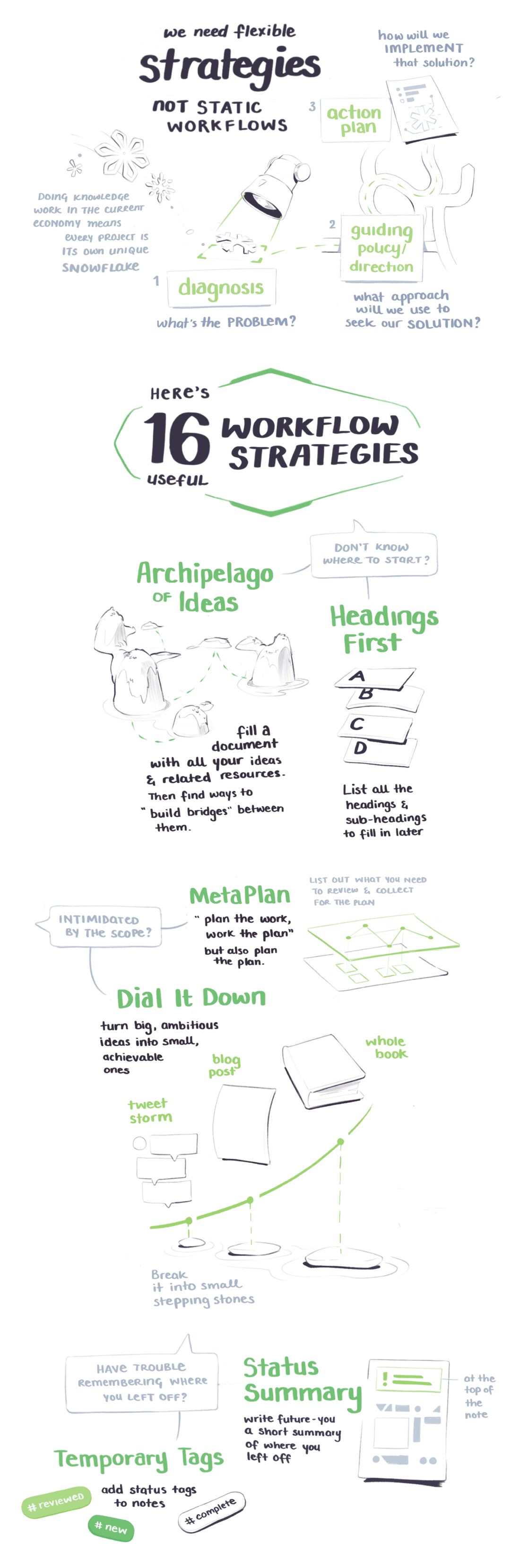
We need flexible strategies, not static workflows. We diagnose the problem, form a guiding policy to tackle it, and write an action plan to implement it.

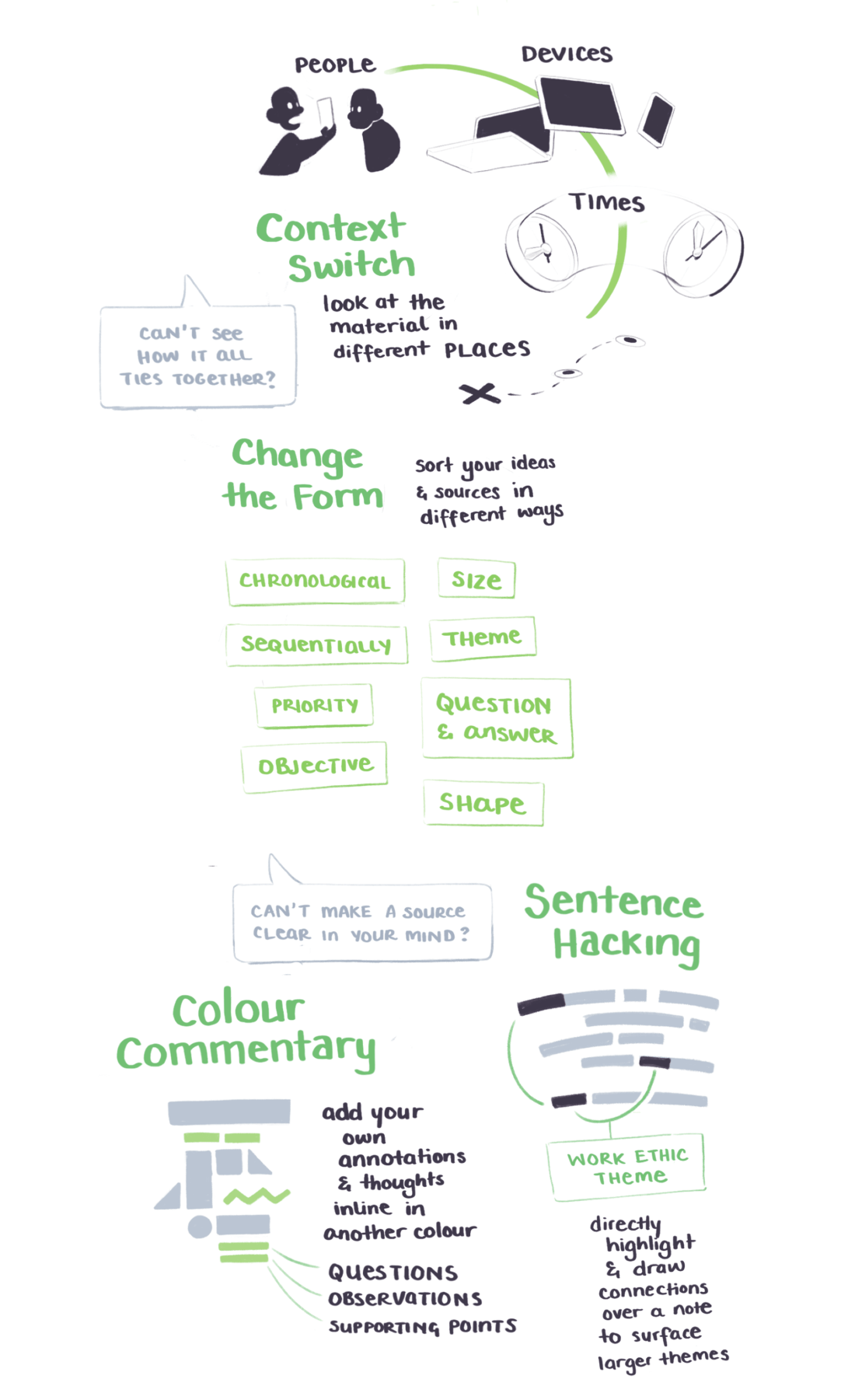
Some workflow strategies we can use include context switching, changing the form of our notes, and adding color commentary through annotations and highlights.

Read the original on maggieappleton.com ↗